69% of Australian online shoppers have lived through a parcel that was lost or damaged. That single figure changes how you should think about ecommerce shipping insurance. It isn't a small add-on tucked behind checkout. For box and satchel sellers shipping fast across Australia at keen prices, it's part of how buyers judge whether your store feels safe to order from.
Why Parcel Protection Now Shapes Australian Checkout
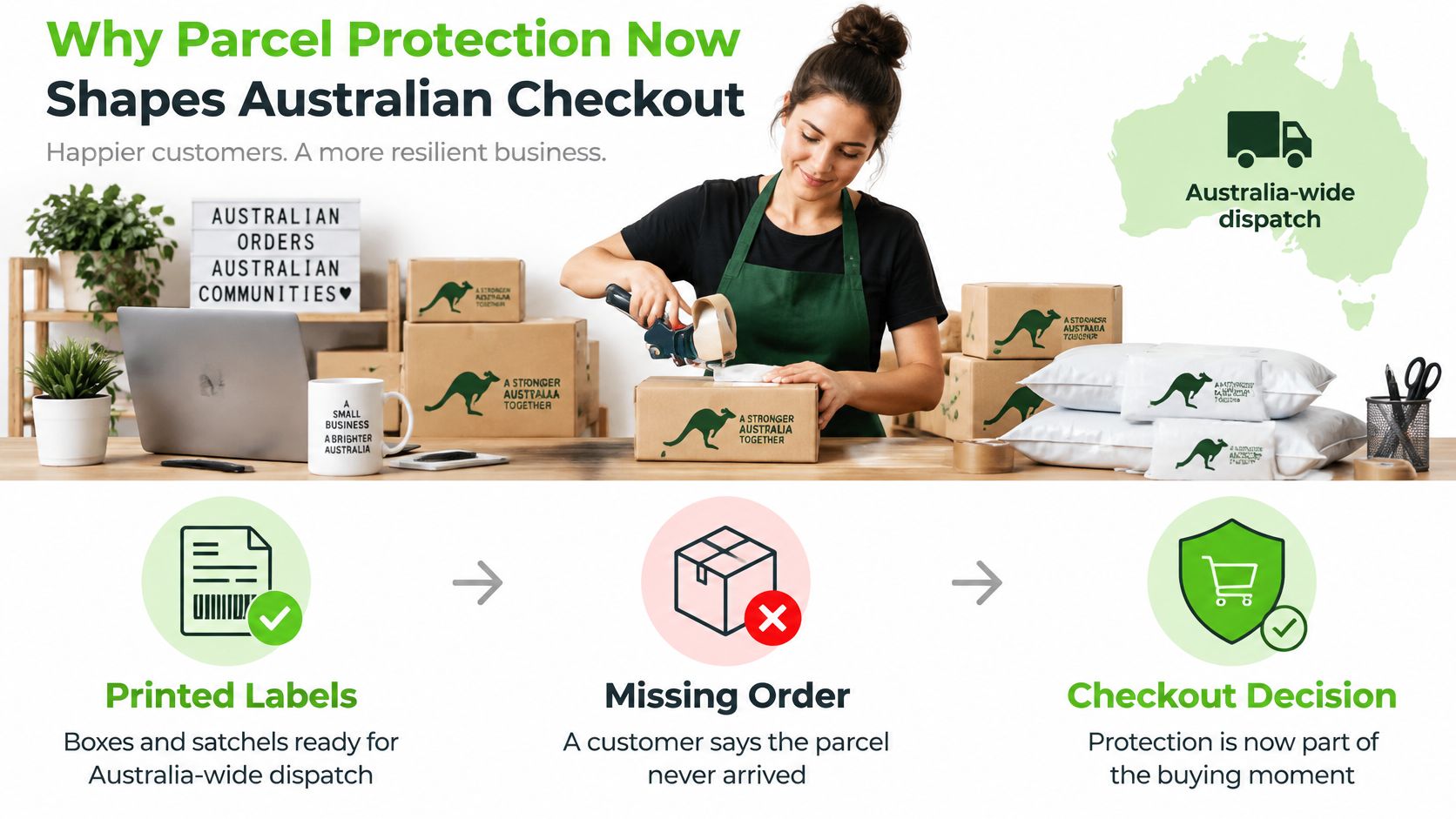
You're at the packing bench late in the afternoon. Labels are printing, cartons are taped, satchels are lined up for pickup, and then a message lands from a customer whose order from last week never arrived in usable condition.
That message isn't just a courier problem. It's a refund decision, a replacement decision, and a trust decision, all at once. The customer doesn't separate your store from the delivery. From their side of the screen, you took the money, so your name is on the outcome.
Shoppers Have Already Felt the Failure
Australian consumer research commissioned by NTI found 69% of online shoppers had experienced a lost or damaged parcel at some point, and 32% had experienced it multiple times, as reported in NTI research on growing shopper pressure for parcel protection. Younger buyers felt it recently, with 60% of Millennials and 61% of Generation Z respondents reporting a lost or damaged parcel within the previous 12 months.
That history explains the checkout behaviour. More than 90% saw value in shipping insurance being included in an online purchase. Every respondent, 100%, considered it important for purchases above $200, and 54% valued it for purchases above $100. More than three-quarters said they'd be more likely to buy from a retailer that protected goods against accidental damage, loss, or theft during shipping.
Practical rule: Treat protection as part of the offer your customer is buying, not as paperwork you sort out after something breaks.
Speed and Price Still Need a Safety Story
Fast, low-cost Australia-wide delivery wins attention. It doesn't remove risk. A carton can be crushed between heavier freight, a satchel can be left in the wrong place, and a label can send a good product on a bad journey.
That's why ecommerce shipping insurance works on two levels for local parcel sellers. First, it's a risk-management tool that may help you recover eligible financial loss. Second, it's a conversion signal that tells a hesitant buyer you've thought about what happens if transit goes wrong.
You don't need to insure your way out of every worry. You do need a clear answer before dispatch. Which orders carry enough value to protect? Which need a stronger delivery instruction, such as the approach explained in guidance on signature on delivery with Australia Post? Which can your business absorb calmly if one goes missing?
Start with that mindset and the rest gets simpler. Insurance isn't about fear. It's about deciding, in advance, how you'll keep a bad delivery day from becoming an expensive week.
Who Pays When an Australian Parcel Goes Missing
Think of two locks on one door. The first lock is your promise to the customer. The second lock is insurance, which may help your business recover money later. The second lock never replaces the first.
The Retailer Owes the Customer a Remedy
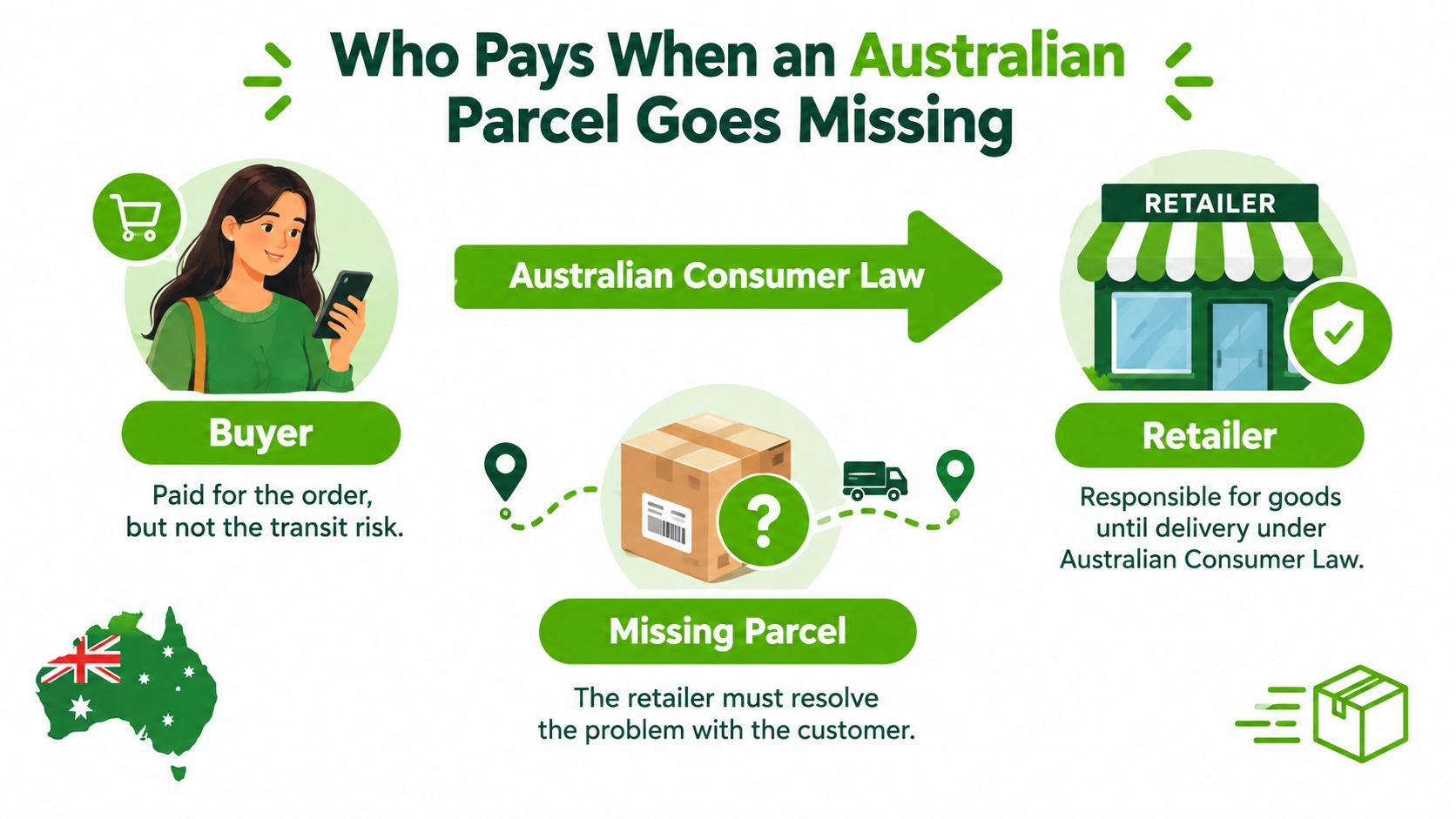
Under Australian Consumer Law, the retailer, not the consumer, is responsible for resolving goods that are lost, damaged, or stolen before delivery is completed, and the retailer must generally provide a remedy such as repair, replacement, or refund regardless of whether the customer purchased separate shipping insurance, as explained by Western Australia's Commissioner for Consumer Protection on shipping insurance and retailer responsibility. The retailer generally holds the delivery contract with the courier.
That distinction trips up many small sellers. You might say, the courier lost it, so the courier should fix it. Your customer hears something different. They paid your store, so your store needs to solve their problem.
- Buyer conversation: What remedy will you offer, and when?
- Accounts conversation: What can you recover from the carrier or insurer afterwards?
- Operations conversation: What evidence proves where the parcel went and how it was packed?
Keeping those three conversations separate protects your reputation. It also stops a customer being bounced between retailer and courier while everyone waits for someone else to act.
Refund First and Claim Later Is Often the Sequence
In practical terms, you may need to refund or replace first, then pursue recovery. Waiting for a claim outcome before helping the buyer can leave the buyer carrying a risk that isn't theirs.
Delivery instructions can change the recovery path without changing that basic duty. Authority to leave, a wrong-address delivery, weather exposure after drop-off, theft, and poor packaging all raise different evidence questions. Was the parcel scanned at the right address? Did the buyer agree to unattended delivery? Did the packaging suit the product inside?
When scans stall, use a calm process rather than guessing, including the checks in advice for when Australia Post tracking is not updating. Tell the customer what you're checking, what you'll do next, and when you'll update them.
Your customer needs a remedy from you. Your claim file is how you try to get your money back afterwards.
That order matters. Ecommerce shipping insurance is best understood as balance-sheet protection for the seller. It isn't a substitute for consumer-law compliance, and it shouldn't be sold to yourself as permission to make the buyer wait.
What Ecommerce Shipping Insurance Actually Covers
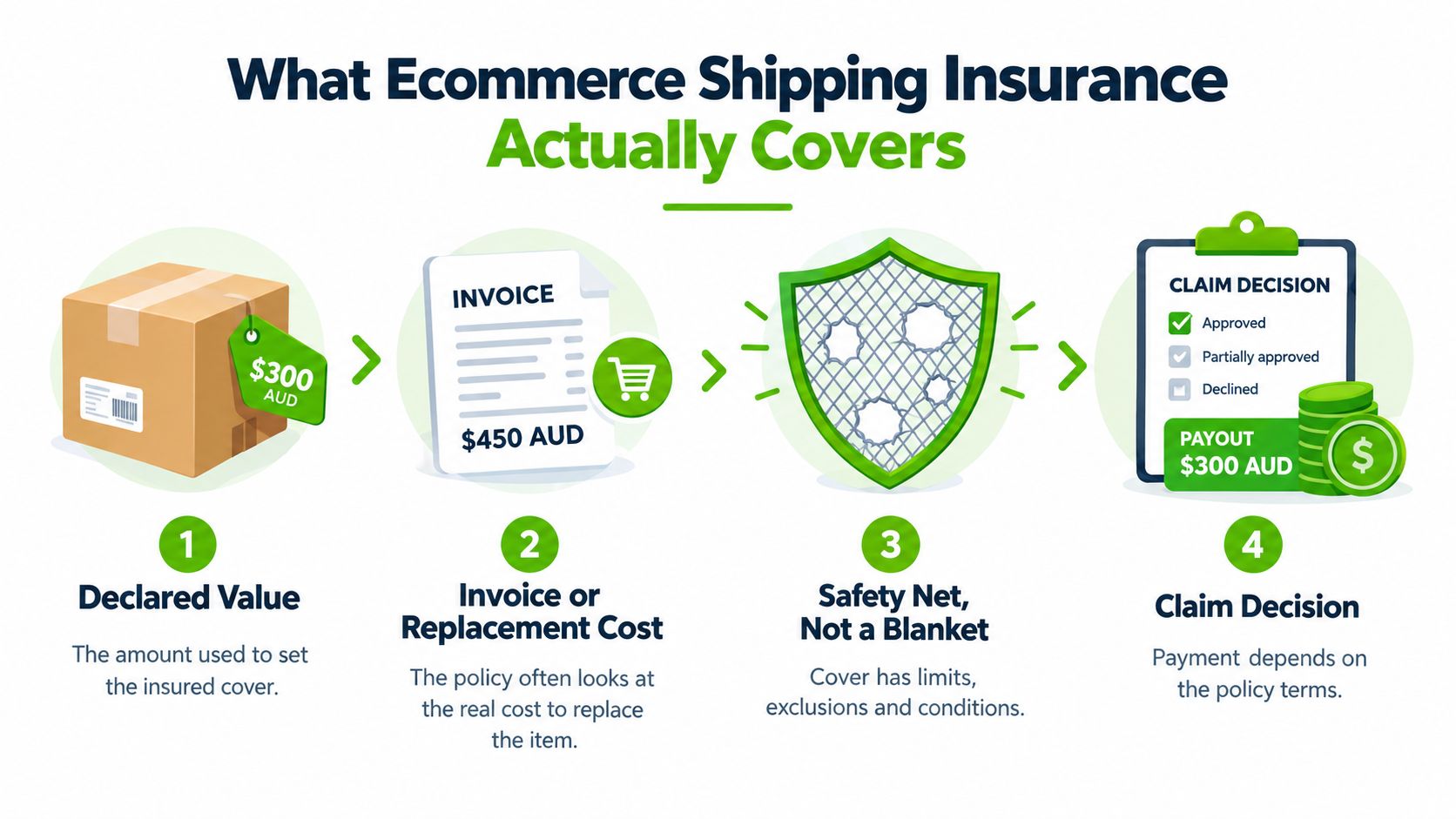
Cover is a safety net, not a blanket. A blanket suggests everything underneath is protected. A net has edges and holes, and you need to know where they are before you rely on it.
Declared Value Sets the Ceiling for the Conversation
Declared value is the value you attach to the consignment when you book it. It should match the invoice or replacement cost evidence you can produce. If you under-declare a box to save effort or cost, you may shrink what can be recovered later.
Picture a carton of skincare, candles, or small electronics heading interstate. The order total in your store, the value on the consignment, and the proof of purchase or replacement cost should tell the same story. When those records don't line up, a claim gets harder before anyone even looks at the damage.
The national scale explains why this habit matters for even a small dispatch table. NTI materials report approximately 1.1 billion parcels were shipped in Australia in 2022, equivalent to about 3 million parcels per day, alongside 85,059 online retail businesses nationally, according to NTI Parcel Protect industry material on Australian parcel volumes. The same material reports one in three parcels are returned to merchants, 81% of customers contact the retailer when a delivery problem occurs, and 73% were more likely to purchase when delivery insurance was included.
A Strong Claim Is an Evidence Chain
Build the file while the parcel is still on your bench, not after a complaint arrives.
- Order record: Keep the item, quantity, and sale value with the customer details.
- Consignment link: Save the consignment number against that exact order.
- Packaging proof: Photograph fragile goods, internal protection, and the sealed carton where the value justifies it.
- Delivery trail: Keep scan history and the customer's complaint in the same place.
That chain helps you separate four very different events. A carrier loss is not the same as transit damage. Delivery to the wrong address is not the same as theft after a correct drop-off. Each one points to different proof and a different next action, and good packing habits from practical guidance on how to pack fragile items make the damage conversation far clearer.
Read the Holes in the Net
Check exclusions before you depend on a policy. Common pressure points include inadequate packaging, prohibited goods, unattended delivery, concealed damage, and late notification. A product can be valuable and still be a poor insurance candidate if it's packed in a way no reasonable carrier journey would forgive.
The habit to build is simple. Match the declared value to real evidence, pack for the journey, and save the trail. Ecommerce shipping insurance can then do its proper job, transferring eligible financial loss without pretending every incident will be paid.
Deciding Which Parcels Are Worth Insuring
Insuring every parcel sounds careful. It can also be lazy maths. Some boxes deserve a premium, some deserve better packaging, and some low-value losses are cheaper for your business to absorb in a planned way.
Put a Number on the Exposure First
Independent reporting citing Australian transport-claims data estimates about 1% of parcels are damaged in transit annually, with uncompensated losses of approximately AUD 1–2 billion, as detailed in reporting on damaged delivery refunds costing Australian small businesses. For a retailer generating AUD 2 million in annual sales, a 1% freight loss or damage rate would imply roughly AUD 20,000 of directly exposed value before labour, reshipping, payment reversals, and customer-retention costs.
Use a plain model for your own store. Expected annual loss equals shipment volume multiplied by incident frequency multiplied by average claim value. Then compare that figure with the premium, any excess, the exclusions that apply, and the staff time needed to administer claims.
That comparison sits naturally beside your broader review of ecommerce shipping costs, because protection is one part of the true cost of getting a box safely to a customer. A cheap freight rate isn't cheap if preventable losses keep leaking from the other side of the ledger.
Sort by consequence: If losing this order would hurt cash flow or a key customer relationship, insure it or strengthen the delivery controls. If replacing it is predictable and minor, planned self-insurance may be enough.
December Changes the Answer
Peak season deserves separate attention. Australian claims analysis reported lost-freight claims rose from 12% of transit claims during most months to 24% in December, while the median December transit claim was AUD 472. More volume, more temporary handling pressure, and more gifts sent to unfamiliar addresses can all raise the stakes.
- Insure: Higher-value cartons, fragile products, and orders where a refund plus reshipment would sting.
- Self-insure: Low-value, easy-to-replace satchels where the expected loss is predictable and small.
- Tighten controls: Orders at theft or wrong-address risk, where address validation, signature requirements, and scan alerts may reduce frequency or severity.
You're not choosing between care and savings. You're choosing the right tool for each parcel. Keep the focus on fast Australia-wide cartons and satchels, not pallets, and sort tomorrow's dispatch pile into three groups before pickup. Insure it, absorb it, or change the delivery instruction. That ten-minute sort can stop an avoidable argument next week.
Comparing Carrier Cover and Third-Party Options
You've done the maths on a single order. Now you need to choose how cover is arranged across a normal dispatch day. Australian box and parcel sellers generally face three paths, and the best mix depends on value, fragility, and how much admin your team can carry.
Three Paths for a Mixed Parcel Day
Carrier-included protection is arranged as part of a booking. It's convenient because declared value, labels, and tracking sit in one workflow. You still need to read limits and exclusions, because convenience doesn't widen the cover.
A separate third-party policy is arranged away from the individual carrier service. It may suit sellers who want one approach across different services, but you'll still need consistent declared values and claim records for every consignment.
Deliberate self-insurance means you set aside the capacity to absorb predictable low-value losses yourself. It isn't the same as ignoring risk. Done properly, it's a budget decision with a clear value threshold and a fast customer remedy process.
Parcel Insurance Paths for Australian Sellers
| Option | Best suited to | Seller still owns | Evidence to keep |
|---|---|---|---|
| Carrier-included cover | Sellers wanting booking and protection in one flow | Customer remedy and correct packaging | Order, consignment number, declared value, scans |
| Third-party policy | Sellers using varied services who want one policy approach | Customer remedy and policy compliance | Invoice, packaging photos, complaint, tracking trail |
| Self-insurance | Low-value goods with predictable replacement cost | Full financial loss and customer remedy | Order value, loss log, refund or reshipment record |
When you're comparing courier options side by side, look beyond the freight price. Ask who arranges the cover, how value is captured, what proof is expected, and what you still owe the buyer if delivery fails.
One option in that comparison is Aeros Couriers, an Australian-owned platform for low-cost local and Australia-wide carton and satchel deliveries. It offers instant quotes, booking in minutes, label printing, tracking, no account application or card charges, optional signature on delivery, and freight insurance included. Metro and regional timing is shown at checkout, and reward points through Simply Merchandise can sit in the background as cost-offset context rather than a reason to choose a service.
Included insurance still needs correct packaging, an accurate value, and a claim file. It doesn't replace your consumer-law duty. Choose the path that fits the parcel in front of you, not a habit you formed when your catalogue was smaller.
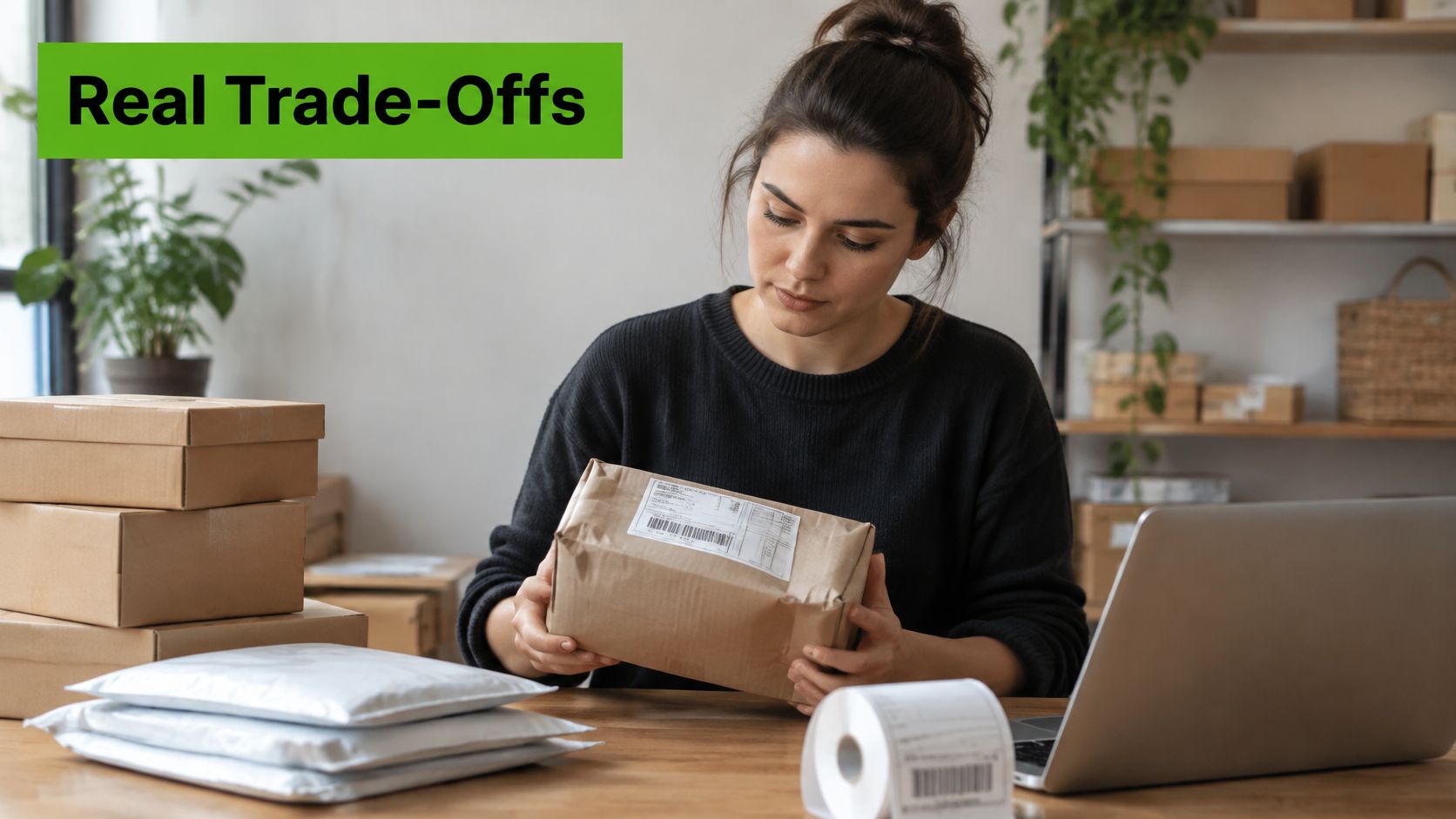
Parcel Stories That Show the Real Trade-Offs
Policies make more sense when you put products inside the boxes. These three everyday consignments show how value, fragility, and delivery instructions change the decision.
A Crushed Skincare Set on a Fast Metro Run
A $240 skincare set leaves in a neat carton and arrives with one corner crushed and bottles leaking. The customer needs a replacement or refund from the seller without waiting for the claim to play out.
The seller's recovery depends on the trail. A truthful declared value, photos of internal dividers and void fill, and a prompt customer complaint make it easier to show transit damage rather than weak packing. Next time, the seller adds corner protection and photographs every high-value beauty order before sealing it.
A Low-Value Stationery Reorder
A small stationery reorder in a satchel tells a different story. If the goods are inexpensive and easy to replace, the premium plus admin time may exceed the expected loss. Planned self-insurance, paired with better void fill and a quick resend promise, can be the calmer commercial choice.
That isn't carelessness. It's a threshold decision made before dispatch, with the loss cost understood.
A Regional Gift Left at the Door
A regional gift is marked authority to leave, scanned as delivered, and later reported stolen. The seller still needs to respond helpfully to the buyer, while the claim conversation may turn on the delivery instruction, the scan location, and whether unattended delivery is excluded.
Trouble isn't only crush damage in transit. In a 2025 Australian survey, 9.08% of online shoppers reported transit damage, 6.33% reported theft after delivery, and 10.66% reported delivery to a different address, while 78% said they'd be more likely to buy from a retailer that includes shipping insurance for damaged, lost, or stolen goods, according to NTI reporting on Australian shoppers and online returns.
For the next gift order, the seller chooses signature on delivery and warns the buyer at checkout. The lesson across all three parcels is steady. Insurance, packaging, and delivery instructions work together, and your catalogue will tell you which lever matters most.
Ship Boxes with Confidence and a Clear Next Step
Confidence doesn't come from hoping every parcel behaves. It comes from a short ritual your team repeats before pickup, even on a busy day.
Your Pre-Dispatch Ritual
- Match the value: Make the declared value agree with the order and replacement evidence.
- Photograph fragile packing: Capture internal protection before the carton is sealed.
- Check the address and ETA: Confirm the destination details and choose a service timeframe that suits the promise you made.
- Choose signature deliberately: Use it when order value or theft risk justifies the extra step.
- Save the trail: Store the consignment number with the customer record before the driver arrives.
That ritual turns ecommerce shipping insurance into something useful. The buyer feels a promise that you'll stand behind the delivery. Your business keeps a recovery path it can use if an eligible loss occurs.
Protection you can explain in one sentence to a customer is protection your team is more likely to apply correctly at the packing bench.
Take one practical next step with your next carton or satchel. Get an instant quote, confirm freight insurance is included, enter a truthful declared value, and book only after the packaging standard and delivery instruction match the risk. Follow the job through tracking from the dashboard, and use local support on the 1300 number if a scan stalls and your customer needs an update.
Review your high-value products before December, when lost-freight claims become a larger share of transit claims. Set your thresholds now, while you can think clearly. Peak season should feel prepared and purposeful, not reactive, and your customers should feel that care from checkout to doorstep.
Get your next box or satchel moving with fast Australia-wide delivery, clear instant quotes, included freight insurance, and tracking that helps you answer customers with confidence. Visit Aeros Couriers to quote your next consignment, set an accurate declared value, and book a delivery approach that matches the value inside the parcel.
Courier quotes, tracking and support
Ready to send a parcel? Compare the available services for your postcodes, parcel dimensions and weight. For an existing delivery, use your consignment number to check tracking or ask our team for help.