
Choose the smallest box that holds your item with protective padding on every side, measure it after packing, and weigh it on a scale. Then compare the real weight with the cubic weight, because the courier bills whichever is higher. Get those three steps right and you will quote accurately, avoid re-weigh adjustments and stop paying to ship air.
This guide walks through how to measure, how weight and size interact, how to size a box for fragile and awkward goods, and what to do when your item is too big for a standard parcel service.
TL;DR
- Pick a box about the same size as the item plus cushioning, not the biggest one you have lying around.
- Measure the packed parcel (longest side first), then weigh it. Always enter both into the quote.
- Couriers charge on the higher of actual weight and cubic weight, so a light, bulky box can cost more than a small, dense one.
- Aeros Couriers handles parcels up to 25kg Australia-wide. Anything bigger or on a pallet is a freight job, not a parcel job.
- One large parcel is not always cheaper than two smaller ones. Run both through a quote before you decide.
Table of Contents
- Start with the item, not the box
- How to measure a parcel properly
- Dead weight vs cubic weight
- Common items and the box that suits them
- Sending one big parcel or two smaller ones
- Size limits: when a parcel stops being a parcel
- Sending to a parcel locker or pickup point
- Protect first, then shrink
- Avoid surprise charges
- Our view: size is a pricing input, not an afterthought
- Book with the right size, get a clear price
- A short checklist before you book
- FAQ
- Sources
Start with the item, not the box
Most sizing mistakes happen before the tape comes out. People grab a box, drop the item in and stuff the gaps. The result is a parcel that is bigger than it needs to be, or one that is too tight to protect anything.
Work the other way around:
- Measure the item itself at its longest, widest and tallest points. Include handles, spouts, cords and anything that sticks out.
- Add padding. A common working allowance is 3 to 5cm of cushioning on each side for sturdy goods, and more for glass, ceramics and electronics. That is a rule of thumb, not a regulation, so adjust for how fragile the thing is.
- Choose a box whose inside dimensions match. Inside, not outside: corrugated board and flaps eat a few millimetres.
- Check the fit. The item should not move when you shake the closed box gently, and nothing should press against the walls.
If a box is nearly empty, it is the wrong box. If you have to force the flaps down, it is also the wrong box. Both end in cost: the first in wasted volume, the second in damage claims.
How to measure a parcel properly
Measure the finished parcel, after it is packed and sealed, with tape included. Padding, bulging sides and the thickness of the cardboard all add up.
- Length is the longest side, width the second longest, height the shortest. Quote forms generally accept any order, but consistency stops mistakes.
- Use a rigid or retractable steel tape measure, not a soft tailor’s tape, and measure to the nearest whole centimetre. Round up, never down.
- If the parcel bulges, measure at the bulge. A courier’s scanner will.
- Soft bags and satchels: measure them filled, lying flat as they would travel.
- Tubes: length is the tube length, and width and height are both the diameter.
Carriers measure parcels in their depots, and the figures on the label are checked against what they find. If your declared size is smaller than the real size, expect an adjustment to the price, a delay, or both. Declaring honestly at the start is cheaper than being corrected later.
Dead weight vs cubic weight
Two weights matter for every parcel.
- Dead weight (actual weight) is what the parcel weighs on a scale, contents and packaging together.
- Cubic weight (also called volumetric weight) is a figure worked out from the parcel’s volume. It reflects the space the parcel takes up in a van or aircraft.
The formula is simple: length x width x height in metres, multiplied by a conversion factor in kilograms per cubic metre. The factor differs between carriers and between modes such as road, express and air, so there is no single number that applies everywhere. Air services typically use a lower kilogram-per-cubic-metre figure, which means bulky parcels get heavier on paper by air than by road.
A worked example
Imagine a box of 60cm x 40cm x 30cm holding a lightweight cushion set that weighs 3kg.
- Volume: 0.6 x 0.4 x 0.3 = 0.072 cubic metres.
- With an illustrative factor of 250kg per cubic metre: 0.072 x 250 = 18kg cubic weight.
- The courier bills on 18kg, not 3kg.
Now pack the same cushions in a 40cm x 30cm x 20cm box by compressing them. Volume is 0.024 cubic metres, so the same factor gives 6kg. Still above the dead weight, but a third of the chargeable weight. You did not change the product, only the air around it.
The factor above is only there to show the arithmetic. Your actual quote will use the factor of the carrier and service you pick, which is why you should enter real dimensions into a quote tool rather than guessing.
Which one will you be charged on?
The higher one. Dense items such as books, tools, tinned food or metal parts are usually billed on dead weight. Light, bulky items such as pillows, clothing, plastic homewares, lampshades and flat-pack furniture tend to be billed on cubic weight.
Common items and the box that suits them
This table gives starting points, not limits. Measure your own item and follow the same steps.
| What you are sending | Typical approach | Watch out for |
|---|---|---|
| Clothing and soft goods | Satchel or small, flat box. Compress and vacuum bag where sensible. | Overstuffed bags measure wider than expected. |
| Books and documents | Small, rigid box or stiff mailer. | Weight builds up fast. Fill gaps so books do not slide. |
| Shoes | Original shoebox inside a slightly larger carton, or a snug box with paper padding. | Shoebox alone is not strong enough as an outer layer. |
| Small electronics | Snug box with 4 to 5cm of padding all round, device in its own packaging. | Do not over-size; foam does the work, not empty space. |
| Glass, ceramics, candles | Double-box: item in a small box, inside a larger box with padding between. | The double-box adds volume, so check cubic weight. |
| Tools and car parts | Small, strong box. Heavy items need double-wall board. | Dense goods hit weight limits before size limits. |
| Long items (rods, posters, tubes) | Tube or long narrow box. | The longest side often drives price or triggers an oversize limit. |
| Bulky lightweight (cushions, bedding) | Compress, then box tightly. | Cubic weight can be many times the dead weight. |
Sending one big parcel or two smaller ones
It is a question readers ask often, and the honest answer is: it depends, so test it.
One larger parcel usually has lower handling cost per item, one label and one tracking number. But a big box with a modest weight can be billed on cubic weight, and a very heavy one may fall into a higher weight bracket or exceed the parcel limit.
Two smaller parcels can sit in cheaper weight brackets and reduce the damage risk (a drop only hits one half of the order). They also cost two labels’ worth of handling and can arrive on different days.
A quick method:
- Quote the single parcel using packed dimensions and weight.
- Split the contents sensibly and quote both smaller parcels.
- Compare the total, then consider delivery risk and what the receiver would prefer.
A platform that shows rates side by side makes this a two-minute job rather than guesswork.
Size limits: when a parcel stops being a parcel
Every carrier sets its own maximum weight, length and volume, and they are not the same. Aeros Couriers books parcels up to 25kg across Australia. The maximum length and other limits depend on the carrier and service selected at the quote stage, so rely on the figures shown when you enter your dimensions rather than a number from a different provider.
When your item is likely to be over the line:
- It weighs more than 25kg.
- One side is longer than a normal carton, such as a surfboard, a ladder, a curtain pole or a large framed mirror.
- It is on a pallet or in a crate.
- It is an awkward shape that cannot be boxed.
These are usually freight jobs. Freight is priced differently, often with pickup and delivery window requirements, and it can need a tail-lift truck or a forklift at one end. Aeros lists freight via its compare and book page, where you can enter the details and see options.
If you are not sure whether to go parcel or freight, the question to answer is: can one person lift it, and does it fit in a standard box? If yes, parcel. If no, freight.
Sending to a parcel locker or pickup point
Lockers add a second size problem: compartments come in fixed sizes. A parcel that is within a carrier’s normal limits can still be too big for the compartment, and the delivery then goes to a counter or back to a depot instead.
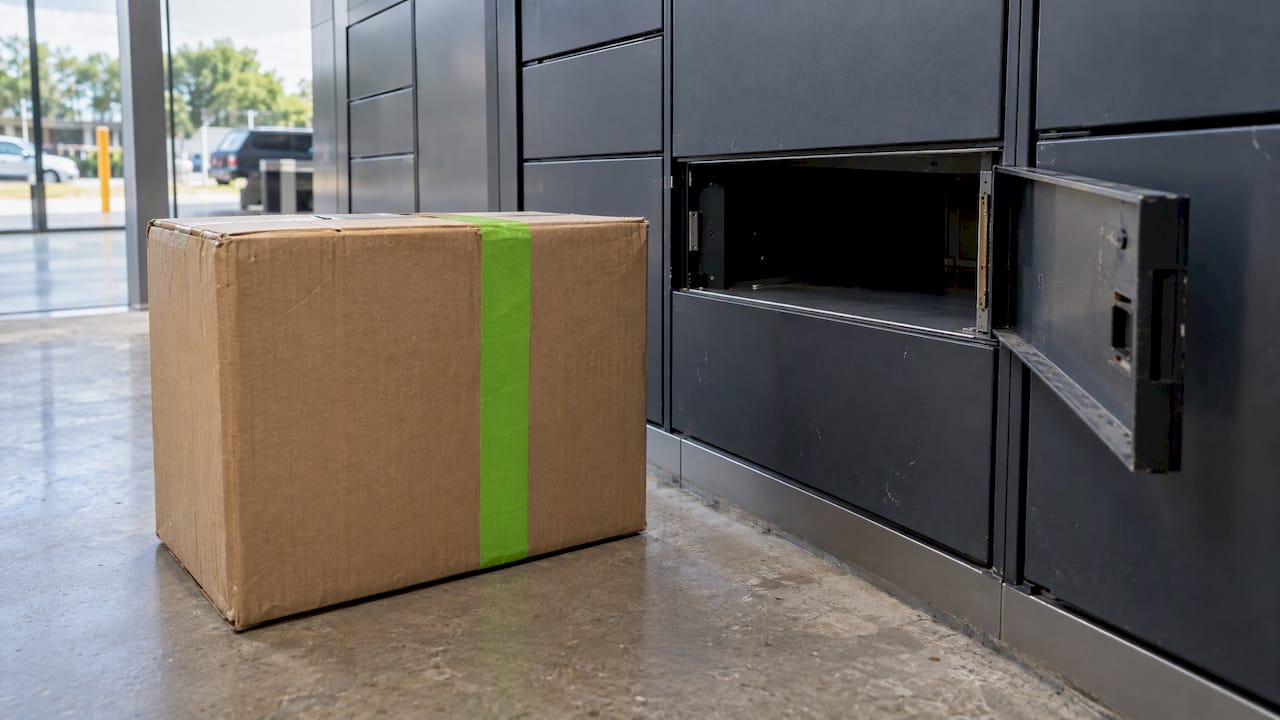
If your receiver prefers a locker, check the compartment size of the locker network before you pack, and keep the parcel flat and small where you can. For a sense of how fit and checks work for restricted goods, this explainer on age checks and locker fit for parcels is a useful read, even though it covers one product category.
Protect first, then shrink
The cheapest parcel is one that arrives intact. A claim, a replacement and an apology cost more than the extra 2cm of padding. Before trimming dimensions, check these:
- Use new or strong boxes. A box that has been through a move has lost much of its strength. Weak boxes crush when stacked.
- Fill voids with paper or air cushions, not loose packing that settles in transit.
- Seal with proper packing tape, using the H pattern across the top and bottom seams.
- Label on the largest flat face, not across a seam, and remove or cover old labels.
- Put a second address slip inside, in case the outer label is damaged.
- Insure what matters. Standard cover can have limits. Check the cover included and add more for high-value goods.
After protection, you shrink: cut down boxes (where the board allows), switch to a different size, compress soft goods, or break the item down. Taking the legs off a table or removing a monitor stand can move an awkward item into a standard parcel.
Avoid surprise charges
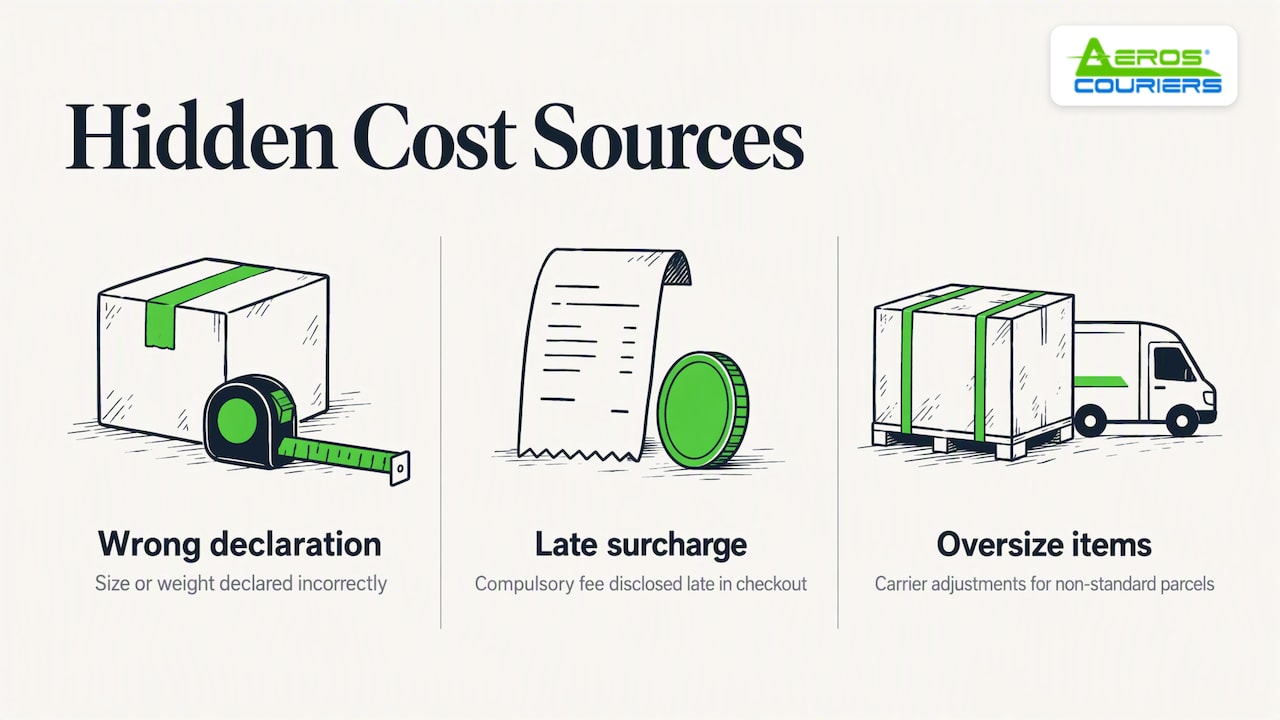
Hidden costs usually come from one of three places: wrongly declared size or weight, a surcharge added late in the booking, or a carrier’s adjustments for oversize or non-standard items.
Australian consumer law backs you up on the second. The ACCC has said that failing to disclose a compulsory surcharge until late in the checkout process can amount to misleading conduct, and in the case it reported the business was ordered to pay $1 million. Whatever you ship with, look for a total price shown up front.
For small businesses, business.gov.au advises treating a delivery provider like any other important supplier: look at how easy it is to get a quote, what insurance is available and how it connects to your online store, rather than just the headline price. Accurate sizing is what makes a quote reliable in the first place.
Our view: size is a pricing input, not an afterthought
We see the same pattern over and over with small businesses and first-time senders. The quote is looked at carefully, but the size and weight that produced it are guessed. Then the parcel is re-measured, the price changes and the sender feels misled, when the cause was a rough input.
That is why we built our platform around comparing rates with the real numbers in front of you. You enter the dimensions and weight, see options from carriers, and book with a flat, transparent price and no hidden fuel surcharge or handling fees. For repeat shippers the habit that pays most is simple: keep a short list of your standard box sizes, with the packed weight of each product. Then every booking is a copy and paste.
A few other things we would tell a friend:
- Standardise your cartons. Two or three sizes cover most of what a small shop sells, and they let you spot when a product no longer fits its box.
- Re-measure when the packaging changes. A thicker mailer or a new product insert can push you over a threshold.
- Use rewards for repeat bookings. Points can be redeemed on later shipments, which adds up for anyone sending weekly.
- If tracking shows a parcel stuck, contact someone who answers. Our Australian support team handles those queries directly.
— Aeros
Book with the right size, get a clear price
Once you have your packed length, width, height and weight, you are ready to quote. With Aeros Couriers you can compare carrier rates for parcels up to 25kg, choose standard, express or same-day options, print your label and track the parcel to the door. Start from the parcel delivery service page, or see how our shipment rate tool works before you book.
A short checklist before you book
- Item measured, with extras like handles included.
- Box chosen to fit, with cushioning on all sides.
- Parcel sealed, then measured (L x W x H, rounded up) and weighed.
- Cubic weight calculated or entered into the quote tool, and compared with dead weight.
- Under 25kg and a standard shape? Book as a parcel. Otherwise look at freight.
- Value checked against the insurance included, with extra cover if needed.
- Label printed, fixed to the largest face, with a backup slip inside.
FAQ
How do I calculate my parcel size?
Measure the length, width and height of the packed parcel in centimetres, rounding each up to the next whole number. Multiply them together and divide by the carrier’s conversion figure to get cubic weight, then compare it with the scale weight. The higher figure is what the quote is based on.
How can I send oversized parcels in Australia?
If the item is over 25kg, extremely long or on a pallet, book it as freight rather than as a parcel. Provide exact dimensions, weight, and pickup and delivery details, and say whether either end has a loading dock or forklift. Taking the item apart or packing it flat can sometimes bring it back into parcel range.
Is it cheaper to send one big parcel or two smaller ones?
Not always one or the other. A single large box may be billed on cubic weight, while two smaller boxes can fall into lower brackets but carry two handling charges. Quote both options with your real dimensions and pick the lower total, factoring in damage risk and delivery timing.
What is the maximum parcel size in Australia?
There is no single national limit, because each carrier and service sets its own maximum weight and dimensions. With Aeros Couriers, parcels go up to 25kg, and any length or volume limits appear when you enter your dimensions for a quote. Larger or heavier items should go as freight.
Sources
- ACCC: Online florist ordered to pay $1 million for misleading online star ratings and price representations
- business.gov.au: Shipping
Recommended
- Parcel Courier Guide for Australian Businesses 2026
- Send Big Parcels Cheap: A 2026 Guide for Australia
- Australia’s Postal Charges For Parcels Explained 2026
- Parcel delivery: parcel delivery tips for cheap rates and smart shipping in 2026
Courier quotes, tracking and support
Ready to send a parcel? Compare the available services for your postcodes, parcel dimensions and weight. For an existing delivery, use your consignment number to check tracking or ask our team for help.