

A residential delivery surcharge is an extra fee a carrier adds when an address is classed as residential, because home stops cost more to service than business ones. Expect either a small per-parcel charge or a larger heavy-residential fee on bulky items. Before you book, check that the displayed price is the total, verify how your address is classified, or use an all-inclusive shipment rate.
TL;DR:
- Charges vary by carrier, service, and parcel weight; heavy or bulky home deliveries may incur a higher fee, and GST may be excluded.
- A registered business can still be classified as residential when address data or delivery history flags the location; verify the booking tool and G-NAF.
- To prevent repeat fees, validate addresses, consolidate orders, record accurate dimensions and weight, or deliver to a commercial address or parcel hub where practical.
- Under Australian Consumer Law, compulsory surcharges generally belong in the displayed total; compare booking records with invoices and dispute unexplained reclassifications using saved evidence.
Table of Contents
- Why do carriers charge a residential delivery surcharge?
- What does a residential surcharge cost in Australia?
- How does a carrier decide an address is residential?
- How can you reduce or avoid residential delivery surcharges?
- What do Australian consumer law and the ACCC require you to disclose?
- How do you check, contest or fix a surcharge on an invoice?
- Our view: why all-inclusive pricing beats surprise adjustments
- Get a shipment rate that shows the full price before you book
- FAQ
- Sources
Why do carriers charge a residential delivery surcharge?
Carriers treat “residential” as an operational category, not a moral judgement on your customer’s front door. A residential route usually means fewer parcels per street, more driving between stops and more time at each one. That adds up quickly across a driver’s shift.
The main cost drivers are:
- Low delivery density: a single parcel on a quiet street can cost far more to deliver than many parcels to a single office block.
- Smaller vehicles and tricky access: narrow streets, steep driveways and locked gates slow drivers down.
- Manual handling: there is rarely a loading dock or trolley, so heavy items are carried by hand.
- Redelivery risk: nobody home during business hours means a second trip or a depot pickup.
So the surcharge works as cost recovery rather than an arbitrary penalty. Carriers could fold it into every base rate, but most prefer to charge it only on the consignments that cause the extra cost.
Pro Tip: Ask your carrier or platform whether the residential fee is already inside the quoted price. That question can help prevent invoice surprises.
What does a residential surcharge cost in Australia?
Fees vary by carrier, service type and parcel weight, and they are often quoted exclusive of GST. Some carriers also publish a separate, higher charge for heavy or bulky residential consignments, so a bulky flat-pack delivery can cost far more to send to a home than a satchel does.
Typical structures you will see on published fee schedules:
- A flat per-consignment residential surcharge on standard parcels.
- A higher heavy-residential or bulky-item surcharge once weight or size passes a threshold.
- Surcharges that apply only to some services, such as road freight rather than express parcels.
- Fees added after booking if the carrier reclassifies the address or the parcel dimensions.
For exact current amounts, read each carrier’s own fee schedule, because figures change and a quoted example can date quickly. Our guides on Australia’s courier prices and the Australia Post courier charges show how to benchmark an invoice line by line.
The ACCC says unavoidable fees must be disclosed: if a surcharge is compulsory, it belongs in the price you show customers. That makes the surcharge a pricing question as much as a logistics one, and it is why comparing totals beats comparing headline rates. If you are weighing carriers, compare total cost, not headline rates before you commit.
How does a carrier decide an address is residential?
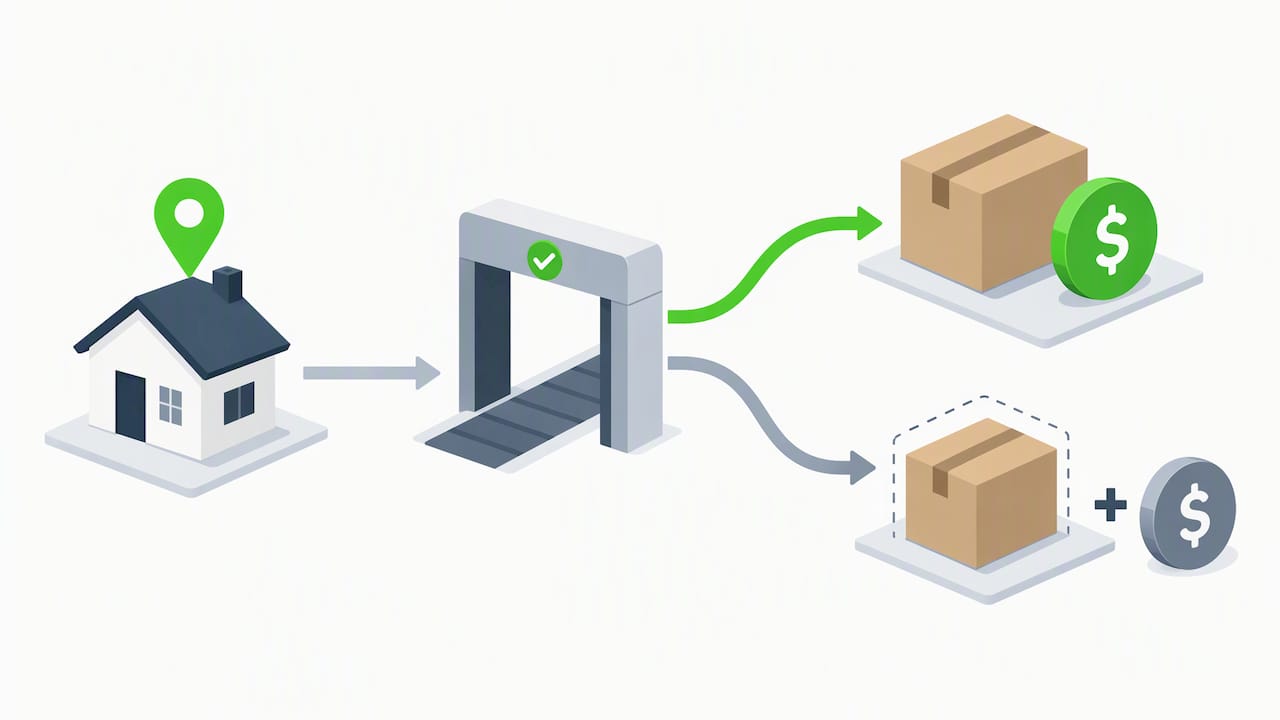
Carriers and booking platforms classify addresses with automated validation. In Australia, the national address file known as G-NAF is the authoritative reference, and government bodies already use open address data across public services. Carriers combine that kind of data with their own delivery history.
Signals that can flag an address as residential:
- The address type recorded in official or commercial address datasets.
- The address format, such as a unit or house number with no business name.
- Delivery density heuristics, meaning few parcels to that street compared with commercial zones.
- Past delivery history showing home-style stops.
Here is the catch for small businesses. If your company is registered at an address classed as residential, carriers may still apply the surcharge, even when you run a genuine business there. Check how your address appears in the booking tool, and compare it with how it shows in G-NAF.
If you see unexpected post-booking adjustments, the cause is often a validation step that failed at booking time. The ACCC’s consumer guidance points to platforms that integrate address validation as a way to reduce invoice surprises.
How can you reduce or avoid residential delivery surcharges?
You cannot always avoid the surcharge, but you can stop it arriving as a surprise. Work through these steps at booking time:
- Validate addresses at checkout. Use an address-validation tool so a typo or unit-number error does not trigger a reclassification later.
- Prefer all-inclusive rates. Choose a quote that shows the total price up front. Our shipment rate does this for parcels up to 25 kg.
- Consolidate orders. Sending several items to one customer in a single consignment avoids paying the fee repeatedly.
- Use a commercial drop-off point where practical. A parcel hub or business address can remove the residential flag, and clear delivery instructions help drivers on commercial sites.
- Declare weight and dimensions accurately. Carriers convert measured dimensions into a deemed weight, and the National Measurement Institute’s procedures show why careful measuring matters. Wrong declarations lead to post-booking reclassification and extra fees.
Industry explainers such as this residential surcharge overview reinforce the same booking-practice habits.
Pro Tip: Measure and weigh one sample of each product you sell regularly, then save those figures in your shipping tool. It takes minutes and prevents repeat reclassifications.
What do Australian consumer law and the ACCC require you to disclose?
Under Australian Consumer Law, you must not mislead customers about the total price they will pay. Compulsory charges have to be shown clearly, not buried until checkout or the invoice.
What the ACCC’s guidance means in practice:
- Businesses must be transparent about unavoidable fees, and a surcharge that is legal can still be misleading if it is hidden. The ACCC price displays guidance sets this out.
- Component pricing is only allowed in certain cases, and where a charge is compulsory the total usually has to be displayed prominently. The ACCC’s sales practices guide explains when.
- A charge that applies every time, as a compulsory part of the purchase, normally belongs inside the single displayed price.
- The Dell case is the classic example: the Full Federal Court disapproved of Dell’s earlier price advertising after compulsory delivery charges were not disclosed, so customers could not buy at the advertised price.
If you pass shipping costs on to customers, build any residential component into the price they see.
How do you check, contest or fix a surcharge on an invoice?
When a residential line appears that you did not expect, work through it in order:
- Compare the booking record with the invoice. Check the address, declared size and weight, and the service you chose.
- Find what changed. If the carrier reclassified the address or the parcel after booking, note exactly when and why.
- Gather evidence. Collect booking confirmations, screenshots of the quote, and your weight and dimension records.
- Raise a dispute in writing. Send the evidence to the platform or carrier, and ask for the classification basis behind the charge.
- Escalate if needed. A business that repeatedly adds undisclosed compulsory charges to its displayed prices may warrant a report to the ACCC as a misleading price display.
Keep your records for every shipment, because disputes are won on documentation.
Our view: why all-inclusive pricing beats surprise adjustments
Most surcharge frustration is not about the fee itself. It is about learning of it after the parcel has already moved. An all-inclusive quote helps make the price clear before you book.
We also lean on route optimisation, since efficient routing can help reduce invoice corrections. When you choose a courier partner, ask how it handles reclassification and whether the quote is the final figure. Then run a simple audit: take a recent invoice and compare it with an all-inclusive quote for the same consignments. The gap tells you what surprises have really cost you.
— Aeros
Get a shipment rate that shows the full price before you book
We built our shipment rate for senders who are tired of invoice surprises. It gives you an up-front, all-inclusive price for eligible deliveries across Australia, so there are no hidden fuel or handling fees to chase afterwards.

Here is how to put it to work:
- Pull a recent courier invoice and list the residential or surcharge lines on it.
- Get a shipment rate quote for the same consignments and compare the totals.
- Book through our compare and book freight platform, or send smaller items with our parcel delivery service.
- Need it faster? Ask about express, same-day and air courier options on our homepage.
Compare one invoice against a quote today, and see what an all-inclusive price looks like.
FAQ
What is a residential delivery surcharge in Australia?
It is an extra fee a carrier adds when a delivery address is classed as residential. Carriers use it to recover the higher cost of home deliveries, which usually involve fewer parcels per stop and more time per delivery.
Why was I charged a residential surcharge on a business address?
Carriers often treat a business operating from a residential-typed address as residential. Check how your address is recorded in the booking tool and in official address data, because a mismatch can trigger the fee even when you run a genuine business.
Do businesses have to show the surcharge in their prices?
If the surcharge is compulsory, the ACCC says it must not be hidden and generally belongs in the total price shown to customers. Showing only part of the cost risks misleading customers under Australian Consumer Law.
How can I avoid a residential delivery surcharge?
Validate addresses at booking, declare weight and dimensions accurately, consolidate orders and use an all-inclusive rate that shows the total up front. Where practical, delivering to a commercial address or parcel hub can also avoid the flag.
Recommended
- A Guide to Australian Postal Parcel Prices
- Courier Rate Cards: Check GST and Fees for Australian Small Businesses
- Australia Post Courier Charges: Understand australian courier charges & Save
- Ecommerce Shipping Costs in Australia: Cut Freight Expenses
Courier quotes, tracking and support
Ready to send a parcel? Compare the available services for your postcodes, parcel dimensions and weight. For an existing delivery, use your consignment number to check tracking or ask our team for help.