For any Australian business that ships products, there’s a question that comes up time and time again: should we ask for a signature on delivery with Australia Post? It feels like such a small decision, but it's a constant tug-of-war between keeping shipments safe and keeping customers happy. Get it wrong, and that exciting moment of arrival quickly sours into a frustrating trip to the local post office.
The Delivery Dilemma: Security Versus Customer Happiness

If you run an e-commerce store in Australia, you know that the final leg of the delivery is where your reputation is made or broken. You’ve poured your heart into creating a great product and a seamless online experience. Now, the delivery itself is the last, critical moment where you connect with your customer.
The natural instinct is to protect that parcel. Requiring a signature seems like the responsible thing to do, a simple way to guard against theft and make sure the order ends up in the right hands. But what feels like a smart security move can often backfire.
The Hidden Cost of "Security"
Today’s customers don’t just want your product; they want it conveniently. A mandatory signature clashes head-on with that expectation. Most people aren't at home during the day, so when the delivery driver shows up to an empty house, the experience immediately breaks down. Instead of the thrill of unboxing, your customer is met with that dreaded “Sorry we missed you” card.
That little slip of paper isn’t just an inconvenience; it’s a broken promise. The customer’s excitement fades, replaced by a chore: they now have to find time in their busy schedule to get to the Post Office, stand in line, and prove their identity just to get what they paid for.
This isn’t just a feeling; it has a real, measurable impact on your business. Forcing a signature can increase the ‘carding rate’—the number of parcels that end up with a collection card—by a staggering 89%. It’s a huge jump. As you might guess, that directly hurts customer satisfaction. After all, Australia Post's own delivery experience reports show that customers are overwhelmingly happier when their package arrives on the first try.
This isn’t just about logistics. It’s about seeing that final delivery step as a fundamental part of your customer experience. It’s a chance to find that perfect balance between security and delight, moving away from rigid rules to build the kind of flexibility that creates truly loyal customers.
The Signature on Delivery Promise: What It Really Means
For any business shipping boxes and parcels across Australia, that final step—the moment the parcel lands in your customer's hands—is everything. The Signature on Delivery service from Australia Post is your ultimate peace of mind, acting as a guarantee that your package was received by a real person, not just left unattended on a porch.
Think of it as the parcel equivalent of a registered letter. It’s an added layer of security that requires a physical signature as proof of receipt. A driver arrives, hands over the parcel, and gets a signature. Simple.
But what happens when no one's home? This is where the process shows its commitment to security. Instead of leaving the parcel exposed, the driver will take it to a nearby Post Office or collection point. Your customer then gets a notification and can pick it up with a valid photo ID, ensuring the item remains safe until it's securely in their possession.
When Is a Signature an Absolute Must?
A signature isn't a one-size-fits-all requirement. In some cases, it's non-negotiable, but for many deliveries, it's a choice you make as the sender.
It's absolutely mandatory for certain types of goods where security and accountability are paramount. These typically include:
- High-Value Items: If you're shipping expensive electronics, designer goods, or jewellery, requiring a signature is the best way to protect both you and your customer from potential theft or loss.
- Restricted Goods: For items like alcohol or specific pharmacy products, the law demands it. A signature confirms the parcel was received by an adult, preventing it from ending up in the wrong hands.
For everything else, you're in the driver's seat. You get to decide if the extra assurance is worth it for your specific fast box and parcel deliveries Australia wide. To get a better feel for all the available options, you can dive into our complete guide on Australia Post courier services.
A Welcome Shift Towards Flexibility
While security is crucial, we all know that the modern customer craves convenience. Nothing is more frustrating than a "we missed you" card when you were expecting a package. Australia Post heard this loud and clear and has evolved its policies to give customers more control.
The game-changer was a policy update that acknowledged the need for a more flexible approach, blending security with real-world convenience.
Effective from April 2, 2017, Australia Post's eParcel policy introduced new service codes that allow for 'Authority to Leave' (ATL) in safe locations, even if a signature was initially requested. This shift empowered customers to manage their own delivery preferences through their MyPost account, a critical feature for a network that delivered a record three million parcels on a single day, December 9, 2024. You can learn more about these eParcel service updates on Australia Post's website.
This evolution reveals a powerful insight for any online business in 2026. Signature on Delivery is no longer just a rigid security measure. It's now part of a flexible ecosystem that allows you to offer your customers the perfect blend of protection and the seamless convenience they've come to expect.
The True Cost of a Required Signature
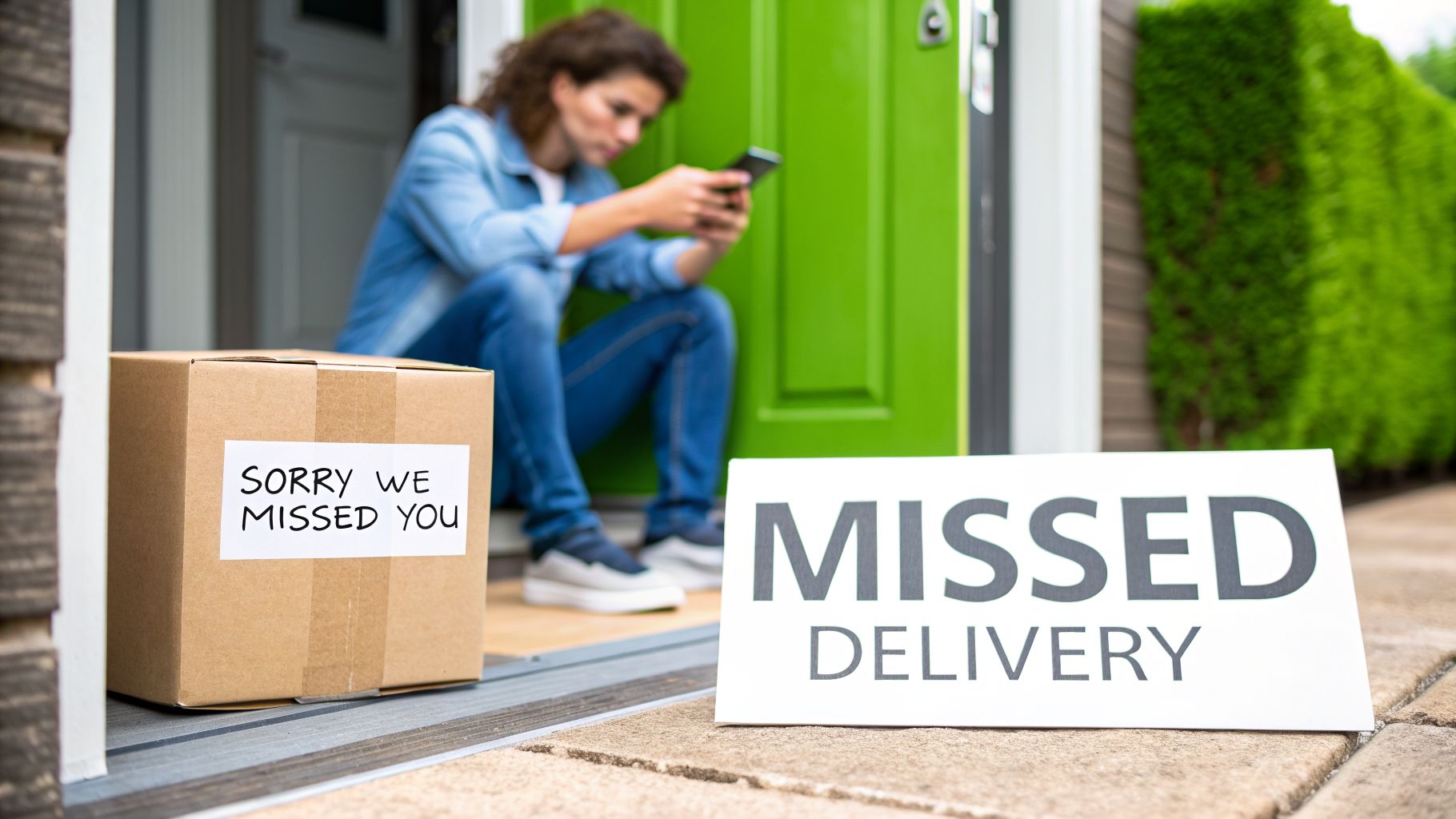
We’ve all been there. Your customer tracks their package with excitement, watching as its status flips to "Out for Delivery." But when they get home, there’s no parcel. Instead, a small, brightly coloured card is stuck to the door—a symbol of a failed delivery.
In that one moment, all the anticipation vanishes. It’s replaced by a deep sigh and a wave of frustration. The joy of receiving their order is gone, overshadowed by the new chore of getting to the Post Office during business hours, waiting in line, and proving their identity just to claim a package that was almost in their hands.
This isn't just a small inconvenience. It's a critical breakdown in the customer experience, and it's a direct reflection on your brand. Forcing a signature on delivery with Australia Post when it isn’t truly necessary creates a point of friction right when your customer’s happiness is on the line.
More Than Just an Annoyance
That initial feeling of disappointment does more than just ruin someone's afternoon; it has a real, measurable impact on customer loyalty. When a delivery is difficult, customers don't just blame the courier—they blame the brand they bought from. The whole experience feels clumsy and out of sync with their busy lives.
This is especially true for low-to-mid-value goods. Is the perceived security of a signature really worth risking a customer’s loyalty over a $30 t-shirt? For a growing number of savvy Australian businesses, the answer is a firm "no."
The link between signature requirements and customer happiness is undeniable. An Australia Post analysis of 3.3 million Net Promoter Score (NPS) responses found that first-time deliveries without signatures lead to far higher satisfaction. Forcing a signature can push the "carding rate" to 21% for apartments and 28% for houses, dragging your NPS score down with it.
The data is clear: retailers who thoughtfully dial back their use of signatures see a significant lift in customer satisfaction, with only a tiny uptick in lost parcel claims. You can dive into the numbers yourself by exploring the full Australian delivery experience report.
Rethinking Your Delivery Strategy
This really challenges us to think about what "secure delivery" actually means in 2026. Is it about getting a scribble on a screen, or is it about building a brand that customers trust to deliver an amazing experience from the first click to the final unboxing?
Taking a broader look at your shipping expenses is a great place to start. Learning how to reduce shipping costs in general can free up your budget and give you more flexibility to decide when add-ons like signature services are genuinely worth it.
Ultimately, it’s about making smart, informed choices. By understanding the real-world impact of your shipping policies, you can strike the perfect balance between protecting your parcels and delighting your customers. It’s also why it pays to get familiar with different service options and what they cost, which is something we break down in our guide to Australia Post courier charges.
How to Manage Your Delivery Preferences
Getting your delivery preferences just right is the secret to a smooth, frustration-free experience for you and your customers. Whether you're a business owner chasing efficiency or a customer who just wants their package without a fuss, taking charge of your signature on delivery Australia Post settings is surprisingly simple.
The good news is that both senders and receivers have control. As a business, you can set the rules right from your shipping desk. And as a customer, you can set their own preferences for every parcel that comes their way. Let's break down how it works from both sides.
For Senders Managing Shipments
When you're sending a parcel, you’re in the driver's seat. You get to decide the delivery rules for each and every item, and this choice happens right when you're creating the shipment in your software or the Australia Post portal.
Think of it this way:
- Requesting a Signature: Got a high-value item or a customer who wants that extra peace of mind? When you create the shipping label, you'll find an option under 'add-on services'. Simply tick the box for "Signature on Delivery." This tells the delivery driver in no uncertain terms that the parcel must be handed directly to someone.
- Giving Authority to Leave: On the flip side, you can pre-authorise the parcel to be left in a safe spot. By selecting "Authority to Leave" (ATL), you’re giving the driver permission to leave the item without a signature, as long as they find a secure location.
- Let Your Customer Decide: The gold standard here is to put the choice in your customer's hands at checkout. A simple checkbox asking, "Do you require a signature?" is all it takes. This empowers your customer and manages their expectations right from the very beginning.
Being proactive like this means you can match the shipping method to the item's value and, most importantly, to your customer's needs.
For Receivers Using MyPost
Your customers have a powerful tool they might not even know about: a personal Australia Post MyPost account. This free service is a game-changer, allowing them to set their own delivery rules that can sometimes even override what you, the sender, have selected.
By setting a permanent 'Authority to Leave' in their MyPost account, a customer can instruct Australia Post to always leave their parcels in a designated safe place. This preference can often convert a "Signature on Delivery" parcel into a convenient safe-dropped item, preventing a trip to the Post Office.
Here’s how easy it is for them to set it up:
- First, they log in to their MyPost account on the Australia Post website or app.
- From there, they’ll navigate to their Delivery Preferences.
- Finally, they can activate Authority to Leave for their address and even leave a specific note, like "Tuck it behind the big blue pot, please!"
A great tip is to educate your customers about this. A quick sentence in your order confirmation emails explaining how MyPost gives them control can work wonders for their delivery experience. And if you want to dive deeper into the logistics of parcel management, you can explore our helpful guide on arranging an AusPost courier pick up.
What to Do When Deliveries Go Wrong
Let's be honest—sometimes, deliveries just go wrong. Even with the best systems in place, a parcel can go astray. But don’t panic. Think of this as your game plan, packed with real-world advice to help you confidently navigate any hiccups with your deliveries across Australia.
The most common headache? A parcel is marked as "delivered" with a signature, but it’s absolutely nowhere to be found. Your first move is simple: ask Australia Post for a Proof of Delivery (POD). This is a digital copy of the signature, and it’s your best first clue to figuring out who signed for the package and where it might have ended up.
Launching a Parcel Investigation
If the POD doesn’t clear things up, or if your tracking seems frozen in time, it’s time to get a formal investigation underway. The good news is that both the sender and the receiver can kick this off directly on the Australia Post website or by giving their customer service team a call.
To get the ball rolling, make sure you have these details handy:
- Tracking Number: This is your golden ticket. It's the most critical piece of info.
- Sender and Receiver Details: Full names, addresses, and the best contact information for both parties.
- Parcel Contents and Value: A clear description of what’s in the box and its approximate worth.
Once you’ve lodged the enquiry, Australia Post will start tracing the parcel's journey step by step. If you've noticed your Australia Post tracking is not updating, this is the single most effective way to trigger a manual scan and jolt your parcel back into motion.
The process below shows the ideal delivery flow, where clear choices are made at every turn to prevent these kinds of issues from happening in the first place.
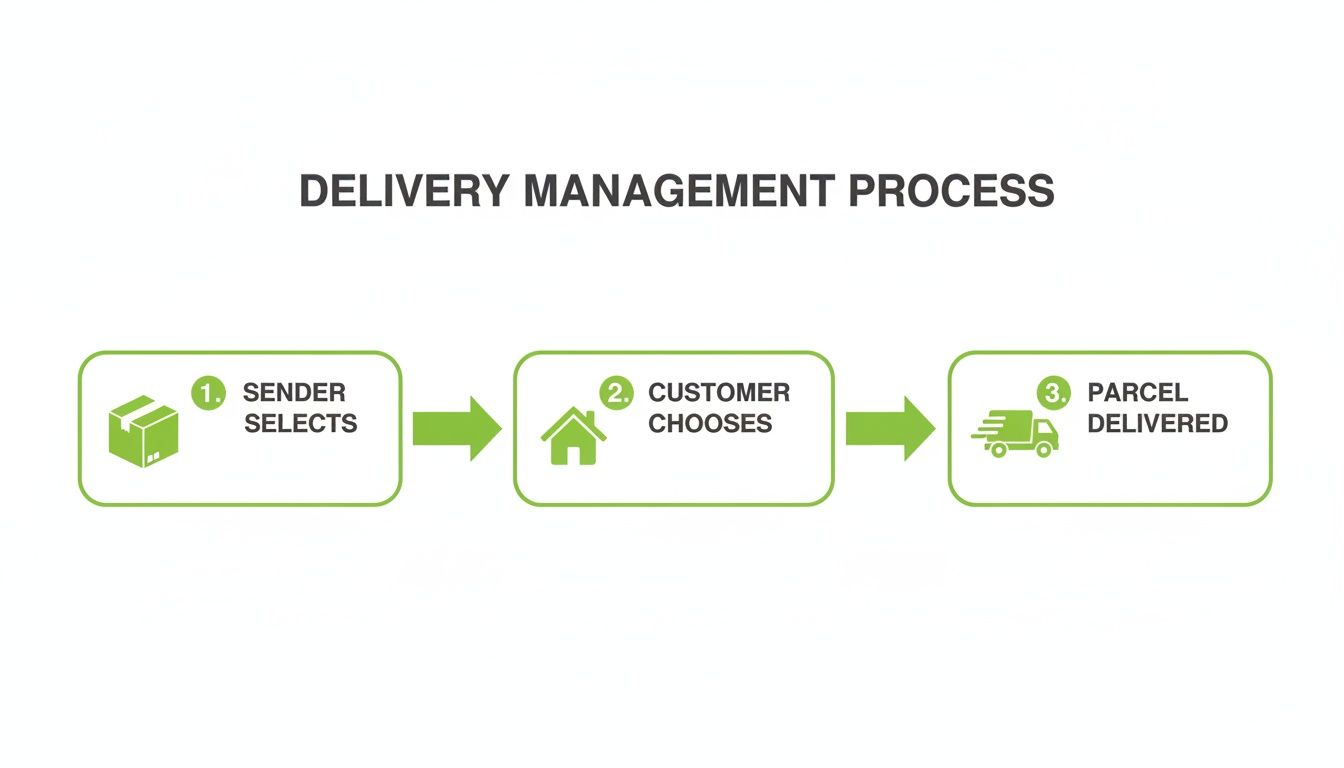
But when things don't go to plan, a formal investigation is your next powerful step.
What About Uncollected Parcels?
Here's another classic scenario: a parcel is "carded" and taken to the local Post Office for collection, but then it just sits there. Australia Post will hold onto these items for 10 business days before they begin the journey back to you, the sender. This can be a costly and frustrating loop for any business.
Here’s a pro tip: If you see a parcel sitting at the Post Office for more than a few days, be proactive! A quick, friendly reminder email to your customer can make all the difference, preventing the item from being returned and saving you the headache and cost of reshipment.
As you build out your delivery strategy, it’s also worth looking into modern alternatives like parcel delivery lockers. These secure, 24/7 collection points are a brilliant way to give your customers another option and ensure their order gets into their hands without the risk of a missed delivery.
A Smarter Shipping Approach for Your Business

When you're running an e-commerce business, you live and die by your shipping. While legacy carriers often lock you into their way of doing things, we believe the power should be in your hands, not theirs. For Australian businesses that depend on getting boxes and parcels delivered quickly, reliably, and at the cheapest prices, that kind of flexibility is everything.
That's precisely why we built Aeros Couriers. We started with a simple idea: what if you were in complete control? With our platform, signature on delivery in Australia isn't a rigid rule; it’s a simple option you can add when you book. This puts you in the driver's seat, letting you strike the perfect balance between security for the parcel and convenience for your customer.
Built for Australian Businesses
We get it. Shipping isn't a one-size-fits-all puzzle. You need a partner who can adapt to the unique rhythm of your business, giving you the speed and savings you need without boxing you into inflexible rules.
At Aeros Couriers, we offer more than just a delivery service. We provide a complete shipping toolkit designed for growth, with instant quotes for total transparency, included freight protection for your peace of mind, and the freedom to decide what each delivery needs, every single time.
This isn't just about moving boxes; it's about crafting the exact customer experience you want to deliver.
- Empower Your Customers: Why not let them decide? Give them the choice of a signature at checkout.
- Protect High-Value Goods: For those special items that need an extra layer of security, adding a signature requirement is just a click away.
- Prioritise Convenience: For everyday orders, you can skip the signature to make sure your customers get their items faster and with less fuss.
When you move beyond a rigid, old-school system, you can pour your energy into what really matters: making your customers happy and watching your business grow. We're here to give modern Australian businesses the smarter, more agile shipping approach they've always deserved.
Frequently Asked Questions
Getting your head around parcel delivery can feel a bit overwhelming at times, but it really doesn't need to be. To help you ship with total confidence, we've pulled together the most common questions we hear about using signature on delivery with Australia Post. Let's get you some clear, straightforward answers.
What Happens If No One Is Home for a Signature Parcel?
We've all been there. You're waiting for a package, but you can't be home all day. If a delivery requires a signature and no one is available to sign, the driver won't leave it on the doorstep.
Instead, they'll leave a collection card in the letterbox. The recipient then needs to pop down to the designated Post Office with that card and some photo ID to pick up their parcel. They usually have 10 business days to collect it.
Can Delivery Be Changed to Authority to Leave After Sending?
This is a common "oh no!" moment for senders. Generally, once a parcel needing a signature is on its way with Australia Post, the sender can't change that instruction.
However, the person receiving the parcel might have some control. If they have a MyPost account, they can often set their own delivery preferences, which can allow drivers to leave future parcels in a safe place, even if you originally requested a signature.
Who Is Liable If a Parcel with Authority to Leave Is Stolen?
Now, this is a big one for both senders and receivers. When you grant ‘Authority to Leave’ (ATL) — whether it's the sender's choice at booking or the receiver's preference in MyPost — you're making a trade-off.
Once the delivery driver scans the item as successfully delivered to a safe place, the responsibility for that parcel typically shifts to the receiver.
It's a tough but essential truth: the convenience of ATL means that if the parcel gets stolen from the doorstep, the sender and the carrier are usually no longer liable. It’s a calculated risk.
Is Signature on Delivery More Expensive?
Yes, it is. Australia Post treats Signature on Delivery as an add-on feature, which comes with an extra fee on top of the standard postage cost. The exact price can change depending on the parcel service you're using.
This extra cost is exactly why it’s so important for Australian businesses to be strategic. You're paying for the peace of mind that comes with a verified, in-person hand-off, so it's best reserved for items where that security is truly worth the investment.
For a genuinely flexible shipping partner built for Australian businesses, Aeros Couriers puts the control back in your hands. We offer instant quotes, reliable delivery across Australia, and the freedom to choose shipping options that fit your needs, without being locked into a rigid contract. See how much you could save with Aeros Couriers.
Courier quotes, tracking and support
Ready to send a parcel? Compare the available services for your postcodes, parcel dimensions and weight. For an existing delivery, use your consignment number to check tracking or ask our team for help.