
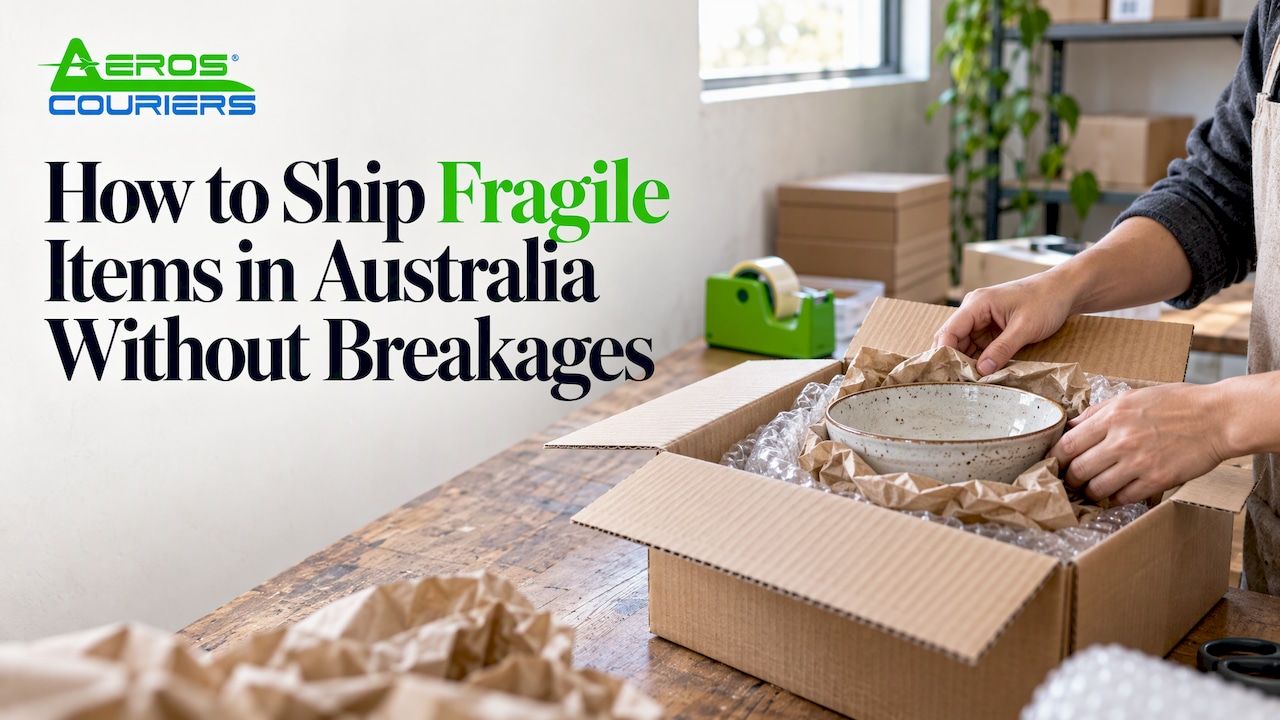
To ship fragile items in Australia safely, pack them in a sturdy box rather than a padded bag, wrap every piece individually, fill every gap so nothing can move, seal the carton firmly, and book a tracked service with cover that suits the value of what you are sending. A “fragile” sticker does not do the work for you. Your packing does.
This guide walks through each step in order, from choosing the carton to booking the courier and handling a damaged delivery. It suits anyone sending glassware, ceramics, electronics, candles, bottles or handmade goods, whether it is a single gift or a weekly run of online orders.
TL;DR
- Use a box, not a padded bag, and leave roughly 5 cm of cushioning on every side of the item, including top and bottom.
- Wrap each item separately, then fill all empty space until a gentle shake produces no movement at all.
- For very valuable or delicate pieces, use the box-in-box method with cushioning between the two cartons.
- Treat the “fragile” label as a prompt for handlers, not a guarantee, and choose insurance to match the item’s value.
- If something arrives broken, photograph it before you do anything else and keep the packaging, label and receipt.
Table of Contents
- Why fragile parcels break in transit
- Step 1: Choose the right box
- Step 2: Wrap every item individually
- Step 3: Fill every gap so nothing moves
- Step 4: Use the box-in-box method for delicate or valuable pieces
- Step 5: Seal and label the parcel
- Step 6: Choose the right service and cover
- Ready to book? Compare couriers in one place
- What to do if a fragile item arrives damaged
- Common mistakes when shipping fragile items
- FAQ
- Sources
Why fragile parcels break in transit
Parcels are sorted, loaded, stacked, unloaded and carried several times between pickup and your recipient’s door. Most breakages come from two things: contents that shift inside the box, and a box that crushes or flexes when other parcels sit on top of it.
The Australian Cultural Heritage and Artefact Association (ACHAA) puts it in practical terms in its introductory shipping and packaging guide. Its test is to ask whether you would be comfortable dropping the packed item from shoulder height, or tossing it across a room, and trust it to survive. It also warns that a FRAGILE sticker will not guarantee soft handling at every stage of the journey.
That is the right mindset. Pack as though the parcel will be treated roughly, because at some point in a long run of handling, it may be.
Step 1: Choose the right box
The same ACHAA guide says the safest option for fragile goods is always a box rather than a padded bag. Bags give you no crush protection and very little room for cushioning.
Pick the carton by weight
PackQueen’s step-by-step packing guide suggests a single-wall carton for items under 2 kg, a double-wall carton for 2 to 10 kg, and a reinforced carton for anything 10 kg or more. Double-wall corrugated board has two corrugated layers sandwiched between three liners, which The Box Man says gives much better stacking and crush strength for fragile goods that pass through many hands, including long-distance runs.
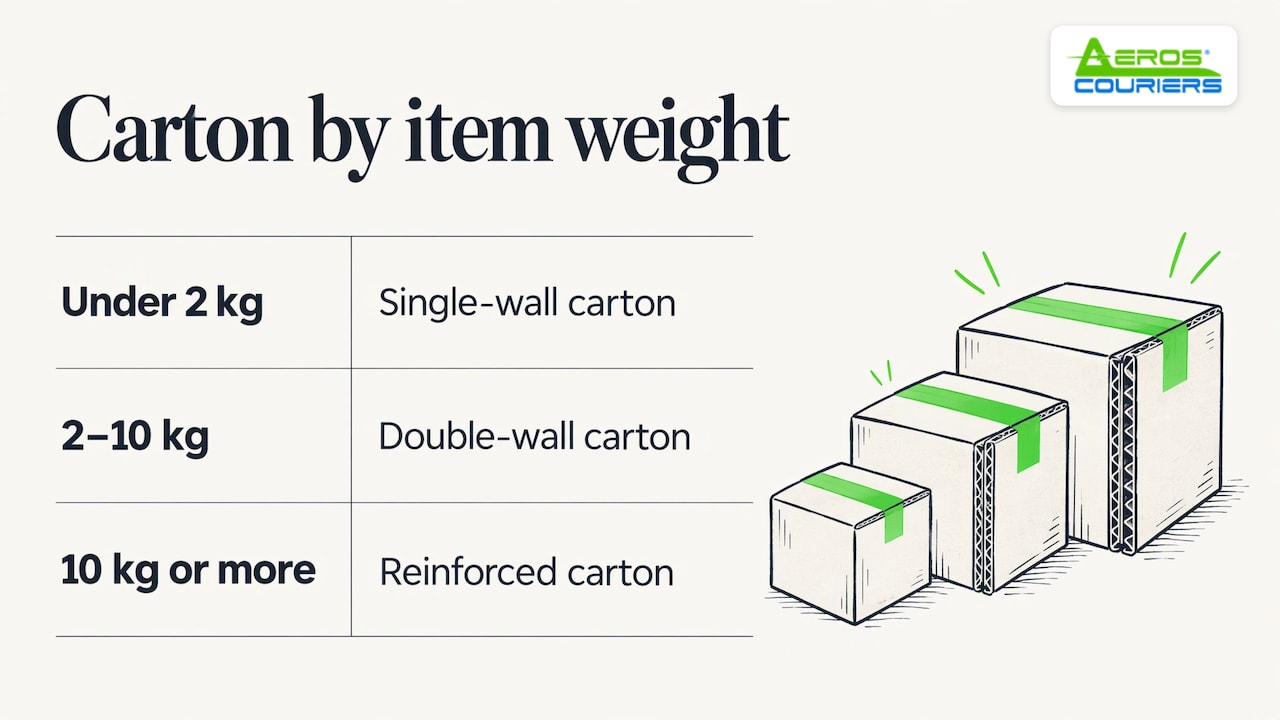
A practical rule: if the item is heavy, awkward or cannot absorb any impact at all, step up to double-wall.
Allow room for cushioning
The box must be bigger than the item, but not by much. QIS Packaging recommends a carton that leaves about 5 cm of clear space on every side of the item, top and bottom included, and a new or near-new carton for genuinely fragile goods. Premium Packaging gives a similar range, at least 40 to 50 mm of cushioning on all sides, with no direct contact between the product and the box walls.
Reused boxes can look fine and still have weakened corners and walls. For a piece you care about, start with a fresh carton.
When the item is large or awkward
Some fragile goods are simply too big or oddly shaped for a standard carton. In those cases, purpose-built protection matters more than a clever wrap. Crating is one approach used for high-value, bulky goods, and this look at shipping in a crate shows how a rigid outer shell changes what a parcel can withstand. If you are sending something big but not extreme, our guide to sending big parcels cheaply across Australia covers size and weight in more detail.
Step 2: Wrap every item individually
Never pack two fragile pieces touching each other. Wrap each one on its own so that nothing can knock against its neighbour.
Bubble wrap done properly
Aussiefast explains that the bubble size should suit the item (smaller item, smaller bubbles) and that the bubbles should face inwards towards the product. QIS Packaging describes the same method: bubble side against the item, flat film facing outward, wrapped in full overlapping turns rather than tight spirals, and held with a strip of tape rather than tape wound around the whole bundle.
How much wrap you need depends on weight. QIS Packaging’s guide suggests:
| Item weight | Suggested wrap |
|---|---|
| Under 1 kg | One or two wraps of 10 mm bubble |
| 1 kg to 5 kg | Two to three wraps of 10 mm, or one wrap of 20 mm, plus firm void fill under and over |
| Over 5 kg | 20 mm bubble for the first wrap, plus a built-up cushioning floor in the base of the carton |
PackQueen recommends 2 to 3 layers of bubble wrap or honeycomb paper per item. For glassware, ceramics and porcelain, Pakio describes a two-layer technique: small 10 mm bubble against the surface to avoid scratching, then 20 mm or 32 mm bubble as the outer cushion.
Protect corners, handles and spouts
The weak points of most breakable items stick out: handles, spouts, stems, lids and corners. QIS Packaging suggests building extra bubble there until these areas are the thickest part of the parcel. Wrap detachable parts, such as lids, separately so they cannot knock against the main piece.
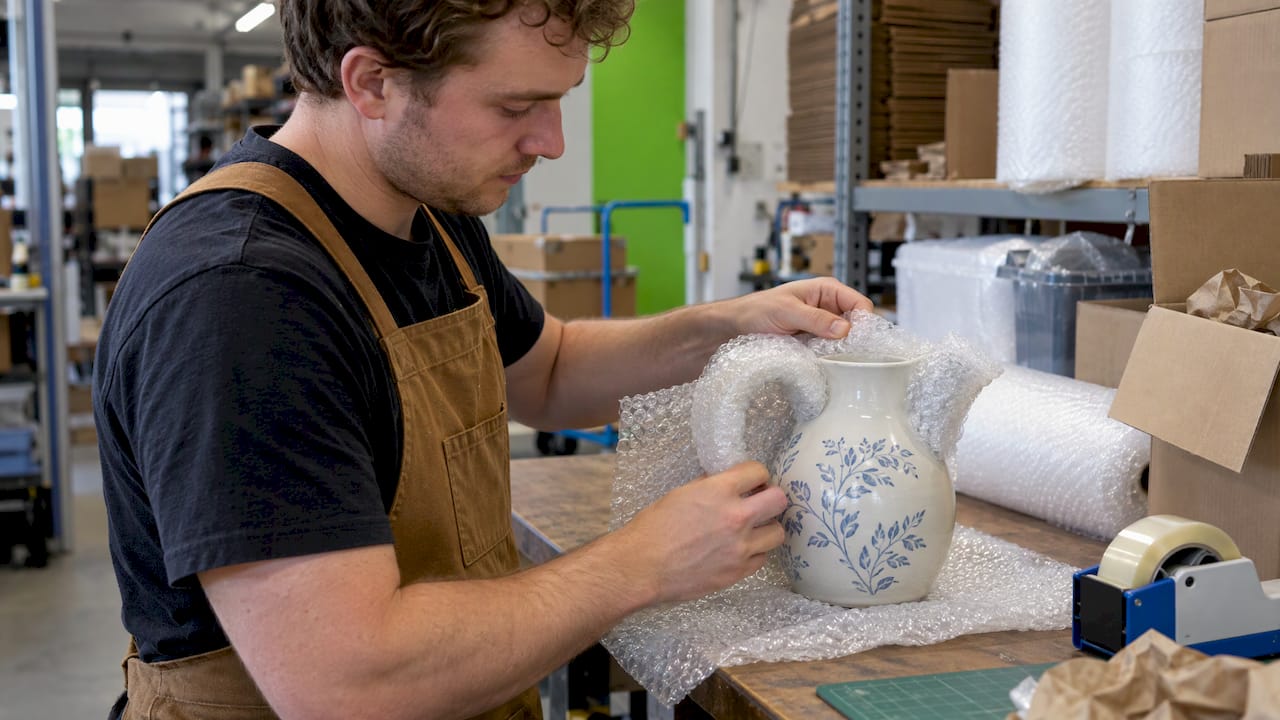
For hollow items like cups, jugs or pots, ACHAA recommends adding padding inside as well, which reinforces the structure from within.
Alternatives to bubble wrap
- Tissue paper works well against scratches and is a good first layer on delicate finishes. Aussiefast advises against newspaper, because the ink can stain valuables.
- Foam wrap suits electronics and polished metalware. Stanley Packaging notes it keeps direct contact with delicate surfaces and resists compression, though it absorbs less energy on sharp impacts than bubble.
- Kraft paper is the same source’s pick for the most cost-effective and cleanest eco-friendly option.
Step 3: Fill every gap so nothing moves
This is the step most people rush, and it matters most. Stanley Packaging observes that for most e-commerce parcels, the main job is preventing movement rather than surviving a big drop. A wrapped item that can slide even a few centimetres will hit the walls.
A reliable sequence, drawn from QIS Packaging’s checklist:
- Seal the bottom seam of the carton properly before loading.
- Put a layer of void fill in the base.
- Centre the wrapped item so it sits away from every wall.
- Fill the sides and corners until the item is held firmly.
- Add a top layer so the contents press very slightly against the lid when it closes.
- Give the box a gentle shake. If you can feel or hear anything shift, open it and add more fill.
PackQueen sums up the test bluntly: movement equals breakage. For glassware, bottles and ceramics, Premium Packaging recommends double-layer cushioning at the base, since that is where an impact lands when a box is set down hard.
Step 4: Use the box-in-box method for delicate or valuable pieces
For extremely fragile or valuable items, double-boxing adds a second line of defence. Big Red Packaging describes the method: pack the item in a smaller box filled with void fill, then place that box inside a larger carton with cushioning between the two, making sure the inner box cannot move.
Consider box-in-box when:
- the item is irreplaceable or high value, such as a vase, antique, sculpture or tea set;
- the parcel is travelling a long way, for example across the country, with several handling points;
- you are sending several fragile pieces that each need their own protected inner carton;
- the item cannot absorb any impact at all.
Australia’s own consumer and cultural guidance supports this approach too: ACHAA advises assessing fragile items such as ceramics, sculpture and pottery individually rather than treating them as one batch.
For a deeper walk-through of careful packing, including items you are moving rather than posting, see our guide to packing fragile items with museum-grade care.
Step 5: Seal and label the parcel
Use good-quality packaging tape and the H-taping method: one strip along the centre seam, then a strip along each edge, forming an H on top and bottom. This closes the flaps and reinforces the seams that take the most stress.
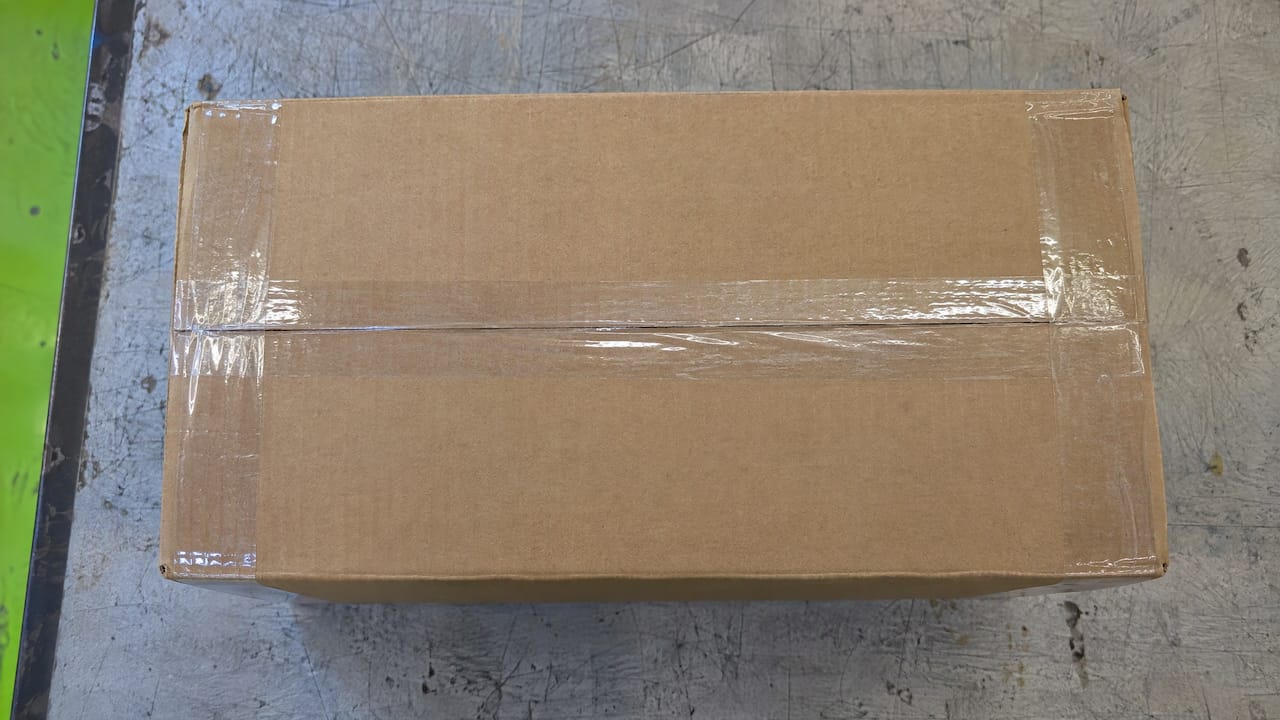
Put the delivery address label on the largest flat surface and keep the tracking details somewhere safe. Add a fragile label if you like, but treat it as a courtesy. As QIS Packaging points out, fragile labelling is a prompt for handlers rather than a guarantee, and a damage claim is generally assessed on whether the packaging was adequate, not whether a sticker was present.
A useful habit: photograph the packed, open box before sealing and again once it is closed. Those images show how well you packed if a claim ever comes up.
Step 6: Choose the right service and cover
Packing gets the item to the door in one piece most of the time. Your service choice and insurance cover the rest.
Match speed to risk
Fewer handling points usually means fewer chances for damage. Express and same-day services can suit fragile goods because the parcel spends less time in the network. If you are comparing options, our parcel delivery service page explains what we offer for parcels, and our guide to choosing an Australian courier company covers what to compare.
Check what insurance covers
Cover terms differ between carriers and insurers, so read them before you book. Packaging is the common thread: inadequately packed goods are the sort of thing cover can exclude. If you want to understand how cover is priced and when it makes sense, see what courier insurance costs in Australia and our page on ecommerce shipping insurance for fast AU parcels.
A sensible rule: the more the item is worth, or the harder it is to replace, the more it makes sense to declare its full value and take cover that matches.
Our view on shipping fragile goods
We see the same pattern all the time: people spend their time choosing a courier and almost none on the box. We think it should be the other way round, or at least equal. Good packing is what protects the item, and a good booking is what protects you if something still goes wrong.
That is why we built Aeros Couriers around transparency. You compare rates from major carriers in one place, see the price up front, and book door-to-door pickup with a printable label, tracking and insurance in the same process. Our pricing is designed to be flat and all-inclusive, so you are not hit with fuel surcharges or handling fees after the fact.
For fragile items, we also believe a human on the end of the line matters. If a parcel is delayed or something looks wrong, you can reach responsive Australian support quickly instead of chasing a faceless queue. Reward points on bookings can then bring your future shipping costs down, which suits small businesses that ship fragile stock week after week.
Aeros
Ready to book? Compare couriers in one place
Once your box is packed and shaken, the booking should take minutes. With Aeros Couriers you can send parcels up to 25 kg Australia-wide, compare rates instantly from major carriers, and choose standard, express or same-day delivery, with door-to-door pickup, shipment tracking and insurance available.
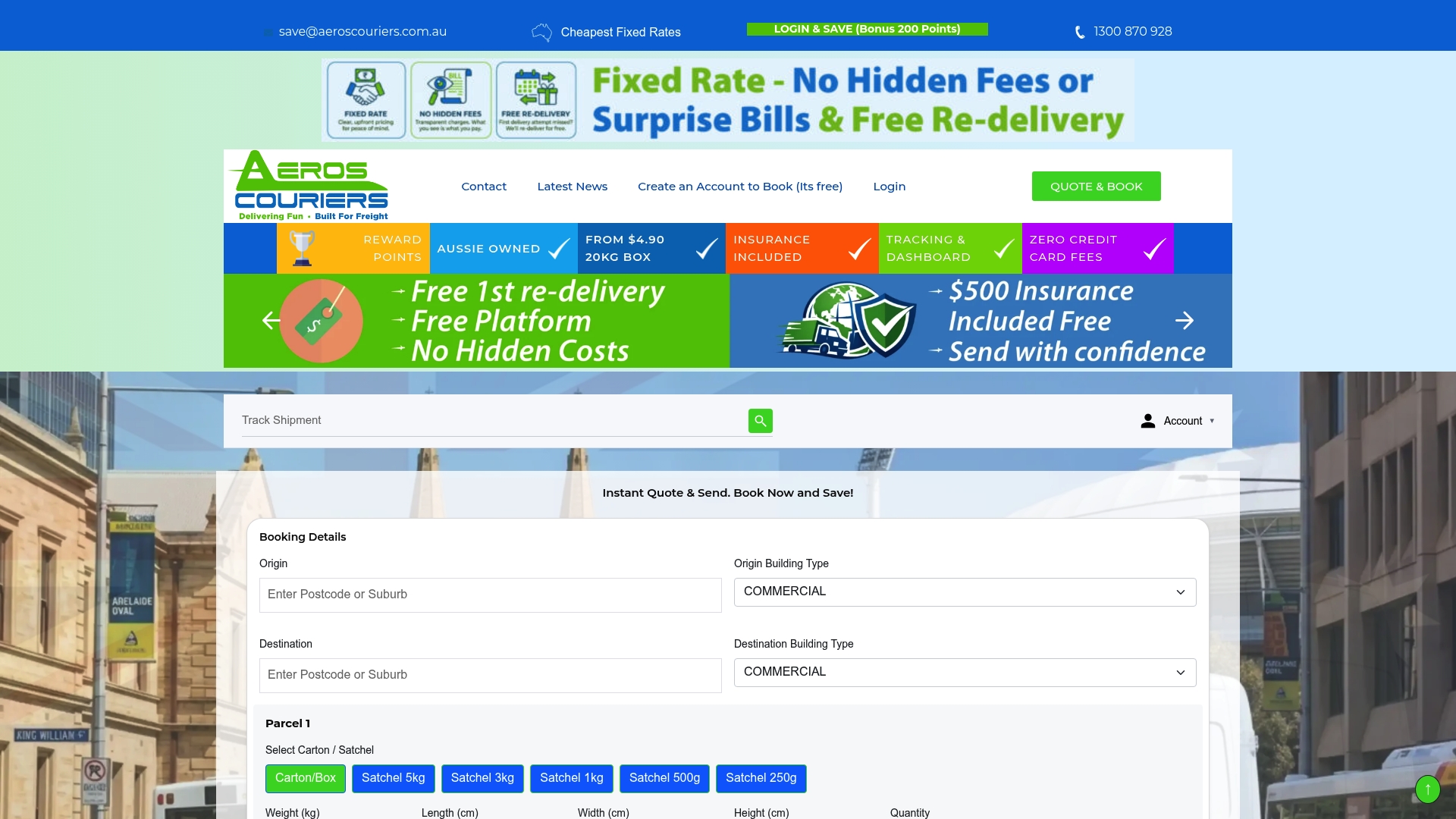
Start on our parcel delivery service page, or go straight to compare and book couriers for freight and larger consignments. Tell us what is inside when you book, so you can choose cover that fits.
What to do if a fragile item arrives damaged
Act quickly and keep everything. A calm, documented claim goes much further than a rushed one.
- Photograph the damage before you move or repair anything. The Western Australian Office of Consumer Protection advises taking a photo of the damage for your own records before returning a product.
- Keep the box and the packing materials. They show how the item was packed and how the parcel was handled.
- Keep your paperwork: the receipt or invoice, shipping label and tracking number.
- Contact your courier or booking platform promptly. Claim windows differ between carriers and services, so do not leave it.
- If you bought the item online, the same Consumer Protection WA page explains that under the Australian Consumer Law, the retailer is responsible for delivery issues, not the courier. If the item arrives broken, you may be entitled to a refund, repair or replacement, and the retailer should cover return postage.
- Escalate if needed. For complaints involving a postal carrier, the same page points to the Postal Industry Ombudsman.
If you booked through us, contact our support team with your photos and tracking number and we will help you work through it.
Common mistakes when shipping fragile items
- Relying on a padded bag. It gives almost no crush protection for hard, breakable goods.
- Using an oversized box with too little fill. Empty space is how items travel and strike the walls.
- Packing items touching one another. Each piece needs its own wrap.
- Using newspaper against valuable surfaces. Ink can stain, so use tissue or kraft paper first.
- Skipping the shake test. It takes ten seconds and catches most movement problems.
- Trusting the sticker. It prompts handlers but does not protect the item.
- Under-declaring value. Cover is only as good as the amount you declare and the packing behind it.
FAQ
Can I ship fragile items with a courier in Australia?
Yes. Couriers carry fragile goods every day, but no carrier can promise soft handling at every stage. Your packing is the main protection, so use a sturdy box, individual wrapping and plenty of fill. Then book a tracked service with insurance that matches the item’s value.
How much space should I leave around a fragile item in the box?
Australian packaging suppliers suggest roughly 4 to 5 cm of cushioning on every side, including the top and bottom. The aim is that the item never touches the box walls. Check by gently shaking the sealed box: if anything moves, add more void fill.
Is bubble wrap enough on its own?
For lighter items, two or three wraps of bubble plus void fill in a good carton is usually fine. For heavy, valuable or irreplaceable pieces, add a second box and cushioning between the two. Choose the bubble size to suit the item, and keep the bubbles facing inwards.
Does a fragile sticker guarantee gentle handling?
No. A fragile label is a prompt for handlers, not a guarantee, and claims are typically judged on the packaging rather than the sticker. Put your effort into the box, wrap and fill, and use the sticker as an extra.
What should I do first if my parcel arrives broken?
Photograph the damage, keep the packaging and your paperwork, then contact the courier or booking platform straight away. If you bought the item from an online retailer, ask the retailer for a remedy too, since under Australian Consumer Law they are responsible for delivery issues.
Sources
- ACHAA’s Introductory Guide to Shipping and Packaging
- How to Package Fragile Items for Shipping, PackQueen
- Shipping Box Sizes guide, The Box Man
- How to Pack Fragile Items for Shipping (AU Guide), QIS Packaging
- Shipping Fragile Items: How to Package Breakables, Premium Packaging
- How to Protect Fragile Items During Transport, Aussiefast
- Bubble Wrap Buying Guide Australia, Pakio
- Void Fill Comparison, Stanley Packaging
- How to Package Fragile Items: A Complete Guide, Big Red Packaging
- Consumer Protection WA: shipping insurance and damaged deliveries
- Shipping in a crate
Recommended
- 5 Moves to Pack Fragile Items for Moving With Museum Grade Care
- How to Ship a Guitar by Courier in Australia
Courier quotes, tracking and support
Ready to send a parcel? Compare the available services for your postcodes, parcel dimensions and weight. For an existing delivery, use your consignment number to check tracking or ask our team for help.