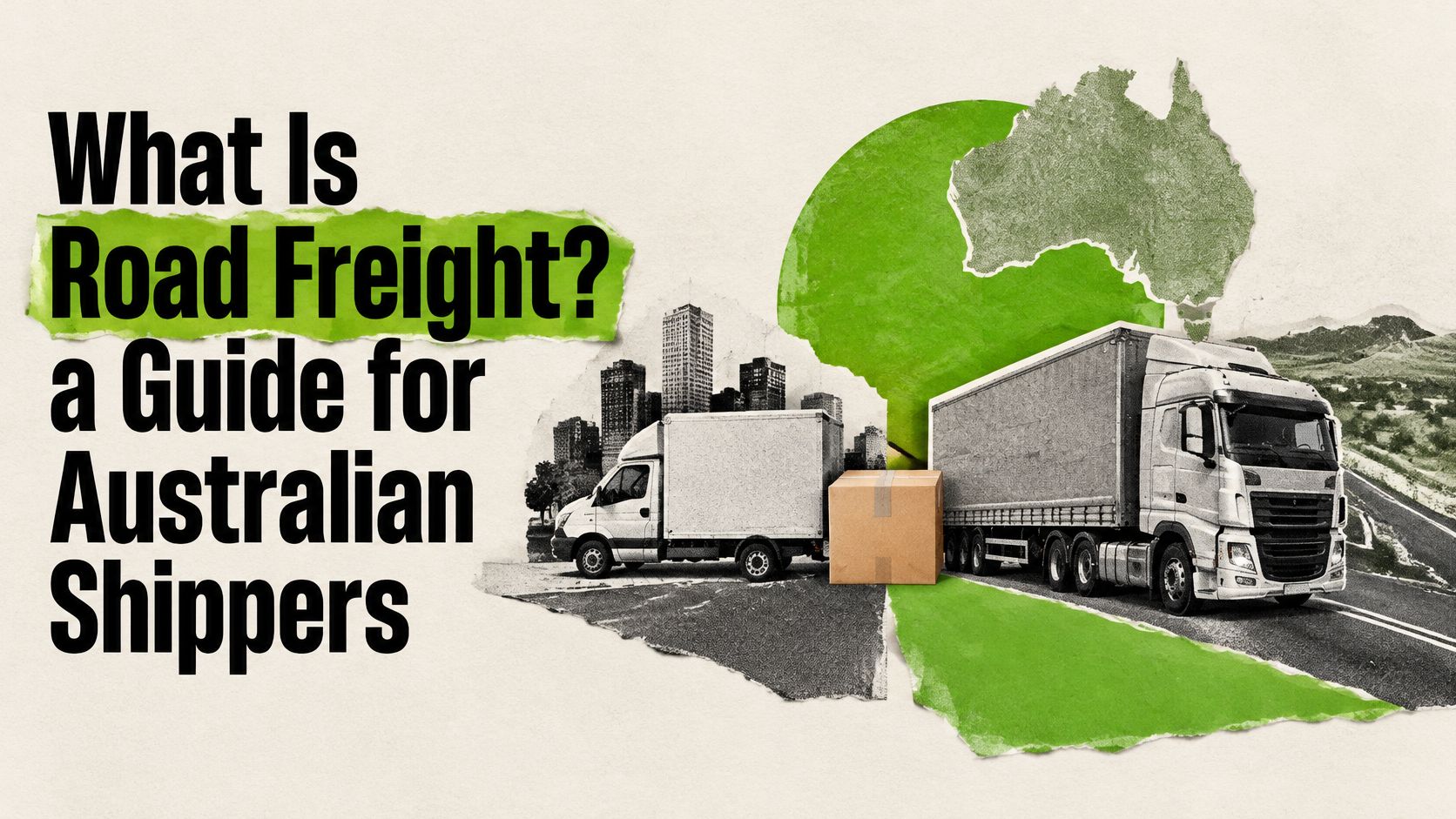
Road freight is the movement of goods by trucks and other road vehicles, measured in tonne-kilometres, which means weight carried multiplied by distance travelled.
Australia's total domestic freight task reached an estimated 786 billion tonne-kilometres in 2024–25, its highest recorded level, according to the Bureau of Infrastructure and Transport Research Economics freight yearbook. For someone sending a box, that enormous network becomes practical through a few simple decisions: how you pack, what you measure and when the parcel needs to arrive.
You don't need to understand truck operations to send confidently. You do need to understand what you're booking. The focus here is domestic shipping within Australia, helping households and businesses find fast box and parcel deliveries Australia-wide at the lowest suitable quoted price, not shipping pallets.
What Road Freight Means and Why It Matters
Think of the tonne-kilometre as a yardstick for transport work. Moving the same weight farther creates a larger freight task, even if the goods fit in exactly the same vehicle.
Under BITRE's freight measurement framework, one tonne moved one kilometre equals one tonne-kilometre, and road transport carried approximately 253 billion tonne-kilometres in 2024–25, roughly 32% of the domestic total. That measurement lets planners compare short, heavy movements with longer, lighter movements without only counting trucks.
What that means for your box
Say a homewares shop packs an order for a customer across town. Another customer orders the same product for delivery interstate. The contents and packaging might be identical, but the interstate shipment requires a longer transport journey.
That doesn't mean a parcel quote is calculated by multiplying its weight by a national freight rate. Tonne-kilometres measure activity, not a retail price list. Carriers also need to account for vehicle space, handling, route coverage and the service selected.
The network carries much more than online shopping orders. Food, retail stock, manufactured goods and construction supplies all travel by road, while parcel carriers organise their own collection, sorting and delivery operations within that wider system.
Useful distinction: Freight describes the goods and their movement. A courier service is a way of arranging that movement for a particular shipment.
From a single booking to organised dispatch
For a household, the essentials might fit on a small booking checklist. For a growing shop, stock records, dispatch details and freight bookings need to stay aligned so staff don't send an order to an outdated address.
Businesses reaching that stage can use Wistec's resource to compare ERP software for logistics when assessing how inventory and dispatch information should work together.
Whether you're packing your first customer order, sending belongings interstate or comparing carriers, the practical question isn't just “what is road freight?” It's which road service suits this box, this address and this deadline?
How a Parcel Moves By Road and How Long It Takes
A parcel travelling from a suburban sender to an interstate household doesn't necessarily stay in the collection vehicle. It usually moves through a coordinated network, with different vehicles handling different parts of the journey.
The Australian Bureau of Statistics road freight analysis reported that articulated trucks carried 77.0% of measured road freight work in 2017–18. These larger vehicles suit line-haul movements, while smaller rigid vehicles commonly support local collection and delivery.
Follow the parcel through the network
Collection begins the physical journey. The driver collects the labelled parcel from the sender's door, or the sender lodges it at an accepted depot. Packaging needs to be finished before collection, with the label visible and access instructions accurate.
At the local hub, staff sort the parcel and consolidate it with other consignments heading towards the same destination. Think of this as passengers gathering at a station before boarding a connecting service. The parcel may wait for the scheduled departure rather than leave immediately after arrival.
The following flow shows the main handovers.
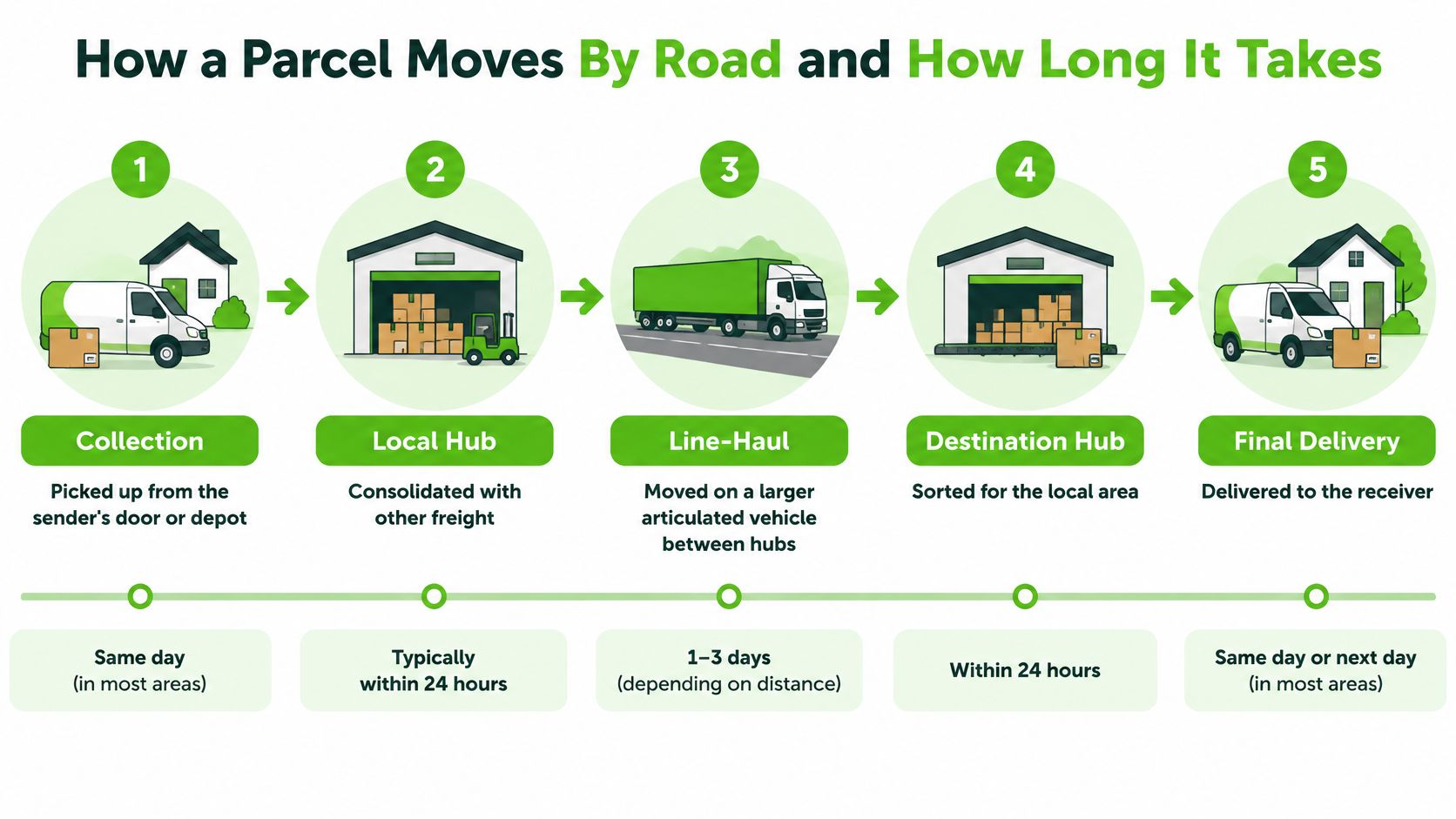
During line-haul, a larger vehicle carries consolidated freight between hubs. This is the long-distance road leg, not the whole delivery service. Arrival at the destination city still leaves sorting and local distribution to complete.
At the destination hub, staff sort consignments for the receiving area and transfer them to a suitable local vehicle. Final delivery then takes the parcel to the home or business, subject to the booked delivery conditions and safe access.
Read tracking as milestones, not continuous movement
A tracking scan may record collection, sorting, a hub arrival or a delivery outcome. It isn't necessarily a live location update, and a gap between scans doesn't prove that the parcel has stopped moving.
Likewise, a hub arrival doesn't mean delivery is imminent. The shipment may still need to meet a local dispatch run. Don't assume a delay happened on the highway when the next connection or sorting step could explain the wait.
For readers interested in the technology behind fleet visibility, Faberwork LLC's explanation of virtual boundaries for vehicle fleets provides context for location-based fleet events. Vehicle location and an individual parcel's tracking record are related tools, but they aren't interchangeable.
Match the delivery promise to the route
A federal analysis of road and rail freight identifies road as generally preferred for short-distance and time-sensitive freight, while warning that first- and last-mile access can reduce its cost advantage. Picking up from a congested street or reaching a rural property adds work beyond the main road journey.
We run deliveries to metro, regional and rural zones across Australia. Remote or rural deliveries may have additional costs, which are included in the quote.
What changes transit by route type
| Route type | What adds time | What the shipper can do |
|---|---|---|
| Metro within one city | Few handovers, peak-hour traffic | Book early in the day and confirm the address |
| Regional town | Longer line-haul, fewer daily runs | Check postcode coverage at the quote stage |
| Remote or rural | Access time, possible surcharge included in the quote | Build extra days into the deadline |
| Interstate | Long line-haul and hub transfers | Allow the full transit window before a promised date |
These are route characteristics, not guaranteed delivery windows. Check the available collection date and quoted transit estimate before telling a customer when to expect an order.
For a shipment crossing state borders, use the interstate transport information to understand the service context. Set the promised arrival date from the complete journey, including collection, transfers and final delivery, rather than the driving time between cities.
Dedicated Versus Shared Road Freight
A dedicated vehicle is like a private taxi. Shared freight is more like a bus: several customers share the transport cost, but the route includes other stops and handling.
Full truckload, or FTL, means a vehicle is dedicated to a shipper's freight. The vehicle can move directly from origin to destination with few stops, even when the shipper hasn't physically filled every available space.
Less-than-truckload, or LTL, means several shippers' consignments share vehicle capacity. Consolidation hubs bring those consignments together and separate them for onward delivery.
FTL versus LTL at a glance
| Feature | Full truckload (FTL) | Less-than-truckload (LTL) |
|---|---|---|
| Shipment size | Dedicates a whole vehicle to one shipper | Shares one vehicle across several consignments |
| Routing | Direct from origin to destination | Multi-stop with consolidation hubs |
| Handovers | Usually none in transit | One or more transfers |
| Transit on long routes | Usually faster | Often slower because of stops |
| Cost basis | Whole-vehicle price, cheaper per unit when full | Shared cost, cheaper for small loads |
| Typical fit | Large steady loads for one business | Small, irregular boxes and parcels |
For box and parcel senders, shared transport is usually the relevant model. Parcel networks aren't necessarily marketed as LTL services, but they use the same broad economic principle: customers share vehicle capacity instead of each paying for an entire truck.
A carton or satchel is assessed using the shipment's characteristics, including weight and occupied space. You're not buying exclusive use of the collection vehicle just because a driver comes to your door.
A dedicated truck can be economical when you use most of its capacity. A small parcel usually benefits from sharing the journey.
Choose by utilisation, not terminology
The break-even point isn't a universal shipment weight. Compare the whole-vehicle quote with the total shared-freight quote for the actual consignment. When a load fills most of a vehicle, a dedicated price can become cheaper per item; when it fills only a small share, paying for shared capacity generally makes more sense.
A small online seller dispatching occasional cartons doesn't need to organise a full truckload operation. The useful questions are whether the booked service is direct or network-based, whether transfers are involved and what transit window applies.
When reviewing domestic freight express information, don't read “express” as a promise of exclusive vehicle use. Service speed and vehicle exclusivity are different characteristics, and the booking terms should make clear what you're purchasing.
What Drives the Cost of Sending Road Freight
Consider a hypothetical pair of 10 kg parcels containing identical goods. One uses a snug, protective carton; the other sits in an oversized box surrounded by unnecessary void fill.
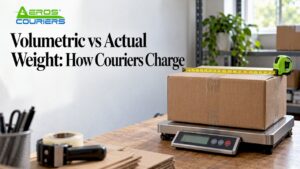
Both weigh the same, but the larger carton occupies more vehicle space. If the carrier applies volumetric charging, that wasted space can increase the chargeable weight. The applicable calculation comes from the selected carrier's rules, so don't assume every service uses the same formula.
The underlying transport task is substantial: federal infrastructure figures recorded 249 billion tonne-kilometres of road freight in 2023–24, equal to 32% of domestic freight travel. For an individual sender, the practical lesson is simpler: avoid paying to move unnecessary weight or empty space.
Pack for protection without excess bulk
Use a sound carton matched to the contents. Cushion fragile surfaces, stop items moving inside and seal the box with packing tape. Don't shrink packaging so aggressively that the contents press against the carton walls or lose needed protection.
Freight operations involve scanning and handling as well as driving.
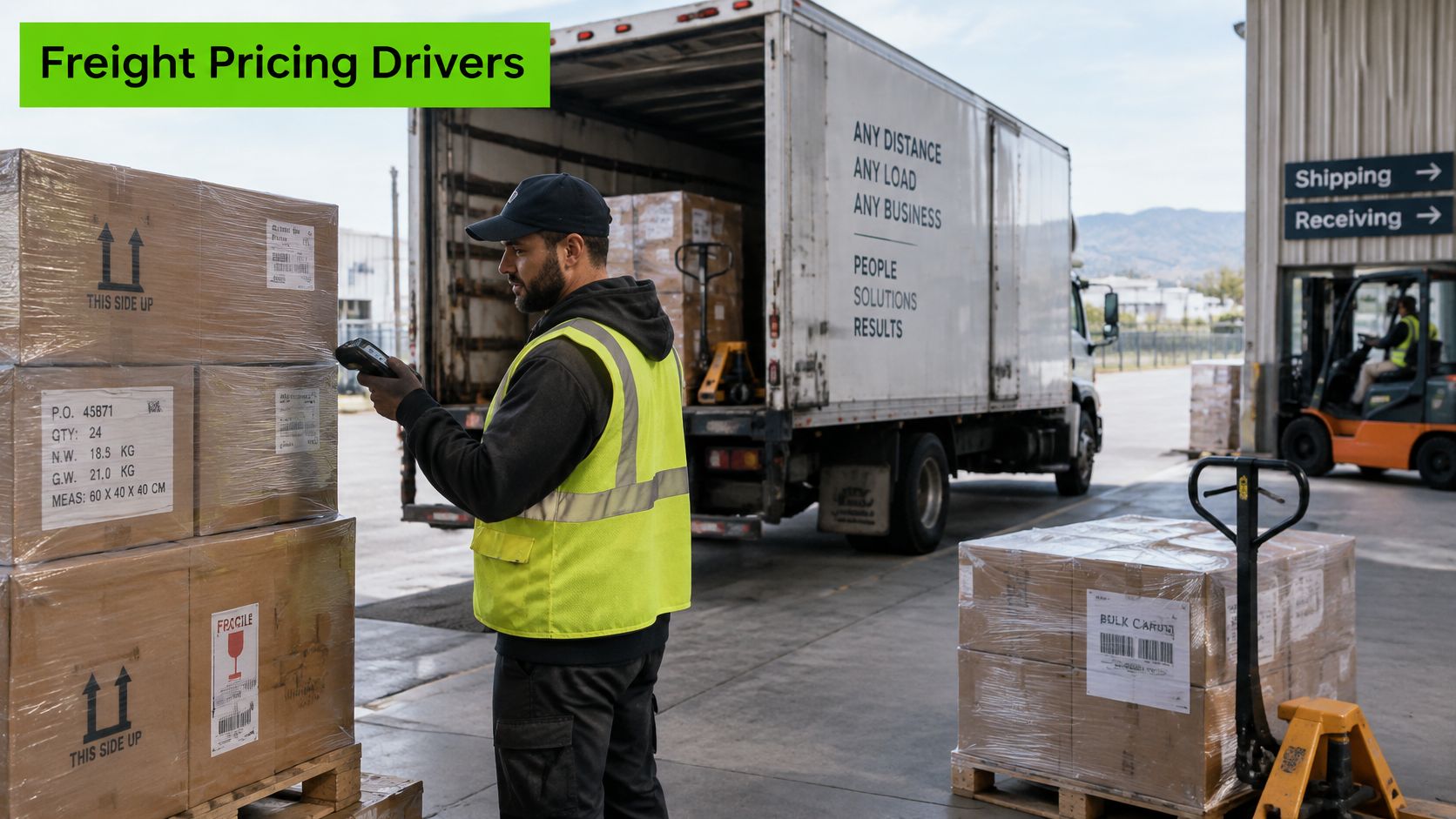
Keep the booking category aligned with what you're sending. A pallet freight quote belongs to a different shipment category, not the box and parcel booking considered here.
Use the quote drivers as a checklist
Cost drivers and what they do to a quote
| Cost driver | How it affects the quote | What the shipper can do |
|---|---|---|
| Packed weight | Heavier cartons use more of the freight task | Pack to the actual contents |
| Packed dimensions | Bulky boxes take more vehicle space | Use a carton sized to the contents |
| Route length | Longer routes add more freight task | Compare origin and destination postcodes at rate check |
| Pickup and delivery location | Remote or rural access can add cost | Confirm postcode coverage at quote stage |
| Service tier | Faster tiers generally cost more | Choose the tier that fits the deadline |
| Extra handling | Redelivery and redirection fees | Choose a delivery window and address that avoids failed attempts |
We check courier rates online for the route using your origin and destination postcodes, packed weight and parcel dimensions. Weigh the sealed parcel on suitable scales and measure its outside length, width and height, including any bulges.
The cheapest initial quote isn't necessarily the cheapest completed delivery. We provide one free redelivery; subsequent redeliveries are charged at the courier's variable rate, confirmed once final costs are known. Redirection fees apply to all consignments we're asked to redirect.
Before paying: Measure first, quote second, then decide whether better packaging could reduce the cost without compromising protection.
Chain of Responsibility and Safe Loading Rules
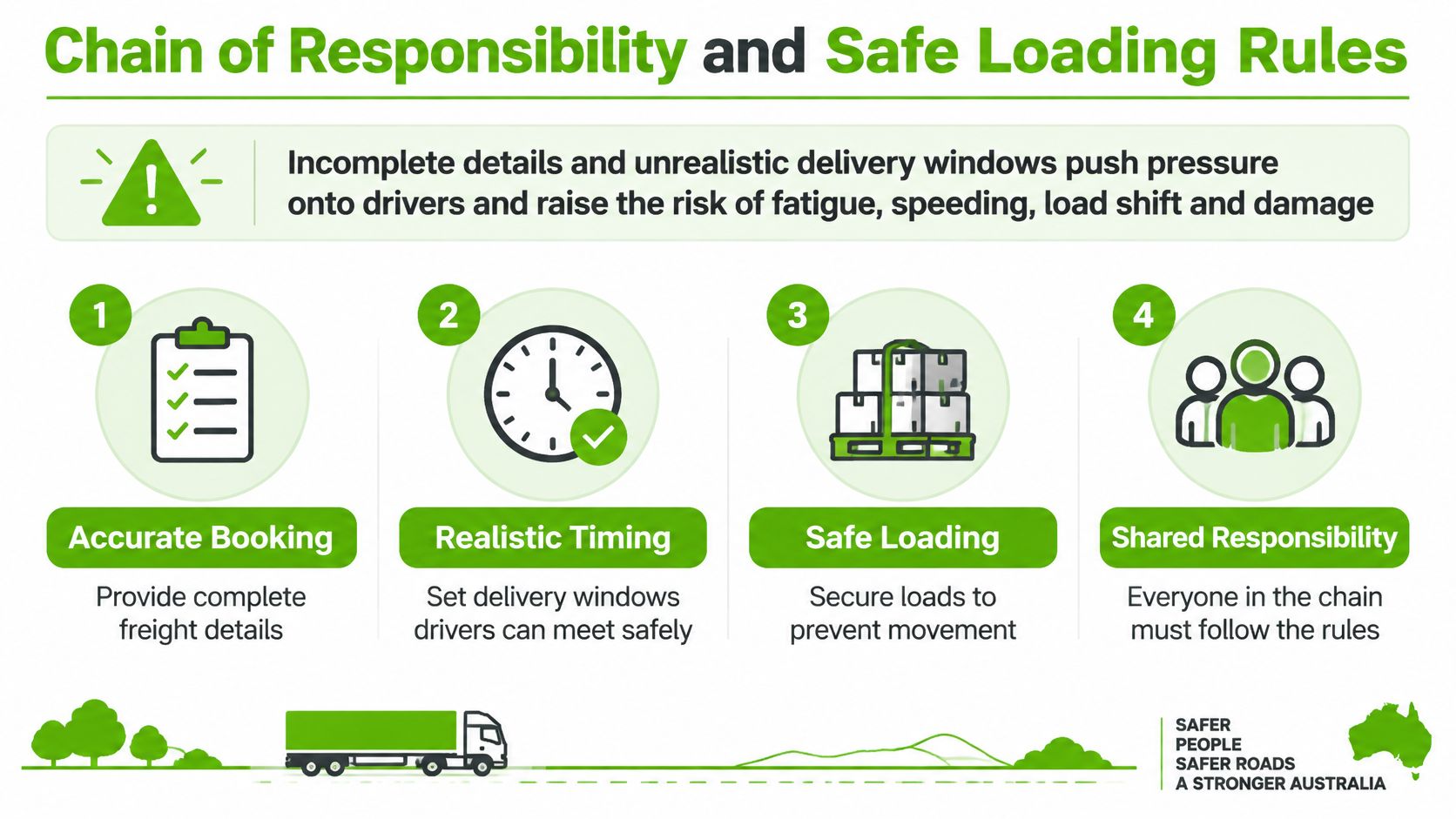
An inaccurate booking or an impossible delivery demand can put pressure on people further along the transport chain. Incomplete freight details and unrealistic schedules can contribute to fatigue, speeding, load shift and vehicle instability.
Chain of Responsibility means safety isn't solely the driver's concern. Businesses and people who control or influence heavy-vehicle transport activities can also have duties, including senders whose decisions affect scheduling, packing or loading.
Under the framework described in the National Heavy Vehicle Regulator's Master Code, the Heavy Vehicle National Law generally covers vehicles above 4.5 tonnes gross vehicle mass or aggregated trailer mass, while Western Australia and the Northern Territory operate outside that law. That threshold concerns the transport vehicle, not the weight of your individual parcel.
Make safe dispatch part of the booking
A small box may travel inside a much larger freight operation. Your role is to provide information and packaging that let the carrier handle it safely.
- Record accurate measurements. Give the mass and dimensions of the finished parcel, not an estimate based on the unpacked product.
- Declare dangerous goods. Identify items such as batteries, aerosols or chemicals and confirm acceptance requirements before booking.
- Choose suitable packaging. Use a strong carton or an appropriate satchel, remove obsolete labels and keep the current label legible.
- Control internal movement. Place heavier contents low and centrally, and cushion items so they can't shift freely.
- Set safe delivery expectations. Provide practical access information and avoid commitments that require unsafe handling or schedules.
This checklist summarises the shared responsibilities behind a safe movement.
Keep instructions specific to parcels
Don't substitute load-unit instructions for carton preparation. Guidance on how to wrap a pallet for shipping addresses a different handling arrangement; a parcel still needs its own suitable container, internal protection and secure closure.
For businesses documenting staff duties, Safety Space's explanation of chain of responsibility offers further operational context. Assign responsibility for checking labels, recording freight details and escalating goods that need special acceptance.
The regulator recommends documented procedures for identifying, assessing and controlling transport hazards. A repeatable dispatch check gives staff a safer alternative to guessing when orders need to leave quickly.
Confirm Your Route and Parcel Details Before You Book
Start with the item and the destination, not an advertised starting price. A small satchel travelling within a city presents a different booking decision from a bulky carton heading to a rural address.
Choose packaging that suits the contents, then identify whether the receiving postcode is metro, regional or rural. Don't assume every service shown for a nearby town also covers an outlying property.
Prepare a booking that matches the actual shipment
Gather the complete sending and receiving addresses, contact details and finished parcel measurements. Use the sealed package rather than the product listing as your reference, and make sure the receiver's name matches the delivery instructions.
At the online rate check, compare the available options side by side. Choose the lowest-priced service that meets the deadline and accepts your parcel's size, weight and contents. A cheaper service that doesn't suit the shipment isn't a saving.
- Check the collection details. Confirm where the driver can find the parcel and whether there are gates, reception desks or access restrictions.
- Review the receiver's address. Include the unit or business name where needed, and correct mistakes before submitting the booking.
- Select the right service. Match the booking category and delivery conditions to the parcel you've prepared.
- Check the label. Print it clearly, attach it to a flat outer surface and keep it away from seams where it may become damaged.
The shipment record matters as much as the outer box. Understanding what a consignment note is helps you connect the booking details, freight identification and tracking reference.
Compare the complete offer
Aeros Couriers is an Australian-owned courier and freight platform offering instant box and parcel quotes Australia-wide, with freight from $4.90 to send a box up to 25 kg for eligible shipments. The price depends on route, packed dimensions, weight and selected service, and the final cost is confirmed in the quote.
Our customer dashboard holds all freight in one place for tracking. Keep the booking reference available so you can identify the correct shipment if the receiver asks for an update.
For residential delivery, make sure the receiver understands the selected delivery conditions and can provide safe access. If tracking shows an unsuccessful attempt or an address issue, respond with accurate information rather than placing another booking for the same parcel. Read the recorded status and timestamp together before deciding what action is needed.
Cheap, reliable shipping starts with a parcel that matches its booking, not with a hopeful estimate.
Before you commit, check the destination postcode, confirm the finished packaging and choose a service with enough time to complete the journey. These small checks help you avoid preventable corrections while keeping the shipment aligned with your budget.
Aeros Couriers offers online quotes for box and parcel deliveries within Australia, helping you compare suitable options for your route and deadline. Have your postcodes, packed weight and dimensions ready, then visit Aeros Couriers to quote your shipment and book the service that fits.
Courier quotes, tracking and support
Ready to send a parcel? Compare the available services for your postcodes, parcel dimensions and weight. For an existing delivery, use your consignment number to check tracking or ask our team for help.