A remote area surcharge is an extra fee a courier adds when your parcel is going to an address outside its standard delivery network. It is set by each carrier, not by law, so the same postcode can cost you more with one courier than another. The way to avoid a nasty surprise is simple: see the full delivery price for the exact destination postcode before you pay, and compare more than one network.
If you searched this phrase and landed on pages about card payment surcharges, you are not alone. That is a different thing entirely. This guide is about parcels and freight: why the fee exists, which parts of Australia tend to trigger it, what it does to a small business’s margins, and how to keep it under control.
TL;DR
- A remote area surcharge is a carrier’s extra fee for delivering to places that sit outside its normal routes, often because of distance, low delivery frequency or subcontracted last-mile agents.
- There is no single national list. Each carrier keeps its own postcode classification, so an address can be remote for one courier and regional for another.
- Places that commonly attract extra charges include parts of the Northern Territory, remote Western Australia, Far North Queensland, Lord Howe Island and Norfolk Island.
- The fix is to compare the all-in price for the destination postcode before booking, and to ask whether fuel, handling or delivery-area fees are included.
- Small sellers can cut the impact by showing delivery costs at checkout, using the right service for the destination and consolidating orders.
Table of Contents
- What a remote area surcharge actually is
- Why remote delivery costs more
- Which places attract the surcharge
- How much it can add, and how it is calculated
- How to check before you book
- Planning a long route: a worked example
- How small businesses can protect their margins
- Moving to a remote or regional address yourself
- Our perspective
- Ready to price a remote delivery?
- FAQ
- Sources
What a remote area surcharge actually is
Couriers build their prices around dense routes. A truck that drops forty parcels in a suburban street earns far more per kilometre than a vehicle that drives hours for a single drop. When an address falls outside those efficient routes, the carrier either passes the extra cost on as a surcharge or builds it into a higher base rate.
You will see the fee under several names: remote area surcharge, remote delivery fee, extended delivery area fee, out-of-area fee or on-forwarding charge. They all describe the same idea. The parcel needs an extra leg, an extra handler or a slower, less frequent service to reach its destination.
It helps to separate it from two charges people confuse it with:
- Residential delivery fees, which apply because the address is a home rather than a business. We cover those in our guide to residential surcharges.
- Fuel and handling levies, which some carriers add on top of a headline rate regardless of where the parcel goes.
A remote area surcharge is about geography and service frequency. The other two are about the type of address and the carrier’s own cost recovery.
Why remote delivery costs more
The reasons are practical rather than arbitrary:
- Distance from capital cities. Many remote communities sit hundreds of kilometres from the nearest depot.
- Subcontracted last-mile agents. In thinly populated regions, the main carrier often hands the parcel to a local agent or a regional operator for the final leg, and that handover has a cost.
- Limited service frequency. Some towns are serviced weekly, not daily, so each run has to carry its own cost.
- Extra handling. More touchpoints mean more manual handling and more chances for delays.
- Islands and seasonal access. Island destinations may depend on air or sea freight schedules, and road access in the tropical north can be cut off during the wet season.
None of this means remote customers are being penalised unfairly. It means the carrier’s cost to serve those addresses is genuinely higher, and the surcharge is how it recovers that cost. The problem for senders is not that the fee exists. It is when the fee appears late, after the customer has already agreed to a price.
Which places attract the surcharge
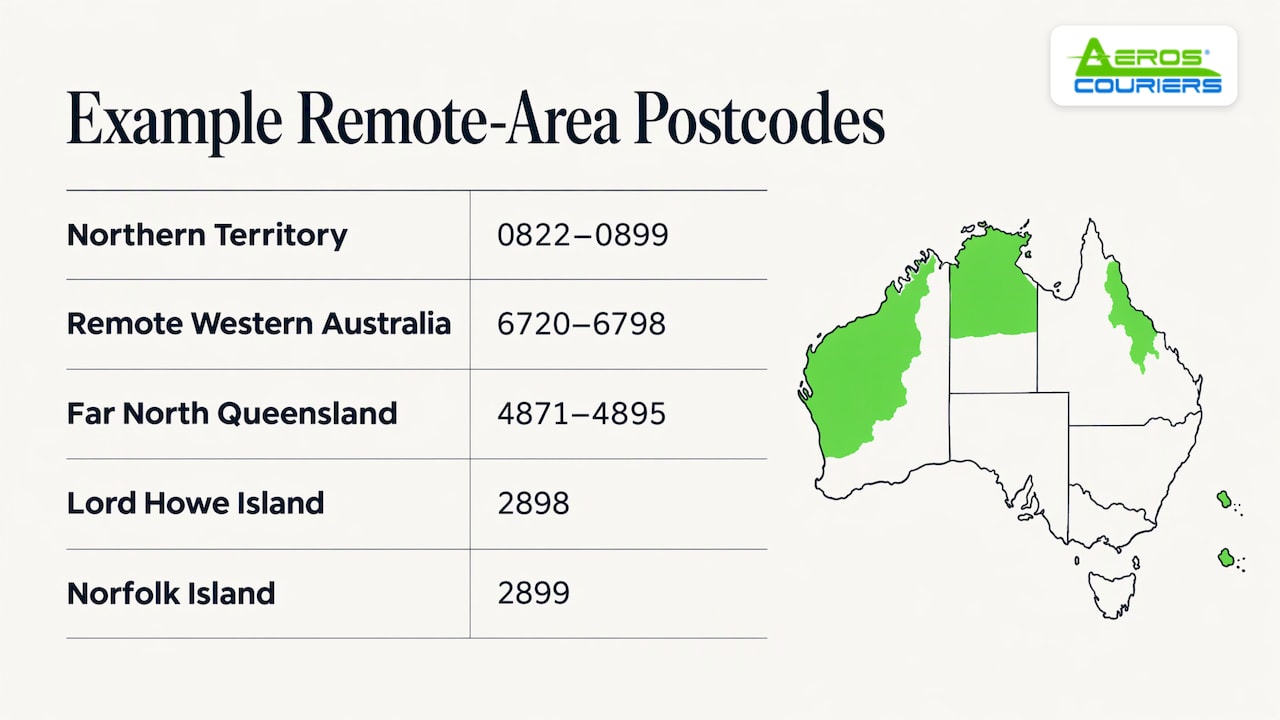
There is no official national register, because each carrier decides its own list. As a guide, one Australian retailer’s help page gives examples of areas that commonly attract extra remote or on-forwarding postage: Northern Territory postcodes 0822 to 0899, remote Western Australia postcodes 6720 to 6798, Far North Queensland postcodes 4871 to 4895, Lord Howe Island (2898) and Norfolk Island (2899), according to that retailer’s postage fees page. Treat these as typical examples, not a rule that applies to every courier.
Other destinations that freight operators commonly describe as remote include Cape York communities in Queensland, remote Kimberley towns in Western Australia, outer Darwin regions and King Island in Tasmania. The list changes between carriers, and a regional town may be priced normally by one network and as remote by another.
That difference is the key point. A parcel to the same Kimberley town can carry a surcharge with one carrier and none with another, depending on who has a reliable local delivery arrangement.
How much it can add, and how it is calculated
Carriers typically calculate remote fees in one of a few ways:
| Method | How it works | What to watch |
|---|---|---|
| Flat fee per parcel | A fixed amount added to every parcel to a listed postcode | Hurts most on lots of small, light parcels |
| Per-kilogram loading | An extra rate on top of the weight charge | Hurts most on heavy or bulky items |
| Higher zone rate | No separate line item, but the base price for that zone is higher | Easy to miss because nothing is labelled “surcharge” |
| Percentage loading | A percentage added to the base freight charge | Grows with the value of the shipment |
We will not quote a typical dollar figure here, because amounts differ widely between carriers and change when they update their price lists. The honest answer is that the fee depends on the carrier, the postcode, the weight and the service level, and the only reliable number is the one you get for your specific parcel.
To see how the weight and size of a parcel move the price before any extra fees, our breakdown of courier prices in Australia is a good place to start.
How to check before you book
A surcharge is only a problem if you discover it too late. Use this routine every time you ship somewhere outside the major metro areas.
- Get the exact postcode and suburb. Do not rely on the town name. Postcodes decide the zone, and neighbouring towns can sit in different zones.
- Measure and weigh the parcel. Use the packed size, not the product size. Cubic weight can push a light but bulky parcel into a higher price band.
- Compare the all-in price, not the headline rate. Ask whether fuel, handling and delivery-area fees are in the quoted figure.
- Compare more than one network. Because classifications differ, a quote from a single carrier tells you little about what the market charges for that address.
- Check the service level. An express option to a remote address may not be offered at all, or may take longer than the label suggests.
- Screenshot or save the quote. If the final invoice differs from what you were shown, you have a record.
On our platform you can compare and book couriers for a destination postcode and see the price before you commit. We publish all-inclusive pricing, with no fuel surcharges or handling fees, and our rates start from $4.90 for parcels up to 25kg. Enter the actual delivery postcode to see what applies to your parcel, since the starting price is not the price for every destination.
Planning a long route: a worked example
Say you run a small online shop in Melbourne and a customer in the Northern Territory orders a 4kg parcel. With a single carrier you might see a base rate that looks fine, then a remote loading added at the last step. A better approach:
- Quote the parcel on several networks using the customer’s postcode.
- Compare the final total, including any area loading, not just the base.
- Choose the network that has a dependable local delivery arrangement for that region, even if it is not the cheapest on paper, if reliability matters to the customer.
For the Top End and Central Australia specifically, our practical guide to Darwin to Alice Springs deliveries explains what to expect on one of the longest routes in the country.
How small businesses can protect their margins
Remote orders are usually a small slice of sales, but they can wipe out the profit on an order if you have promised free shipping.
Show shipping before checkout
Customers accept a delivery cost they can see. They abandon carts when a cost appears at the end. A postcode-based shipping calculator, or a clear note on remote delivery, protects both conversion and trust.
Set a sensible free-shipping threshold
If you offer free shipping over a certain order value, check that the threshold covers the worst-case cost, not just the average. Some sellers exclude remote postcodes from free shipping and say so plainly on the product page.
Consolidate where you can
Shipping several items in one parcel to a remote address usually costs less than sending them separately, because per-parcel fees are only paid once.
Choose the right service level
Express and same-day services are built for metro and major regional routes. For a remote destination, a standard service on a network that actually serves the area is often the better value. If you are weighing options, our overview of interstate courier options covers the trade-offs.
Use rewards to offset the cost
If you ship regularly, points add up. Our reward points program gives you points on deliveries that you can redeem for discounted rates or merchandise, which helps recover some of the cost of harder-to-reach deliveries.
Insure what matters
Longer routes and more handoffs mean more handling. Insurance is included with our service, and for valuable items it is worth confirming the cover that applies to your shipment before you send.
Moving to a remote or regional address yourself
If you are an individual relocating, expect delivery to be a part of the cost of regional life. Online orders may arrive later and cost more than they did in the city, and bulky goods are the most affected. Reading about why Australians are moving to regional areas gives useful context on the lifestyle trade-offs, including the extra charges and delivery challenges that come with more distant destinations. Buying locally for heavy items and ordering lighter goods online is a common approach.
Our perspective
Most of the frustration we hear about remote delivery is not about the price itself. It is about the surprise. A customer is told one number, then a different number appears after the parcel is booked or even delivered.
That is why we built our service around transparent, all-inclusive pricing. We do not add fuel surcharges or handling fees, and we let you compare rates from top carriers instantly so you can see what a destination will cost before you commit. Parcels up to 25kg start from $4.90, and the quote for your postcode is the figure to rely on.
For small businesses, that clarity is what keeps a remote order profitable. You can set your own shipping rules with real numbers instead of guesses. When something does go wrong with a delivery, you reach a real person who can sort it out quickly, and your rewards points keep working in your favour on every booking.
Aeros
Ready to price a remote delivery?
Whether you are sending one parcel to a family member in the north or fulfilling orders for customers across the country, you can see the cost for your destination before you pay. Our platform offers door-to-door pickup, printable labels, shipment tracking, insurance and express and same-day options where available.
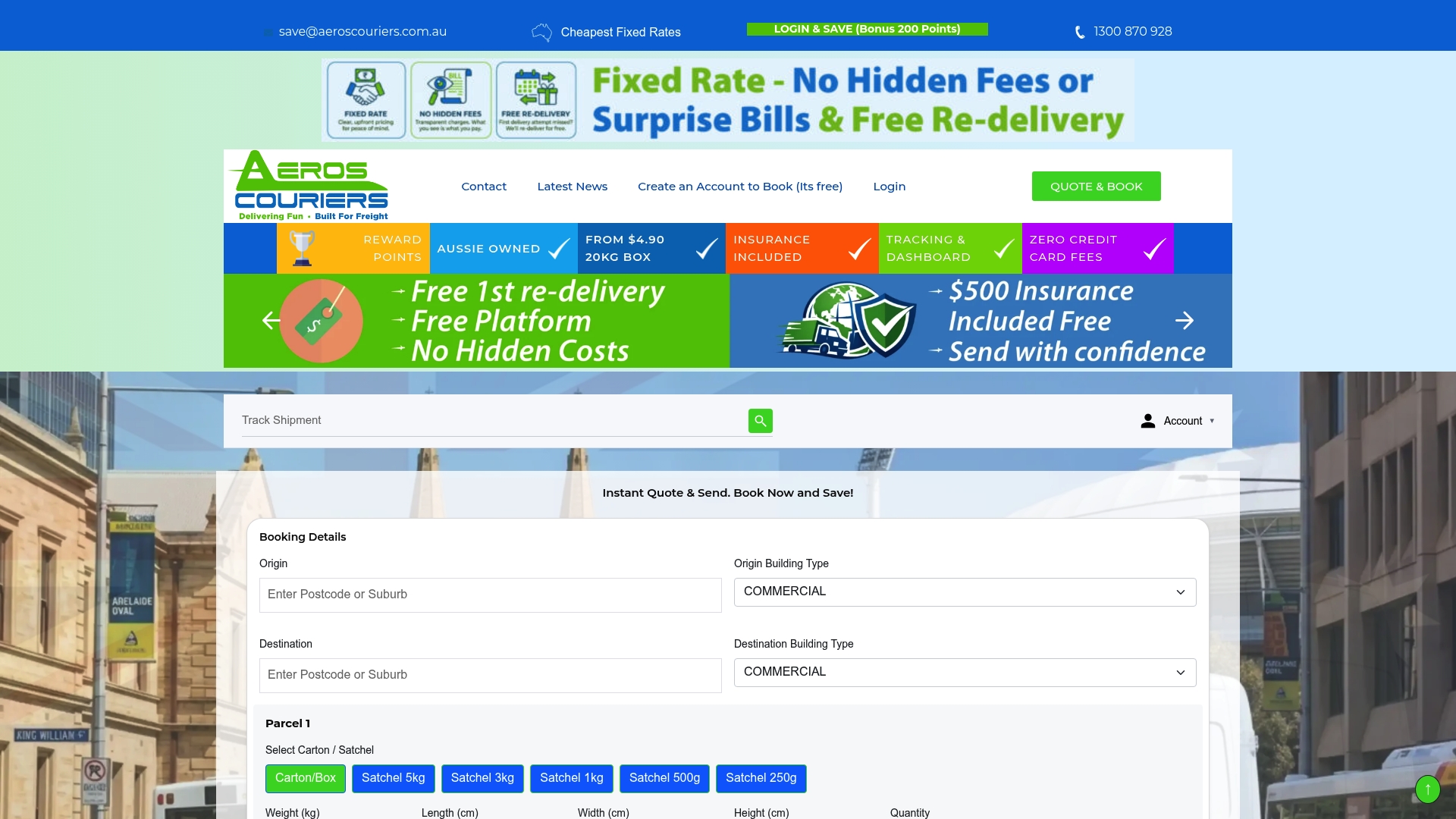
Start on our parcel delivery service page, or go straight to the shipment rate tool to enter your destination postcode.
FAQ
What is a remote area surcharge?
It is an extra fee a courier charges for delivering to addresses outside its normal service network. The cost covers extra distance, less frequent runs or a subcontracted local agent. Each carrier sets its own rules and postcode list.
Which postcodes have a remote area surcharge?
There is no single national list. Commonly affected areas include parts of the Northern Territory, remote Western Australia, Far North Queensland and offshore islands such as Lord Howe and Norfolk Island. Always check the specific postcode with the carrier or booking platform.
How can I avoid a remote area surcharge?
You usually cannot remove it, but you can avoid being surprised by it. Compare all-in prices for the delivery postcode across more than one network, confirm what is included, and consolidate items into fewer parcels. A service with all-inclusive pricing makes the total clear before you pay.
Is a remote area surcharge the same as a card surcharge?
No. A card surcharge is a fee on a payment method, which is a separate topic. A remote area surcharge is a delivery fee tied to where the parcel is going.
Sources
Recommended
- Residential Surcharges: Avoid Fee Surprises for Australian Businesses
- Australia Post Courier Charges: Understand australian courier charges & Save
- Fixed Price Courier Services | Low Cost & No Hidden Fees
- How to Estimate Shipping Costs in Australia Accurately
Courier quotes, tracking and support
Ready to send a parcel? Compare the available services for your postcodes, parcel dimensions and weight. For an existing delivery, use your consignment number to check tracking or ask our team for help.