
You can arrange a courier to collect a parcel from your home or office: book online or through an app, pick a time slot and the driver comes to you. The fastest route is an instant shipment rate tool that shows final price and open pickup slots before you confirm, similar to those found on top courier platforms for businesses. We built our own shipment rate checker at Aeros Couriers for exactly this, letting you book a home pickup the moment you know the cost.
TL;DR:
- Final prices are usually shown upfront without hidden fuel surcharges or handling fees, making rate comparison straightforward.
- Most home pickups are scheduled within a window lasting from 9:00 am to 5:00 pm, with same-day services often capable of collection within two to three hours.
- Parcels heavier than 25kg or bulky items generally require freight booking instead of standard courier pickup.
- Booking platforms typically allow authorizing a third party to hand over parcels, simplifying contactless or delegated handovers.
- Clear, accurate labeling and proper packaging significantly reduce the risk of delays, refusals, or parcel damage during collection.
Table of Contents
- How to book a pickup: comparing rates and choosing a slot
- What pickup windows and turnaround times actually look like
- How courier pricing works and how to compare shipment rates
- What couriers will and won’t collect from your door
- Packing and labelling checklist for a smooth pickup
- Tracking, payment and sorting out pickup problems
- Why Aeros is built for reliable, low-cost home pickups
- What the pickup process gets wrong, and what actually matters
- Check your rate and book an Aeros pickup today
- FAQ
- Sources
How to book a pickup: comparing rates and choosing a slot
Booking a home pickup follows the same basic flow across most platforms, whether you are shipping one box or managing regular small business despatch.
- Enter your pickup and delivery postcodes, then add the parcel’s weight and dimensions into a shipment rate tool.
- Compare the service levels on offer, usually standard, express and same day, and pick the one that matches your deadline and budget.
- Choose a pickup slot from the times shown for your address, and add contact details or special instructions (gate code, reception desk, safe drop permission).
- Generate your label. Most services let you print one at home, display a QR code on your phone, or have the driver scan a code if you have no printer.
- Pay at the point of booking by card, or choose pay on pickup, where the driver takes payment on collection; business accounts can usually opt for invoiced billing instead.
The label step trips people up more than any other part of the process. If you cannot print, check whether the courier’s app supports a scannable QR code or a nearby drop off point as a backup, because a driver who cannot scan or read a label often cannot legally collect the parcel. Specific instructions, like “leave with building manager” or “ring before arrival”, are worth adding every time rather than only when something is unusual, since drivers work from whatever notes are on the job.
What pickup windows and turnaround times actually look like
Most home pickups are booked into a window rather than an exact time, and that window varies by provider and postcode.
- Standard scheduled pickups commonly run between 9:00am and 5:00pm, with Amazon Easy Ship pickups for eligible sellers typically occurring within two business days of creating the shipment, inside that same 9:00am to 5:00pm band.
- Same day services tend to offer narrower response windows, often in the order of two to three hours from booking to collection, though this depends on how close your address is to a depot or available driver.
- Postcode eligibility affects timing more than most people expect: a pickup that is instant in a capital city suburb might only run on set days further out.
A pickup collected and scanned on the day it is booked is one of the clearest signs a provider’s routing is working as intended.
If a driver misses a scheduled window, most platforms let you rebook for the next available slot at no extra charge, and will log the missed attempt against your booking reference. Keep that reference handy. It is the first thing support will ask for if you need to lodge a claim or chase a delayed pickup.
How courier pricing works and how to compare shipment rates
Price is rarely just about distance. Several factors stack together to produce the number you see at checkout.
- Actual weight versus cubic (volumetric) weight: couriers charge whichever is higher, so a light but bulky box can cost more than its scale weight suggests.
- Zone or distance: metro to metro pickups and deliveries are usually cheaper than runs into regional areas.
- Service level: same day and express pricing sits above standard delivery, reflecting the tighter pickup and transit window.
- Insurance and extras: optional cover adds a small amount to the base rate but protects against loss or damage claims later.
Say a 5kg satchel travelling between two metro postcodes comes back as $9.90 on a standard service and $18.50 on same day through a shipment rate tool: that gap is the pickup speed, not a hidden fee. Some providers add fuel surcharges or handling fees on top of the quoted number, which is where a transparent rate tool earns its keep. At Aeros Couriers, our shipment rate tool shows the full, final price upfront, with no fuel surcharge or handling fee added after the fact, so the figure you see when comparing is the figure you pay.
What couriers will and won’t collect from your door
Before you book, it pays to check your parcel actually qualifies for a standard home pickup rather than a freight booking.
- Most parcel services cap standard pickups around 25kg per item; anything heavier, bulkier or palletised usually needs a freight booking instead.
- Batteries, liquids, aerosols and other hazardous goods are commonly restricted or require specific packaging and a declaration before a driver will take them.
- Business shipments, especially international ones, often need supporting paperwork such as a commercial invoice, and some pickups ask for photo ID to confirm the sender.
Declaring a restricted item honestly at booking is far less hassle than having a driver refuse it on your doorstep. If you are unsure whether something counts as hazardous, most platforms list examples during the booking flow, and it is worth checking before you tape the box shut.
Packing and labelling checklist for a smooth pickup
A parcel that is packed and labelled properly rarely gets held up, refused or discharged.
- Use a box rated for the contents’ weight, with enough internal cushioning that items cannot shift or press against the sides.
- Measure and record the length, width and height before booking, since these figures feed directly into the cubic weight calculation on your rate.
- Seal every seam with proper parcel tape, not household sticky tape, which tends to fail in transit.
- Attach the label flat on the largest face of the box and take a photo of it before handover, in case you need proof later.
- If you cannot print, ask whether the driver can scan a QR code from your phone, or whether a nearby drop off point will accept the parcel instead.
Pro Tip: Photograph the packed, labelled parcel on your doorstep before the driver arrives, it is the single easiest piece of evidence if a dispute comes up later.
For contactless handovers, most platforms let you authorise someone else, a flatmate, receptionist or neighbour, to hand the parcel over on your behalf, as long as you note this in the booking instructions.
Tracking, payment and sorting out pickup problems
Once your pickup is booked, you should get a confirmation with a tracking number almost immediately. Keep it.
- Tracking numbers and digital proof of pickup (a scan event or driver photo) are your record that the parcel left your hands, and matter if a delivery goes missing.
- Payment typically happens at booking by card, though some services allow payment on pickup or invoiced business accounts.
- If a pickup is missed, delayed or a parcel is damaged, contact the booking platform’s support first. They generally hold the direct relationship with the carrier and can escalate faster than going straight to the carrier yourself.
Having your booking reference, tracking number and a photo of the packed parcel ready before you call or message support cuts resolution time down considerably.
Why Aeros is built for reliable, low-cost home pickups
We designed our platform around the two things that cause the most friction in home pickups: unclear pricing and unpredictable timing.
- Our rates start from an affordable base price for parcels up to a certain weight, so you know the floor price before you even compare service levels.
- We charge transparent pricing with no hidden fuel surcharges or handling fees added after you book.
- Our route optimisation and active parcel monitoring are aimed at keeping pickup and delivery windows predictable rather than approximate.
- Every delivery earns reward points that can be redeemed for further savings on future bookings.
- Our Australian-based customer support team is available to resolve pickup or delivery issues quickly rather than leaving you waiting on a generic queue.
Each of these reduces a specific friction point: a known price removes guesswork at checkout, predictable timing means fewer missed pickups, and direct support means a problem gets looked at by someone who can actually act on it.
What the pickup process gets wrong, and what actually matters
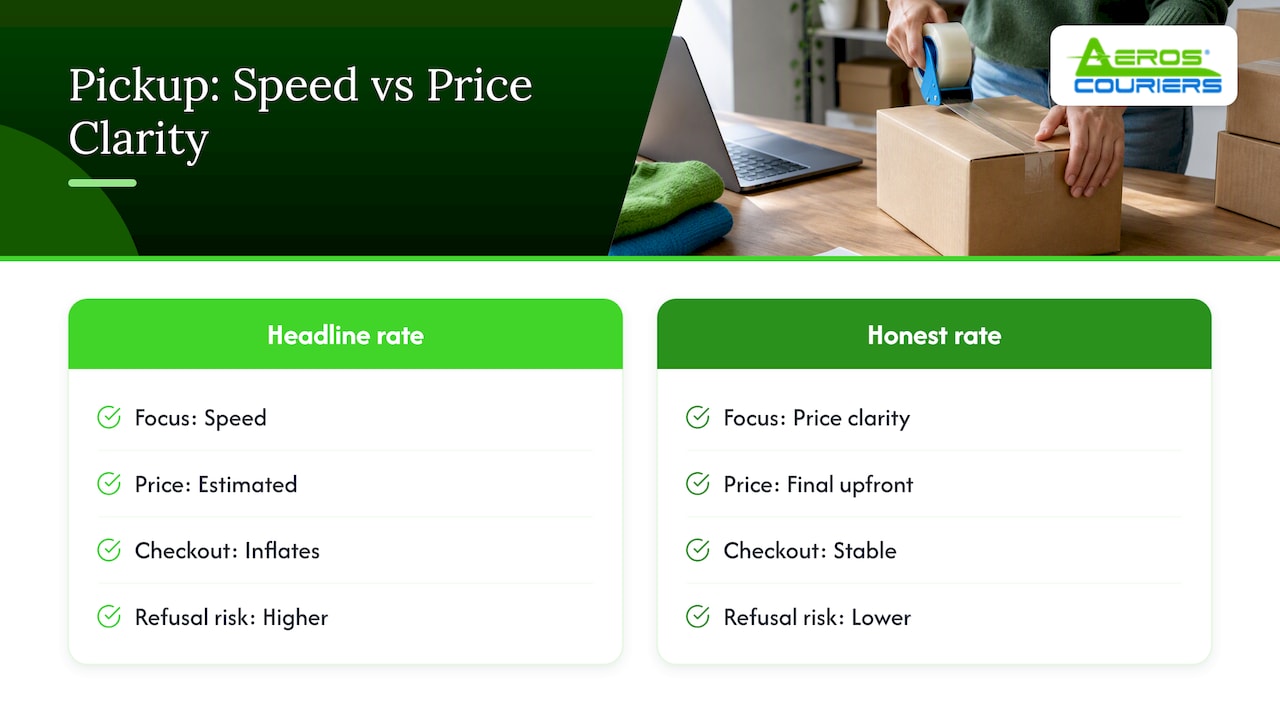
The received wisdom around courier pickups treats speed as the main variable worth optimising, same day this, two-hour window that. In practice, the bigger failure point is price clarity. A same day pickup booked at a headline rate that balloons with fuel surcharges and handling fees at checkout is a worse experience than a standard pickup with an honest, stable price shown upfront.
Most of the friction people blame on “unreliable couriers” is actually unclear information: a weight that was estimated rather than measured, a postcode that was never checked for eligibility, a label that could not be scanned. None of that is really about the courier’s reliability at all.
If you take one thing from this guide, prioritise checking the real, final price and your postcode’s pickup window before you fixate on service speed. A same day slot is worth nothing if the parcel gets refused at the door for a label that will not scan.
— Aeros
Check your rate and book an Aeros pickup today
Booking a home pickup with us starts the same way this guide does: check the price first. Our shipment rate tool gives you a final, transparent cost before you commit to anything, so there are no surprises once the driver arrives.
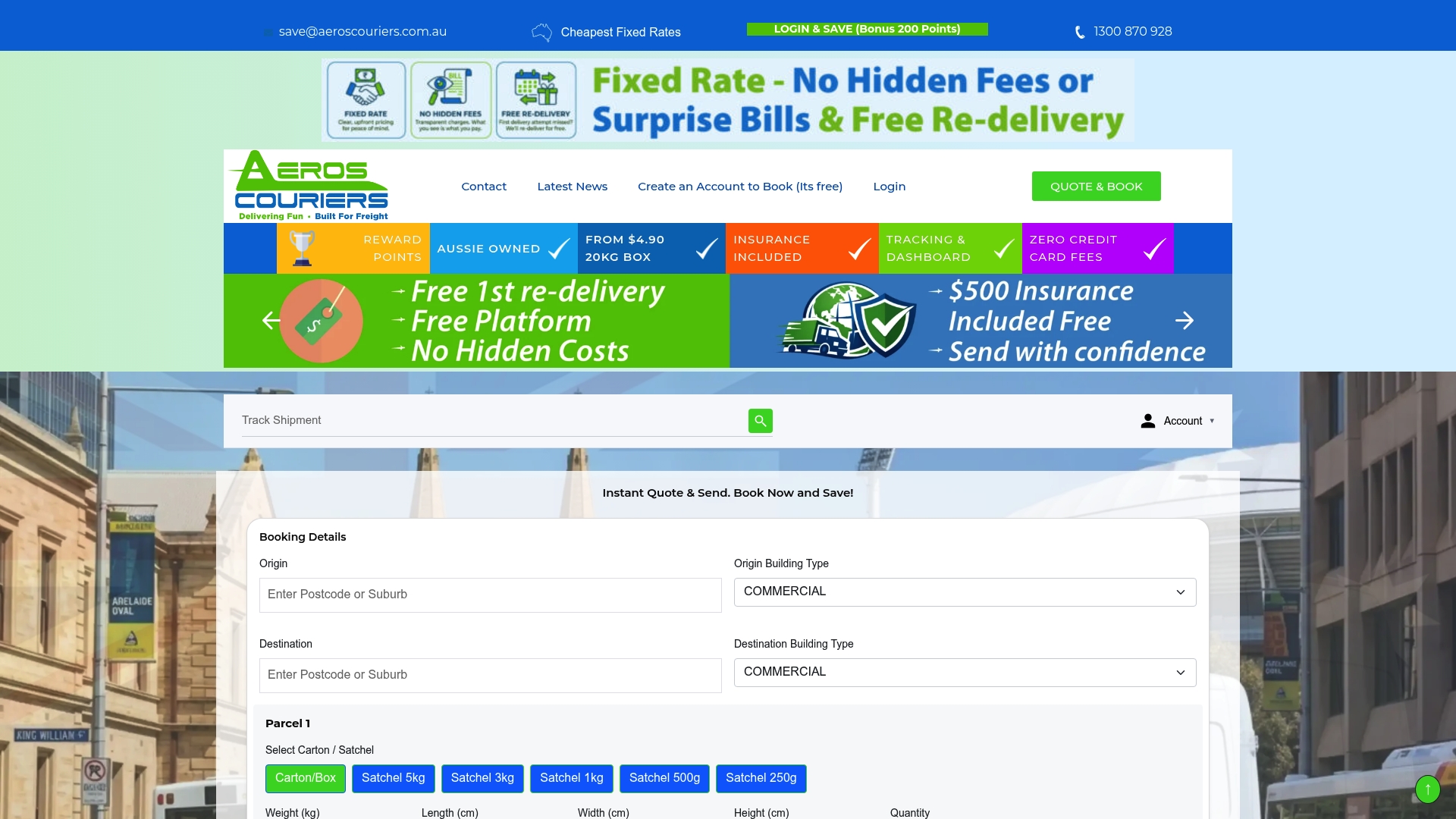
- A transparent final price is typically shown before you book, usually without unexpected fuel or handling fees.
- Online booking with a pickup slot chosen to suit your day, not a fixed depot schedule.
- Tracking from pickup to delivery, plus reward points on every booking you make.
Check your shipment rate now, pick your slot and have a driver at your door.
FAQ
Which courier collects from home?
Most major courier platforms, including marketplace services like Airtasker and online booking platforms such as ours at Aeros Couriers, offer collection directly from your home or office address. You simply enter your address and a pickup window during booking rather than dropping the parcel off yourself.
Can I pay a courier to pick something up?
Yes, paying for a courier pickup is the standard way these services work: you book a slot, pay at checkout or on pickup, and a driver collects the parcel from your address. Pricing usually depends on weight, size, distance and how fast you need it collected.
Can I get someone to pick up a parcel for me?
Yes, most booking platforms let you authorise another person, such as a neighbour, flatmate or receptionist, to hand the parcel to the driver on your behalf. You add this as a note or special instruction when you book the pickup.
Can you send a courier to pick up a parcel?
Yes, this is exactly what a scheduled courier pickup does: you book online or through an app, choose a pickup window, and a driver comes to collect the parcel rather than you taking it to a depot. Most services ask for the parcel’s weight and dimensions upfront so the pickup and price are confirmed before the driver arrives.
How much does a home courier pickup typically cost?
Cost depends on weight, distance and service speed, but local task listings on platforms like Airtasker typically show a broad range of prices for ad hoc courier jobs. Standard parcel services with transparent pricing, such as our rates from $4.90 for parcels up to 25kg, can work out considerably cheaper for routine shipments.
Sources
- Amazon Easy Ship | Sell on Amazon Australia
- Find trusted courier service providers in Melbourne Western Suburbs