
A tracking number is a unique identifier assigned to a parcel so it can be followed from the moment a label is created until it reaches your door. You use it to check progress, confirm delivery and spot problems early. Formats differ between carriers and countries, with international shipments often following the UPU S10 standard.
TL;DR:
- International tracking numbers usually follow the UPU S10 standard, a 13-character format including service, serial, check digit, and country code; reusing these identifiers is discouraged for at least 24 months.
- Most parcels progress through recognizable statuses such as “label created,” “accepted,” “in transit,” “out for delivery,” and “delivered,” with scans often skipping stages without indicating a problem.
- A tracking number not updating within 24 to 48 hours is common due to label delays, customs holds, or barcode issues, provided the number is entered correctly and transit time is respected.
- Carrier-specific formats vary from numeric-only to alphanumeric codes, with modern labels often using GS1 DataMatrix barcodes that encode additional shipment data for automated sorting.
- Checking tracking on the official carrier website and understanding common number structures helps prevent scams and allows proactive parcel monitoring.
Table of Contents
- What a tracking number is and how it works
- Common tracking number formats and what the parts mean
- How to read tracking status updates and what they mean
- Why tracking sometimes doesn’t update and what to do
- Security and privacy: what tracking reveals and safe practices
- Operator notes: how tracking supports delivery reliability
- Why tracking literacy helps senders and recipients
- Check rates and tracking before your next shipment
- FAQ
- Sources
What a tracking number is and how it works
A carrier generates your tracking number the instant a shipping label is created, whether you book online or hand a parcel over the counter. That number gets printed on the label as both a human-readable string and a barcode, then scanned at each stop in the network: pickup, sorting hubs, transfer points and final delivery.
Each scan updates a central database, which is what populates the tracking page you check. The printed number is for people; the barcode is what machines actually read, and it moves much faster through automated sorting than any manual entry could.
- Carriers assign the number at label creation, before the parcel is physically collected.
- A barcode scan updates the carrier’s system in near real time, while the printed number is mainly for manual lookups.
- Many identifiers include a check digit, and the UPU recommends that identifiers are not reused for at least 24 months to avoid confusion between shipments.
That last point matters more than it sounds. Without a cooling-off period, an old delivered parcel and a new one could show up under the same number, which would make the whole system useless.
Common tracking number formats and what the parts mean
International postal items commonly follow the UPU S10 standard, a 13-character format built from four parts: a two-letter service indicator, an eight-digit serial number, a single check digit and a two-letter country code. An example might look like AB123456785AU, where AB is the service type, 12345678 is the serial, 5 is the check digit and AU marks the country of origin.
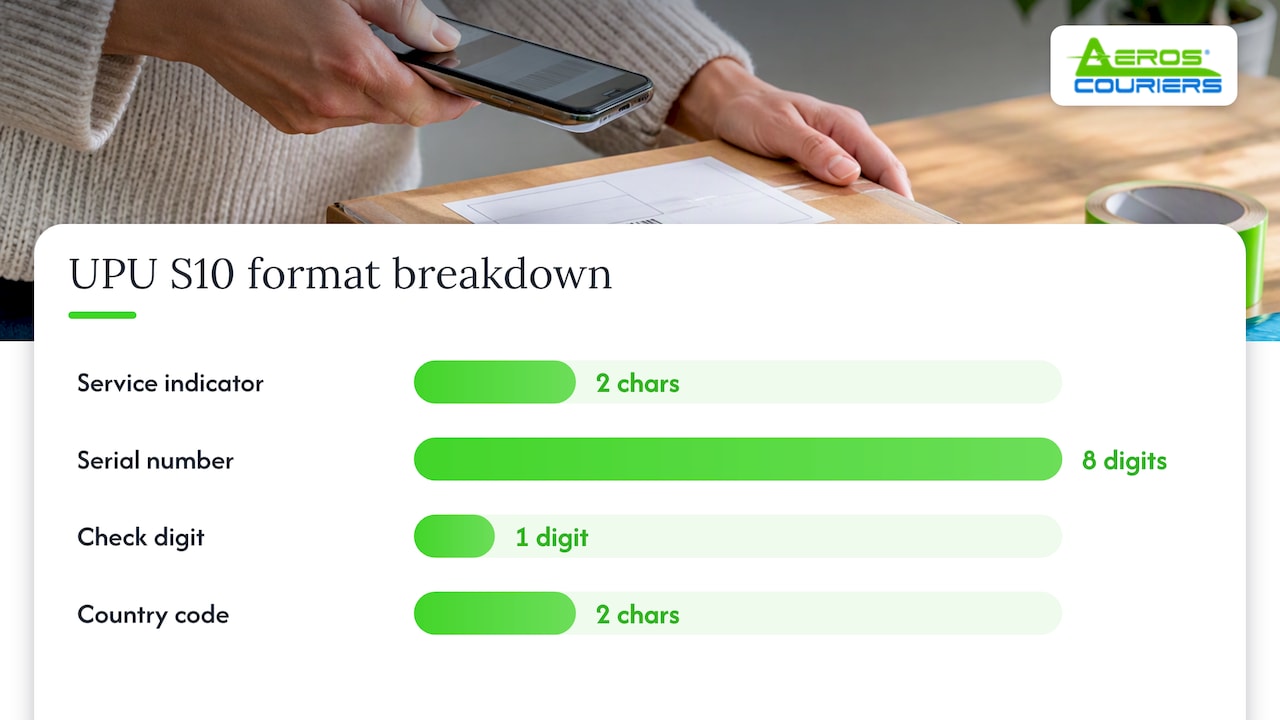
The check digit is not decorative. It is calculated from the eight serial digits using fixed weights, and systems use it to catch typos or misread characters before they cause a lookup to fail.
Domestic and courier networks use their own patterns too:
- Numeric-only formats of varying length are common, with length differing depending on the carrier, as Wikipedia’s overview of tracking numbers notes.
- Alphanumeric strings with carrier-specific prefixes, common on consignment-based courier networks. Our guide to StarTrack Express tracking numbers breaks down one such example.
- GS1 DataMatrix barcodes on modern labels, which pack extra metadata such as postcode and date into a 2D code that automated sorters read directly.
For everyday use, you usually only need the serial number and check digit when you type a number in manually. The service indicator and country code mostly matter to the systems routing your parcel behind the scenes, not to you as the person checking status. Our explainer on tracking identifiers for Australian parcel and freight shipments covers more carrier-specific examples if you want to compare formats.
How to read tracking status updates and what they mean
Most parcels move through a predictable sequence of statuses, even though the exact wording varies by carrier.
- Label created: the shipment exists in the system, but the parcel has not necessarily been collected yet.
- Accepted or collected: the carrier has physically taken possession of the parcel.
- In transit: the parcel is moving between facilities, sometimes shown as “with carrier.”
- At sort facility: the parcel has arrived at a hub for sorting toward its next leg.
- Out for delivery: the parcel is on a vehicle headed to the final address.
- Delivered: the parcel has reached its destination, sometimes with a signature or photo recorded.
Carrier developer documentation, such as Australia Post’s reference statuses, shows that consignment-level and article-level statuses can differ for the same shipment. A consignment might show “in transit” while an individual article inside it hasn’t scanned yet at that same point.
Scans don’t always happen at every single stage. A parcel can skip straight from “accepted” to “out for delivery” on a short route, which is normal and not a sign of a problem.
Pro Tip: If a status hasn’t changed in a day or two on a domestic parcel, that’s usually within normal range: only worry once it stalls well past the carrier’s stated delivery window.
Why tracking sometimes doesn’t update and what to do
A tracking page that hasn’t moved doesn’t always mean something has gone wrong. The most common causes are a label that’s been created but not yet scanned at pickup, a backlog at a sorting hub, a handover between carriers on an international route, a customs hold, or a barcode that’s smudged or torn and can’t be read by scanners.
Before assuming the worst, work through a quick checklist:
- Double-check you’ve entered the full tracking number correctly, with no missing or swapped characters.
- Confirm the number against your sales receipt or booking confirmation to rule out a typo.
- For international items, allow the standard transit window before expecting consistent updates, since customs processing can pause scans for days.
- Wait 24 to 48 hours and check again before contacting anyone, since many gaps resolve on their own.
If the gap continues past that window, contact the carrier or sender with the tracking number, the booking date and the delivery address ready. Our guide on what to do when Australia Post tracking isn’t updating walks through this in more detail.
Security and privacy: what tracking reveals and safe practices
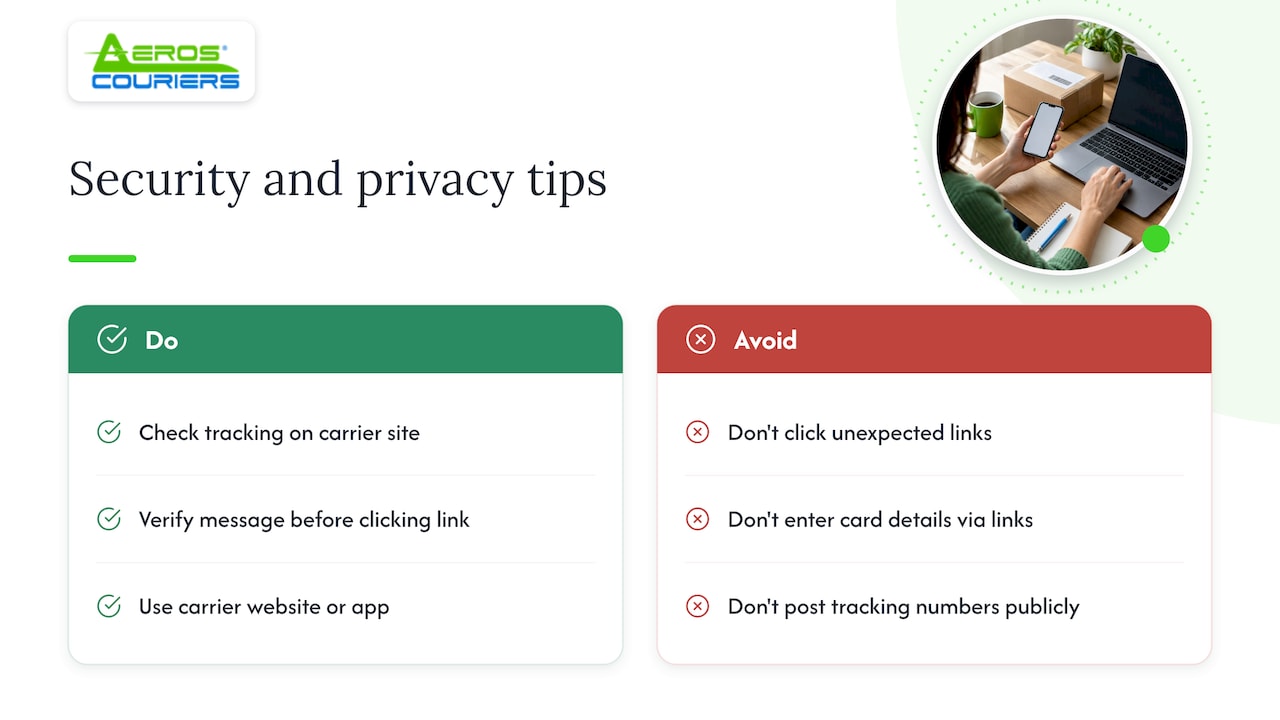
A typical tracking page shows status, timestamps and sometimes a delivery signature or photo, but not sensitive personal or payment details. Because tracking links look routine, they’re a common target for phishing: scammers send fake “delivery failed” messages asking you to click a link and enter card details.
Always check tracking directly on the carrier’s own website rather than through a link in an unexpected text or email. For high-value parcels, avoid posting tracking numbers publicly on social media or marketplace listings, since anyone with the number can often see delivery timing and location details.
Operator notes: how tracking supports delivery reliability
Behind the scenes, tracking data does more than tell you where a parcel is. Active parcel monitoring and route optimisation can spot delays early and adjust before they become late deliveries, rather than waiting for a customer to ask. This data also feeds customer support teams, so when you get in touch, they can usually see exactly where a shipment sits without asking you to repeat details.
Customers booking through a courier platform can expect responsive support, visibility into where a parcel is at each stage, and rewards points that build up with every delivery booked.
Why tracking literacy helps senders and recipients
Understanding how tracking numbers work saves time for both ends of a delivery. Three habits make the biggest difference: save your tracking number the moment you get it, check status through the carrier’s own site rather than a forwarded link, and wait out the standard transit window before assuming a parcel is lost. Treat tracking as a tool you check proactively, not just something you glance at once a parcel is overdue.
— Aeros
Check rates and tracking before your next shipment
There are courier platforms that offer transparent, flat-rate pricing with no fuel surcharges or hidden handling fees, paired with active monitoring on parcels booked through them. If you want to compare courier rates and see tracking options side by side before booking, you can compare and book a courier in a few minutes.
FAQ
How can I tell what company a tracking number is from?
The format often gives it away: a 13-character code ending in a two-letter country code usually follows the UPU S10 standard used by postal services internationally. Courier networks tend to use their own numeric or alphanumeric patterns, so checking your receipt or confirmation email for the carrier name alongside the number is the most reliable method.
What should an Australia Post tracking number look like?
Australia Post uses identifiers such as a consignment_id and article_id within its label metadata, as described in its developer documentation. International items sent through Australia Post may instead follow the standard S10 format with a service indicator, serial number and country code.
How do I read a tracking number?
Most of what you need is the serial number and, for S10-format codes, the check digit used to catch typos before a lookup fails. The surrounding letters, such as the service indicator or country code, mostly guide the carrier’s own routing systems rather than telling you anything you need to act on.
How do I identify a courier by tracking number alone?
Length and structure are the clearest clues: numeric-only strings of varying length suggest a domestic courier network, while a 13-character code with letters at each end points to the international S10 standard. When a label includes a 2D GS1 DataMatrix barcode alongside the printed number, that’s typically a sign of a modern courier label built for automated sorting.
