







“Leave with Sarah at unit 4, call 0400 000 000 on arrival, no signature needed” works because it tells the driver exactly who, where, and what to do in one breath. Vague notes like “leave in a safe place” force drivers to guess, and guessing is what causes missed or misplaced parcels. A good instruction always has a name, a phone number, an exact spot, and a clear signature rule.
TL;DR:
- Specific delivery instructions that include a name, phone number, exact drop-off location, and signature rules significantly reduce missed or misplaced parcels.
- Short, clear templates for various scenarios such as contactless, apartment, or fragile deliveries improve clarity and consistency in instructions.
- Including essential details like access codes, backup contacts, or special handling notes prevents common delivery failures in restricted access or high-value parcels.
- Using precise phrasing like “leave behind the blue pot plant on the front porch” is more effective than vague notes, ensuring couriers understand exactly where to leave the parcel.
- Delivery instructions should be concise, actionable, and tailored to the scenario to optimize route efficiency and increase the likelihood of successful delivery on the first attempt.
Table of Contents
- 10 short delivery instruction examples people and small businesses can copy
- Copy-ready templates for checkout fields and account profiles
- How to write clear, effective delivery instructions
- Special cases: fragile, restricted access and apartment deliveries
- Why phrasing matters: an Aeros perspective
- Book a delivery that follows your instructions exactly
- Useful sources for packing, handling and signature guidance
- FAQ
10 short delivery instruction examples people and small businesses can copy
The fastest way to write a good delivery note is to start from one that already works. Below are ten short, ready-to-paste examples covering the situations most people actually deal with.
- Home with a hiding spot: “Leave behind the blue pot plant on the front porch. Call 0400 000 000 if no answer.”
- Contactless: “Leave at the back gate and call on arrival. No need to knock.”
- Apartment with concierge: “Leave with reception/concierge. If unattended, knock on unit 12 and ask for Priya.”
- Business delivery: “Deliver to the loading dock, rear of building. Ask for James, 0400 000 000.”
- Fragile item: “FRAGILE: do not stack. Handle upright, glass contents.”
- Perishable order: “Deliver before 12pm. Contains refrigerated goods, please keep in shade.”
- High-value parcel: “Signature required. Do not leave unattended under any circumstances.”
- Neighbour pickup: “If no answer, leave with Dave at 14 Marigold Street (yellow door).”
- Restricted access building: “Buzz unit 7 on intercom. If no answer, leave with building manager, ground floor office.”
- Weekend or timed window: “Deliver Saturday only, between 9am and 1pm. Call ahead.”
Each of these works because it answers the same three questions in order: where exactly, who to contact, and what happens if nobody is home. Short, standardised notes like these reduce the back-and-forth that slows down last-mile delivery, since drivers spend less time interpreting vague phrasing and more time actually delivering.
Copy-ready templates for checkout fields and account profiles
Online sellers and regular shoppers need instructions that fit tight text fields without losing clarity. These templates are built for checkout notes, packing slips and automated messages.
- Checkout note (short form): “Leave at [location]. Phone [number]. [Signature required / Authority to leave].” This fits within the character limits of most e-commerce and courier booking platforms.
- Warehouse or packing slip snippet: A permanent packer alert such as “DO NOT STACK, FRAGILE” printed in bold or capitals on the slip works best when it is short and limited to one instruction per line.
- Authority-to-leave checkbox wording: “I authorise the courier to leave this parcel unattended at the address above if I am not home to receive it.” This single sentence covers the legal intent without extra explanation.
- Automated confirmation message: “Your parcel is on its way. Delivery note: leave at front door, photo on delivery. Reply to this message if you need to update instructions before dispatch.”
Keeping these templates consistent across a store’s checkout, packing process and customer messages means the same instruction follows the parcel from order to doorstep, rather than being rewritten differently at each stage.
How to write clear, effective delivery instructions
A good delivery instruction is built from the same six elements every time, regardless of the scenario.
- Recipient’s full name, so the driver can confirm identity at the door.
- Contact phone number, in case of access issues or last-minute changes.
- Exact physical drop location, named specifically rather than described vaguely.
- Access code or intercom instructions, where a building requires one.
- Signature requirement, stated plainly as needed or not needed.
- Preferred delivery hours, if timing matters for the recipient.
Use short verbs and concrete place names: “leave behind the pot plant” beats “leave somewhere safe.” Avoid listing more than one instruction that could contradict another, and never include private security codes or alarm details in a note a courier or system might log publicly.
Pro Tip: Picture a stranger standing at your front door with a parcel and no other information. If your instruction wouldn’t get them to the right spot, rewrite it.
Special cases: fragile, restricted access and apartment deliveries
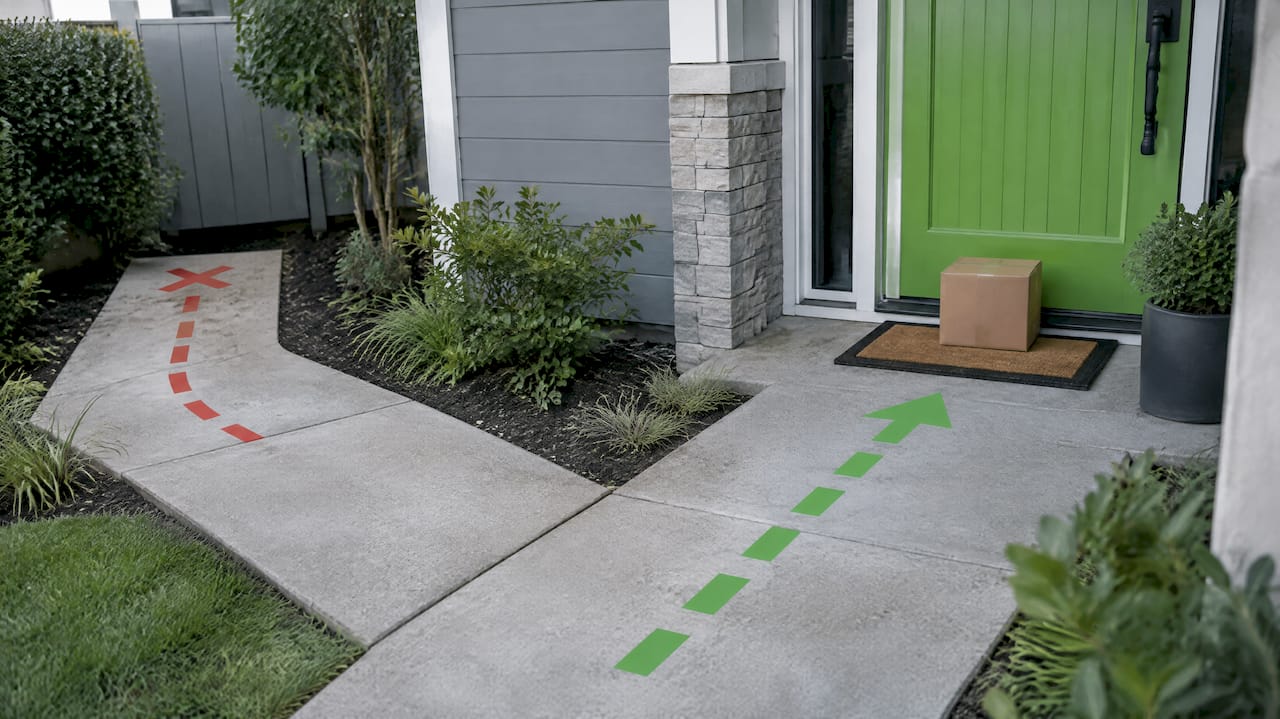
Some deliveries need more than the standard template. A few extra words in the right place prevents most of the common failure points.
- Fragile items: Use short, direct phrasing like “FRAGILE: do not stack; handle with care,” a format that mirrors standard packing and handling guidance for breakable goods.
- Restricted access buildings: Name an authorised contact or arrange an alternative drop-off point, such as a front desk or neighbouring business, rather than leaving the driver to find their own workaround.
- Apartment or multi-drop buildings: Reference reception or concierge by name, include the flat number, and name a neighbour as backup where photos on delivery are allowed.
- High-value or insured items: State “signature required” explicitly and include any reference or insurance number so the delivery is handled with the right level of care.
Why phrasing matters: an Aeros perspective
Delivery failures rarely come from bad luck. They come from instructions that are technically present but practically useless, a one-word note like “porch” with no phone number or backup plan. Aeros supports clearer phrasing because route optimisation and active parcel monitoring only work as well as the information attached to the parcel. A driver with a precise note and a working number resolves an access issue in seconds rather than making a second attempt the next day.
— Aeros
Book a delivery that follows your instructions exactly
Writing a clear instruction only helps if the courier actually follows it. Aeros Couriers lets you compare Shipment rate options with transparent pricing and no hidden surcharges, then book with your delivery notes attached from the start. Our parcel delivery service includes tracking and responsive support, so if a driver hits an access issue, you hear about it straight away rather than finding a missed-delivery card.

Compare rates and book your next parcel through Freight in a few minutes.
Useful sources for packing, handling and signature guidance
For more on fragile packing, see Caseys Movers’ handling tips. For signature rules, see our signature-on-delivery guide.
FAQ
What should I write on delivery instructions?
Include the recipient’s name, a phone number, the exact drop location, and whether a signature is required. Short, specific phrasing like “leave behind the pot plant, call on arrival” works better than a vague note like “leave in a safe place.”
What are examples of instruction?
Common examples include “leave at the back gate and call on arrival,” “deliver to the loading dock, ask for James,” and “signature required, do not leave unattended.” Each ties a specific location to a contact method and a clear rule for unattended delivery.
What are the delivery instructions?
Delivery instructions are the notes a sender or recipient attaches to a parcel telling the courier where to leave it, who to contact, and whether a signature is needed. They can be added at checkout, in a courier account profile, or directly on a packing slip.
How do I give instructions to my delivery partner?
Most checkout forms and courier booking platforms, including Aeros Couriers, have a notes field for delivery instructions at the time of booking. Keep the note short, specific, and limited to one clear action so the driver isn’t left interpreting conflicting details.
