






Pack fragile items with five moves: choose a new double-walled box sized to the item, wrap each piece on its own in bubble wrap or packing paper, cushion every gap so nothing shifts, seal the box with the H-tape method, then label it clearly and load it the right way up. Have bubble wrap, packing paper, a double-walled box and heavy-duty tape on hand before you start.
TL;DR:
- Using a new double-walled box provides better crush resistance for fragile items, especially for long trips or high-value packages.
- Bubble wrap with impact-absorbing layers and shaped foam are essential for cushioning impact-sensitive items like glassware and electronics.
- A shake test should always be performed before sealing and labeling to confirm no movement, reducing breakage risk during transit.
- Proper loading places heavier boxes at the bottom and fragile ones on top, secured with straps and marked clearly to prevent mishandling.
- Choosing couriers with flat-rate, insured, and monitored services minimizes handling risks and provides better protection for delicate shipments.
Table of Contents
- Gathering the right materials before you pack
- Packing glassware, artwork, electronics and other awkward items
- Loading, stacking and securing fragile boxes for transport
- Special rules for high-value, air travel and battery-powered items
- How Aeros and smart logistics choices reduce handling risk
- What I’d tell anyone packing something breakable
- Booking a courier for fragile parcels the practical way
- Sources
- FAQ
Gathering the right materials before you pack
The box matters more than most people think. A new double-walled box holds its shape under stacking pressure far better than a reused single-wall carton, and for anything with real value or a long trip ahead, that strength is worth the extra cost. Reused boxes look fine on the outside but often lose much of their original crush resistance after one trip, so keep them for sturdy, low-risk items and buy new ones for glass, ceramics and electronics.
Different wrapping materials do different jobs. Packing paper is best for filling shape and preventing scuffs on flat or slightly textured surfaces. Bubble wrap absorbs impact, a single layer for everyday glassware and a double layer for anything with sharp edges or thin walls. Foam sheets suit flat, wide items like framed prints or electronics panels, while corner protectors guard the most vulnerable points on frames and boxed appliances. Anti-static wrap is worth using on circuit boards and other sensitive electronics to stop static discharge during handling.
Void-fill choices are just as important as the wrap itself. Loose foam beads shift during a move and settle unevenly, leaving gaps exactly where you need cushioning most, so they are a poor choice for anything travelling by vehicle. Air pillows, crumpled kraft paper or shaped foam inserts hold their position far better and are easy to top up if a box feels light once it is closed.
Before you tape anything shut:
- Do a quick inventory and photograph valuable pieces so you have a record of their condition beforehand.
- Remove batteries from electronics, torches and toys to prevent leaks or accidental activation.
- Gather H-tape supplies, a marker, fragile labels and painter’s tape so you are not hunting for materials mid-pack.
- Note the destination and any handling instructions on a card taped inside the lid.
Pro Tip: Keep a roll of painter’s tape separate from your packing tape, it is gentle enough for glass and frames but strong enough to hold protective padding in place while you work.
Packing glassware, artwork, electronics and other awkward items
Whatever you are packing, the sequence stays the same: wrap the item individually, pad the base of the box, place the item, fill every gap, test for movement, then seal and label. Skipping the movement test is the single biggest reason boxes arrive with something broken inside, according to practical packing guides used by professional movers, which recommend a simple shake test before sealing: if you can hear or feel anything move, add more filler.
- Wrap each item on its own, never nested against another fragile piece.
- Lay 5 to 8 centimetres of crumpled paper or foam across the base of the box.
- Place the heaviest wrapped item first, then build upward from there.
- Fill every gap along the sides and top until nothing can shift.
- Lift and gently shake the closed box to confirm there is no movement.
- Seal with the H-tape method and label the box before moving it.
Glassware and dishes need slightly different handling depending on their shape. Plates pack best on their edge, not flat, since a stack of flat plates concentrates pressure on the bottom piece. Cups and bowls should each get their own wrap and go in nested rows with paper between layers. Stemware is the trickiest: use a divided box or build cardboard dividers, wrap the bowl and stem separately if the glass is delicate, and always run the shake test before closing the lid.
Mirrors and picture frames travel best upright, never flat, inside a purpose-built mirror box. Tape an X across the glass with painter’s tape to hold shards together if it breaks, fit corner protectors on all four corners, and pad the space between the frame and the box wall so it cannot slide.
Artwork on canvas needs a different approach again. Use acid-free tissue directly against the painted surface, then a corner board or foam cradle around the edges, and never let tape or padding press against the painted face itself.
Electronics benefit from anti-static wrap rather than bubble wrap directly on circuit boards, plus batteries and memory cards removed and packed separately. Add extra cushioning at the corners and a layer of foam over any screen.
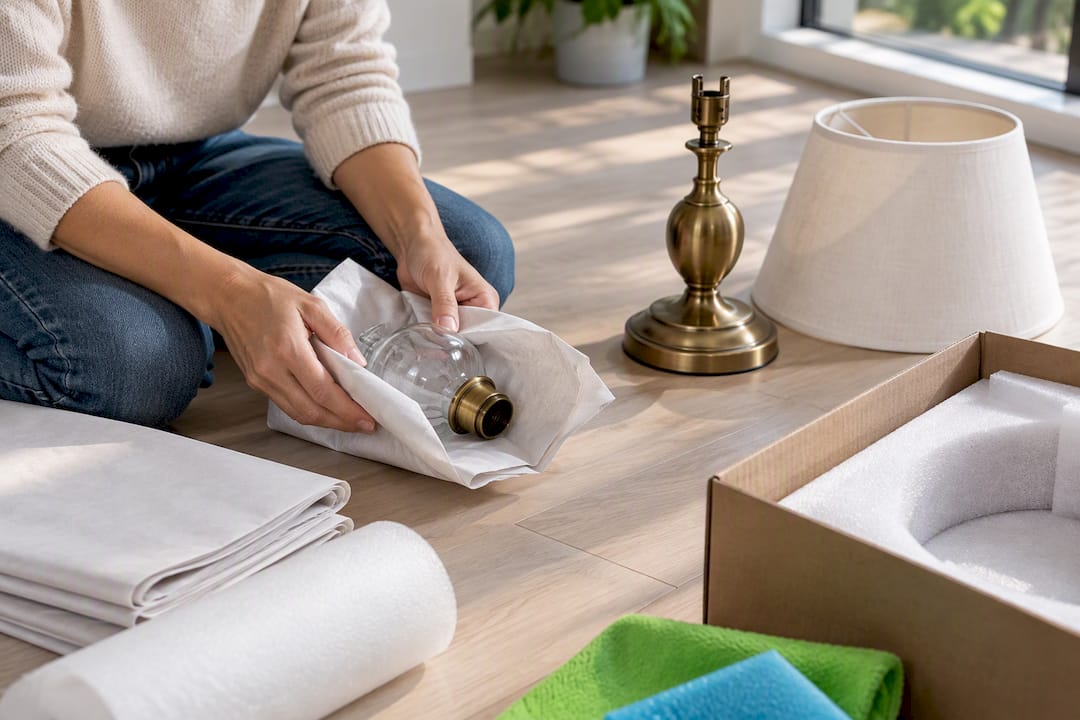
Lamps and other odd shapes are easiest once disassembled. Pack the base, shade and any glass fittings separately, wrap fragile fittings individually, and use the shade’s own box if you still have it, since it is shaped to fit.
Loading, stacking and securing fragile boxes for transport
Load order decides whether your prep work survives the trip. Put heavier, sturdier boxes down first and fragile boxes on top, well away from the doors of a van or the edges of a pallet where knocks are most likely.
- Keep fragile boxes off the floor of a truck bed where vibration is strongest.
- Use straps and wedges to stop boxes sliding, but avoid pulling them so tight that boxes compress against each other.
- Leave a small buffer of space around fragile boxes rather than packing the load wall to wall.
- Mark “this way up” and “fragile” on at least two sides of the box so it is visible from any angle.
For long-distance or particularly sensitive loads, an air-ride trailer smooths out road vibration considerably compared with standard suspension, which matters most for anything with fine mechanical parts or old glass. Whatever the vehicle, tell the driver or movers which boxes carry the highest-value items and add your contact details directly on the crate.
Pro Tip: A sticky note reading “open first, heaviest inside” on the lid of your most fragile box saves the person unpacking from guessing.
Special rules for high-value, air travel and battery-powered items
Museum-standard packing assumes the worst: that every box will be handled roughly no matter how many fragile stickers it carries. Museum packing guidance recommends photographing an object’s condition beforehand, restraining it snugly inside a custom crate, lining the crate with a moisture barrier and dense foam, and adding silica gel to control humidity. For genuinely valuable pieces, a vibration or shock data logger travelling inside the crate provides an objective record of what happened in transit.
Flying with fragile or valuable items adds its own constraints. IATA’s passenger baggage rules recommend keeping irreplaceable valuables in carry-on rather than checked baggage where possible, and adding both internal and external identification in case a bag is separated from its owner. Liquids, aerosols and gels in carry-on are restricted to small volumes at security, which matters if you are packing anything with liquid contents.
- Remove or declare lithium batteries according to airline and IATA cargo guidance, since certain battery types are restricted or forbidden in checked baggage.
- Carry electronics with removable batteries in hand luggage where the airline allows it.
- Check with the carrier before shipping anything containing a battery you are unsure about.
How Aeros and smart logistics choices reduce handling risk
Choosing the right courier matters as much as how you pack. Aeros Couriers lists rates from $4.90 for parcels up to 25kg, with transparent flat-rate pricing that avoids the hidden fuel or handling surcharges that push up the real cost of shipping fragile items elsewhere.
- Route optimisation and active parcel monitoring give visibility into where a fragile shipment is at each stage.
- Choosing express or same-day service reduces the number of handling points a fragile parcel passes through.
- A rewards programme and direct customer support mean a quick response if something needs attention mid-transit.
- Insurance options, detailed on the guide to insurance for couriers, cover declared value against damage in transit.
Fewer handovers generally means fewer chances for a box to be dropped, stacked wrong or crushed, so matching the service level to the item’s fragility is worth the few extra minutes at booking.
What I’d tell anyone packing something breakable
Good packing is mostly about time, not money. A cheap box and an extra ten minutes cushioning the corners beats an expensive box packed in a hurry. The mistakes I see most often are reused boxes that have already lost their strength, gaps left unfilled because the shake test got skipped, batteries left inside electronics, and labels that only say “fragile” with no orientation or contact details. Before pickup, check the box: right size, individually wrapped contents, no movement when shaken, sealed with H-tape, and labelled on two sides.
— Aeros
Booking a courier for fragile parcels the practical way
Once your item is packed properly, the courier you choose still matters. Aeros Couriers offers transparent flat-rate pricing with no hidden surcharges, tracking on shipments, insurance options for declared value, and express or same-day services when a shorter transit time reduces handling risk.
- Weigh and measure the packed box, not the item alone, before you get a quote.
- Have a declared value ready if you want insurance cover on a fragile or high-value item.
- Compare service levels and rates on the Freight comparison and booking page before choosing express, same day or standard delivery.
Sources
- Packing for transportation — WA Museum manual
- Passenger baggage rules — IATA
- How to pack fragile items for shipping — U-Haul
FAQ
What can I use to pack fragile items?
Use a new double-walled box, bubble wrap or packing paper for individual wrapping, and a firm void-fill like air pillows, crumpled paper or shaped foam. Avoid loose foam beads, since they shift and leave gaps during a move, and keep heavy-duty tape and fragile labels on hand for sealing and marking the box.
How do I pack a fragile item?
Wrap the item individually, cushion the base of the box, place the item, then fill every remaining gap until a gentle shake produces no movement. Seal the box using the H-tape technique and label it fragile with an arrow showing which way is up.
How do I pack fragile items for a flight?
Keep irreplaceable valuables in carry-on rather than checked baggage where possible, and add identification both inside and outside the bag, as recommended in IATA’s passenger baggage rules. Remove or declare lithium batteries according to the airline’s guidance, since some battery types face restrictions on air transport.
Can you put “fragile” on a package?
Yes, marking a package “fragile” is standard practice and helps prompt more careful handling, though it does not guarantee gentle treatment on its own. Pair the label with clear “this way up” arrows on at least two sides and pack the contents as if the label will be ignored.
What is the safest way to pack glass items?
Wrap each glass item individually, pad the base of the box generously, and use dividers for stemware or multiple pieces. Test the packed box with a gentle shake before sealing, and if anything moves, add more void-fill until it stops.
