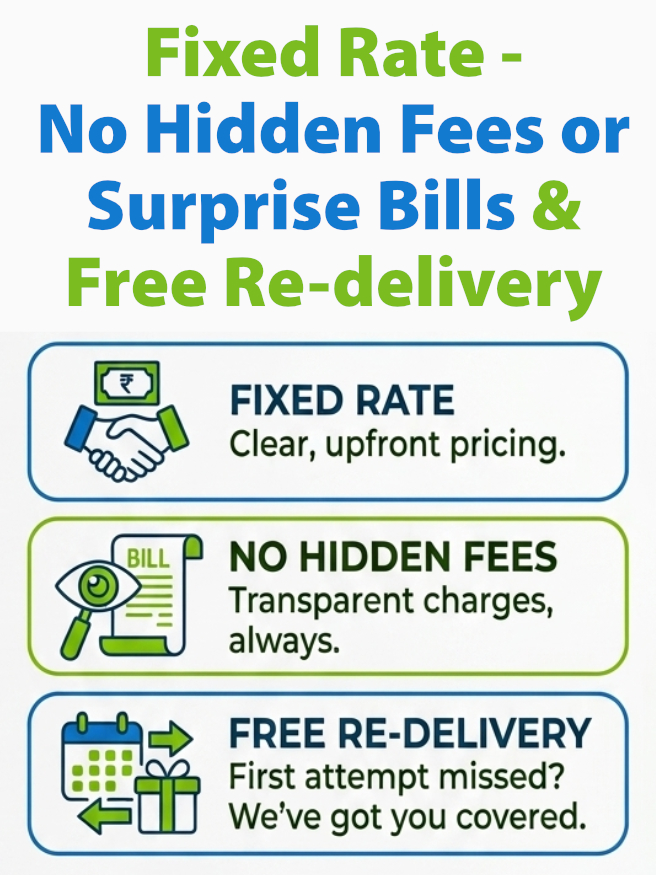









Door to door delivery means a courier collects your parcel from your address and hands it over at the recipient’s doorstep, with tracking the whole way. If you want that convenience without paying more than you should, a service with transparent pricing and live tracking, like Aeros Couriers’ Shipment rate, gives you both in one booking.
TL;DR:
- The real cost of door to door delivery depends on weight, volumetric weight, distance, service speed, and surcharges, not the advertised rate.
- Transparent pricing includes all surcharges upfront, and tracking should provide detailed milestones from pickup to delivery.
- Choosing a courier requires assessing price transparency, tracking detail, transit reliability, insurance, and local support, not just the headline price.
- Rates vary significantly with parcel size and destination, so comparing detailed quotes ensures the best value for your specific shipment.
- Always get written confirmation of the delivery guarantee and compensation limits before handing over your parcel to avoid disputes later.
Table of Contents
- What door to door delivery actually covers
- Pricing factors and how to estimate a real quote
- How to choose a door to door courier
- Where Aeros fits these priorities
- What actually matters when you are choosing a courier
- Compare rates and book your delivery
- Authoritative reading on delivery rights and trends
- Sources
- FAQ
What door to door delivery actually covers
Door to door delivery is the full chain of custody from your front door to someone else’s, and understanding each leg helps you spot where delays or damage usually happen. The first mile is pickup: a driver collects the parcel from your address rather than you dropping it at a depot. From there, it moves through one or more sorting hubs where it is scanned, sorted by destination, and loaded onto the next leg of transport. The last mile is the final run to the recipient’s address, ending with proof of delivery, usually a photo, a signature, or a scanned barcode confirming the parcel changed hands. This structure is what separates true door-to-door service from options that only cover part of the trip, such as depot-to-depot freight where someone still has to collect the goods.
Not every shipment needs the same speed, and courier services typically offer several tiers:
- Same day: pickup and delivery within hours, usually within the same city or region.
- Express or next day: guaranteed delivery by the next business day, suited to urgent but not same-day needs.
- Economy or standard: slower transit at a lower price, fine for non-urgent parcels.
Tracking updates should tell you more than “in transit”. A useful tracking page shows the pickup scan, hub arrival and departure scans, an estimated delivery window, and the final proof of delivery. If a courier’s tracking only shows two or three vague milestones, that is worth noting before you book, and services with direct courier tracking tend to give you more of this detail in real time.
Pricing factors and how to estimate a real quote
The rate you see advertised is rarely the rate you pay, and the gap usually comes down to a handful of predictable factors. Weight is the obvious one, but volumetric weight (also called DIM weight) often matters more: couriers calculate a parcel’s dimensions and charge based on whichever is higher, actual weight or volumetric weight. A large, light box, like a lampshade or a stack of pillows, can cost more to ship than a small, dense one of the same actual weight. This is also why a headline rate under $5 can be misleading on its own: it is usually a starting price for small, light parcels, and the real cost only becomes clear once dimensions and destination are entered.
Beyond weight and volume, expect these to shift the quote:
- Distance and destination: metro-to-metro is cheaper than regional or remote delivery.
- Service speed: same day and express cost more than economy options.
- Insurance or declared value cover: often included up to a limit, with extra cover available for high-value goods.
- Surcharges: remote area fees, oversized or odd-shaped item handling, and fuel or peak-season surcharges are common add-ons worth checking before you book.
Same-day and next-day services usually have a pickup cutoff time, often early to mid-afternoon, after which the parcel rolls to the next available slot, so it pays to confirm the cutoff rather than assume standard business hours apply.
Consumers do not chase the cheapest option at any cost: they weigh price against speed and reliability. Around 33% of shoppers cite low delivery costs as a main driver of loyalty to a retailer, but a meaningful share are still willing to pay a premium of roughly $5 to $10 for express delivery when speed matters. That tells you the goal is not always the absolute lowest rate: it is a rate that is transparent enough to compare properly against the guaranteed speed you are getting.
How to choose a door to door courier
Picking a courier is easier when you judge it against a short, consistent list of criteria rather than the headline price alone.
- Price transparency: does the quote include all surcharges upfront, or are fuel and handling fees added later?
- Tracking detail: can you see pickup, hub, and delivery scans, or just a single status update?
- Transit-time consistency: does the courier publish a guaranteed window, and do reviews suggest it holds up?
- Insurance and claims cover: what is the default cover limit, and how do you lodge a claim if something goes missing or arrives damaged?
- Responsive local support: is there a real contact for disputes, or only an automated ticketing system?
When you are getting a quote, ask directly: is this priced on DIM weight or actual weight, whichever is greater? What is the delivery guarantee, and what happens if it is missed? What is the maximum compensation for loss or damage? What is the pickup window, and when is the cutoff for same-day dispatch? How is the tracking reference issued, by email, SMS, or both?
Watch for red flags: no tracking number issued at booking, vague promises of a “flat rate” with no breakdown of what it covers, no stated process for lodging a claim, or no local support contact you can reach if a parcel goes missing.
Pro Tip: Get the quote in writing, including the delivery guarantee and compensation limit, before you hand over the parcel, not after something goes wrong.
The protections that apply also depend on who is buying. If a delivery service fails to meet its obligations, such as not delivering on time or damaging goods, the business is legally responsible for providing a remedy under Australian Consumer Law when the buyer is a consumer. For business-to-business freight, some of those consumer guarantees may not apply in the same way, so it is worth checking the contract terms around liability and transit cover before shipping anything high value on a commercial account.
Where Aeros fits these priorities
Some courier services build their offering around priorities most shippers actually care about: a low starting cost, honest pricing, and visibility once the parcel leaves your hands.
- Some services advertise rates starting low for parcels up to 25kg, with pricing structured to avoid hidden fuel surcharges or handling costs added after the fact.
- Technology such as route optimisation and active parcel monitoring may be used to keep transit times consistent and tracking updates current.
- Rewards programmes may let frequent senders, particularly small businesses, earn points that reduce the cost of future bookings.
Transparent pricing and live tracking are not features you should have to pay extra for, they are what a door to door delivery quote should include by default.
Regular users of some platforms may get access to responsive local support, which matters most when a delivery has already gone wrong and you need a real answer quickly.
What actually matters when you are choosing a courier
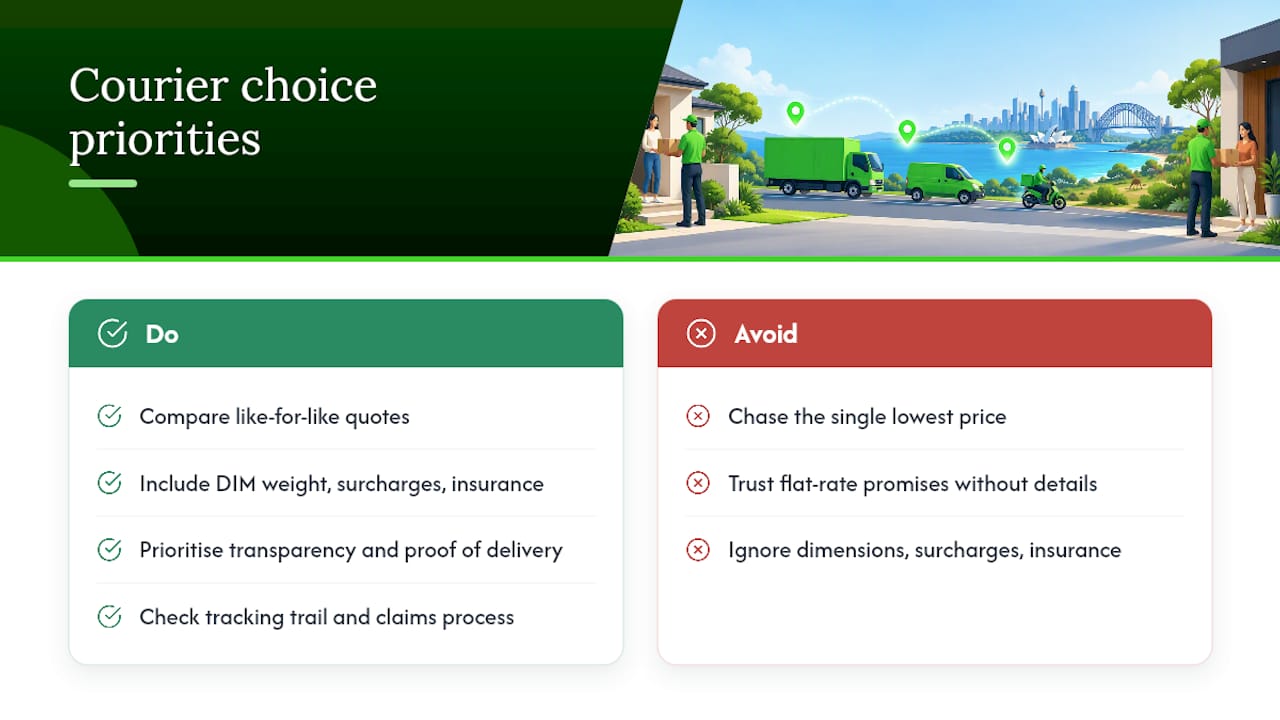
The advice most people get about courier shipping treats price as the only variable worth comparing, and that is where it falls short. A rate that looks cheap on a homepage banner means very little if the real quote balloons once dimensions, surcharges, and insurance are factored in. The senders who get consistently good outcomes are not the ones chasing the single lowest number, they are the ones who compare like-for-like quotes, including DIM weight and add-ons, before they commit.
What is overrated is the flat-rate promise with no detail behind it. What is underrated is a courier that shows you the tracking trail and tells you plainly what happens if something goes wrong. If you take one thing from this, prioritise transparency and proof of delivery over a headline price, because that is what protects you when a parcel is late, damaged, or missing.
— Aeros
Compare rates and book your delivery
Getting a door to door parcel moving with Aeros Couriers starts with a quote, not a commitment. You enter the pickup and delivery details, compare rates across carriers instantly, and see the real price, including any insurance cover, before you book anything.
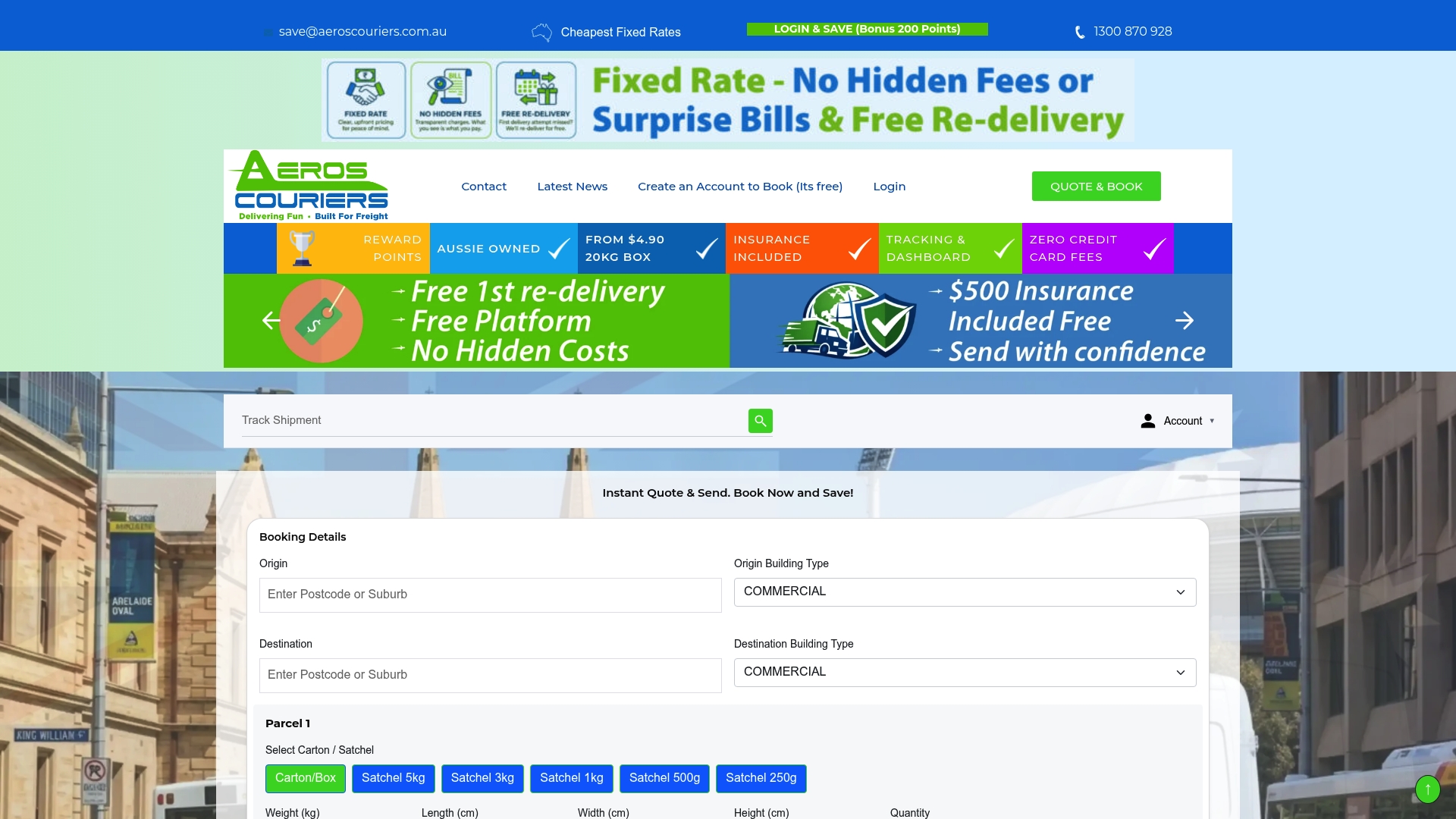
After you book, expect a straightforward sequence: an instant quote based on your parcel’s weight and dimensions, a pickup booked for a time that suits you, a printable label generated on the spot, and a tracking number issued so you can follow the parcel from collection to doorstep. Pricing stays visible upfront, with no fuel or handling surcharges added later, and points earned on the booking go toward future savings through the rewards programme.
- Instant rate comparison across multiple carriers from one quote.
- Pickup booked and label printed without a separate depot visit.
- Tracking number issued at booking, not after the parcel has already left.
Ready to see your rate? Compare and book a courier now.
Authoritative reading on delivery rights and trends
For deeper detail behind the claims in this guide, these sources cover consumer rights and industry pricing trends directly.
- ACCC guidance on buying online explains that online purchases carry the same consumer guarantees as in-store ones.
- ACCC guidance on non-delivery sets out what businesses must communicate about timing and remedies.
- Grant Thornton and Power Retail research on how price, speed, and reliability shape delivery expectations.
Sources
- When you don’t receive products or services paid for | NSW Government
- Buying online | ACCC
- Value, speed and reliability: what’s driving Australian retail? | Power Retail (Grant Thornton)
- Not receiving products or services that are paid for | ACCC
FAQ
What is door to door delivery?
Door to door delivery is a courier service that collects a parcel from the sender’s address and delivers it directly to the recipient’s address, with tracking covering pickup, transit, and final handover. It contrasts with services that require drop-off or pickup at a depot at either end.
Which is the cheapest home delivery service?
The cheapest option depends on parcel weight, dimensions, and destination, since volumetric pricing can change the real cost significantly. Some couriers advertise low starting rates for parcels up to 25kg with no hidden surcharges, though comparing an actual quote against your parcel’s dimensions is the only reliable way to confirm the cheapest fit.
What is door to door delivery also called?
It is sometimes called door to door courier service or door to door pickup and delivery, and in freight contexts it may be described as door to door shipping, particularly when customs clearance is involved for international goods.
Who has the cheapest courier rates?
Rates vary by weight, distance, and service speed, so there is no single cheapest provider for every shipment. Comparing quotes from multiple carriers on the same parcel details, as Aeros Couriers’ rate comparison tool allows, is the most reliable way to find the lowest genuine price for that specific delivery.
What happens if my door to door delivery is damaged or missing?
If a delivery service fails to meet its obligations, the business is legally responsible for providing a remedy under Australian Consumer Law. Checking a courier’s insurance cover and claims process before booking makes resolving a missing or damaged parcel faster if something goes wrong.
