
That moving quote has probably already done the damage. You opened the email, saw the number, and instantly started renegotiating with yourself. Maybe you carry everything yourself. Maybe you bribe mates with pizza. Maybe you just keep half your stuff and pretend that was always the plan.
Many movers make the same mistake at this point. They assume the cheapest way to move house is a single choice: full-service removalists, a rental truck, or complete DIY. In practice, the lowest-cost move is usually a smarter mix of methods. You pack what you can. You pay for muscle only where it matters. You send boxes separately when that beats hauling them all in one hit.
That approach matters even more now because common moving advice still misses how Australians move today. One clear gap is that existing content doesn't properly address fragmented, non-traditional moving solutions, including courier and parcel services for non-urgent shipments, even as lighter moves become more viable for people who reduce what they own before relocating, as noted by MoveBuddha's discussion of cheap local moves.
The Smart Mover's Mindset Beyond the Big Truck
The biggest savings usually start when you stop thinking like a customer buying a "move" and start thinking like a coordinator managing a few separate jobs.

A traditional quote bundles everything together. Packing, lifting, loading, transport, timing, risk, convenience. That's why the price can feel brutal. You're paying for a team to solve every problem, even the ones you could handle yourself for far less.
A hybrid move breaks that bundle apart. That changes everything.
What a hybrid move actually looks like
For one household, it might mean packing every carton themselves, booking a man-with-a-van for the heavy furniture, and sending extra boxes separately. For another, it might mean moving essentials in the car, arranging fast delivery for cartons, and selling bulky furniture that isn't worth dragging to the next suburb.
The point isn't to chase hardship. It's to pay only for the parts that save real time, real strain, or real risk.
Practical rule: If an item is cheap to replace, awkward to carry, and rarely used, question whether it deserves space in your move at all.
The wrong question and the right one
The wrong question is, "What's the cheapest company?"
The right question is, "Which parts of this move need a vehicle, which need labour, and which only need organised packing?"
That shift helps you avoid two expensive traps:
- Overbuying convenience: Hiring a full crew when you only need help with a fridge, mattress, and sofa.
- Underestimating effort: Booking the cheapest vehicle option, then losing money to stress, delays, or repeated trips.
- Dragging dead weight: Paying to move items that should've been sold, donated, or sent separately.
I've seen people save more by reducing the job than by negotiating the quote. That's the core idea. A cheaper move isn't always about harder work. It's usually about better separation of tasks.
The Ruthless Declutter to Sell and Ship Before You Pack
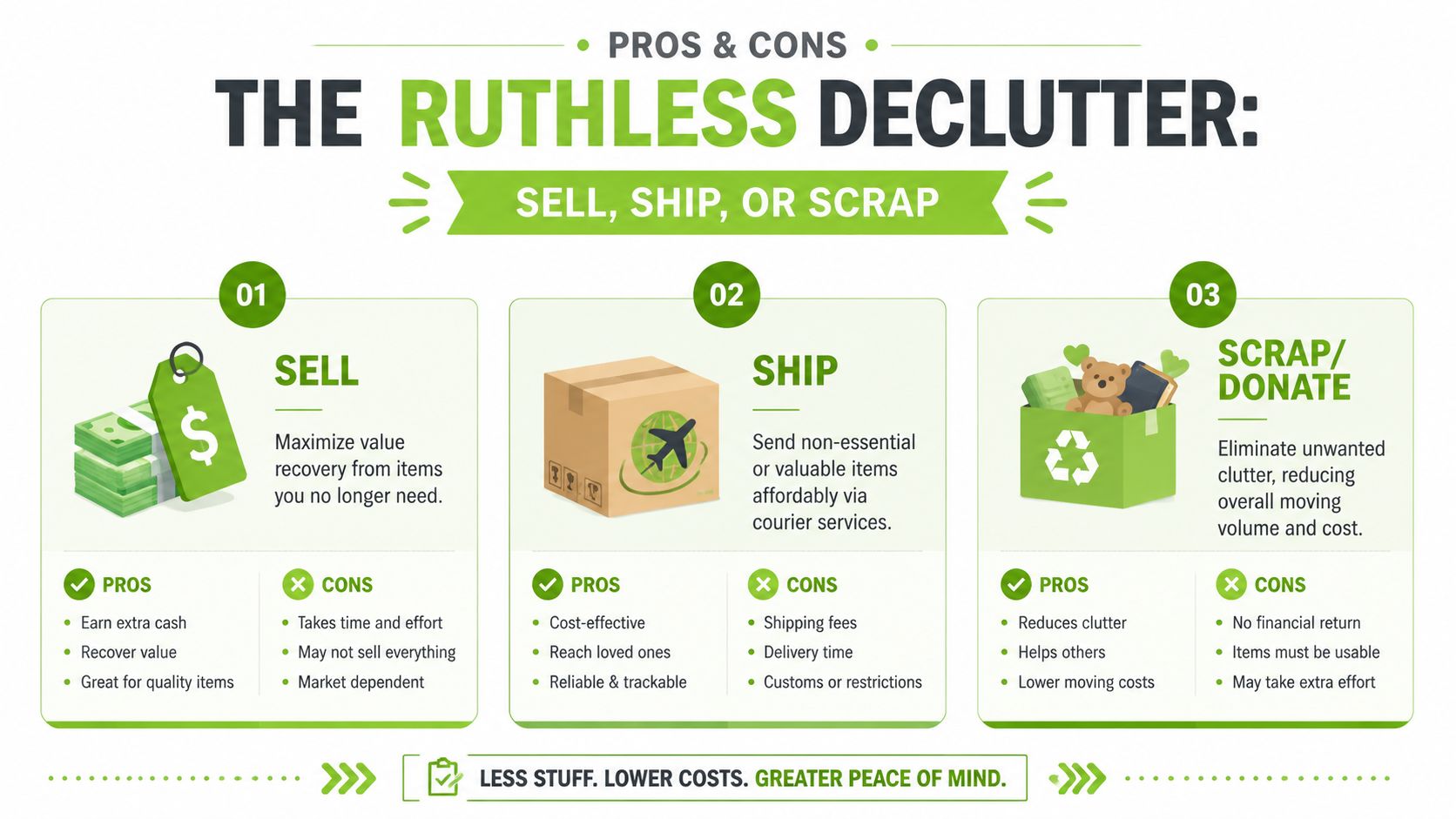
Every object in your home has a moving cost attached to it. Some items cost money to move. Others cost time, space, fuel, or effort. Before you tape a single box, force every item through one filter: sell, ship, or scrap.
Sell what doesn't deserve truck space
Facebook Marketplace and Gumtree are best for items that still have obvious local value. Spare desks, occasional chairs, second TVs, bikes, side tables, unopened décor, and kid gear often move faster than people expect if the price is realistic and pickup is simple.
Use one test. Would you pay to transport this item if you had to decide today? If the answer is no, list it.
Selling does two useful things at once. It cuts volume and gives you fresh cash for boxes, tape, van time, or cleaning.
Ship the items that matter but don't need to ride with you
Many people miss a strong cost-saving move here. Not everything needs to go in the same vehicle on the same day. Books for a family member, spare clothes, office gear, small electronics, kitchen items, and neatly packed household cartons can often travel separately.
If you're comparing options for cartons and small consignments, it's worth reviewing practical parcel pricing strategies such as the cheapest way to send a parcel. The key is simple: once you remove box volume from the main move, you may be able to use a smaller vehicle, shorter labour booking, or fewer trips.
Take a common example. A spare bike with low resale value but awkward dimensions might not be worth carrying with household furniture if it creates packing problems. A box set of books, on the other hand, is dense, easy to carton properly, and often better handled as a separate shipment than as loose dead weight inside a rushed moving van.
Scrap or donate without sentimentality
Not every item needs a second life in your next home.
- Worn basics: Old Kmart shelving, chipped storage tubs, tired linen, broken office chairs.
- Duplicate kitchen gear: Extra pans, mystery lids, spare mugs, gadgets still living in a drawer.
- Emotional clutter: Items kept from habit rather than use.
If you're hesitating over an item for more than a minute, ask a tougher question: will I be relieved to see this in the new place, or annoyed that I brought it?
That answer is usually honest.
A faster way to decide
Use this three-pass method over a weekend:
- First pass: remove obvious rubbish and donation items.
- Second pass: identify saleable pieces with clear local demand.
- Third pass: group the remaining non-furniture items into "carry now" and "send separately".
This isn't just tidying up. It's cost control before the move even starts.
Find Free Packing Supplies to Save Your First $500
Friday night before the move, you realise the quote looked cheap until the packing bill started piling up. New cartons, tape guns, bubble wrap, butcher's paper, mattress bags. Suddenly you've spent real money before a single item leaves the house.
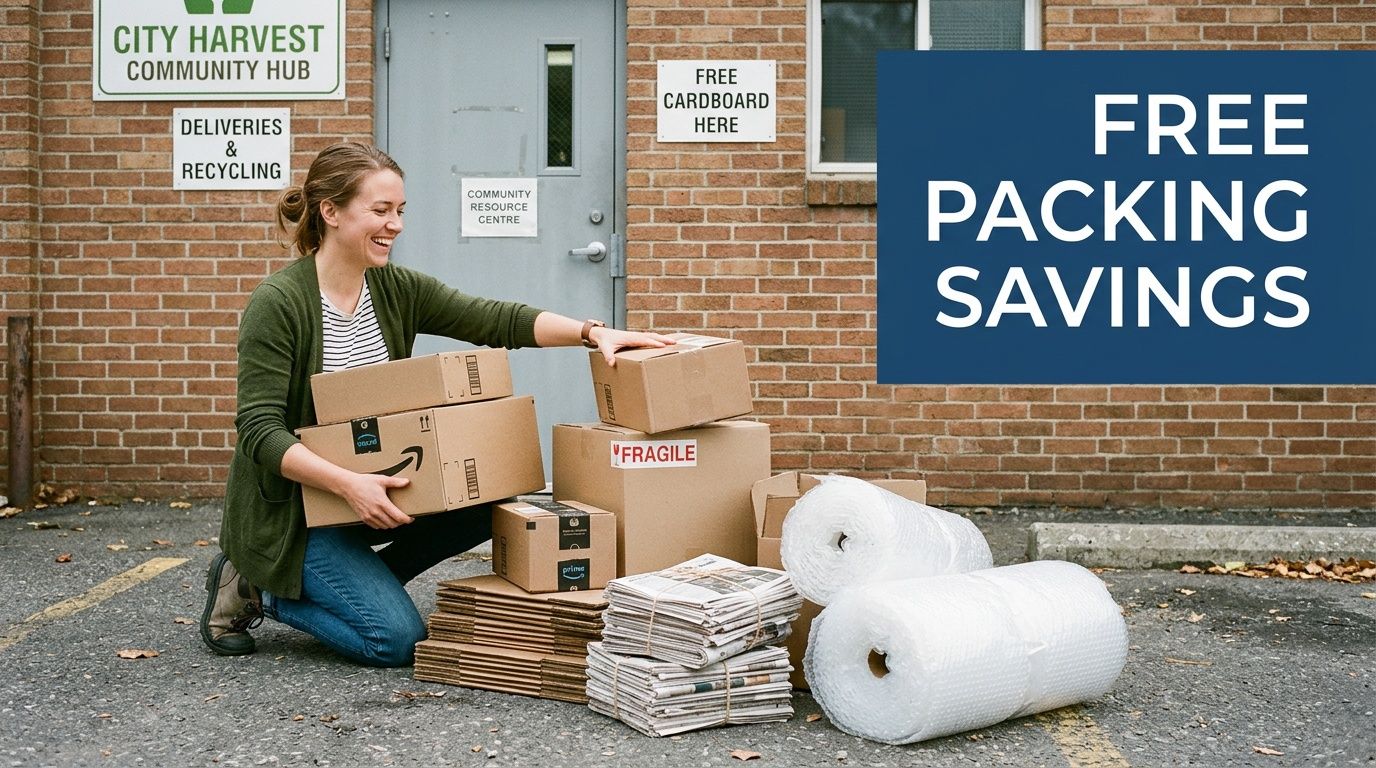
I see this all the time. People try to save on transport, then hand the savings straight back at the packing-supplies aisle. A cheaper move starts with free, clean, uniform cartons and a plan for what needs premium protection.
That matters even more in a hybrid move. If you're packing your own boxes, sending some separately, and only paying a man-with-a-van for furniture and heavy lifting, every carton needs to be the right size, strong enough for stacking, and cheap enough that you don't care if it never comes back.
Where to get solid boxes without paying retail
Start 2 to 3 weeks early. The best free boxes go fast, and waiting until moving week leaves you with crushed supermarket cartons and panic buys.
- Facebook Marketplace and local community groups: Best source for full moving bundles, often with tape, paper, and markers included.
- Bottle shops: Strong, compact boxes that work well for pantry goods, cleaning products, and tools.
- Pharmacies and office supply stores: Good for smaller cartons that stop people from overpacking heavy items.
- Electrical retailers: Useful for double-wall cartons and clean padding.
- Workplaces and storerooms: Regular deliveries often mean a steady supply of decent cartons if you ask early.
- Bunnings and other large retailers: Ask when shelves are restocked and whether staff can set aside clean boxes.
Use a simple filter. If the box smells, has water damage, greasy corners, or a weak base, leave it there. Free rubbish is still rubbish.
If you're splitting the move and sending smaller items separately, box size matters more than people expect. Oversized cartons cost more to move, are harder to stack, and encourage bad packing habits. For satchel-sized items like cables, documents, toiletries, or folded clothes, this guide to small satchel options in Australia Post contexts helps you match the packaging to the item instead of defaulting to a half-empty box.
Pack for transport type, not just for storage
The packing stage is where cheap moves usually go wrong. A box packed for sitting in a spare room is not packed for being carried downstairs, loaded into a van, then possibly shipped separately with other cartons.
Use these rules.
Put dense items in small boxes
Books, canned food, tools, and paperwork belong in smaller cartons or wheeled luggage. Large boxes filled with heavy items split at the base and slow the whole move down. They also increase labour time if you're paying hourly help.
Use what you already own as protective fill
Towels, jumpers, socks, pillowcases, and linen do the job well for many household items. Save bubble wrap for glassware, framed pieces, and anything fragile.
Reinforce the bottom properly
One strip of tape across the seam is lazy packing. Run tape along the centre seam, then across both edges. If the box is carrying weight, add a second layer. People who work around freight and pallets already understand load stability. The same basic handling logic shows up in this essential advice for warehouse operations.
Label for speed, not perfection
Write the room, the contents, and whether the box is "open first", "courier", or "van". In a hybrid move, that last note saves money because the wrong box in the wrong vehicle creates extra lifting, repacking, and delays.
Three mistakes that turn free boxes into expensive problems
Free boxes save money only if they survive the job.
- Mixing light and heavy items in one large carton: The weight shifts and crushes weaker contents.
- Using giant boxes for "miscellaneous" items: They become awkward, disorganised, and slow to unload.
- Packing fragile items with too much empty space: Movement inside the box causes the breakage, not the lack of expensive wrap.
A good packing setup is boring on purpose. Small heavy boxes. Medium general boxes. Clearly marked cartons for courier shipment. Furniture left for the van crew.
That is how the hybrid move starts paying off before transport even begins.
Choosing Your Transport The Ultimate Cost Comparison
A cheap move rarely comes from one service doing everything. It comes from assigning each part of the job to the cheapest method that can handle it safely.
That is the mistake I see all the time. People hire a truck big enough for the whole house, then pay to move flat-pack furniture, spare linen, kids' toys, and boxes of books in the same expensive booking as the sofa and fridge. A better approach is to price transport by category. Heavy and awkward items need lifting power. Boxed goods need the lowest cost per carton. Your car can handle the valuables and first-night essentials.
DIY truck rental
DIY truck hire can be the lowest direct-cost option for a short local move, especially for a studio, one-bedroom place, or a tidy two-bedroom home with easy access. Budget providers and comparison sites such as Oneflare's moving cost guide show why people consider it first. Truck hire often looks far cheaper than booking a full removals crew.
The savings are real only if the job stays simple.
Add stairs, tight loading zones, oversized furniture, or a long drive, and DIY starts leaking money through fuel, trolley hire, extra rental hours, and time off work. There is also injury risk. One damaged back can wipe out every dollar you thought you saved. For that reason, I only rate full DIY as the best-value option when the load is modest and the access is forgiving.
Man-with-a-van services
For many local moves, this is the practical middle ground. You get a vehicle and labour without paying for a full removals setup, office overhead, and a large crew.
Australian marketplaces such as Airtasker's moving services cost guide give a better benchmark here than generic overseas pricing pages. The exact rate depends on suburb, stairs, item count, parking, and minimum booking length, but the pattern is consistent. A man-with-a-van often beats full-service movers on smaller jobs, especially apartments, share houses, and partial house moves.
The catch is quoting. If you understate volume or forget to mention a steep driveway, narrow stairwell, piano, or fridge with no lift access, the booking can stretch well past the estimate. Good operators ask sharp questions for a reason.
Full-service movers
Full-service movers make sense when complexity is the true cost driver. Large family homes, difficult access, antique furniture, or tight settlement timing can justify the premium because experienced crews work faster and make fewer expensive mistakes.
This is also the option people underestimate when they compare only the quote headline. Professional crews bring pads, dollies, straps, and loading technique. They can protect floors, stack a truck properly, and reduce breakage. If the move is messy enough, paying more upfront can be cheaper than replacing damaged furniture or needing a second job to finish what the first plan could not handle.
Read the exclusions before you book. The fine print around waiting time, stair fees, long carries, and weekend surcharges matters. This breakdown of Hidden Costs Of Moving covers the extra charges that catch people who focus only on the base rate.
Consolidated freight and backloading for longer moves
Interstate moves change the maths. Once distance rises, paying for an entire truck just to carry boxes becomes hard to justify.
Consumer guides such as Muval's interstate moving cost guide explain the broad difference between dedicated removals and backloading. Backloading is usually cheaper because your goods share truck space on an existing route, but timing is less precise. That trade-off suits flexible households. It does not suit anyone who needs exact-day delivery.
For cartons and smaller household items, a hybrid move usually beats the one-truck model. Pack your boxes yourself, send them through a freight or courier service, then book local lifting help only for the furniture and appliances. Before you reserve a larger vehicle than you need, compare live rates on courier and freight options for moving boxes. In plenty of moves, that one check is what keeps the budget under control.
Moving transport options compared
| Method | Estimated Cost (Local) | Estimated Cost (Interstate) | Best For | Biggest Catch |
|---|---|---|---|---|
| DIY truck rental | Usually the lowest direct cost on simple local moves | Often loses value as distance, fuel, and time rise | Small local moves with easy access | Labour, driving, damage risk, hidden extras |
| Man-with-a-van | Often cheaper than full-service on smaller jobs | Better for partial or short-haul loads than whole-house interstate relocations | Units, share houses, partial moves | Poor volume estimates and minimum hours |
| Full-service movers | Usually the highest local price | Premium pricing for dedicated interstate service | Complex homes, difficult access, tight timing | You may pay for services you do not need |
| Backloading | Rarely relevant for short suburban moves | Often cheaper than a dedicated truck if your dates are flexible | Interstate furniture and mixed household loads | Delivery windows are less exact |
| Consolidated freight for boxes | Depends on carton count and service level | Often strong value for boxed goods on longer routes | Hybrid moves that split boxes from furniture | Packing discipline matters |
The cheapest transport option on paper is not always the cheapest move in practice. The strongest budget strategy is usually a hybrid one. DIY the packing, pay for the lifting that actually needs skill, and send boxes through the lowest-cost freight channel that fits your timeline.
The Hybrid Move in Action Using Couriers for Boxes
The best hybrid move is boring on purpose. It separates urgency from bulk. It sends what can travel independently and reserves paid labour for the few items that need hands, height, and careful loading.
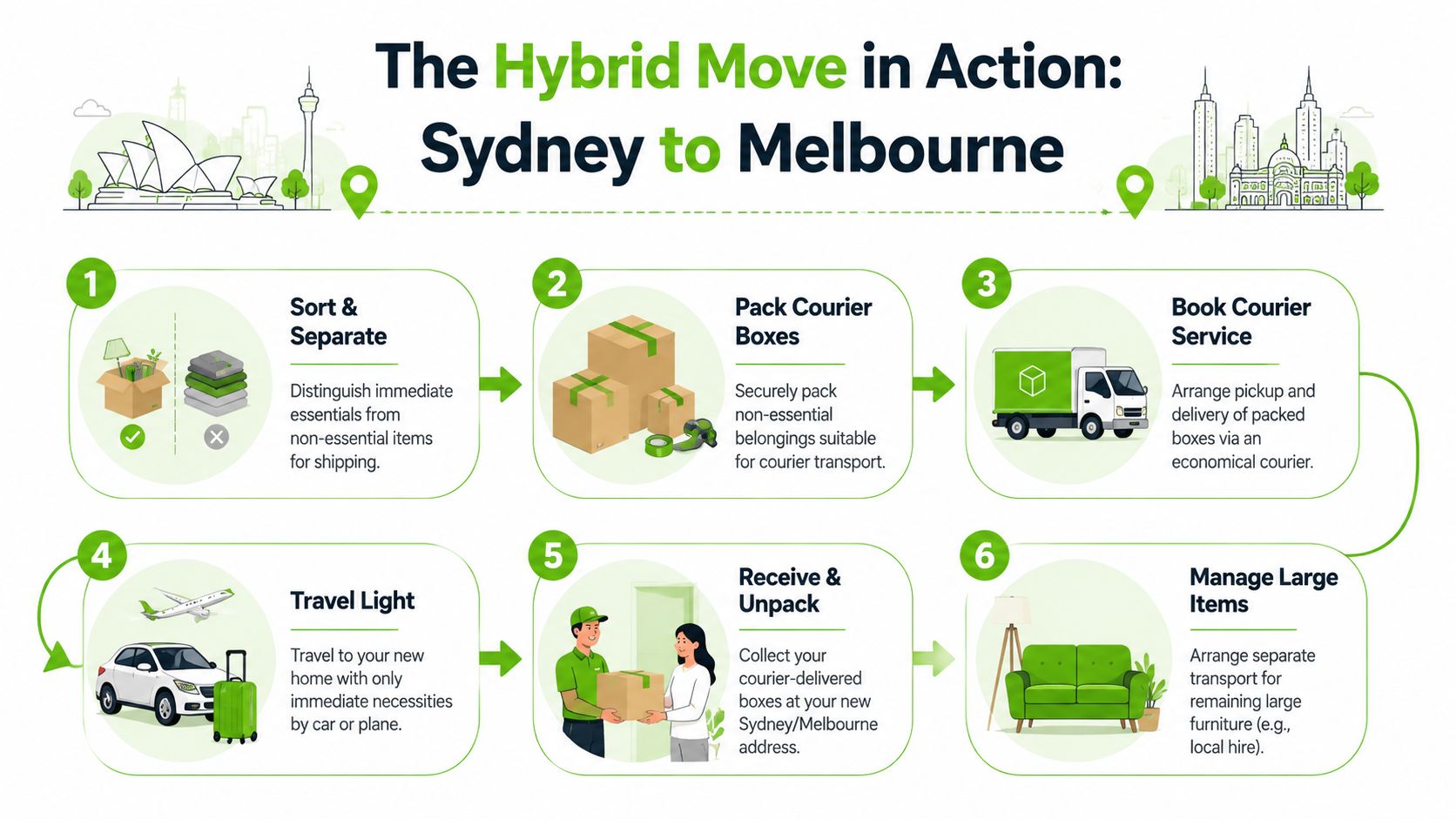
Consider Sarah. She's leaving Sydney for Melbourne. She doesn't need a giant truck to shadow her entire life from one door to the next. She needs a method.
She sorts the move into three groups. Immediate essentials travel with her. Heavy furniture gets separate handling. Everything boxable gets packed carefully and booked through consolidated freight.
Why this model beats the one-truck mindset
Verified benchmark data shows that for interstate relocations, consolidated Less-Than-Truckload freight for boxes and similar loads can deliver 35-50% savings, with a 10-20 m³ Sydney to Melbourne shipment costing $1,200-$3,500 compared with $4,000+ for a traditional moving truck, based on the provided LTL benchmark data.
That matters because many households don't need one service to do everything. They need one affordable way to move cartons, one short booking for bulky lifting, and a clear plan for the rest.
Sarah's version looks like this:
- Essentials with her: documents, daily clothes, laptop, medication, chargers, bedding.
- Courier-ready cartons: books, kitchenware, shoes, home office items, décor, folded linen.
- Heavy or awkward pieces: bed frame, mattress, sofa, washing machine.
A full removalist treats all three groups as one problem. The hybrid move doesn't.
How to organise the box side properly
Courier and freight networks reward good packing and punish loose thinking. Cartons need to be square, sealed, labelled clearly, and packed to survive handling without shifting internally. If you're moving larger cartons or awkward boxed items, this guide on sending big parcels cheaply is useful for understanding how to package bulkier consignments without overpaying.
For stacking and safe handling principles, especially if you're organising multiple cartons for collection or temporary storage, this practical resource on essential advice for warehouse operations is worth a look. The handling logic applies even when you're not running a warehouse. Stable stacking prevents crushed cartons, split seams, and nasty surprises on arrival.
What the hybrid move gets right
It respects a simple truth. Furniture and cartons are different jobs.
A sofa needs access planning, lifting skill, and vehicle space. A taped box of books needs secure packing and a sensible shipping method. Trying to solve both with one expensive all-in booking is where many budgets fail.
Send what can travel independently. Reserve premium labour for the items that can injure you, damage walls, or ruin the day.
Where people get it wrong
The hybrid model only works when the sorting is strict.
People usually blow it by doing one of these:
- Packing too late: then everything feels urgent and gets shoved into the same costly option.
- Sending loose items: odd-shaped bags and unsealed tubs are asking for trouble.
- Keeping low-value furniture: bulky pieces can erase savings fast.
- Forgetting arrival order: first-night essentials should never disappear into the general box stream.
The beauty of the hybrid move isn't novelty. It's control. You stop buying one oversized solution and start matching each part of the move to the cheapest sensible method.
Your Final Playbook A Pre-Move Checklist and Budget
A low-cost move comes down to timing, discipline, and refusing to pay for convenience you don't need. If you keep the move modular, the decisions become much easier.
Your timeline before moving day
Six weeks out
- Declutter hard: sell, donate, recycle, or bin anything that doesn't justify transport.
- Start sourcing boxes: ask retailers, friends, local groups, and workplaces.
- Measure big items: know what furniture needs a van or lifting help.
Three to four weeks out
- Separate essentials from delayed items: keep daily-life gear out of the shipping stream.
- Book transport selectively: reserve local help only for the heavy pieces.
- Check access at both properties: stairs, lifts, loading zones, and parking affect time and cost.
One to two weeks out
- Pack by room and urgency: day-one boxes should be obvious.
- Label everything clearly: top and sides.
- Confirm pickups and delivery windows: especially if boxes and furniture are travelling differently.
Moving week
- Strip beds and dismantle only what must be dismantled
- Keep a personal carry bag: documents, chargers, medication, toiletries, clothes.
- Do one final cull: almost every home still has items that don't deserve the trip.
If you want a solid reminder of the budget traps people forget, this roundup of Hidden Costs Of Moving is a helpful prompt before you lock in bookings.
Two simple budget templates
Use estimates, not wishful thinking. For box shipping and separate consignments, a quote tool such as this shipping cost estimator helps you pressure-test the numbers before moving week.
| Move type | Budget lines to include |
|---|---|
| Local hybrid move | Boxes and tape, van or man-with-a-van booking, fuel if self-driving, cleaning, storage if needed, box delivery for overflow items |
| Interstate hybrid move | Box freight, furniture transport or local van bookings at each end, travel costs, temporary essentials, replacement cost for furniture you choose not to move |
The mindset that saves the most
The cheapest way to move house isn't a secret truck company or a magic discount code. It's a decision-making process.
Cut the load first. Pack better. Separate cartons from furniture. Buy labour only where it prevents injury, breakage, or repeated trips. That's how you keep more money in your pocket and arrive at the new place less wrecked.
If you want a practical way to price box and parcel delivery before you commit to a larger moving vehicle, Aeros Couriers makes it easy to compare options, book online, print labels, and arrange low-cost shipping across Australia. For anyone planning a hybrid move, that can be the difference between paying for empty truck space and paying only for the cartons you need to send.
Courier quotes, tracking and support
Ready to send a parcel? Compare the available services for your postcodes, parcel dimensions and weight. For an existing delivery, use your consignment number to check tracking or ask our team for help.