
Contact the seller or sender first: they hold the original shipment record and can usually pull up the carrier and reference details within minutes. While you wait, search your email, SMS and retailer account for dispatch confirmations, then try a carrier’s address or recipient-based search if those come up empty.
TL;DR:
- Retailer accounts often retain the carrier and reference number after a tracking link expires; search receipts using the exact business name on your bank statement.
- Carrier searches work better when you provide the recipient name, full address, phone number, approximate ship date, and parcel description together.
- After a week or two without answers, escalate with receipts, message screenshots, key dates, and a direct request for dispatch proof.
- Australian Consumer Law requires businesses unable to supply a paid item within a reasonable time to offer a solution; marketplace claims go to individual sellers.
Table of Contents
- Immediate steps you can do now: seller, emails, receipts and retailer accounts
- Carrier and address-based searches: how to search without the standard tracking number
- If you still can’t find the parcel: escalate with evidence and know your consumer rights
- Prevention: simple habits and tools to stop tracking numbers from getting lost
- How our tools and support reduce missing-tracking problems
- Using alternative identifiers such as phone number or recipient name for parcel tracking
- Steps to verify your identity or proof of purchase when requesting parcel information
- Using third-party parcel tracking services or apps that allow tracking without a number
- How courier companies like us handle parcels without tracking numbers internally
- Timeframes typically involved in locating parcels without tracking numbers
- A straight answer on what actually works
- How we help you avoid this problem altogether
- FAQ
- Sources
Immediate steps you can do now: seller, emails, receipts and retailer accounts
Before you ring a carrier, go straight to whoever sold you the item. Send them your order number, a copy of the purchase receipt, the delivery address and a phone number they can reach you on. This gives them everything they need to pull up the shipment record without going back and forth.
While you wait for a reply, work through your own records:
- Search your email for the retailer’s name, “dispatch”, “shipped” or “on its way”.
- Check your SMS inbox and any shopping app notifications you may have missed.
- Look in spam or promotions folders, since courier alerts sometimes land there.
- Check your bank or PayPal statement for the exact business name the charge came from.
- Log into the retailer’s website or app and open “order history” or “track order”.
Most retailer accounts show the carrier name and a reference number even when the original tracking link has expired or was never sent. If you spot one, screenshot it or save the order page as a PDF before you contact anyone else, since that record often speeds up the next step.
Pro Tip: Search your email for the retailer’s exact charge name from your bank statement, not just the store name you remember, since invoices are often sent from a different business entity.
Carrier and address-based searches: how to search without the standard tracking number
If the seller can’t help straight away, most carriers and Australia Post let you search using details other than a tracking number. Try these in order:
- Use the carrier’s “track by reference” or “track by address” tool with the delivery address and recipient name.
- Enter any delivery card number left at your address, since posties and couriers often leave one when a parcel can’t be left safely.
- Call or use webchat and give the sender’s name, the approximate ship date and a short description of the parcel.
- Ask whether the carrier can search by your mobile number or email if that’s what the sender used to book the shipment.
- Visit your local post office or depot in person with photo ID and the order confirmation, since staff can sometimes search internal systems that aren’t available online.
Being specific helps. A vague “I’m missing a parcel” gets a slower response than “a book parcel from a Sydney seller, booked around March 10, 2026, addressed to my unit.”
If you still can’t find the parcel: escalate with evidence and know your consumer rights
When the easy checks don’t turn anything up, it’s time to put together a short evidence pack and push for a resolution. Ask the seller directly for proof of dispatch, the carrier’s reference number, photos of the packed item if they have them, and a clear answer on whether they’ll refund or replace it.
Before you escalate further, gather:
- Your order number and a copy of the payment receipt.
- Screenshots of every message exchanged with the seller so far.
- Any delivery card, First Notice or carrier reference you’ve found.
- Dates: when you paid, when it was meant to arrive, and when you first raised the issue.
Under the Australian Consumer Law, a business that can’t supply something you’ve paid for within a reasonable time has to offer a solution, whether that’s a replacement, a refund or another fix. If you bought through a marketplace, remember that your rights generally sit with the individual seller rather than the platform itself, so direct your evidence pack to them first. If the seller won’t act, a marketplace dispute process or a chargeback through your bank or card provider is the next step.
One of the most reliable routes to a resolution is a seller who still holds the original dispatch record, since that single document usually resolves the dispute faster than any amount of back-and-forth messaging.
Prevention: simple habits and tools to stop tracking numbers from getting lost
A few small habits make the next parcel much easier to find.
- Save every dispatch email and SMS instead of deleting them once the parcel arrives.
- Turn on push notifications in retailer and carrier apps so tracking links don’t rely on email alone.
- Create a dedicated shopping email folder or account for anything you don’t want to lose track of.
- If you ship often, keep a simple log with the merchant, date and carrier for each parcel.
Pro Tip: A plain spreadsheet with four columns, merchant, date, carrier and reference, takes thirty seconds to update and saves hours when something goes missing.
How our tools and support reduce missing-tracking problems
We built our platform around the same problem this article solves: parcels that are hard to trace because the reference got lost somewhere between booking and delivery.
- We quote transparent pricing without hidden surcharges, so the booking confirmation you keep reflects the full cost record.
- Our parcel monitoring helps track a shipment’s progress automatically rather than relying on a single email you might delete.
- Our customer support team can look up a shipment from an address, sender name or booking reference when the tracking number isn’t available.
Consolidated tracking across carriers, paired with a support team you can actually reach, shortens the time between “I think it’s lost” and “here’s exactly where it is.”
Using alternative identifiers such as phone number or recipient name for parcel tracking
When the tracking number itself is gone, the next best thing is any identifier the carrier used to book the shipment in the first place. Most major carriers and Australia Post let you search by the recipient’s name combined with the delivery address, which narrows results to the handful of parcels addressed to that location in a given week.
A phone number works similarly, since many retailers pass your mobile number to the courier for delivery notifications, and that number is often searchable on the carrier’s side even without a reference code. If you booked the shipment yourself rather than having a retailer do it, your own account on the carrier’s website will usually list every shipment tied to your name, email or phone number, regardless of whether you kept the original tracking link.
This approach works best when you can narrow the date range. Telling a carrier “sometime last month” produces too many matches, but “the week of March 10” paired with your name and suburb usually narrows it to one or two candidates. Combine this with a parcel description (size, weight, what’s inside) and you give the person on the other end of the phone enough to search efficiently rather than guess.
Steps to verify your identity or proof of purchase when requesting parcel information
Carriers and sellers won’t hand over delivery details to just anyone, so expect to prove you’re the rightful recipient or buyer before they’ll search further. Have your order confirmation or receipt ready, since it shows the date, amount paid and the business you bought from, which is usually the first thing support staff ask for.
Photo identification matters most when you’re trying to collect a parcel in person, such as at a post office counter or a carrier’s local depot, where staff need to confirm the name on the parcel matches the person standing in front of them. If you’re querying online or by phone instead, the combination of your name, delivery address and payment amount is often enough to match you to the shipment in their system.
Keep a few things on hand before you start any enquiry: the retailer’s order number, a screenshot or PDF of the payment confirmation, the exact delivery address used, and your phone number or email if that’s what was given to the carrier at booking. Having all of this ready the first time you call cuts out a second round of back-and-forth and gets your case looked at properly instead of parked in a queue.
Using third-party parcel tracking services or apps that allow tracking without a number
A handful of tracking apps and comparison tools let you search across multiple carriers at once using details other than the official tracking number, which is useful when you’re not sure which courier a seller used. These tools typically ask for the sender’s name, your address and an approximate ship date, then check that information against several carriers’ systems in one search instead of you doing it manually for each one.
Comparison platforms built for international shipping, such as Parcel International, can be particularly useful for cross-border parcels, since they’re set up to help with the extra documentation customs clearance often requires, alongside comparing carrier options. These are worth trying when a parcel has crossed a border and you’re not sure which local depot it has landed with.
Third-party apps are a reasonable first move when you genuinely don’t know which carrier was used, but they still rely on the same underlying information: your address, the sender’s details and roughly when it shipped. If a third-party search comes up empty, that usually means the seller hasn’t yet handed the parcel over to a carrier, which brings you back to contacting them directly.
How courier companies like us handle parcels without tracking numbers internally
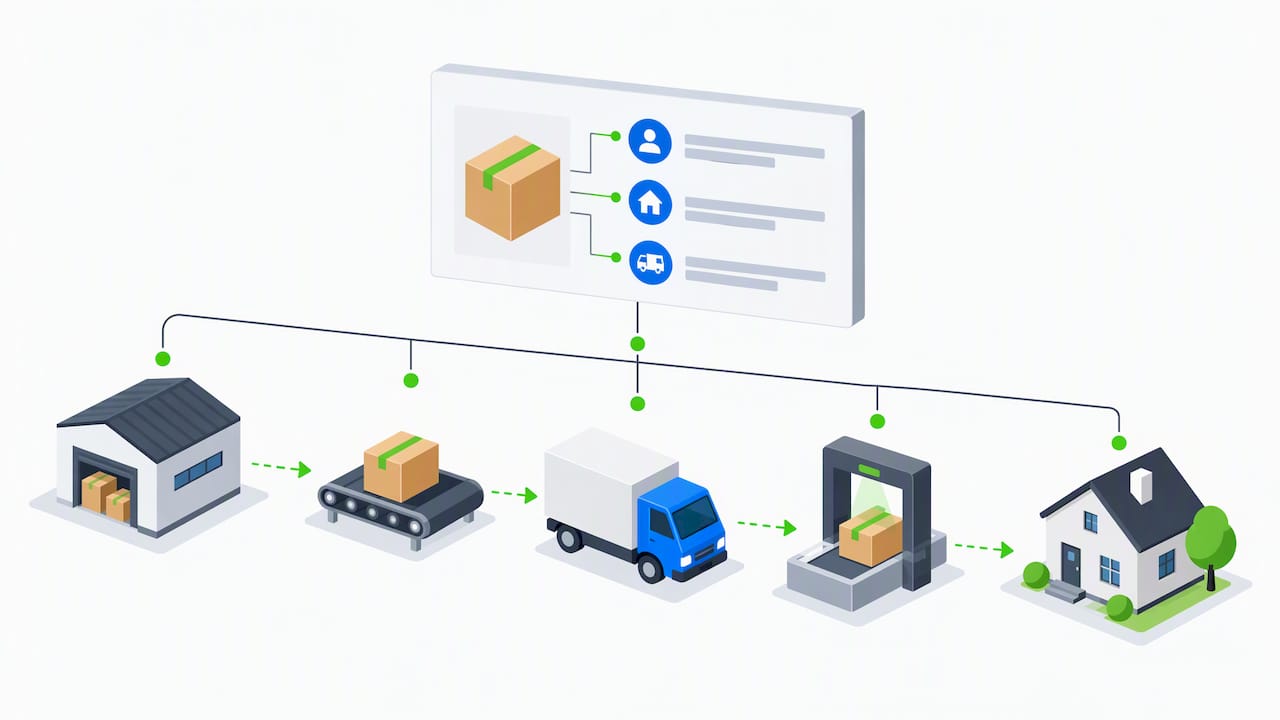
When a tracking number goes missing on our side, we don’t treat the shipment as lost. Every booking made through our platform is logged against the sender’s account, the recipient’s address and the specific carrier used, so our support team can look a parcel up from any of those details even if the customer-facing tracking number has been misplaced.
Because we compare rates and routes across multiple carriers rather than relying on just one, our internal system keeps its own reference tied to each booking regardless of which carrier ultimately handles the delivery. That means a missing tracking number on the carrier’s side doesn’t necessarily mean we’ve lost the thread. Active parcel monitoring flags shipments that haven’t moved as expected, which often surfaces a problem before the customer even realises their tracking link isn’t working.
In practice, this is what consolidated tracking is for: one dashboard that ties a booking reference to the parcel’s real-world journey, so a missing number is a lookup for our support team rather than a dead end for the customer.
Timeframes typically involved in locating parcels without tracking numbers
How long this takes depends heavily on which step actually finds the answer. A seller who still has the dispatch record on file can usually confirm the carrier and reference within a business day, sometimes within the hour if their systems are up-to-date. Checking your own email or retailer account is instant once you know where to look, so that step costs you minutes rather than days.
Carrier address or name-based searches tend to take longer, generally a few business days, since staff are manually matching your details against shipments rather than pulling up an exact record. International parcels add more time again: waiting for a First Notice to arrive by post can take a week or more after the parcel lands in the country, and customs processing through an Import Declaration adds further days on top of that.
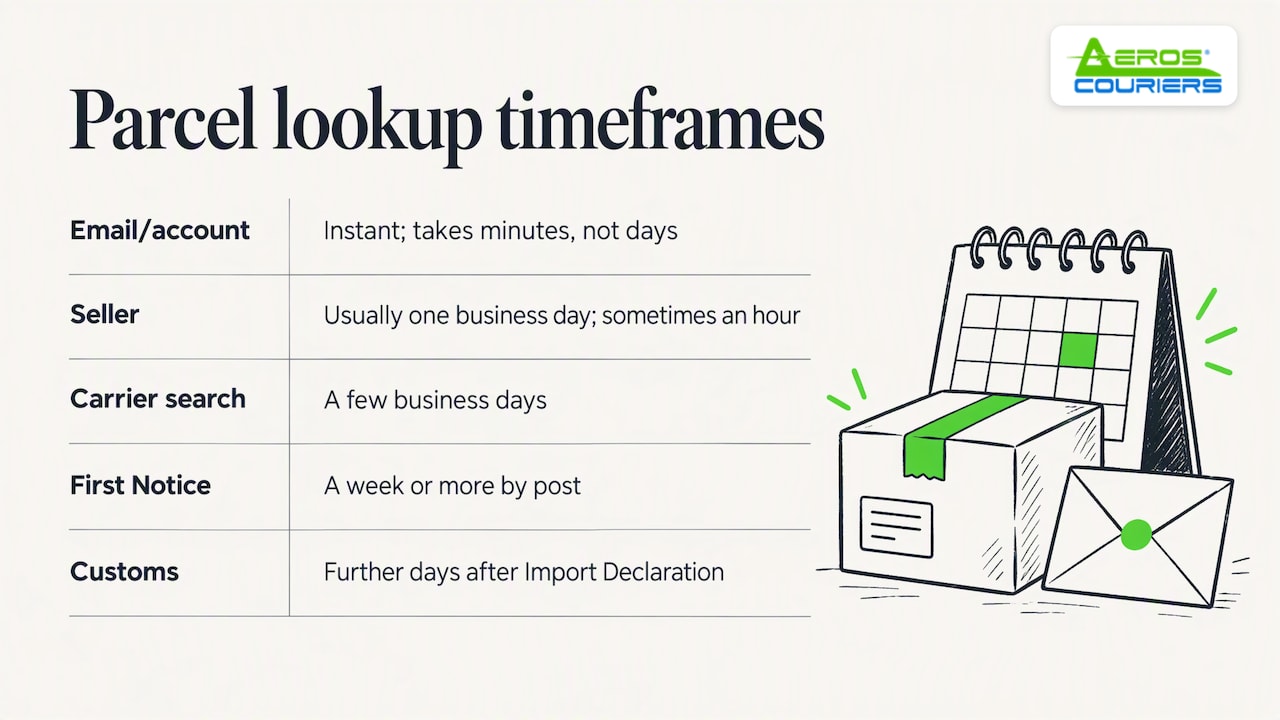
If you’ve gone through seller contact, email searches and carrier enquiries without an answer after a week or two, that’s the point to escalate with a formal evidence pack rather than keep waiting, since a reasonable time to supply a paid-for item has a limit under consumer law.
A straight answer on what actually works
Most guides on this topic list ten steps and imply you should try them in order. In practice, two steps solve the overwhelming majority of missing-tracking cases: contacting the seller and checking your own retailer account. Everything after that, carrier searches, First Notices, third-party apps, exists for the minority of cases where the seller genuinely doesn’t have the information either.
The mistake I see most often is people jumping straight to carrier hotlines because it feels like “doing something official,” when the seller’s own records are almost always faster and more complete. Carriers deal with thousands of parcels a day and can only match yours against whatever details you give them. A seller’s order system already has the match sitting there.
— Aeros
How we help you avoid this problem altogether
We give you one dashboard for every parcel you book, so there’s no single email or tracking link standing between you and knowing where a shipment is. Active parcel monitoring flags delays before you have to ask, and our support team can look up a booking from an address or sender name if a reference ever goes missing on your end.
| What you get | Why it matters |
|---|---|
| Consolidated tracking across carriers | One place to check instead of several carrier sites |
| Active parcel monitoring | Delays get flagged before you notice a problem |
| Transparent pricing with no hidden fees | The booking confirmation you keep matches what you paid |
| Direct human support | A real person can search by address or name, not just tracking number |
If you’re booking your next shipment, compare rates and book through our parcel delivery service or check Express, Same Day and Air courier options to get a consolidated tracking reference from the start.
FAQ
Is it possible to track a package without a tracking number?
Yes. You can usually track a parcel using the sender’s name, your delivery address, a phone number, or a carrier reference from a delivery card or First Notice. Contacting the seller first is generally the fastest way to get the correct reference reissued.
How can I track my China Post package?
Start by checking your retailer account or email for a dispatch confirmation, since many China Post shipments are handed to a local carrier like Australia Post once they arrive, which changes the tracking reference. If an Australia Post First Notice arrives, the mail reference on it (starting with N, Q, V or W) can be used to locate the parcel locally.
What is the URL for UPS tracking?
Carrier tracking pages change over time, so the safest approach is to search “UPS tracking” directly or check the dispatch email from your seller, which usually links straight to the correct page. If you don’t have that email, contact the seller for the carrier reference first.
How can I track my international shipment?
Look for an Australia Post First Notice or customs notice, since it will carry a mail reference beginning with N, Q, V or W that ties directly to any Import Declaration on file. Comparison tools such as Parcel International can also help when you’re unsure which carrier is handling the final leg of delivery.
Recommended
- Capital Transport Tracking: A Complete Guide to Tracking Shipments
- Your Guide to Aramex Tracking Courier Services in Australia
- Your Ultimate Guide to the StarTrack Express Tracking Number
- Tracking Registered Post: Australia Guide 2026
Courier quotes, tracking and support
Ready to send a parcel? Compare the available services for your postcodes, parcel dimensions and weight. For an existing delivery, use your consignment number to check tracking or ask our team for help.