
You've got new arrivals ready, your product pages look sharp, and your socials are doing their job. Then the pressure lands in the checkout. A customer in Sydney wants the dress tomorrow for an event. Another in regional Queensland assumes “express” means the same thing. Your team is small, your margins matter, and one sloppy delivery promise can undo a week of good marketing.
That's why clothes next day delivery matters so much for Australian fashion brands. It isn't only about moving parcels faster. It shapes trust before the order is even placed. It affects conversion, repeat purchase behaviour, support tickets, and whether your brand feels polished or patchy.
Australian operators also face a problem that many global shipping guides ignore. Reliable local data is thin. While global trends show 7% of online orders have same-day or next-day delivery, specific, reliable data for the Australian market is scarce according to Capital One Shopping's ecommerce delivery research. That gap leaves many fashion businesses relying on guesswork, copied overseas playbooks, or carrier promises that don't match real operating conditions here.
The Next Day Delivery Promise in Australian Fashion
Customers rarely separate shipping from brand experience. If your site feels premium but your delivery offer is vague, buyers notice. In fashion, where timing can be tied to weekends, events, workwear, gifts, or holiday travel, speed carries emotional weight.
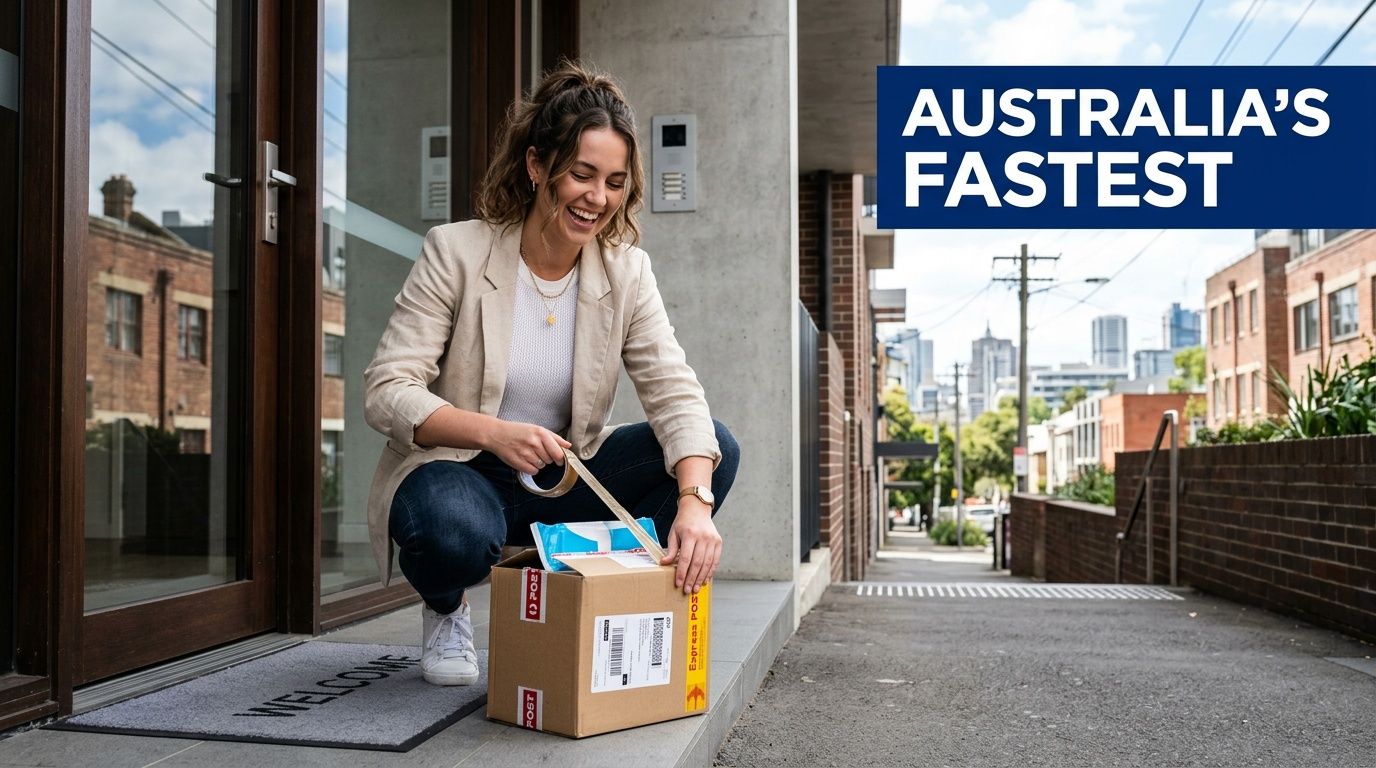
A useful way to look at next-day delivery is as a merchandising tool, not just a fulfilment line item. The promise of fast arrival can lift confidence on high-intent products like occasionwear, work basics, and last-minute gifts. If you want to see how that offer is commonly framed in practice, review a local next day shipping service option and note how the promise is presented around booking simplicity, speed, and clear shipment handling.
Why speed changes the buying decision
Customers hesitate when they can't tell when an order will arrive. They also hesitate when they suspect “fast shipping” will turn into a support headache. The strongest fashion stores remove that doubt early.
Three things happen when you offer a clear next-day option:
- Urgent buyers convert sooner because they don't need to keep comparing retailers.
- Your store feels more established because reliable fulfilment signals operational maturity.
- Support pressure drops because delivery expectations are set before payment, not argued about after dispatch.
Fast shipping works best when it's precise. “Delivered tomorrow in selected metro areas” builds more trust than a broad promise you can't consistently keep.
What the promise really means
For an Australian boutique, next-day delivery isn't a blanket national claim. It's a controlled promise based on postcode, cut-off time, carrier coverage, and how well your team executes the handoff. Brands get into trouble when they sell speed as a slogan instead of an operational standard.
The practical mindset is simple. Promise next-day where you can deliver it cleanly. Be explicit where you can't. Customers usually accept limits when the message is honest and easy to understand.
Choosing Your Speed Selecting the Right Service Level
Not every order needs the fastest service available. That's where many growing boutiques overspend. They treat speed as one setting when it's really a menu of service levels, and each one suits a different product, customer, and destination.
The right service level starts with what you sell. A black dress needed for Friday night has different urgency from a restock of everyday tees. A premium boutique can often charge for urgency because the customer values certainty. A discount-led store may need a sharper trade-off, with speed reserved for paid upgrades or selected postcodes.
Match service level to product and buyer
Think about your orders in categories rather than one broad shipping rule.
| Order type | Best fit | Why it works |
|---|---|---|
| Event or occasionwear | Next-day option | Timing is part of the product value |
| Core basics and repeat purchases | Express as standard | Buyers want reliability without a premium surcharge |
| Sale items and low-margin stock | Standard with optional upgrade | Protects margin while preserving choice |
| Metro last-minute purchases | Same-day or next-day where viable | Useful for high-intent buyers who need certainty |
Operator discipline matters in this context. If you offer next-day on every SKU, every postcode, and every hour of the day, you'll create more exceptions than successful deliveries. Strong brands narrow the promise until it becomes dependable.
Build around geography, not hope
Australia isn't one delivery zone. Sydney, Melbourne, Brisbane, Adelaide and Perth all have inner-metro patterns that can support fast parcel movement more easily than regional or remote areas. If your checkout treats them the same, your service offer is already flawed.
Use a simple decision filter:
- Destination first. Metro and regional customers shouldn't see the same promise.
- Order timing second. A morning order and a late-afternoon order don't belong in the same dispatch bucket.
- Product shape third. Soft apparel in satchels is easier to move quickly than awkward boxed items.
- Customer value last. Reserve premium urgency for customers and orders where it makes commercial sense.
Practical rule: Your cheapest workable service is usually better than your fastest theoretical one.
Avoid single-carrier thinking
Many fashion businesses outgrow single-carrier setups before they realise it. One provider might be fine for a chunk of metro deliveries, then underperform on certain routes, cut-off windows, or price points. Once that happens, your store absorbs the friction through customer service and refunds.
A better operating model is to compare parcel services by lane, urgency, and carton profile. That gives you room to switch when one service is better for a particular destination without rebuilding your whole checkout experience.
What works
- Tiered offers at checkout so the customer can choose between standard and faster options
- Postcode-based delivery messaging instead of broad national promises
- Parcel-friendly packaging for lightweight apparel that moves cleanly through courier networks
- Clear exclusions for areas where next-day isn't realistic
What doesn't
- Using “express” as a catch-all term without defining expected delivery timing
- Charging premium rates on low-value orders where the shipping cost feels disproportionate
- Treating all urgent orders the same regardless of item value or destination
- Promising metro speed to regional customers and hoping the network catches up
The aim isn't to be the fastest store in every scenario. It's to be the most credible one.
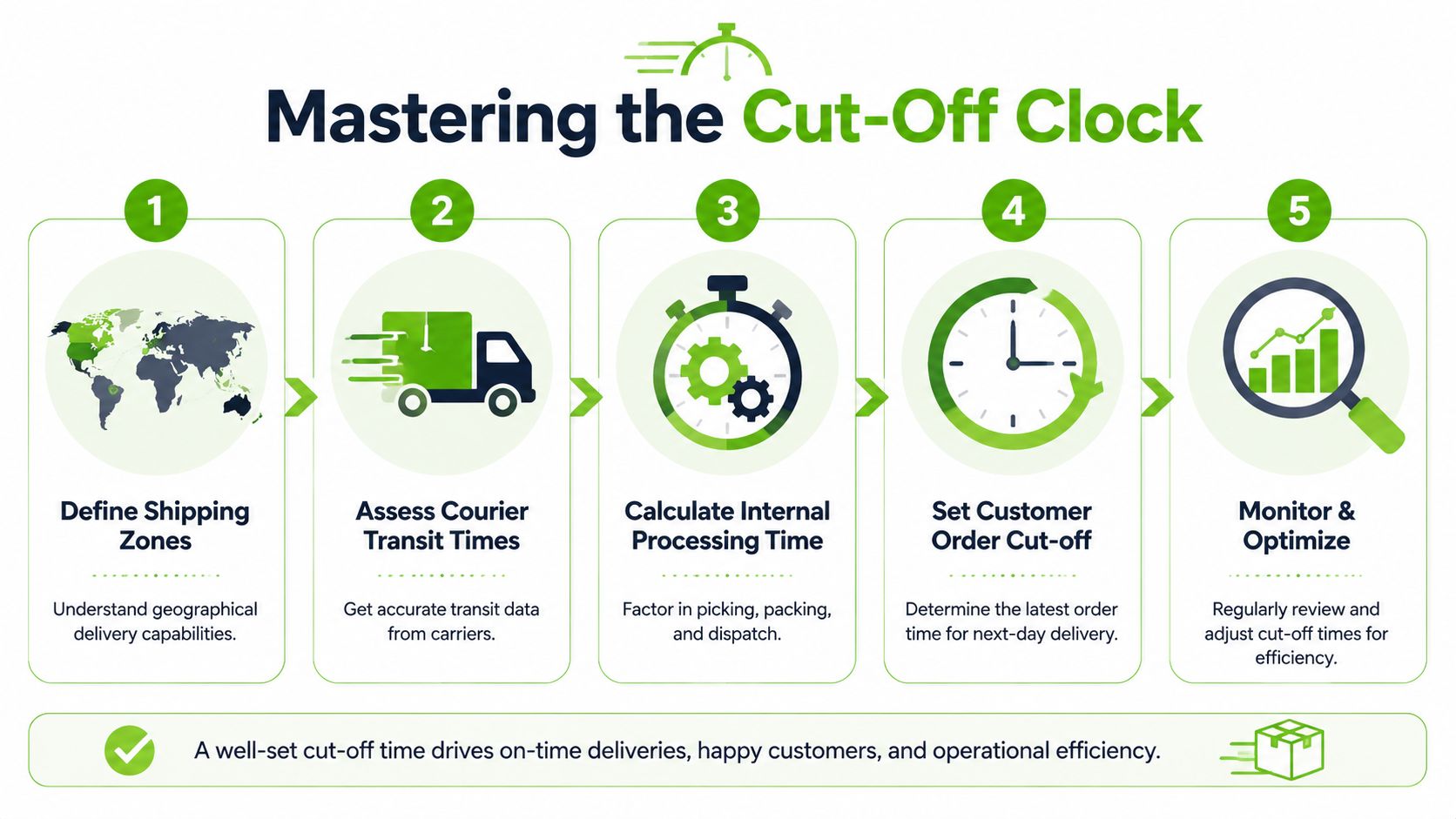
Mastering the Cut-Off Clock for Flawless Fulfilment
Most next-day failures don't begin on the road. They begin in the storeroom. The order comes in, someone sees it late, stock isn't confirmed, labels are printed in a rush, and the pickup window slips. By the time the parcel reaches the network, the promise is already under strain.
That's why your cut-off clock matters more than your marketing copy. In practice, it's the line between a fast-delivery offer that builds confidence and one that creates rework.
A same-day workflow that protects tomorrow's promise
Take a typical order placed at 1 pm for a metro customer. If you want that parcel moving smoothly, the internal sequence needs to be boring in the best possible way.
- Order review happens immediately. Payment is checked, fraud flags are cleared, and the order drops into the packing queue.
- Stock is confirmed on shelf. If your inventory record is messy, next-day delivery becomes a gamble.
- Packing starts within a fixed service window. Don't leave urgent orders mixed in with general dispatch.
- The label is generated straight from the order record. Manual retyping is where address mistakes creep in.
- Pickup or drop-off is locked before your daily deadline. If the handoff misses the network, your next-day offer is no longer real.
A lot of boutiques set customer cut-off times based on what sounds attractive. That's backwards. Start with your real internal handling time, then work outward.
Cut-off times should be earned, not guessed
If your team needs time to pick, fold, pack, label, and stage orders, your public cut-off must leave room for that. A later promise may look stronger on the site, but if it causes rushed packing and missed collections, it will cost more than it wins.
Australian metro delivery performance gives you a useful benchmark. First-attempt delivery success rates in metro areas average 92.5%, and address validation APIs can achieve 99.8% accuracy, which matters because incorrect addresses account for 28% of delivery failures according to SmartRoutes delivery success data.
For Melbourne fashion businesses running local urgent orders, it's worth studying how a dedicated same-day delivery service in Melbourne frames timing, booking, and local movement. Even if your core offer is next-day, same-day service design teaches useful discipline around dispatch cut-offs and handoff speed.
If your checkout accepts an urgent order five minutes before your team stops packing, the problem isn't the courier. It's your process.
The controls that reduce failure
A strong cut-off system usually includes these controls:
- Address validation at checkout so the team isn't deciphering incomplete details after payment
- A visible dispatch board showing urgent, standard, and exception orders separately
- One daily owner for final courier handoff, rather than assuming someone will “sort it”
- A hard stop for late orders that automatically shifts them into the next available service window
You don't need a warehouse to do this well. A clean back-room setup with disciplined timing can outperform a larger operation that runs on improvisation.
Packaging and Labelling for Speed and Safety
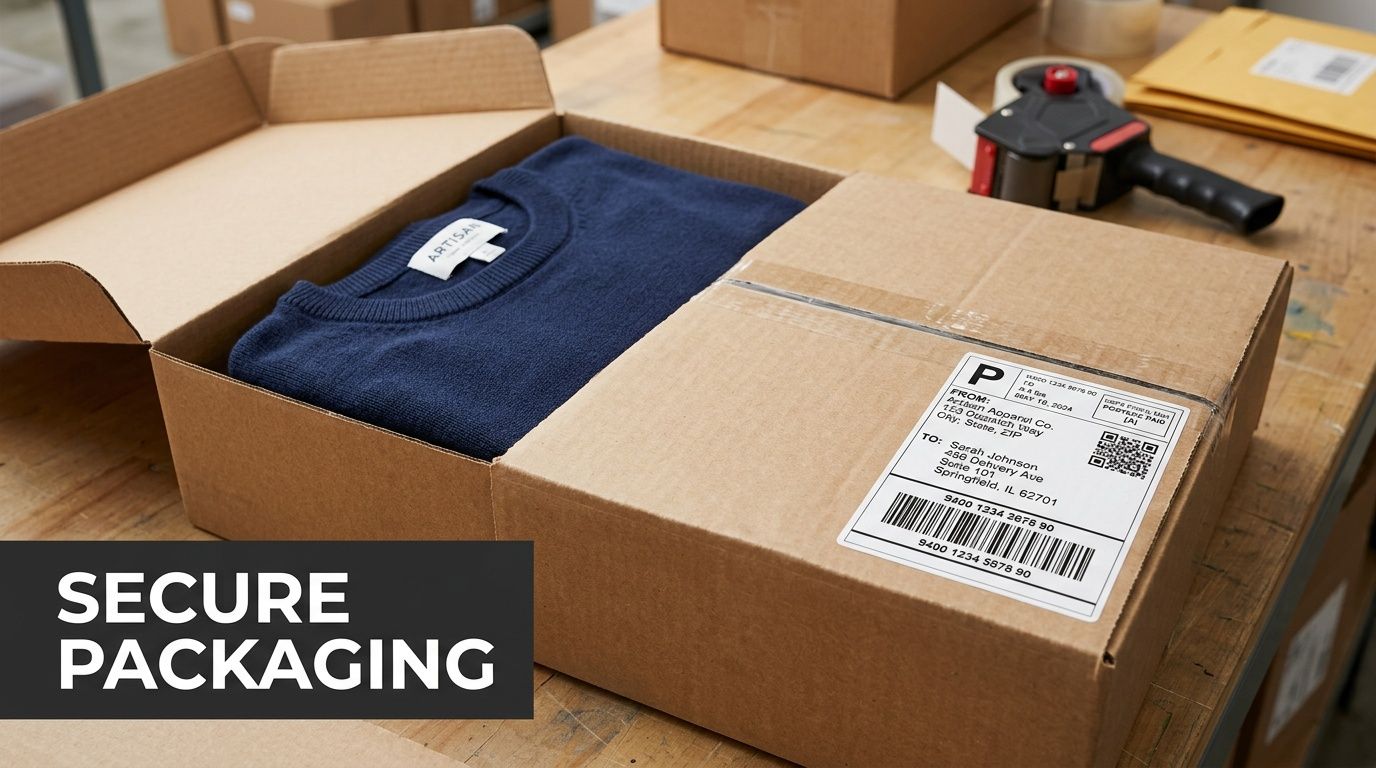
A fast parcel still fails if it arrives creased, wet, split, or unscannable. In clothing, packaging has two jobs. It must protect the item, and it must help the parcel move through sorting points without friction.
For most apparel, satchels beat oversized boxes. They're lighter, neater, and easier to process. Boxes still have a place for structured garments, multi-item orders, or anything that needs shape protection, but many boutiques default to cartons too early and pay for wasted cube.
Pack for the network you actually use
Clothes next day delivery works best when parcels are built for conveyor handling, quick scans, and doorstep conditions. That means less empty space, fewer loose folds, and no labels wrapped over seams or corners.
Use this checklist on your bench:
- Choose the smallest practical outer so garments don't shift around in transit.
- Bag the garment internally if fabric needs protection from moisture or dust.
- Keep barcodes flat and visible on the largest clean face of the parcel.
- Remove or cover old labels completely if you ever reuse cartons.
- Avoid overstuffing satchels because burst seams create delays and damage claims.
If you're shipping knitwear, fold tightly and place it in an inner sleeve before using a satchel. If you're sending shirts with presentation value, a slim carton may be the better choice because crushed collars create disappointment even when the parcel arrives on time.
Labels should be machine-friendly
A label isn't admin. It's the parcel's passport through the network. If the barcode is blurred, partly taped over, or printed at poor quality, the parcel slows down at the first scan point.
The safest setup is to generate labels directly from your booking workflow so names, addresses, and service details stay consistent. A practical reference for this is a label on package guide, which shows the kind of placement and clarity courier networks expect.
Common labelling mistakes
- Tiny fonts on thermal printers that become hard to read
- Labels placed over edges so scanners can't capture the full code
- Special delivery instructions hidden inside order notes instead of appearing in the correct field
- Handwritten edits on printed labels, which often confuse sorting staff
Good packaging is quiet. It doesn't create questions at the depot, in the van, or on the customer's doorstep.
Safety and compliance still matter
Even simple clothing parcels need consistency. If your team uses mixed packaging styles, random tape methods, and ad hoc labels, your error rate rises. Standardise your materials, train one packing method for each order type, and keep a visual sample wall if you have more than one packer.
Speed comes from repeatable handling. Safety comes from respecting the parcel's journey.
Pricing Your Speed and Managing Customer Expectations
Many boutiques treat shipping as a painful cost to hide. That's a mistake. Delivery pricing is one of the clearest signals of how your business thinks. Handled well, it supports conversion and protects margin. Handled badly, it confuses customers and forces your team into constant exceptions.
The first rule is simple. Don't subsidise urgency by accident. If next-day delivery costs you more to fulfil, the customer offer should reflect a deliberate strategy, not a panic decision made at checkout setup.
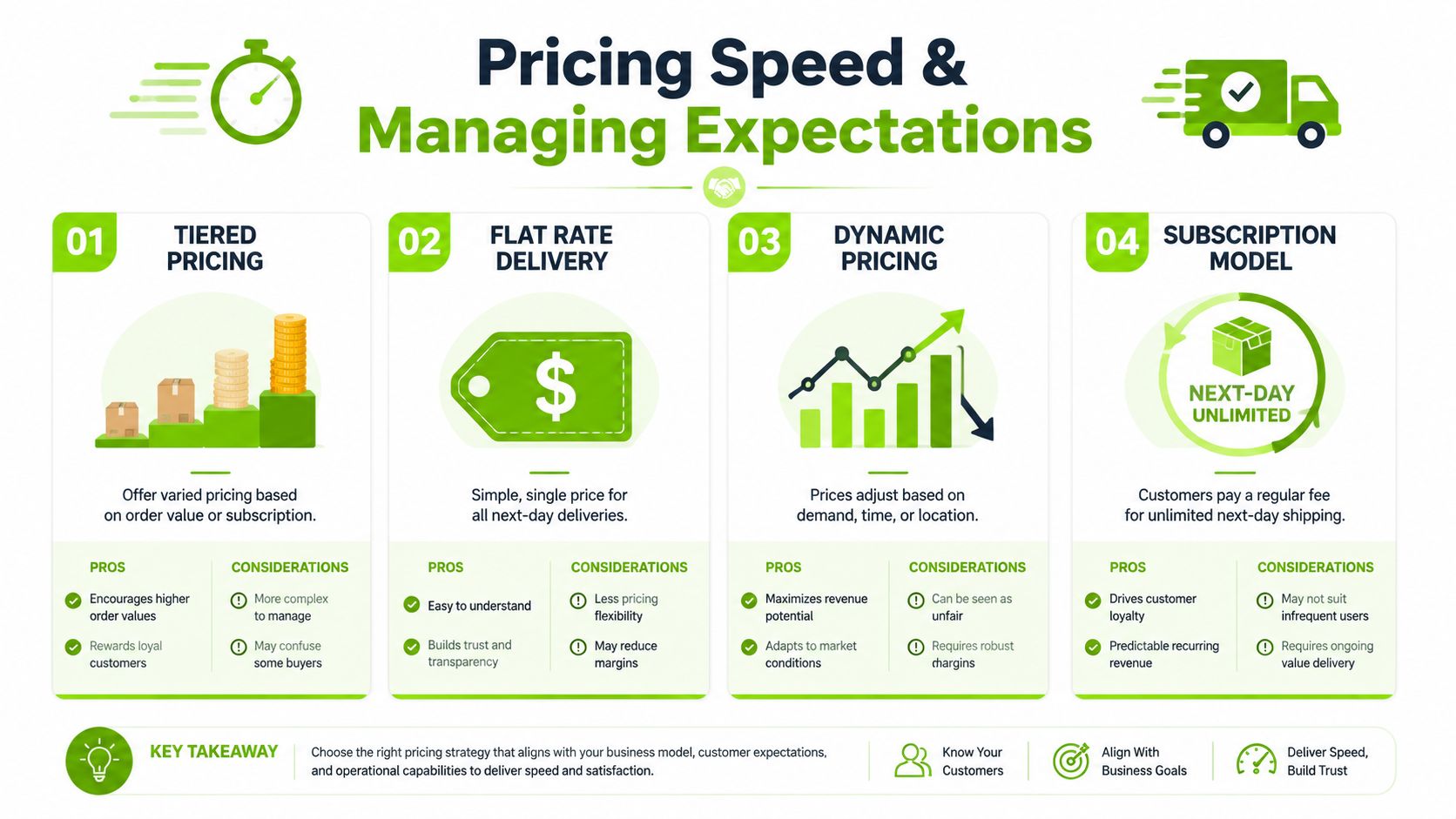
Four pricing models that suit fashion brands
Different models work for different assortments and customer bases.
Paid upgrade
This is often the cleanest starting point. Standard shipping remains the default, and next-day appears as an optional upgrade for buyers who need it. It protects margin and reveals genuine urgency without forcing every customer to absorb the cost.
Built-in shipping
Some brands wrap shipping cost into product pricing and present fast delivery as included. This can work well when your average order value is healthy and your core customer prefers simplicity over line-by-line shipping maths.
Threshold-based offer
A spend threshold can encourage larger baskets while limiting your exposure on small orders. It's particularly useful for boutiques that want to increase average order value without discounting product.
Membership or loyalty-led shipping
If your brand has strong repeat purchase patterns, a shipping benefit inside a loyalty structure can create stickiness. The key is to keep the rules clear and the geography realistic.
A quick way to sense-check your setup is to compare current courier prices for parcel delivery before locking in a public offer. Don't choose based on headline rate alone. Look at destination mix, parcel profile, and what happens when customers select urgency near your cut-off.
The metro and regional divide must be visible
Many Australian stores lose trust at this stage. Metro customers may be able to access a genuine next-day option. Regional customers often can't, at least not with the same consistency. If you hide that difference until after purchase, frustration is guaranteed.
The available evidence is clear. Australia Post's Express Post next-day guarantee reaches 75% of metro addresses, but drops to 50% to 60% for regional areas, and 68% of regional shoppers cite unreliable fast delivery as a major concern according to the cited Australian delivery context in this reference.
That doesn't mean regional customers should see a weaker experience. It means they should see an honest one.
What to say at checkout
Use language that tells the truth without sounding apologetic. These examples work better than vague promises:
Metro next-day option
Order before the listed cut-off for next-business-day delivery to selected metro postcodes.Regional express option
Fastest available service shown at checkout. Delivery timing varies by postcode.Urgent order note
Need it quickly? Select the fastest available option and check the ETA before payment.
Customers are more forgiving of a slower service than a broken promise.
Where stores lose money
Pricing mistakes usually come from one of these habits:
| Mistake | Result |
|---|---|
| Offering one national “express” fee | Regional deliveries erode margin or underperform |
| Absorbing urgent shipping on low-value orders | Profit disappears on the orders that need it most |
| Hiding delivery limitations until after payment | Support load rises and trust falls |
| Using promotional language without postcode logic | Checkout converts, then operations scramble |
A strong pricing model does two things at once. It gives metro customers a compelling fast option, and it gives regional customers accurate visibility before they commit. That transparency is not a concession. It's part of the value.
Building Lasting Loyalty Beyond the Delivery
A successful next-day order does more than complete a sale. It tells the customer your store is organised, honest, and easy to buy from again. That impression matters more in fashion because each delivery shapes how people feel about fit risk, returns, and whether they'll trust you with another time-sensitive order.
Loyalty doesn't come from speed alone. It comes from the combination of clear checkout messaging, disciplined fulfilment, sensible packaging, and delivery follow-through. If one of those breaks, the customer remembers the friction, not the product photography.
Reliability reduces returns and waste
This point is often overlooked. A reported 55% of online clothing returns are due to delivery issues, not the product itself, as noted in this apparel delivery reference. That's why reliable next-day services, clear tracking, and optional signature on delivery can do more than improve convenience. They can reduce avoidable returns and the waste that comes with resending, reprocessing, and repacking.
The retention payoff is substantial too. If you're refining the full post-purchase journey, this guide to customer retention in ecommerce is worth reading alongside your shipping plan. It's a useful reminder that repeat revenue usually comes from a chain of small trust signals, not one grand loyalty campaign.
Turn delivery into a repeat-purchase asset
Practical loyalty tactics don't need to be flashy.
- Send tracking early and clearly so the customer never has to ask where the parcel is.
- Make returns straightforward because apparel buyers need confidence that mistakes are fixable.
- Use delivery preferences thoughtfully. Optional signature can reassure customers receiving higher-value items.
- Reward repeat behaviour when your shipping workflow supports it. A structured look at customer loyalty reward programs can help if you want to connect fulfilment with retention rather than treating them as separate functions.
The brands that keep customers aren't always the cheapest or the flashiest. They're the ones customers trust to deliver without drama.
Australian fashion businesses don't need to imitate overseas giants to compete. They need sharper promises, cleaner execution, and a delivery offer that matches the realities of local geography. Get that right, and clothes next day delivery stops being a cost centre. It becomes part of your brand.
If you want a practical way to book low-cost Australian parcel deliveries, compare services, print labels, track jobs, and offer faster shipping with less admin, Aeros Couriers is worth a look. It's built for local businesses that need straightforward Australia-wide shipping without the usual setup friction.
Courier quotes, tracking and support
Ready to send a parcel? Compare the available services for your postcodes, parcel dimensions and weight. For an existing delivery, use your consignment number to check tracking or ask our team for help.