
Finding a cheap interstate courier in Australia isn't some dark art. It really comes down to understanding that the final price tag is more than just the distance between A and B. It's a mix of how fast you need it there, the size of your parcel, and a few sneaky surcharges you might not see coming.
Once you know what actually drives these costs, you can start making smarter choices and seriously cut your shipping spend, right from the very first box you send.
Decoding the True Cost of Interstate Shipping
Trying to find a cheap interstate courier can feel like you're trying to hit a moving target. You get one quote that looks pretty good, then another for the same destination comes in way off. It’s not random. Think of it like a plane ticket—the base fare is just the starting point, with a bunch of other factors building up to the final price.
To get a real grip on your shipping budget, you have to look past the obvious stuff like weight and distance. The courier game in Australia is complex, with a whole lot of variables deciding what you'll end up paying.

Key Factors Influencing Your Quote
There are a few core ingredients that make up the total price of sending a parcel across state lines. Getting familiar with them is the first step to getting them under control.
- Service Speed: Does it absolutely have to be there tomorrow, or can it wait a few days? Express services will always cost more because they often rely on air freight to guarantee speed. Standard road freight is your go-to for saving money, but it'll take a bit longer.
- Carrier Networks: Not all couriers are built the same. Some are wizards in regional areas and can offer better rates for remote drops, while others are geared for lightning-fast deliveries between major cities.
- Fuel Surcharges: This is the big one most people miss. It's a variable fee carriers tack on to cover the ever-changing price of fuel, and it can add a surprising amount to your total bill.
The e-commerce boom has blown up the Aussie courier market, but with that growth comes higher running costs. Sky-high fuel prices mean nearly every major carrier now has a fuel surcharge tied to petrol and diesel prices, and that cost gets passed right on to you.
Beyond the Obvious Costs
The real cost of shipping isn’t just what you see on the invoice. For businesses especially, other factors can hit your bottom line. Our simple guide to calculate shipping charges can help you get a much clearer picture of what you might be up for.
A cheap quote that leads to a damaged product or an unhappy customer is never a bargain. The best price is always a balance between what’s affordable and what’s reliable, making sure your parcel gets there safely and when you said it would.
On top of the direct fees, Aussie businesses also have to think about compliance. The Transport Chain of Responsibility is a big deal for interstate shipping. It puts legal responsibility on everyone involved in the transport chain, and getting it wrong can result in hefty fines.
By understanding these fundamentals, you can shift from just hunting for a low price to strategically finding the best possible value for what you actually need.
How Smart Packaging Can Slash Your Shipping Bill
Your first line of defence against high shipping costs isn’t actually the courier you choose—it's the box you put your item in. Before you even think about booking a delivery, getting your packaging right is the single most effective way to lower your expenses. It sounds basic, but a few smart choices here can make a massive difference to your final bill.
To find a cheap interstate courier, you first need to get your head around a concept called dimensional weight (often called cubic weight). Couriers don't just charge for how heavy your parcel is; they also charge for the amount of space it takes up in their van or plane. Think of it like paying rent for that spot on the truck—if your packing is inefficient, you're literally paying for empty air.
Here in Australia, every major courier uses a formula to figure this out. They multiply your parcel's length, width, and height (in metres), and then multiply that number by a cubic conversion factor, which is usually 250. The courier will then charge you for whichever is greater: the actual, physical weight of your parcel, or this calculated dimensional weight.
The Problem of Paying for Air
Let's look at a real-world example. Say you're sending a lightweight but bulky item, like a decorative pillow, from Sydney to Perth. The pillow itself might only weigh 1 kilogram. But if you pack it in a big box measuring 50cm x 50cm x 50cm, its dimensional weight balloons to a whopping 31.25 kilograms (0.5m x 0.5m x 0.5m x 250).
You'll be charged for a 31.25 kg parcel, not a 1 kg one. This is the number one reason people get hit with unexpectedly high shipping quotes and a huge budget-killer for many businesses.
This is exactly why a small, heavy item like a dumbbell can sometimes cost less to ship than a large, light item like a lampshade. Nailing this concept is fundamental to finding the cheapest way to send a parcel, which we cover in more detail in our dedicated guide.
Actionable Tips to Cut Your Packaging Costs
You can start saving money right now with a few simple packaging strategies. These small adjustments will bring down your dimensional weight and, in turn, your shipping bill.
- Choose the Right-Sized Box: This is the big one. Always use the smallest possible box that will still safely protect your item. A snug fit cuts out unnecessary volume, which directly lowers the dimensional weight and the price you pay.
- Use Lightweight Void Fill: If you have some empty space left in the box, fill it with lightweight materials like bubble wrap or air pillows, not heavy scrunched-up paper. This keeps your item secure without adding a gram more than necessary to the actual weight.
- Consolidate Your Shipments: Sending multiple items to the same destination? Whenever you can, pop them into a single, larger box. Shipping one consolidated parcel is almost always cheaper than sending several smaller ones because you avoid paying the base charges and handling fees for each individual shipment.
By making these simple changes, you stop paying for empty space and start paying for what you’re actually sending. It's a proactive approach that ensures you're getting the best possible rate before you even start looking at courier options.
Finding the Right Courier for Your Route and Budget
Trying to navigate the Australian courier market can feel like a real headache. There are dozens of carriers, and each has its own strengths, weaknesses, and complicated pricing. So, how do you find the right one? The secret is realising there’s no single "best" courier for everything—just the best one for your specific parcel, route, and deadline.
Some carriers have built incredible networks for hitting those far-flung regional towns, while others are masters of the high-speed dash between capital cities like Melbourne and Sydney. Going to each of their websites one by one to compare quotes is a surefire way to waste your day.
There's a much smarter way to do it.
The Power of Courier Aggregators
Imagine walking into a single shop where all the major couriers are lined up, ready to offer you their best price on the spot. That’s pretty much what a courier aggregator is. These online platforms bundle multiple carriers together, giving you instant access to pre-negotiated wholesale rates that are usually reserved for high-volume businesses.
Instead of typing in your parcel details over and over again on different sites, you do it just once. The platform then lays out all your options in a simple, side-by-side comparison.
This lets you choose based on what's most important to you:
- Cost: Immediately see who offers the most budget-friendly price.
- Speed: Compare the estimated delivery times for standard road freight versus express air services.
- Carrier Reputation: Stick with a household name or go with a specialist known for excelling on your specific route.
This is, without a doubt, the fastest and most effective way to lock in a genuinely cheap interstate courier without compromising on service. We dive deeper into this process in our guide to finding the cheapest courier service in Australia.
Making the Final Choice
Once you see all your quotes in one place, the decision becomes much clearer. If your delivery isn’t urgent, a standard road service is almost always going to be your most economical option. For those last-minute, must-have-it-now shipments, you can instantly see the price jump for express services and decide if the premium is worth paying.
Choosing the right service level is a balancing act between speed and cost. Here's a quick look at what you can typically expect.
Interstate Courier Service Level Comparison
| Service Level | Typical Speed | Relative Cost | Best For |
|---|---|---|---|
| Standard / Road Express | 2-7 business days | $ | Cost-effective shipping for non-urgent items |
| Express / Air Freight | 1-3 business days | $$ | Urgent deliveries, especially between capital cities |
| Same-Day / Priority | Within 24 hours | $$$ | Extremely time-critical documents and parcels |
| Heavy / Bulk Freight | Varies by carrier | Custom | Pallets, oversized items, and large consignments |
By understanding these tiers, you can quickly filter your aggregator results to find the service that hits that sweet spot for your needs.
The real game-changer with an aggregator isn’t just the money you save—it’s the time. It transforms a painful research project into a quick, five-minute decision, so you can book your shipment and get back to your real work.
The flowchart below shows how this decision-making process works, starting with the most critical first step: your packaging.
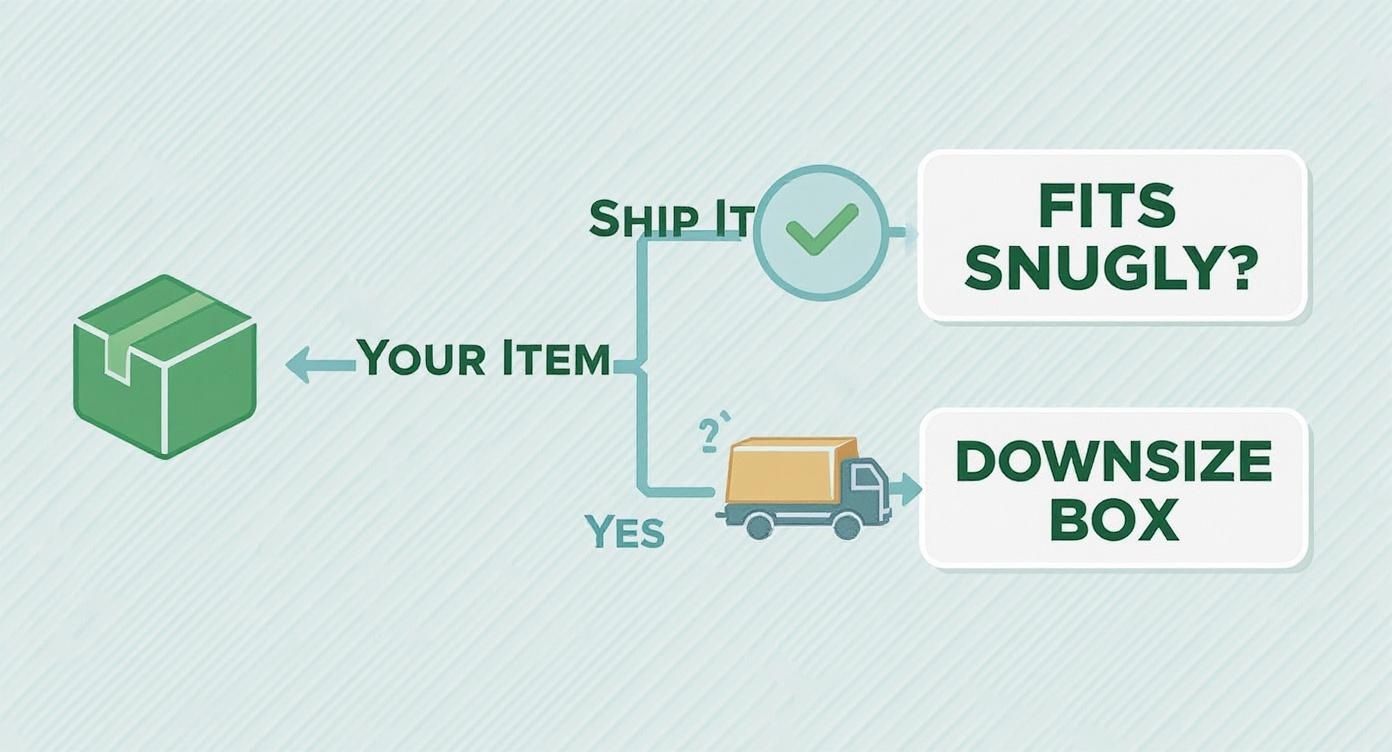
As you can see, smart shipping begins before you even start looking for a courier. Getting your packaging right is the foundation for a lower quote.
By using comparison tools, you can confidently navigate the market and find the perfect match. This strategic approach ensures you’re not just picking a cheap interstate courier, but the right one that perfectly balances cost, speed, and reliability for every single parcel you send.
Unlocking Savings with Backloading and Off-Peak Shipping
Beyond clever packaging and comparing carriers, there’s another powerful trick to finding a genuinely cheap interstate courier service, especially if you’re sending larger items or aren’t in a massive rush. It’s an industry secret that smart shippers use to get huge discounts by working with the natural rhythm of Australian logistics.
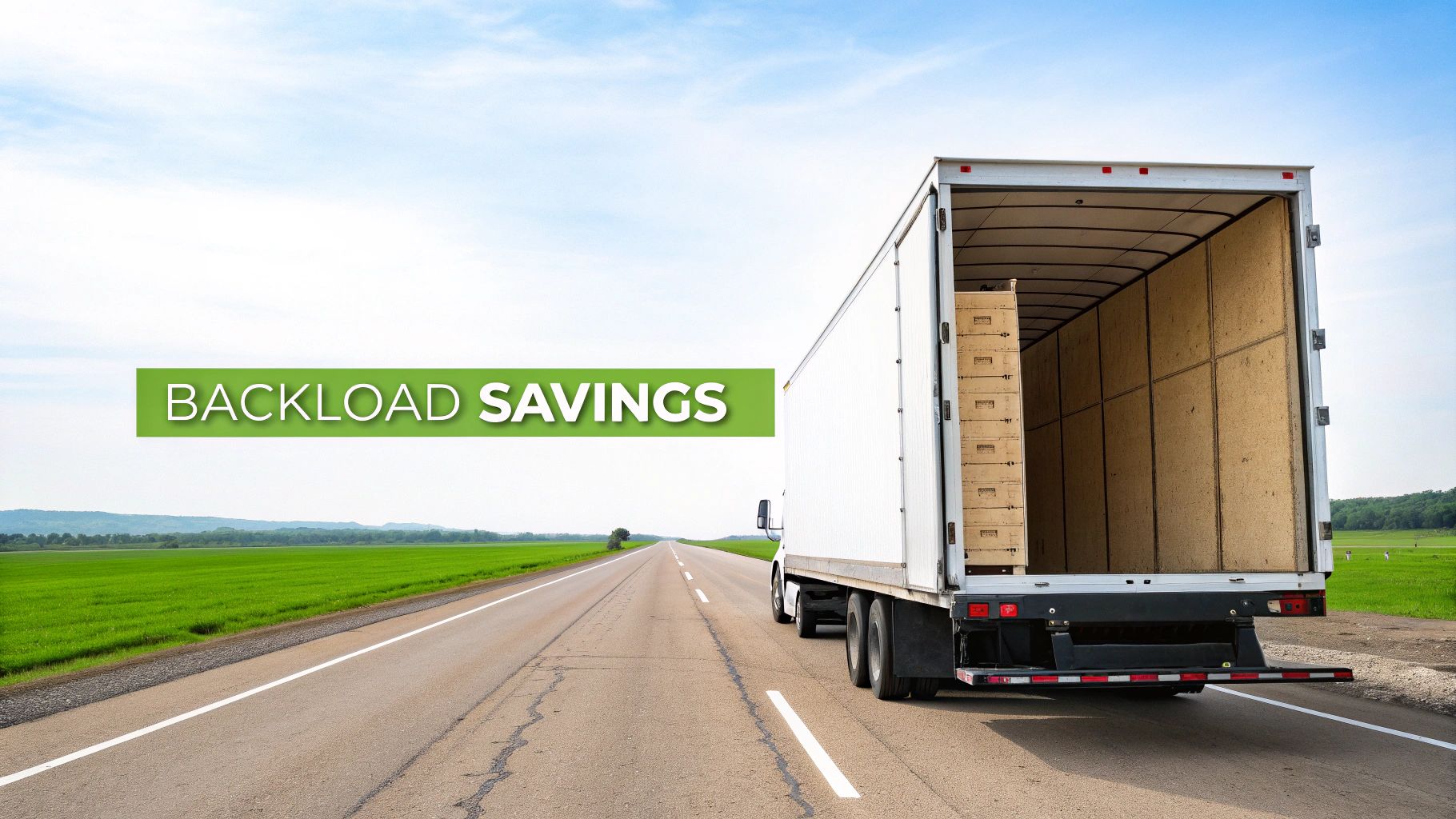
The strategy is called backloading. Think of it like carpooling for your freight. A truck drives from Sydney to Brisbane packed to the rafters with goods. But what about the return journey? That same truck often travels back mostly empty, and every kilometre of that empty run is burning cash on fuel and wages.
Backloading is the simple, brilliant answer. Courier companies sell that empty space on the return trip at a steep discount, turning a loss into a win-win. You get your gear shipped for a fraction of the normal price, and they make money on a trip that would have otherwise cost them.
Capitalising on Underused Capacity
This approach is perfect for anyone with a bit of wiggle room in their schedule. Because you’re fitting into the courier’s existing route, you might need to wait an extra day or two for a truck to become available. The financial payoff for that little bit of patience, however, can be massive.
Backloading is one of the most budget-friendly options on the Aussie courier market, with the potential to significantly reduce shipping costs. This method allows you to pay a lot less by simply using the spare capacity on return trips. For instance, the typical cost for sending large parcels interstate via backloading can be quite low.
It’s an ideal choice for:
- Moving bulky furniture or household items across state lines.
- Businesses sending large stock orders that aren’t time-critical.
- Anyone shipping oversized items that would normally attract eye-watering surcharges.
In these situations, knowing your options for a cheap big parcel delivery can make a serious difference to your bottom line.
The Value of Off-Peak Flexibility
The same basic idea applies to off-peak shipping. Just like booking a flight, sending your parcels during quieter times often means lower prices. Couriers have peak periods—think the mad rush before Christmas or the end of the financial year—when their networks are stretched to the limit and prices are at their highest.
If your delivery isn’t urgent, try scheduling it outside of these high-demand windows. You’ll often find some decent savings. By simply being flexible with your pickup and delivery dates, you allow carriers to slot your parcel into their network more efficiently, and they’ll often pass those savings right back to you.
Combining a flexible timeline with a backloading service is one of the most effective cost-cutting formulas out there. It just requires a shift in mindset from “how fast can it get there?” to “how affordably can it get there?”.
When you’re searching for a cheap interstate courier on a comparison site, keep an eye out for these “economy” or “standby” services. They represent a fantastic opportunity to slash your shipping bill without sacrificing the reliability of the delivery itself. It’s the smart, strategic choice for any planned, non-urgent shipment where budget is the top priority.
Navigating Metro Versus Regional Delivery Costs
In Australia, the cost to send a parcel can jump significantly the second it leaves a major city and heads into a regional area. The search for a cheap interstate courier takes on a whole new dimension once you’re shipping outside the bustling metro hubs. This price gap isn’t random—it’s a direct result of the logistical realities of running a delivery network across such a vast country.
Think about it this way: sending a package across Sydney or Melbourne is a high-density game. One driver can knock out dozens of deliveries in a pretty tight radius, making each stop incredibly efficient. Now, picture a regional delivery. That same driver might have to travel hundreds of kilometres between just a handful of drop-offs. That’s a huge difference in time, fuel, and resources for the same number of parcels.
This is exactly why regional routes cost more. Carriers have to bake in the extra fuel, driver wages, and vehicle wear and tear required to get your package to a more remote doorstep.
Understanding Location-Based Pricing
It’s not just a simple metro vs. regional split, either. Even within major cities, operational costs can vary. Things like local fuel prices and demand create price differences from one capital to another. This is a perfect example of how wider economic shifts directly influence the rates you’re quoted.
Getting a handle on how different postcodes affect your shipping bill is key. It’s why many businesses explore effective location-based pricing strategies to better manage their budgets.
Strategies for Managing Regional Costs
While regional shipping is almost always going to be pricier, you’re not stuck with the first price you see. A few smart moves can help you keep these expenses under control.
- Pick Carriers with Strong Regional Networks: Some couriers have poured serious investment into their regional infrastructure. They often have local depots and established delivery runs that make their pricing for remote areas much more competitive than a courier who mainly sticks to the cities.
- Consolidate Your Shipments: This is a big one. If you’re sending several packages to the same regional address, bundle them into a single, larger shipment. It’s always cheaper to pay a surcharge on one big box than on three or four separate ones.
- Factor in Surcharges: Always be on the lookout for location-specific surcharges. Couriers add these fees for postcodes they consider particularly tough or expensive to service. Make sure your quote includes these so you don’t get any nasty surprises on the final invoice.
The key to finding a cheap interstate courier for regional Australia is planning. By selecting the right carrier and optimising your shipments, you can significantly reduce the impact of the “regional premium” on your shipping spend.
By anticipating these costs and making informed choices, you can master the complexities of both metro and regional pricing. For a closer look at options within a major city, feel free to check out our overview of a reliable courier service in Melbourne. This kind of proactive approach helps you find the most affordable and dependable solution, no matter where your parcel needs to end up.
Got Questions About Cheap Interstate Couriers? We’ve Got Answers
Stepping into the world of interstate shipping can feel a bit overwhelming. To help you get your bearings and make smarter shipping decisions, we’ve put together answers to some of the most common questions we hear. Think of this as your go-to cheat sheet for locking in a great deal.
What Is the Cheapest Way to Send a Large Parcel Interstate in Australia?
If you’re sending something big, bulky, or heavy and time isn’t a huge factor, backloading is almost always your cheapest bet.
It’s a clever way to use the empty space on a truck that’s already making a return trip. Since the truck is heading that way anyway, carriers are happy to sell that unused space for a fraction of the normal cost.
The best way to tap into these deals is through a courier comparison platform. These websites let you see backloading options right alongside standard road freight services from a bunch of different carriers, so you can spot the lowest price for your large item in seconds.
Is the Cheapest Courier Always the Best Option?
Honestly, not always. That super-low price you see on the screen can be tempting, but it’s worth taking a closer look. Sometimes, the cheapest quote comes with a few hidden catches.
The “best” courier isn’t just about the lowest price. It’s the right mix of cost, speed, and reliability. A bargain-basement service that takes two weeks or delivers a broken item isn’t a saving—it’s a problem waiting to happen.
Before you click “book,” always check these details:
- Estimated Transit Times: How long will it really take? A cheaper service often means a longer wait on the road.
- Tracking Capabilities: Can you follow your parcel every step of the way, or will you just get a vague “in transit” message?
- Included Insurance: Is your item covered if something goes wrong? Make sure the coverage value is enough to protect your goods.
Spending a few extra dollars for a carrier with a solid reputation and better tracking can give you a lot more value and peace of mind in the long run.
How Can a Small Business Reduce Shipping Costs?
For small businesses, shipping costs can really eat into your margins. The good news is, there are some really effective ways to bring those costs down.
First up, make a courier comparison platform your best friend. This is a game-changer. It gives you immediate access to bulk shipping rates that are usually reserved for the big players. You get the benefit of their negotiating power without having to send thousands of parcels yourself.
Next, get serious about your packaging. Every centimetre and gram counts. By using the smallest and lightest box that still safely fits your item, you can slash the charges based on dimensional weight. Making this a habit will save you money on every single package you send out the door.
And finally, consolidate your orders whenever possible. It’s nearly always cheaper to send one slightly larger box to a customer than two or three small ones. You pay fewer base charges and handling fees, and the savings go straight to your bottom line.
Ready to find a genuinely cheap interstate courier without compromising on service? With Aeros Couriers, you can instantly compare competitive quotes from Australia’s top carriers. Find the best price, book your shipment in minutes, and track everything from one easy-to-use dashboard. Get your free quote today at https://www.aeroscouriers.com.au.
Courier quotes, tracking and support
Ready to send a parcel? Compare the available services for your postcodes, parcel dimensions and weight. For an existing delivery, use your consignment number to check tracking or ask our team for help.