
At the end of the month, the numbers usually tell the story before anything else does. Sales might look solid. Orders might be moving. Then you open the shipping spend and realise freight is chewing through margin on every box you send to Sydney, Brisbane, Adelaide, Perth, and every regional postcode in between.
That’s where a lot of Australian businesses get stuck. They assume freight is a fixed cost, or that the only answer is to chase a cheaper headline rate. It rarely works that way. The cheapest quote on one parcel can become the most expensive habit across a month of dispatch.
The businesses that get this under control don’t have secret courier deals. They build better shipping habits. They pack tighter, compare smarter, audit regularly, and stop avoidable mistakes before a parcel leaves the bench. If you’ve ever looked into understanding removalist pricing, the same principle applies here: the final price depends on what you’re sending, how it’s packed, where it’s going, and which service fits the job.
Your Wake-Up Call on Shipping Costs
A familiar pattern plays out in small businesses. Orders increase, dispatch gets busier, and freight spend rises faster than expected. The problem isn’t always volume. It’s usually leakage.
One parcel goes out in a box that’s too big. Another goes regional on a service that looked cheap until the surcharge hit. A staff member sticks with the same carrier out of habit. A battery-powered item gets flagged because the declaration wasn’t clear. None of these mistakes looks massive on its own. Over a quarter, they stack up.
Freight costs rarely blow out because of one dramatic decision. They blow out because small inefficiencies become routine.
That’s the wake-up call. If you want to know how to reduce freight costs, stop treating shipping as a back-office chore. Treat it like part of your pricing, customer experience, and profit protection.
What usually goes wrong
A lot of businesses fall into the same traps:
- They buy boxes in bulk without reviewing size mix. Cheap packaging can create expensive cubic charges.
- They rely on one courier for everything. That makes life simple, but not usually cheap.
- They don’t review invoices or lane patterns. Costs drift upward.
- They focus on base rate only. Surcharges, rejected parcels, and redelivery issues often cause the most damage.
What works better
The practical approach is less glamorous and much more effective. Tighten packaging. Compare carriers by parcel, not by loyalty. Batch smartly. Keep an eye on regional costs. Make compliance part of checkout, not a clean-up job afterward.
That shift is what gives you control again. Not just lower freight bills, but a shipping operation that supports growth instead of draining it.
Master Your Packaging to Cut Cubic Costs
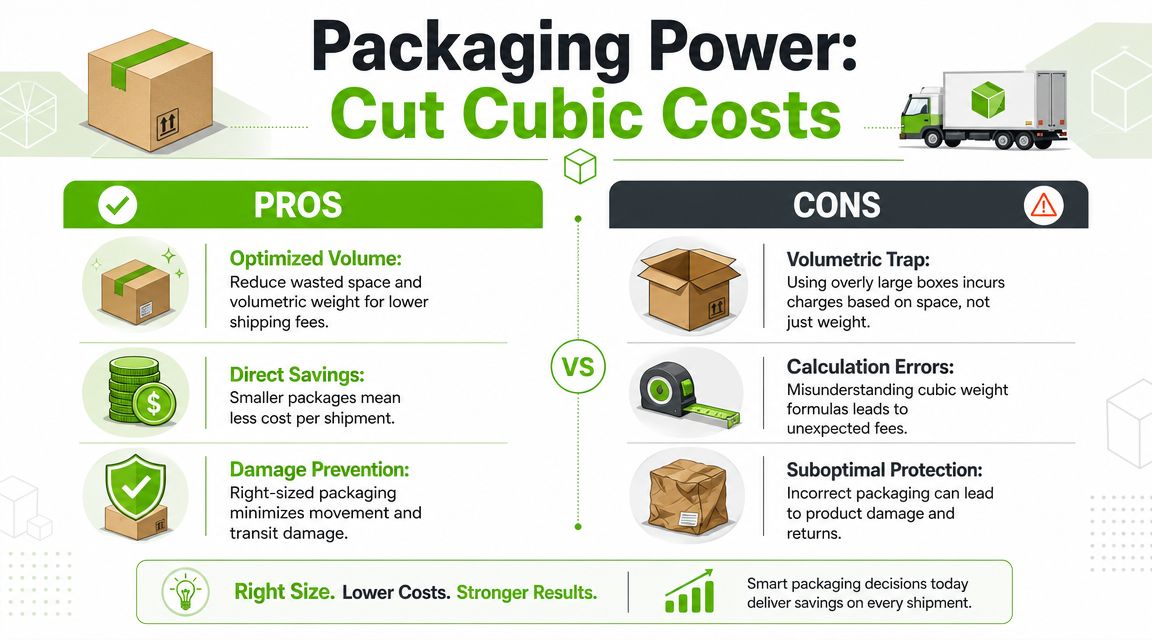
Packaging is where many parcel shippers lose money without noticing. Not because they packed badly in the obvious sense. Because they packed too much air.
Carriers don’t just care about what a box weighs on a scale. They also care about how much space it takes up in the network. A lightweight item in an oversized carton can cost more than a heavier item in a tight, efficient box.
Why cubic charges matter
If you send apparel, homewares, cosmetics, spare parts, or subscription boxes, this matters every day. A puffer jacket is a good example. It isn’t especially heavy, but it becomes expensive if it goes into a large carton with lots of dead space. Compress it properly, use a satchel or a right-sized box, and the chargeable size changes.
A significant pitfall for Australian e-tailers is failing to optimise for density. According to Transport for NSW data, this can inflate shipping costs by an average of 10-15% according to analysis on density and freight spend.
A better packing bench routine
Good packaging doesn’t mean using the smallest box possible at all costs. It means using the right packaging for the item, the destination, and the service level.
Here’s the checklist I’d use in any parcel operation:
- Match the carton to the item. If the item shifts around, the box is too big or the void fill is wrong.
- Reduce dead space first. Don’t solve empty space by adding more filler than the product needs.
- Use lighter protective materials where possible. Protection matters, but overbuilt packaging often drives up chargeable size.
- Separate fragile from bulky logic. Fragile items may need structure. Soft goods usually need compression and tight wrapping.
- Standardise your top box sizes. Too many random carton sizes create inconsistent charging and slower packing.
- Train staff to measure finished parcels, not just products. The box you buy isn’t the cost. The packed dimensions are.
Practical rule: If the product can’t move, the box usually won’t cost more than it should.
A lot of packing mistakes come from poor material choices rather than laziness. If your team needs a simple refresher on wraps, fillers, and protection methods, Admiral's Yard packing advice is a useful reference for selecting the right materials without overpacking.
Make packaging decisions visible
The easiest way to control this is to price shipping off real parcel dimensions before dispatch. A live quote tool helps staff see the cost difference between one box size and another before they print a label. If you want a practical benchmark for box and parcel pricing, checking current postal charges for parcels makes the trade-off much clearer.
Packaging is not admin. It’s one of the fastest ways to cut waste out of parcel freight.
Choose the Right Carrier for Every Single Parcel
Sticking with one carrier for every shipment feels efficient. It usually isn’t. Australia is too varied for that approach to stay cost-effective across metro, outer-metro, and regional deliveries.
The cheapest option for a small carton going from Melbourne to inner Sydney often won’t be the cheapest option for a heavier box heading to regional Queensland or Western Australia. Service strengths vary by lane, parcel profile, and pickup arrangement. That’s why loyalty can become expensive.
Why single-carrier habits cost more
A single-carrier setup creates blind spots. Staff stop comparing. Exceptions become normal. You end up accepting pricing and service mismatches because the workflow feels familiar.
That’s not the same as having a shipping strategy. It’s just having a default.
By strategically consolidating daily dispatches and choosing the best carrier for each, Australian businesses can achieve annual savings of 18-30% on their shipping costs, according to this freight cost reduction analysis.
What a multi-carrier workflow does better
For parcel businesses, the win is flexibility. A multi-carrier platform lets you compare rates and service options in real time, then book based on the actual shipment in front of you instead of an old preference.
That matters when you’re sending:
| Parcel situation | What to prioritise |
|---|---|
| Small metro box | Lower base price and fast local transit |
| Residential delivery | Clear pricing on home delivery conditions |
| Regional shipment | Visibility on surcharges and route coverage |
| Fragile or time-sensitive parcel | Reliable service fit, not just cheapest sticker |
| Mixed daily dispatch | Fast comparison across carriers in one workflow |
One practical option is Aeros Couriers’ guide on what makes a courier service the best, which reflects the broader point well: the useful shipping tool isn’t the one with one answer. It’s the one that lets you compare carriers, print labels, and choose based on the parcel, destination, and timing.
The right carrier is not a company. It’s a decision you make parcel by parcel.
What doesn’t work
Three habits tend to backfire:
- Choosing on headline price alone. Regional add-ons and service limitations can erase the saving.
- Keeping “backup carriers” outside the normal workflow. If comparison takes extra effort, staff won’t do it.
- Treating all destinations the same. Metro logic and regional logic are different.
If you want to know how to reduce freight costs without slowing dispatch, this is one of the most useful changes you can make. Build choice into the daily process so the cheapest suitable option is visible every time.
Unlock Savings with Smart Shipping Habits
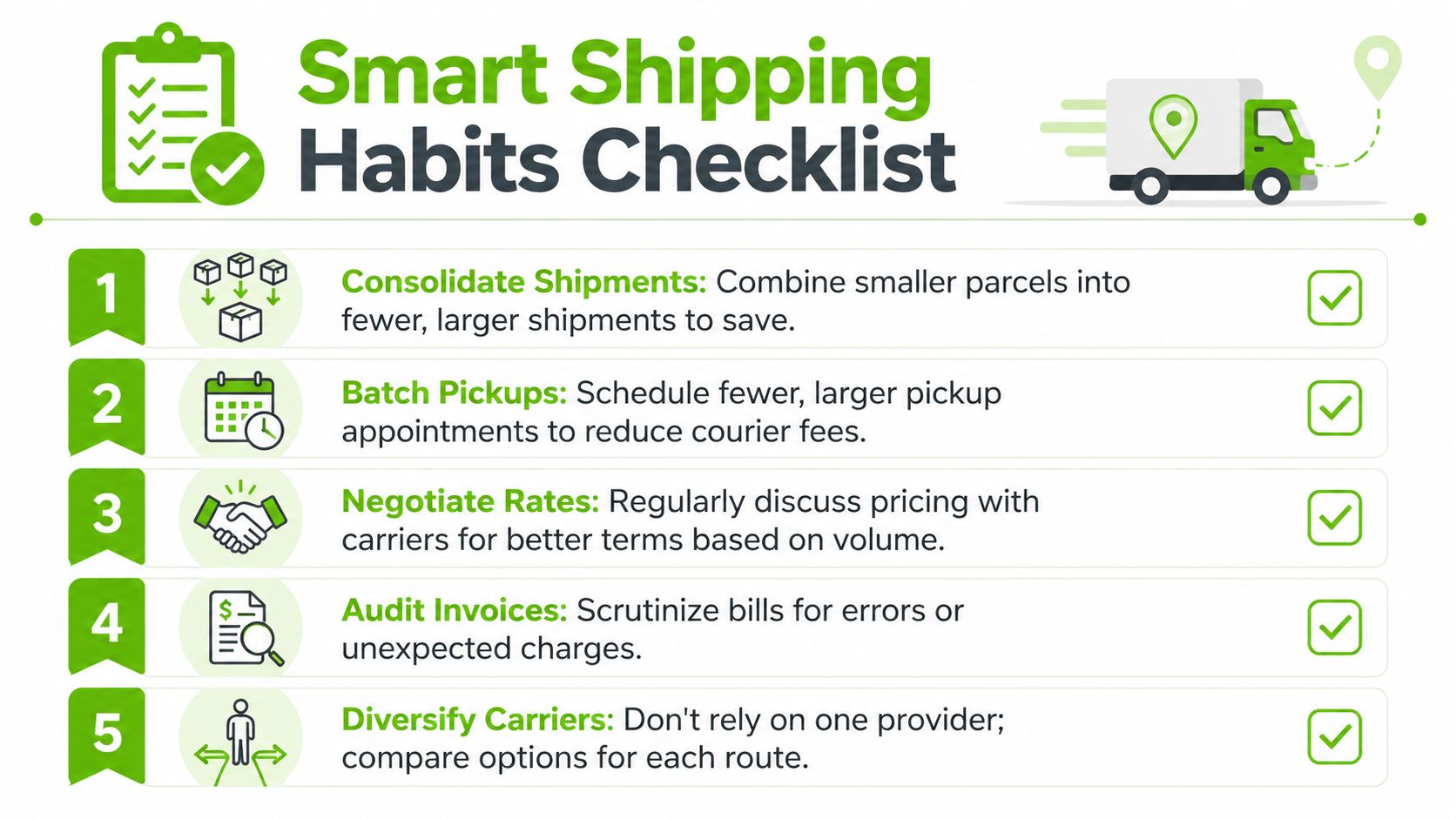
Most freight savings don’t come from one brilliant negotiation. They come from repeatable habits. The businesses that keep shipping costs under control know their patterns. They know which destinations sting, which parcel types drift upward, and which surcharges keep appearing.
That starts with a simple freight audit. Not a giant project. Just a regular review of what you’ve already been sending.
Run a simple freight audit
Look back over your recent shipping history and sort it by destination, parcel type, service used, and total charge. You’re trying to spot concentration, not create a perfect report.
Australian businesses that implement quarterly freight audits report achieving 10-15% cost reductions, and rising regional surcharges can be 20-35% higher for states like WA or NT, especially after infrastructure disruptions, according to this freight audit methodology.
What to look for in the numbers
Don’t overcomplicate the review. Start with the obvious questions:
- Which postcodes cost more than expected? Regional routes usually reveal themselves quickly.
- Which parcel sizes show up most often? That helps you standardise packaging and service choice.
- Where do surcharges keep appearing? Residential, remote, and special handling flags are common culprits.
- Which orders could have been batched? Multiple parcels to the same area on the same day often signal avoidable spend.
A good audit changes behaviour at the bench. If staff know a postcode range regularly attracts a premium, they’ll quote and pack with more care. If you see repeat same-day shipments to one metro area, you can batch them into one pickup window instead of treating each as urgent.
Build habits that cut cost without slowing service
The strongest savings habits are operational, not theoretical.
Batch where it makes sense
If several orders are going to the same metro area or regional corridor, don’t send them as isolated dispatch decisions if timing allows. Grouping dispatches reduces friction and gives you cleaner pickup patterns.
Quote before you label
Too many teams print first and think later. The better method is to compare service options on the actual dimensions and destination before the label is created. A live shipping price calculator helps stop “that’ll do” decisions at the exact point they get expensive.
Watch regional freight closely
Regional shipping in Australia punishes lazy assumptions. A route that looks normal on a map can price very differently in the system. If your volume is spread nationally, route logic matters. For a useful explainer on the mechanics behind route efficiency, how route planning software works gives a solid overview of why some routes cost more than others.
Audit first. Negotiate second. If you don’t know which lanes are hurting you, you’ll ask for the wrong discount.
Smart habits turn freight management from reactive to controlled. Once your team can recognise costly patterns, savings stop depending on guesswork.
Navigate Australian Regulations to Avoid Penalties
A lot of parcel senders hear Chain of Responsibility, then assume it’s mainly a problem for heavy transport operators. That’s a mistake. If your business packs and sends boxes across Australia, you’re part of the chain.
In simple terms, CoR means responsibility is shared. If a parcel is packed unsafely, declared incorrectly, or sent in a way that creates risk, the problem doesn’t sit only with the carrier. It can come back to the sender.

Where parcel businesses get caught
The common trouble spots are straightforward:
- Loose or poorly secured contents that shift in transit
- Undeclared dangerous goods, especially batteries, aerosols, and chemical products
- Weak packaging that fails under handling
- Incorrect labels or descriptions that trigger rejection or delay
Non-compliance with Chain of Responsibility laws can lead to fines of over $10,000, and digital platforms with built-in checks for packaging standards and dangerous goods can reduce rejection rates by 25-40%, according to this CoR-focused freight cost guide.
Treat compliance as cost control
Good operators don’t separate compliance from savings. They understand that rejected freight, delayed freight, and fined freight are all expensive freight.
A safer workflow looks like this:
- Check the item before packing. If it contains batteries, pressurised contents, or restricted materials, verify the rules first.
- Pack for handling, not shelf presentation. Couriers move parcels through cages, depots, vans, and linehaul networks.
- Use system prompts when available. Built-in checks reduce staff guesswork.
- Document clearly. Vague descriptions create avoidable hold-ups.
If your team ships anything that might fall into a restricted or declared category, this guide to hazardous goods classification is the sort of operational reference worth keeping close.
Compliance done early is cheaper than correction done late.
This isn’t about legal jargon. It’s about avoiding preventable costs and keeping parcels moving.
Turn Freight Savings into Business Growth
Once you strip the noise out of freight, the playbook is straightforward. Pack tighter. Compare carriers on the job in front of you. Audit your shipping patterns. Stay clean on compliance.
Those aren’t glamorous changes. They are profitable ones.
Where the savings really matter
Every dollar you stop wasting on freight can be used somewhere that grows the business:
- Marketing spend that brings in new customers
- Sharper pricing that improves conversion
- Better packaging and fulfilment tools that reduce errors
- Customer service improvements that keep buyers coming back
That’s the reason to learn how to reduce freight costs. You’re not just trimming an overhead. You’re freeing up working capital from a part of the business that often runs on autopilot.
Make shipping a commercial advantage
The best small businesses don’t win because they spend the least on freight at any cost. They win because they spend wisely. Their parcels are packed properly, routed sensibly, and sent through systems that give staff visibility before a bad decision becomes a charge.
If you’re building a lean shipping process for an online store or growing company, practical guidance on small business shipping in Australia can help turn these ideas into a repeatable workflow.
Start with the easiest fixes at the packing bench. Then tighten quoting, auditing, and compliance. Done consistently, those habits don’t just lower shipping costs. They make the whole business more resilient.
If you want a simpler way to compare carriers, book Australia-wide parcel deliveries, and keep shipping decisions organised in one place, Aeros Couriers is worth a look. It gives businesses a practical workflow for quoting, booking, labelling, and tracking without adding extra admin, which makes it easier to control freight spend day after day.
Courier quotes, tracking and support
Ready to send a parcel? Compare the available services for your postcodes, parcel dimensions and weight. For an existing delivery, use your consignment number to check tracking or ask our team for help.