
You’re probably doing this already. Packing orders late in the day, comparing courier tabs, second-guessing whether express is worth it, then dealing with a customer who wants an update before the parcel has even cleared pickup.
Such is the nature of small business shipping australia. Shipping doesn’t sit neatly in one box. It affects margin, repeat purchases, support workload, and how professional your business feels to the customer on the receiving end.
Australian businesses carry an extra layer of difficulty because the country is huge, delivery networks aren’t equal across every postcode, and pricing often feels designed for large-volume senders. Yet shipping isn’t a side issue. The Australian parcel shipping market generated about 4 to 5 billion AUD in 2019, up from 3.5 billion AUD in 2016, according to Statista’s Australia parcel market revenue data. That scale matters because Australia had 2,729,648 actively trading businesses at 30 June 2025, with 91.5% under $2 million turnover in the verified data above. Most of those businesses don’t have time to waste on clunky freight admin.
The shift that helps is simple. Stop treating shipping as a painful back-office task. Start treating it as a lever. The businesses that get this right quote faster, pack smarter, communicate better, and avoid getting locked into one carrier’s pricing or service problems.
Why Mastering Shipping Is Your New Competitive Advantage
The old view says shipping is just a cost. That view hurts small businesses.
Customers don’t separate your product from your delivery experience. If the parcel arrives late, damaged, or with poor tracking, they blame your business. They don’t care which courier caused the problem.
Shipping affects more than freight spend
A strong shipping setup does four jobs at once:
- Protects margin: You stop leaking money through poor packaging choices, avoidable surcharges, and one-size-fits-all carrier decisions.
- Reduces support tickets: Better tracking and clearer delivery windows mean fewer “where is my order?” emails.
- Improves conversion: Buyers are more likely to finish checkout when delivery feels predictable.
- Builds trust: Reliable dispatch and clean parcel presentation make a small business look organised.
Practical rule: If shipping creates confusion inside your business, it creates doubt for your customer.
That’s why the businesses that outperform in crowded categories often aren’t the ones with the cheapest product. They’re the ones with the least friction after the sale.
Australia makes good shipping harder, and more valuable
Selling from Melbourne to Geelong is one thing. Sending the same box from Brisbane to regional WA is another. Distance, handovers, and postcode coverage all change the economics.
That’s where a lot of owners get stuck. They assume expensive or inconsistent shipping is unavoidable. It isn’t. Some of it is structural. A lot of it comes from using the wrong shipping model, poor packaging discipline, and weak communication when something goes off track.
In practice, mastering shipping means making better decisions before the parcel leaves your premises. Which service suits this order? Is the packaging oversized? Can you quote instantly? Can a customer get a useful answer quickly if a pickup fails?
Those aren’t minor operational details. They’re part of your competitive edge.
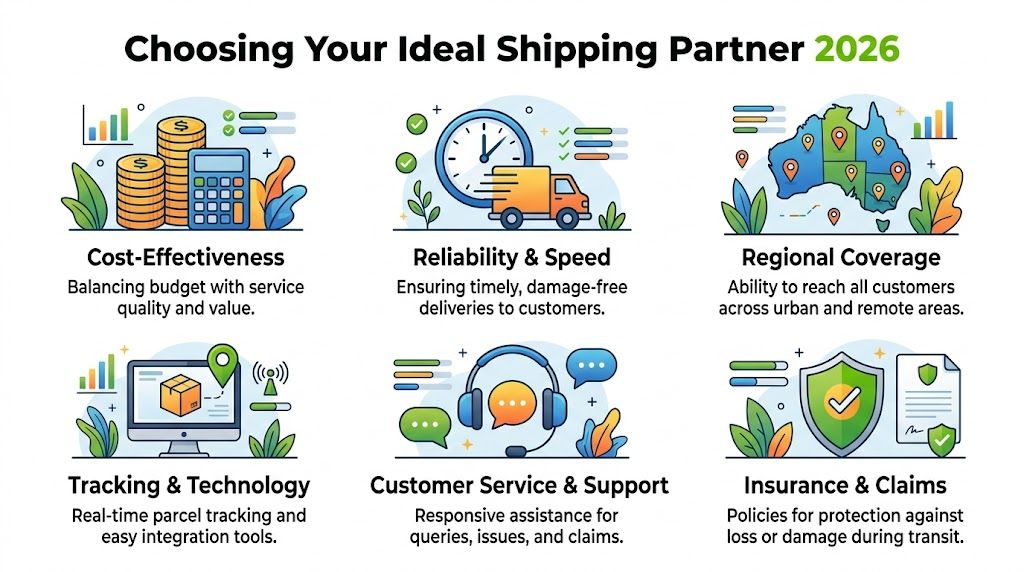
Choosing Your Shipping Partner in 2026
Most small businesses start with whatever carrier is easiest to access. That works for a while. Then volumes increase, destinations widen, and cracks show up fast.
The core choice is usually this. Go direct with one major carrier, or use a multi-carrier platform.
Going direct with one carrier
A direct account can work if your freight profile is very stable. Same product range, same dispatch location, similar destinations, similar parcel sizes.
The upside is simplicity. You learn one system, one label format, one invoice style.
The downside is exposure. When pricing changes, service slips, or a carrier is weak in a certain lane, you’ve got nowhere to move inside the same workflow.
This matters because 53% of small businesses already use multiple couriers to get better rates, and 55% want expanded e-commerce delivery options, according to B&T reporting on Sendle survey findings. Small operators have already worked out that one courier rarely fits every job.
Using a multi-carrier platform
A multi-carrier setup gives you options at the quote stage instead of after the problem appears.
That’s the practical benefit. You compare service types, delivery windows, and pricing for the specific parcel in front of you. You don’t force every shipment through the same channel.
This model tends to suit SMEs because it removes a common barrier. You can access business-style rates and workflows without going through a long account application process or committing to heavy volume.
One example is Easyship, which can be useful if you want to compare carriers in one place and look at shipping tools through a cashback lens as well.
What to compare before you choose
Don’t choose on brand familiarity alone. Compare on the things that affect your daily work.
| Factor | Single carrier setup | Multi-carrier platform |
|---|---|---|
| Rate flexibility | Limited to one pricing structure | Compare by parcel and destination |
| Backup options | Weak if service issues hit | Stronger because you can switch |
| Onboarding | Can involve account hurdles | Often faster to start |
| Coverage fit | Depends on one network | Better for mixed metro and regional lanes |
| Admin effort | Simple at first, rigid later | Centralised if the platform is good |
| Customer service impact | Depends on one support channel | Depends on platform support plus carrier network |
Standard or express
This decision shouldn’t be emotional. It should follow product value, customer promise, and destination.
Use standard when:
- The order isn’t urgent: Low-pressure replenishment items usually don’t need premium speed.
- The margin is tight: Paying more for speed can wipe out profit on lower-value orders.
- The customer has accepted a wider delivery window: Clear expectations matter more than false urgency.
Use express when:
- The item is time-sensitive: Event stock, urgent replacements, or customer-paid priority are the obvious cases.
- The cost of delay is high: Some orders create more support work than the express uplift costs.
- You need tighter control: Faster services can reduce uncertainty on key deliveries.
The right service level is the one that fits the order, not the one with the loudest branding.
The partner test most businesses forget
Before you commit, test support.
Call the number. Send an email. Try to understand what happens when a parcel isn’t picked up. Ask how rebooks work. Ask what the dashboard shows after dispatch.
That tells you more than the sales page ever will.
If you want a useful checklist for weighing service quality, claims handling, visibility, and responsiveness, this guide on what makes a courier service the best is worth reviewing before you lock in a setup.
A Small Business Guide to Shipping Costs and Savings
Most shipping invoices look simple until you read the line items closely. Then you find out the job didn’t just cost the quoted base rate.
For local box and parcel deliveries across Australia, the businesses that keep costs down usually do one thing well. They understand what drives charges before they book.
What your parcel really gets priced on
For cartons and satchels, cost usually comes back to a small group of variables:
- Destination: Longer linehaul and harder-to-service postcodes cost more.
- Dimensions: A light but bulky box can price worse than a compact heavier one.
- Weight: Actual weight still matters, especially once the carton gets dense.
- Service level: Standard and express aren’t interchangeable on price.
- Pickup and delivery conditions: Residential addresses, limited access, or missed collections can create friction.
Australia’s geography magnifies all of this. The Perth-to-Sydney lane is about 4,000 km, and regional last-mile delivery can account for 50% to 70% of total transport expense, according to Clique Logistics on logistics hurdles for Australian SMEs. The same source notes that SMEs using wholesale bulk purchasing platforms can achieve 20% to 30% rate reductions.
That doesn’t mean every shipment suddenly becomes cheap. It means access model matters.
The expensive mistake small businesses keep making
They pack to fit the product, not the price logic.
If you use boxes that are too large, you pay to move air. That’s one of the most common avoidable leaks in parcel spend. A business can be careful with supplier costs and still lose money every day through oversized cartons.
Good cost control starts on the packing bench:
- Measure your top twenty SKUs or order combinations. Build packaging around what you ship most, not what happens to be on hand.
- Carry fewer box sizes, but choose them deliberately. Too many sizes creates confusion. Too few creates overpacking.
- Use satchels where product protection still holds. For soft goods and low-fragility items, satchels can trim dimensional bulk.
- Train staff to pack for movement. If contents shift, you often end up using bigger cartons and more filler than needed.
Common hidden shipping costs and how to avoid them
| Hidden Cost | What It Is | How to Avoid It |
|---|---|---|
| Oversized packaging | A carton that is larger than the item needs, increasing chargeable size | Match box sizes to your common order profiles |
| Regional servicing cost | Delivery into harder-to-reach areas with fewer efficient runs | Quote accurately at checkout and avoid flat national pricing if it hurts margin |
| Rebooking time | Failed or missed pickups that force staff to chase support | Use platforms with clear rebook workflows and visible job status |
| Manual entry errors | Wrong addresses, wrong service selected, bad labels | Pull order data into one booking flow and validate details before dispatch |
| Poor packaging choice | Using a box where a satchel would do, or the wrong fill | Standardise packaging rules by product type |
Savings that work in the real world
There’s no magic line-item trick. Savings usually come from stacking a few practical disciplines together.
Use wholesale-rate access
If you’re shipping regularly, comparing retail-style bookings one by one is a slow way to stay expensive. The smarter move is to use a platform that gives small businesses access to pre-negotiated pricing without forcing enterprise-style setup.
That’s where local comparison tools can help. If you want to understand the moving parts before changing providers, this page on cost for shipping gives a useful breakdown of what affects a quote.
Segment your parcel types
Not every order deserves the same logic.
A compact metro parcel, a regional carton, and an urgent replacement shouldn’t all flow through one fixed service rule. Build simple rules around:
- Fast metro orders
- Low-urgency interstate orders
- Regional deliveries where customer communication matters more
- Orders with margin room for express
- Orders that need signature because replacement risk is higher
That’s how you avoid overpaying for speed where no one asked for it.
Review your true cost per parcel
A cheap label can still be an expensive shipment.
Look at the full operational cost:
- packing materials
- labour time
- customer service follow-up
- rebook effort
- replacement risk
- claims hassle
Cheap freight that creates admin pain usually isn’t cheap.
The businesses that ship well don’t just chase the lowest first quote. They look for the lowest all-in cost while keeping delivery reliable.
Packaging Your Parcels for Success
A good parcel starts before pickup. If the item is packed badly, the cheapest rate in Australia won’t save you from damage, delays, or customer complaints.
Most packing problems come from rushing. Wrong box, weak sealing, too much empty space, poor labels, or no thought given to what happens when the carton is handled several times across the network.

Choose the right outer packaging
Start with the product, not the packaging stock you’re trying to use up.
Use a satchel when the item is non-fragile, compact, and won’t be damaged by compression. Use a box when the item needs structure, edge protection, or internal cushioning.
A few practical rules help:
- Fragile items need rigid walls: Ceramics, glass, and boxed products with presentation value should not go in soft packaging.
- Soft goods can often go flatter: Apparel and textiles usually don’t need bulky cartons.
- Don’t oversize by habit: A large box with a small item inside invites movement and extra cost.
Pack for movement, not for the shelf
Parcels get lifted, scanned, stacked, and shifted. Pack for that environment.
Use fill to stop movement, but don’t rely on one loose sheet of paper and hope for the best. If the item can knock around inside the box, damage risk rises fast.
Seal all seams properly. Weak tape jobs fail at the corners first. Labels must sit flat, stay visible, and not wrap over edges.
If you need a practical refresher on placement, this guide on label on package is worth keeping handy for staff training.
A parcel should survive handling by people who don’t know what’s inside and don’t have time to be careful with it.
Don’t ignore the workflow side of packing
Freight rate pressure has increased. Verified data states the market saw freight rate hikes of 10% to 15% after the Sendle closure in 2024, and that adopting technology such as integrated dashboards can help SMEs reduce last-mile expenses by up to 25%, based on the referenced YouTube source in the verified data.
That matters on the packing bench too. Good packaging isn’t only about materials. It’s about consistency.
Businesses pack better when they have:
- Clear packing rules by SKU or product type
- A label workflow that avoids manual rewriting
- Order visibility before the parcel reaches dispatch
- A simple process for exceptions such as fragile items or signature-required jobs
Be careful with dangerous goods
Many small businesses ship items that can trigger extra requirements without realising it. Aerosols, certain cosmetics, anything with lithium batteries, and some cleaning or automotive products need closer review.
Don’t guess with dangerous goods. If you’re unsure, check the packaging requirements and carrier acceptance rules before dispatch. One wrong assumption can lead to rejection, delay, or a compliance issue that costs more than the order is worth.
Streamline Your Operations with a Shipping Dashboard
Once your order volume grows, the biggest shipping cost often isn’t the label. It’s the admin around it.
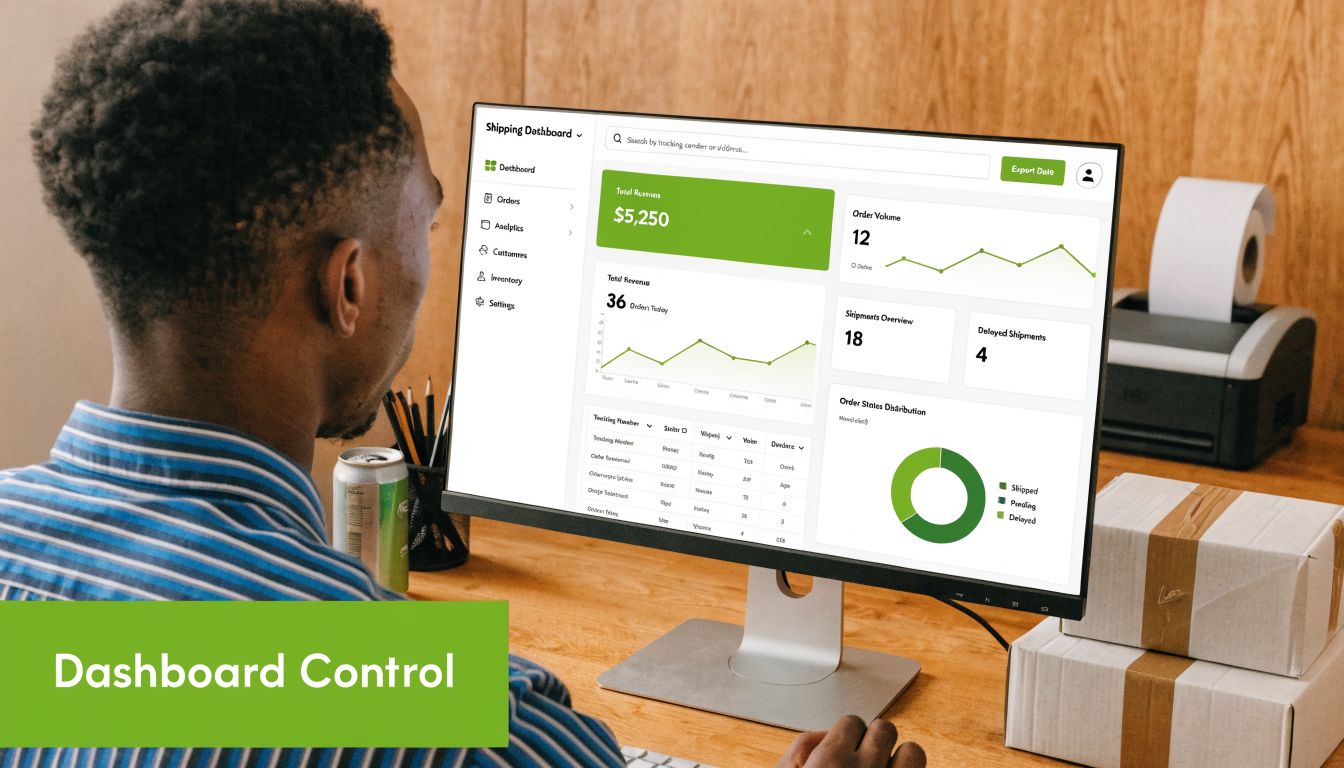
Manual entry, scattered tracking links, missed pickups, invoice confusion, and staff working from different spreadsheets all chew up time. A central dashboard fixes that by giving your team one place to book, track, rebook, and review jobs.
Why a single dashboard changes the day-to-day
The operational win is clarity.
If you run from more than one location, or even just have multiple staff booking jobs, a central system keeps everything in one readable view. Pickups, labels, tracking, and invoicing stop living in separate places.
That’s especially useful for multi-site pickup. Instead of each location doing its own thing, all jobs can sit inside one workflow and one record set.
What to look for in the platform
A dashboard should do more than print labels. It should remove repetitive work.
Look for these functions:
- Instant account access: You shouldn’t need a drawn-out setup to start booking.
- Multi-site visibility: Teams need to see what’s booked across locations.
- Simple tracking status: Staff should know whether a job is booked, picked up, in transit, or needs attention.
- Clean invoicing: Finance shouldn’t have to stitch together freight records manually.
- Pickup management: Rebooking should be obvious, not buried.
One option in this space is the perfect platform to compare and book your courier, which outlines what a comparison-and-booking workflow looks like in practice for Australian businesses.
Use your own reporting better
Not every team needs a full BI stack. Plenty of SMEs can get value just by organising dispatch data properly and spotting patterns in carrier use, parcel types, and exception rates.
If your team still leans heavily on spreadsheets, it can help to learn how to build your first Excel AI dashboard so shipping data becomes easier to read and act on.
Better shipping decisions usually come from better visibility, not more meetings.
There’s also a margin angle people overlook. Verified data notes that platforms offering reward points on every order can reduce effective shipping expense by 5% to 15%, based on Business Daily Media’s referenced coverage. If your platform includes a rewards layer, that won’t replace rate discipline, but it can help offset spend you’re making anyway.
Solving the Regional and Rural Delivery Challenge
Regional shipping frustrates businesses for one reason more than any other. Silence.
Customers are usually patient when they know what’s happening. They get angry when the parcel is late and no one can give them a straight answer.

The real regional problem
The delivery window between metro and regional locations can vary by 1 to 4 days, based on the content owner’s direct operating context in the brief. That isn’t always a failure. It’s often the result of linehaul timing, local runs, and lower service density.
What turns a normal delay into a bad customer experience is poor communication.
Large carriers often break down at the exact moment a small business needs help. Pickup missed. Tracking stalled. Customer waiting. Support hard to reach.
What actually works
Regional freight becomes manageable when you build communication into the process instead of treating it as a rescue task.
That means:
- Set realistic delivery expectations before dispatch: Don’t promise metro timing to regional customers.
- Use a platform with direct support access: A real phone number and responsive email matter when a shipment stalls.
- Make rebooking simple: If a parcel isn’t picked up, staff need a one-step action, not a long support chase.
- Keep all jobs visible in one place: A dashboard helps staff answer questions without hunting through inboxes.
A practical reference for this side of operations is delivery last mile, especially if your business regularly ships beyond metro networks.
Regional delivery doesn’t have to feel like a black box. It only feels that way when no one owns the communication.
When small businesses handle updates well, regional customers usually respond well too. They know where they live. What they want is honesty, visibility, and a fast answer when something changes.
Your Action Plan for Cheaper Faster Shipping
The smartest move isn’t switching everything overnight. It’s tightening the few parts of shipping that leak money and time every week.
Start with a short audit.
Do these five things this week
Review your top parcel types
Check what you send most often by size, weight, and destination.Measure your packaging properly
Remove oversized cartons and match box or satchel choice to the product.Compare shipping models
Look at whether one carrier still makes sense, or whether a multi-carrier setup would give you better flexibility.Fix communication gaps
Make sure your team can answer pickup and tracking issues quickly, especially for regional jobs.Centralise the workflow
If bookings, labels, tracking, and invoicing sit in different places, bring them together.
The big shift is mental. Don’t act like shipping is something that happens to your business. Treat it like a system you control.
That’s how small businesses ship cheaper, faster, and with less daily friction.
If you want a practical way to compare rates, book local and Australia-wide parcel deliveries, manage multi-site pickups, print labels, and track jobs in one place, Aeros Couriers is an Australian-owned option built for businesses that need straightforward shipping without the usual account hurdles.
Courier quotes, tracking and support
Ready to send a parcel? Compare the available services for your postcodes, parcel dimensions and weight. For an existing delivery, use your consignment number to check tracking or ask our team for help.