
Orders are coming in. That should feel like progress.
Instead, you are staring at shipping quotes, arguing with carton sizes, wondering why one parcel to Brisbane looks cheap and the next one to regional Victoria wrecks your margin. You are not alone. For a lot of Australian small businesses, shipping stops being an admin task and starts acting like a tax on growth.
The fix is not “ship faster” or “find one cheap carrier and hope for the best”. The fix is understanding how the domestic courier game works in Australia, then choosing a setup that cuts hidden costs before they cut into profit.
Your Launchpad to National Success Starts with Shipping
A common pattern looks like this. A small online store starts with a few weekly orders, packs everything from the spare room, then suddenly has customers in Perth, Cairns, Adelaide, and regional NSW. Sales grow, but so do support emails. “Where is my order?” “Why is shipping so expensive?” “Why did this one arrive tomorrow and that one takes days?”
That is the moment shipping stops being a back-office chore. It becomes part of the product.
Australia’s domestic courier market is not small or slowing down. The market reached $12.4 billion in 2025, with a 15% annual e-commerce growth rate post-2020, and domestic parcel volumes hit 1.2 billion units in 2021, which was a 25% increase from pre-pandemic levels, according to The Business Research Company. If you sell online, you are operating inside that reality whether you like it or not.
Shipping is now part of your brand
Customers do not split your business into separate boxes labelled “product”, “service”, and “courier”. They judge the whole experience. If your checkout surprises them with a bad rate, or your delivery promise falls apart, they blame you.
That is why a smart domestic courier setup matters.
- It protects margin: bad packaging choices, poor service selection, and hidden fees leak money.
- It protects trust: clear ETAs and reliable tracking cut customer anxiety.
- It protects repeat sales: people buy again when delivery feels straightforward.
Practical rule: treat shipping as a sales function, not just a fulfilment function. The business that delivers smoothly tends to look more organised than the business with the slightly cheaper product.
Stop chasing one “perfect” courier
Most owners waste time trying to find a single carrier that is cheapest for every route, parcel, and customer. That is not how Australian logistics works.
A better move is using a system that gives you rate visibility, lets you book quickly, and supports Australia-wide parcel movement without forcing you into slow account setup. If you want a feel for what that looks like in practice, review national courier services built for local shipping across Australia.
Shipping can either stay a source of friction or become a growth lever. For most SMBs, the difference comes down to understanding the network, the pricing model, and the total cost.
Understanding the Domestic Courier Network
A domestic courier network is the circulatory system of Australian commerce. Parcels move through pickup points, depots, sorting hubs, linehaul routes, and final delivery runs. If one part of that chain is clumsy, the whole shipment slows down.
For a small business owner, the useful question is not “what is a courier?” It is “which courier model fits the way I ship?”

The three models you will run into
Legacy national carriers have broad coverage and rigid operating rules. They suit businesses that like established networks and standard processes, but they can be less flexible on booking flow, account requirements, and pricing transparency.
Metro or regional specialists tend to be useful when your volume is concentrated in a specific area. They can handle local runs well, but they are not always the cleanest answer for Australia-wide shipping.
Platform aggregators sit in the middle and make the network easier to access. They let you compare options, book online, and manage shipments in one workflow instead of juggling multiple carrier relationships.
That last model matters because many SMBs do not need “a courier”. They need access to courier capacity without admin drag.
What the network means for your day-to-day decisions
When you book a parcel, you are paying for more than a van and a label. You are paying for:
- Pickup coordination
- Sortation and scanning
- Linehaul movement between cities
- Final-mile delivery
- Exception handling when something goes wrong
If your current process makes you email for quotes, wait for approval, or open accounts before you can move one carton, it is too slow for modern e-commerce.
Some businesses also benefit from reading broader material on courier logistics solutions because it helps frame courier choice as a systems issue, not just a rate issue. That mindset shift is useful. Cheap shipping that creates admin chaos is not cheap.
Not all “Australia-wide” services feel the same
A domestic courier can claim national reach and still be painful to use. What matters is the user experience wrapped around the transport.
Look for these basics:
- Instant quoting
- Simple label generation
- Tracking visibility
- Pickup flexibility
- Clear rules on restricted items
Expert view: the businesses that stay in control of shipping are often the ones that reduce decision fatigue. Fewer manual steps means fewer pricing mistakes, fewer address errors, and fewer missed dispatches.
The network itself is complex. Your booking process should not be.
How Courier Pricing and Transit Times Work
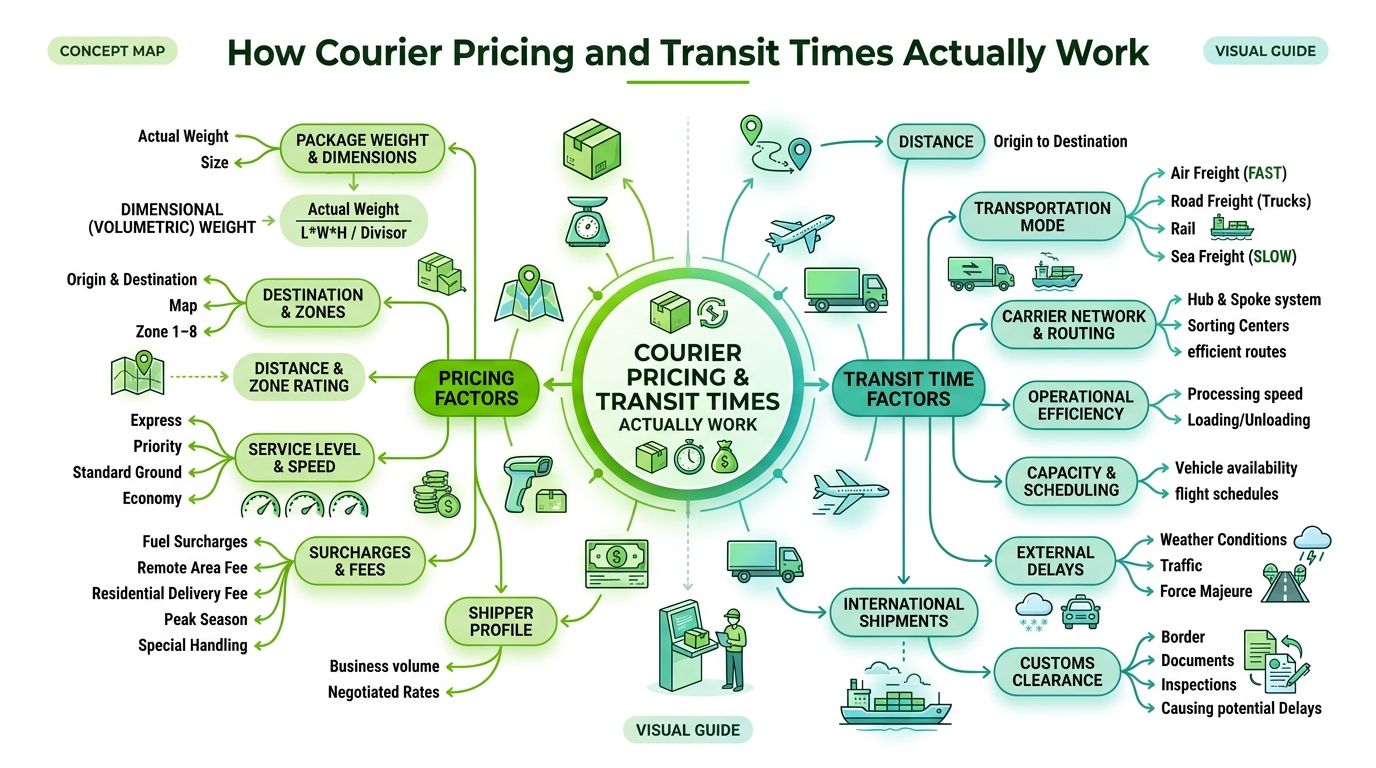
You quote a customer $12 for shipping, then the courier charge lands at $18 because the box was too big, the address was regional, and the order needed a signature. That is how margin disappears. Courier pricing is predictable once you know what drives the bill.
Start with the four inputs that matter. Dead weight, parcel dimensions, destination, and service speed. Get any of them wrong and your checkout price becomes fiction.
Why packaging decisions change profit
For many Australian SMBs, the product is not the pricing problem. The box is.
Australia Post explains that parcel charges can be based on cubic weight when a shipment is large for its actual weight. In plain English, couriers charge for space as well as kilos. A light but bulky carton can cost more than a compact heavier one, which is why satchels and right-sized cartons tend to beat oversized boxes for soft goods and small consumer products. See Australia Post's guide to cubic weight and volumetric pricing.
A hoodie packed in a neat satchel is cheap to move. The same hoodie dropped into a half-empty carton becomes expensive for no good reason.
Actual weight versus volumetric weight
Here is the rule. Couriers price against the higher of the two measurements.
- Actual weight is the reading on the scale.
- Volumetric weight is the amount of space the parcel takes up in the network.
This catches businesses selling light, awkward items. Lamp shades, pillows, hampers, promotional kits, and low-density stock often look cheap to ship until the dimensions are entered properly.
If you sell anything unusual in shape, check your packaging before you set customer-facing rates. If the item also falls into a regulated category, review the nine classes of dangerous goods before dispatch. Misclassified freight creates delays, extra handling, and avoidable charges.
What changes the quote
Courier pricing moves for operational reasons, not mystery reasons.
| Cost factor | What it means for you |
|---|---|
| Weight | Heavier parcels often cost more |
| Dimensions | Large cartons can price higher even when the contents are light |
| Destination | Regional and remote deliveries often cost more than metro runs |
| Speed | Express services raise the rate fast |
| Extra services | Signature, cover, and manual handling add cost |
The fix involves discipline with packaging and checkout rules.
- Use the smallest safe packaging. Do not use a carton that leaves 40 percent of the volume as empty air.
- Standardise your box range. Fewer sizes means cleaner quoting, faster packing, and fewer pricing errors.
- Record packed dimensions by SKU. Do this before you publish shipping rates, not after the first complaint.
- Separate default and exception orders. Your top sellers should follow a standard rule. Odd-shaped products need their own logic.
If you want to tighten your pricing setup, this breakdown of courier costs is worth reviewing before you set checkout pricing.
Why transit times vary so much
Transit time in Australia depends on route density, handover points, and distance. Sydney to Melbourne is a very different job from Brisbane to remote Far North Queensland.
The mistake is promising the fastest published estimate as if it is normal. It is not. Build your customer promise around the service level you can hit consistently, especially if you ship outside metro corridors.
Use these rules:
- Keep standard as your default service. It protects margin and suits the majority of everyday orders.
- Use express selectively. Reserve it for urgent replacements, premium orders, or deadline-driven shipments.
- Set realistic ETAs by postcode. One national shipping promise creates support problems.
- Watch cutoff times closely. A parcel booked after the linehaul cutoff often loses a full day.
The number that matters is total shipping cost
Small business owners often compare base rates and stop there. That is the wrong comparison.
Total shipping cost includes packaging, surcharges, failed delivery risk, redelivery effort, customer service time, and the admin involved in booking each job. Traditional carrier accounts can look cheaper on paper while adding friction through account setup, rate cards, minimum volume expectations, and manual quoting. Platform models such as Aeros Couriers remove much of that overhead. You can compare services quickly, book without the usual setup drag, and get extra value through rewards instead of chasing one narrow headline rate.
That highlights an important pricing lesson. The cheapest label is not necessarily the cheapest shipping system.
Navigating Service Types and Shipping Restrictions
A domestic courier service is not one thing. It is a menu. If you choose the wrong service for the job, you either overpay or create delivery headaches.
The trick is to match the service to the order value, customer expectation, and item type.
Common Australian Domestic Courier Services at a Glance
| Service Type | Best For | Typical Speed (Metro) | Key Consideration |
|---|---|---|---|
| Standard parcel | Everyday orders with flexible delivery windows | Fast, but less urgent than express | Often the most cost-efficient default |
| Express parcel | Time-sensitive customer orders | Faster than standard | Use selectively or margin disappears |
| Same-day metro | Local urgent deliveries | Same day | Useful for specific suburbs and cutoff times |
| Signature on delivery | Higher-value goods | Depends on route and service | Reduces unattended drop risk |
| Authority to leave | Low-risk residential orders | Depends on route and service | Convenient, but not right for every item |
Pick service types on purpose
Too many SMBs offer one shipping option because it is easier. It is not smarter.
Standard should carry most of your parcel volume. It is the sensible default for businesses shipping boxes and satchels Australia-wide.
Express should be used when the order justifies it. Think replacement items, event deadlines, or premium customer expectations.
Signature on delivery is a risk-control tool, not a luxury add-on. If the item is hard to replace or likely to be disputed, use it.
Authority to leave can reduce missed deliveries, but it is not suitable for all orders. If theft risk is high or the item is fragile, think twice.
Recommendation: create simple rules. For example, low-risk residential parcels can use ATL, while higher-value orders automatically require signature.
Restrictions are not optional fine print
Many senders get caught. A courier is not just moving a box. It is moving a declared item through a regulated network.
Items that often trigger restrictions include:
- Lithium batteries
- Aerosols
- Flammable liquids
- Corrosive products
- Pressurised containers
Some goods can move only under specific conditions. Others cannot travel through standard parcel services at all. If you guess, you risk rejection, delay, or worse.
For a practical starting point, review the guide to nine classes of dangerous goods before you list, pack, or dispatch anything remotely questionable.
Size and declaration discipline matter
For parcel-focused businesses, the safest habit is simple. Keep your boxes compact, declare contents accurately, and do not push odd-shaped items through standard services just because they fit on your workbench.
Ask these questions before booking:
- Is the item safe for standard parcel transport?
- Is the packaging strong enough for conveyor handling and van movement?
- Does the declared weight and description match reality?
If you cannot answer yes to all three, stop and fix it before dispatch.
The true cost of getting restrictions wrong
A rejected parcel is annoying. A non-compliant shipment is expensive.
The impact of getting restrictions wrong wastes labour, delays the customer, and can trigger extra charges or compliance problems. For a small business, that sort of avoidable mess creates far more pain than the original freight charge.
The disciplined shipper wins here. Clear service selection, clean declarations, and basic goods knowledge solve most problems before they start.
Packaging and Compliance for Safe and Secure Delivery
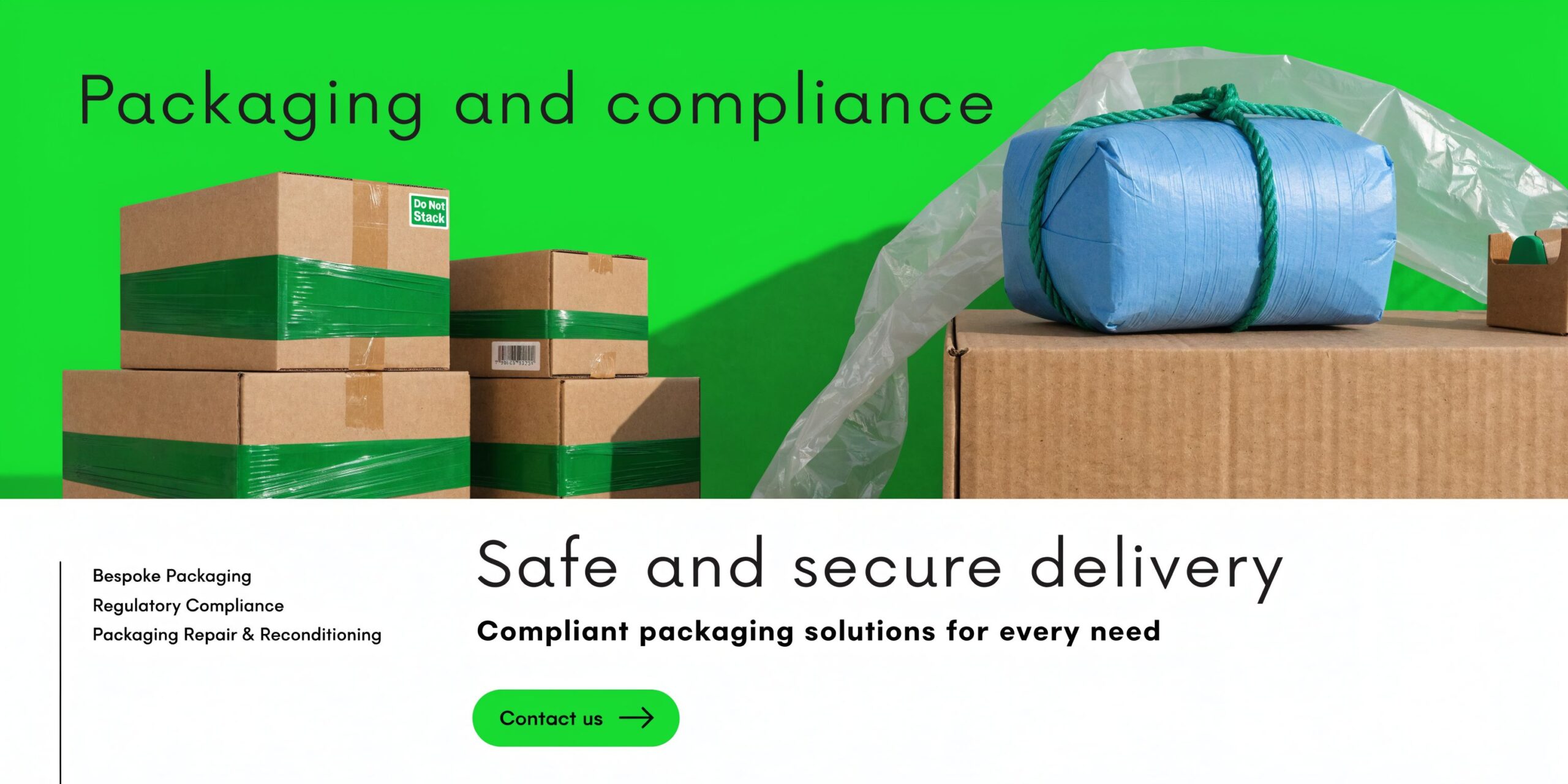
Most parcel damage is not bad luck. It is poor packing.
If your carton caves in, your product rattles around, or your label peels off halfway through the trip, the network is not the first problem. Your preparation is.
Pack for movement, not for the shelf
A parcel does not travel from your dispatch bench to the customer’s hands in a straight, gentle line. It gets picked up, sorted, stacked, shifted, scanned, and dropped at multiple points.
Pack for that reality.
- Use a proper carton: retail product boxes are rarely shipping cartons.
- Fill empty space: movement inside the box causes damage.
- Seal all seams well: weak taping is one of the easiest ways to lose control of a parcel.
- Protect corners and edges: fragile stock often fails at the pressure points first.
If you regularly send one product line, create a repeatable packing method. Do not let each staff member invent their own version.
Compliance is your problem too
Under Australia’s Chain of Responsibility laws, everyone in the supply chain carries legal responsibility for safety. In 2023-24, there were over 1,200 CoR prosecutions resulting in AUD $12.5 million in fines, with many linked to load restraint and mass violations, according to the National Heavy Vehicle Regulator.
You might think that sounds like a trucking issue. It is not just a trucking issue.
If you understate weight, pack goods unsafely, or send something that creates handling risk, you are part of the problem chain. Even if you only ship parcels and boxes, accuracy still matters.
The minimum standard every sender should follow
Treat this as your basic dispatch checklist.
Choose the right box size
The box should fit the product closely without crushing it. Oversized cartons attract higher cost and more damage risk.Use protective infill properly
Bubble wrap, kraft paper, or other cushioning should stop movement. One token sheet on top does nothing.Seal with intent
Tape the base, top, and seams properly. If the carton feels loose when lifted, fix it.Apply labels cleanly
Keep the shipping label flat, visible, and unobstructed. Do not wrap tape across critical barcode areas unless the label stock is designed for it.Declare accurately
Weight, dimensions, and contents should match what you are sending.
Key takeaway: packaging is not a cosmetic step. It is part of cost control, damage prevention, and legal compliance.
Documentation matters more than people think
If a parcel goes missing or a claim needs review, weak paperwork makes everything harder. A clear booking record and consignment details help you prove what moved, when it moved, and how it was declared.
If you are fuzzy on that side of the process, learn what a consignment note does and why it matters.
Good packaging does two jobs at once. It protects the item and protects your business.
How to Choose the Right Courier for Your Business
You quote a customer in Dubbo using a metro-based freight assumption, the parcel costs more than expected, and your staff burn 20 minutes fixing the margin hit. That is how small shipping mistakes turn into a monthly profit leak.
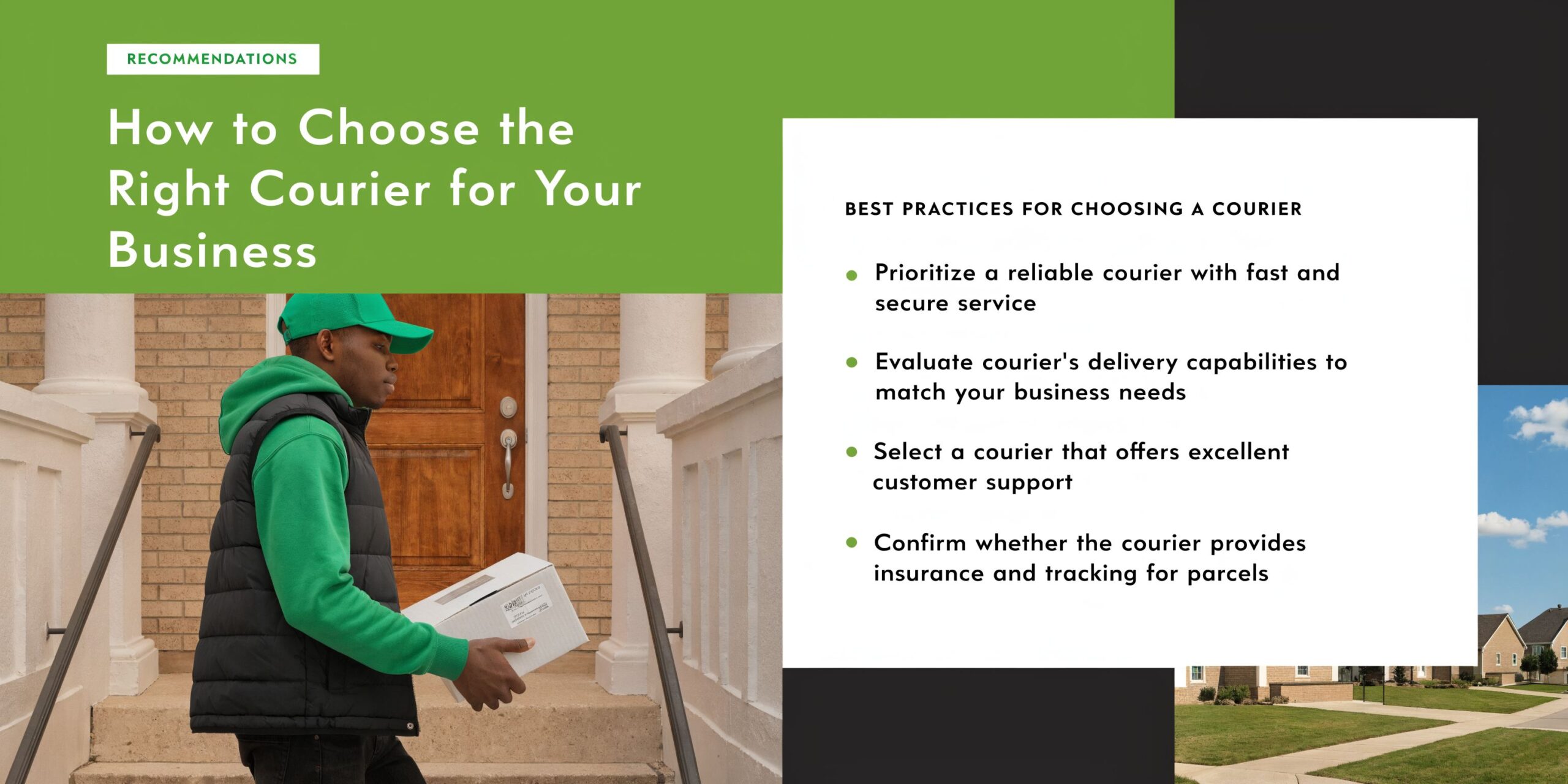
Choose a courier based on total operating cost. Sticker price alone is a bad filter.
Start with your actual shipping pattern
Before you compare providers, look at your last 50 to 100 shipments and sort them by what you really send.
Check four things first:
- parcel type, satchels or cartons
- destination mix, metro, regional, or remote
- pickup needs, one site or multiple locations
- service expectation, cheapest possible, fastest possible, or sensible middle ground
Do this once and you stop buying courier services based on guesswork.
Regional coverage decides whether your setup holds up
A national business needs a courier setup that works outside the capital cities. The Australian Bureau of Statistics regional population data makes that obvious. A large share of Australians live outside the major metro centres, so weak regional coverage is not a side issue. It is a revenue issue.
Ask direct questions before you commit:
| Question | Why it matters |
|---|---|
| How are regional delivery estimates shown at quote stage? | You need realistic promises before checkout |
| Are surcharges and area-based fees visible upfront? | Hidden charges destroy margin |
| Can you book without a long account setup process? | Delay at onboarding slows sales and dispatch |
| Is tracking simple enough for customers to follow themselves? | Fewer support emails for your team |
| Are pickup options flexible by day and location? | Small businesses rarely ship on a perfect schedule |
If a provider looks strong on Melbourne to Sydney lanes but gets vague on regional WA, north Queensland, or inland NSW, treat that as a warning.
Reliability saves more money than advertised speed
Fast on paper means little if parcels miss scans, pickup windows slip, or delivery estimates keep changing.
What you need is boring consistency. Clear booking. Predictable pickups. Tracking that customers can read without calling you. Support that answers the actual question. Pricing that makes sense before the invoice lands.
That setup cuts admin. It also protects your customer experience.
Check the full cost, not just the freight line
This is the mistake that hurts Australian SMBs most. They compare one visible rate and ignore the rest of the shipping bill.
Your real courier cost includes:
- booking time for staff
- account setup friction
- failed or delayed pickups
- surcharge surprises
- customer service time spent chasing updates
- delivery exceptions that trigger refunds, replacements, or discount requests
A slightly higher quoted rate can still be the cheaper option if it removes those losses. A platform model often wins here because it reduces admin and makes charges easier to see before you book. If you want a practical example, look at Aeros Couriers' platform-based shipping model for Australian businesses.
Use a simple decision process
Do not overcomplicate courier selection. Run this check instead.
Price your top shipment types
Use the parcel sizes, weights, and destinations you ship every week.Test metro and regional jobs separately
Good metro pricing does not guarantee good national coverage.Time the booking process
If staff need too many clicks, manual workarounds start creeping in.Review visibility after dispatch
Tracking, proof of delivery, and exception alerts matter after the parcel leaves your hands.Read service limits carefully
Products like cosmetics, batteries, aerosols, and electronics often trigger restrictions or extra handling rules.
Match the courier setup to the way your business runs
A lightweight e-commerce brand, a parts supplier, and a multi-site wholesaler should not choose the same shipping setup in the same way.
The right answer is often a system that lets you choose the right service for each job without opening separate negotiations, waiting through account approvals, or guessing what the final charge will be. For a small business, that is the difference between shipping as a routine process and shipping as a weekly headache.
The Aeros Couriers Advantage for Australian Shippers
For many Australian SMBs, the core problem is not access to delivery capacity. It is the friction around using it. Platform models are worth serious attention. According to Austrade, no-account platforms can cut total shipping costs by 15% to 25% for small businesses by leveraging wholesale rates and eliminating hidden fees. It also notes that rewards programs can offset 10% to 15% of annual shipping spend for frequent e-commerce shippers.
Those numbers matter because they speak to total cost, not just the sticker rate.
Why the platform model works for small businesses
Traditional arrangements often make small operators jump through hoops before they can even send consistently. Account applications, pricing opacity, and add-on charges waste time and money.
A platform approach strips that back.
- You can quote fast
- You can book without long setup delays
- You can centralise labels and tracking
- You can avoid some of the hidden admin cost that comes with fragmented courier use
For businesses comparing options, Aeros Couriers is one example of that model. It offers instant quotes, online booking, label printing, tracking, freight insurance inclusion, and rewards tied to merchandise redemptions. For a small business sending parcels Australia-wide, those features are practical, not decorative.
The feature that matters most is not flashy
It is ease.
If a system lets your staff quote and dispatch in minutes, that changes daily operations. If it removes account application friction, that helps businesses that need flexibility. If it avoids card charges and lets you compare options in one workflow, you get closer to the true goal, which is cheaper parcel movement with less admin.
The rewards angle also deserves attention. Most courier discussions ignore it, but if your shipping spend can produce useful merchandise credits, that is a legitimate value component for marketing teams and growing brands.
This is the point many owners miss. The cheapest domestic courier is not necessarily the one with the lowest visible base rate. It is often the one that lowers the full cost of shipping, booking, support, and operational hassle.
Your Next Step to Smarter Shipping in 2026
Shipping is not just a fulfilment line item. It affects margin, customer trust, repeat sales, and how confidently you can grow across Australia.
Get the basics right. Use the right carton. Understand dimensional pricing. Choose service levels deliberately. Be strict on declarations and compliance. Then pick a domestic courier setup that reduces total cost, not just advertised cost.
If you want a simpler way to quote, book, track, and manage Australia-wide parcel deliveries, get an instant quote from Aeros Couriers and compare the true cost of shipping before your next dispatch run.
Courier quotes, tracking and support
Ready to send a parcel? Compare the available services for your postcodes, parcel dimensions and weight. For an existing delivery, use your consignment number to check tracking or ask our team for help.