








Trying to make sense of a courier invoice can feel like you're cracking a code. But once you break it down, understanding courier costs in Australia is actually pretty straightforward. The final price you pay is really just a mix of a few key things: your parcel's size and weight, how far it's going within Australia, and how fast you need it to get there.
Getting a handle on these elements is the first step toward taking control of your shipping budget.
Your Guide to Navigating Courier Costs in Australia
If you run a business in Australia, you don't need us to tell you that shipping is a major expense. Whether you're sending orders across a busy city or out to a regional town, the final figure on that invoice can sometimes feel like a complete mystery. This guide is here to pull back the curtain and give you a clear roadmap to managing your domestic shipping spend.
Understanding what goes into your courier bill is more important than ever. The e-commerce boom has completely changed the game for logistics in Australia, ramping up both demand and complexity. You can see this shift in the sheer growth of the market.
Australia's courier, express, and parcel (CEP) market is on track to hit a massive AUD $13.7 billion in revenue by 2025. This explosion shows just how vital shipping has become, especially with online shopping leading the charge.
While this growth means more choice for businesses, it also brings a wider array of fees and surcharges to watch out for. For a small or medium-sized business, knowing how to navigate this landscape is crucial for staying profitable. It’s about moving past just accepting the first quote you see and starting to make smart, strategic choices that get you great service without breaking the bank.
What This Guide Will Cover
We're going to break down courier costs into simple, manageable pieces. We'll start with the basics and build up to practical strategies you can put into action right away.
Here’s what we’ll walk through:
- The Building Blocks of a Bill: We’ll start by pulling apart the core costs, like base rates and the critical difference between a parcel's actual weight and its cubic weight.
- Service Level Impact: You’ll see exactly how choosing between standard, express, or same-day delivery changes the price you pay.
- Uncovering Hidden Fees: We’ll shine a light on common surcharges for things like fuel, regional deliveries, and manual handling, and show you how to sidestep them where possible.
- Actionable Cost-Saving Strategies: Finally, we’ll give you a toolkit of practical tips you can use to actively bring down your shipping expenses.
By the end of this, you won't just understand your courier invoices—you'll have the confidence to choose the best courier service for your specific needs, making sure every dollar you spend on shipping is working for you. This turns shipping from a confusing cost into a smart, controllable part of your business strategy.
Understanding What's Actually on Your Bill
If you want to get a handle on your shipping spend, you first need to know what you’re paying for. When you break down a typical courier invoice, you’ll find that two key components really drive the final price. Nailing these concepts is the first, most important step toward smarter shipping for your business.
The first part of the equation is the Base Rate. Think of it like a taxi’s starting fare—it's the initial charge for the journey, calculated before any extras are tacked on. This rate is set by the two most basic factors: how far your parcel is travelling within Australia and how much it weighs. It’s the absolute minimum it will cost to get your package from A to B.
This diagram highlights why getting courier costs under control is so critical, especially with Australia’s e-commerce market continuing to boom.
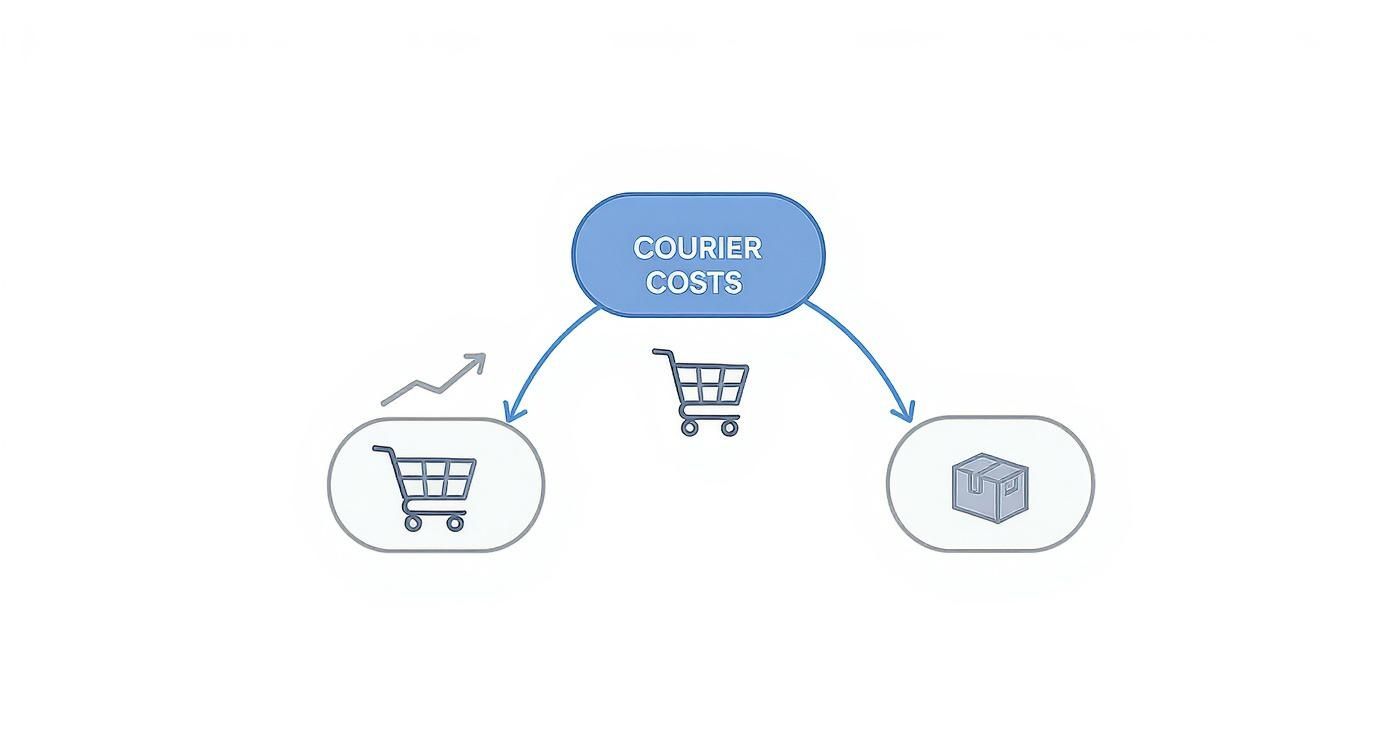
As you can see, the huge growth in online shopping has led to a massive increase in parcel volumes. For any business, this makes managing shipping expenses more complex—and more important—than ever.
How Shipping Zones Work
Couriers in Australia don't charge by the exact kilometre. That would be a logistical nightmare. Instead, they’ve sliced up the country into shipping zones. Each zone is a specific geographical area, and the more zones your parcel has to cross to get to its destination, the higher your Base Rate will be.
For example, sending something from a warehouse in Dandenong to a customer in Fitzroy keeps it within the same local Melbourne zone. That’s going to be your cheapest possible rate. But ship that exact same parcel from Melbourne to a customer in Perth, and you're crossing multiple zones. The cost jumps up accordingly. It’s a standardised way of pricing for the vast distances involved in Australian logistics.
Actual Weight vs. Cubic Weight: The Decider
Now we get to the most crucial, and often misunderstood, part of courier pricing: the face-off between Actual Weight and Cubic Weight. It’s a simple concept that catches a lot of businesses out, but understanding it can unlock some serious savings.
-
Actual Weight: This is exactly what it sounds like. It’s what the scales say when you weigh your parcel. A box of bolts weighing 10 kilograms has an actual weight of 10 kg. Simple.
-
Cubic Weight (or Volumetric Weight): This isn't about how heavy your parcel is, but how much room it takes up in the back of a van. A big, light item—think a box full of pillows—doesn't weigh much, but it hogs a ton of valuable space.
Here’s the kicker: couriers calculate both weights for every single parcel. They then charge you based on whichever number is higher. This is what’s known as the chargeable weight.
The logic here is pretty straightforward. A delivery van can fill up with bulky, lightweight items long before it hits its maximum weight limit. By charging for cubic weight, couriers ensure they’re being paid fairly for the space a large package consumes.
This table shows a practical example of how cubic weight can dramatically change the cost of shipping.
Sample Parcel Cost Calculation: Actual vs. Cubic Weight
| Parcel Details | Parcel A (Dense Item) | Parcel B (Bulky Item) |
|---|---|---|
| Item | Box of Machine Parts | Large Lamp Shade |
| Dimensions (cm) | 20 x 20 x 20 | 50 x 50 x 50 |
| Actual Weight | 15 kg | 2 kg |
| Cubic Weight Calculation | (0.2 x 0.2 x 0.2) x 250 | (0.5 x 0.5 x 0.5) x 250 |
| Cubic Weight Result | 2 kg | 31.25 kg |
| Chargeable Weight | 15 kg (Actual is greater) | 31.25 kg (Cubic is greater) |
Even though the lamp shade is incredibly light, it costs significantly more to ship because its chargeable weight is based on the huge amount of space it takes up.
Mastering this concept is key. If you can shrink your box size—even by a few centimetres—you can often lower your shipping bill without changing the item's weight at all. You can get a better feel for how these numbers work by learning more about how to calculate your own shipping charges for different parcels.
How Delivery Speed and Parcel Type Impact Pricing
Once you've figured out your chargeable weight, the next things that shape your shipping cost are two simple choices: how fast you need it there and what you're actually sending. These decisions are the biggest levers you can pull to control your final courier costs, forcing a classic trade-off between speed, special handling, and your budget.
It’s a bit like booking a flight. You can grab a standard economy ticket that gets you there reliably, or you can pay a premium for a business class seat that offers a faster, more specialised experience. Courier services work in much the same way, with different service levels built for different needs and price points.
The Speed and Cost Trade-Off
In the world of Australian domestic shipping, nothing moves the price needle quite like speed. Whether you choose standard, express, or same-day delivery, each option triggers a completely different set of actions from the courier company, and that's directly reflected in the price. Getting your head around these differences is key to striking the right balance between keeping customers happy and protecting your profit margins.
Here’s a simple breakdown of the main service tiers:
-
Standard Delivery: This is the bread and butter of Australian logistics. It’s the cheapest option because it lets carriers pack their vans and trucks efficiently, grouping thousands of parcels onto the most optimised routes. It’s the perfect choice for non-urgent shipments where keeping costs down is the top priority.
-
Express Delivery: When you tick the express box, you're paying for your parcel to jump the queue. These items are flagged for priority and fast-tracked through sorting hubs to slash transit times. This premium service is what you need when you have to meet tight deadlines, usually getting parcels between major cities in just 1-2 business days.
-
Same-Day or Urgent Delivery: This is the top-shelf service, and it costs accordingly. It requires a dedicated driver to literally drop everything and take your parcel from A to B. The logistics are incredibly intensive, bypassing the entire standard network to get that one item delivered immediately.
While standard delivery is still the most common choice for Aussie businesses, faster services are catching up quickly as shoppers demand quicker turnarounds. In fact, while standard services brought in the most revenue in 2024, express and same-day delivery are set to boom, with projections showing a 5.76% compound annual growth rate between 2025 and 2030.
How Your Parcel Type Shapes the Price
After speed, the physical nature of your package is the next biggest factor. Couriers sort shipments into different categories, each with its own pricing model based on the effort required to handle and transport it. The two most common buckets are small satchels and larger cartons.
A small satchel can be zipped through automated sorting machines and easily fits into a driver's daily run. A heavy, awkward box, on the other hand, might need a two-person lift, special equipment, and will take up a huge chunk of space in the van—all things that add to the final cost.
Let’s look at the key differences:
-
Satchels and Small Parcels: This is the engine room of e-commerce. Lightweight items, typically anything under 5kg, make up a massive 70% of all parcels shipped in Australia. Because they’re generally a standard size and easy for machines to sort, they often come with very competitive, fixed-rate pricing, especially for deliveries within the same city.
-
Cartons and Heavy Consignments: The moment a parcel gets too big or heavy, it’s pushed into a completely different pricing tier. Heavier items mean more manual handling, more room in the vehicle, and more strain on the entire delivery network. This not only leads to higher per-kilo rates but also makes optimising your cubic weight absolutely essential to avoid overpaying.
Making the right call on service speed and understanding how your parcel type is priced are fundamental skills for any shipper. For a closer look at how these factors all come together on an invoice, check out our detailed guide on understanding parcel postage costs in Australia. It's the kind of knowledge that helps you build a shipping strategy that works for your budget and your customers.
Uncovering Surcharges and Avoiding Hidden Fees
The base rate and service speed are just the starting point for your courier costs. The final figure on your invoice often tells a different, more expensive story. This is where surcharges and additional fees sneak in, turning what should be a predictable budget item into a real headache for many Aussie businesses.
But these charges aren't random. Each one exists for a specific operational reason, and understanding the "why" is your best defence. Instead of getting a nasty surprise on your bill weeks after a parcel has been sent, you can learn to see these costs coming, minimise them, or even sidestep them altogether. Let's pull back the curtain on the most common surcharges and what you can actually do about them.

Navigating Common Courier Surcharges
Think of surcharges as "if/then" fees. If a shipment needs special handling or goes somewhere tricky, then a fee applies. These charges simply compensate the courier for the extra time, fuel, or legwork required to get the job done right.
Here are the usual suspects you’ll find on Australian courier invoices:
- Fuel Surcharge: This is the most common one. It's a variable percentage added to your base rate to cover the ever-changing cost of fuel. As petrol prices go up and down, so does this surcharge, meaning your shipping costs can shift slightly month to month.
- Regional and Remote Delivery Surcharge: It costs a lot more to get a parcel to Dubbo than to a depot in downtown Sydney. This fee covers the significant extra expense of servicing areas outside the main metro networks—think longer drives, fewer deliveries per kilometre, and more fuel.
- Futile Delivery Fee: This one stings because it’s often avoidable. A driver shows up, but the delivery can't be completed. Maybe the address is wrong, or there's no one home to sign for it. The fee covers the cost of that wasted trip and the admin needed to try again.
The best way to control surcharges is to get ahead of them. By making sure your address data is spot-on and your packaging is up to scratch, you can wipe out a huge chunk of these fees before they even have a chance to appear on your invoice.
Avoiding Fees Through Smart Practices
While some charges like the fuel levy are just part of the deal, many others are entirely within your control. A few small tweaks to how you ship can lead to big savings over time, protecting your profit margin from those sneaky "hidden" fees.
Being proactive is your best strategy. Double-checking the details before you book a shipment can save you a world of frustration and expense. A simple typo in a postcode or a box that’s a few centimetres too big can have a real impact on your final bill.
Manual Handling and Oversize Fees
Courier networks are built on speed and automation. Conveyor belts and sorting machines process thousands of parcels an hour. But when a package is too big, too heavy, or just plain awkward (like a long tube or a poorly wrapped item), it gets pulled off the line and has to be sorted by a real person.
- What it is: A Manual Handling Fee is charged for any item that can't fly through the automated system. This includes anything unstable, badly packaged, or bigger than the carrier's standard limits.
- How to avoid it: Easy. Stick to standard, sturdy cardboard boxes. Make sure they’re taped up securely and won’t fall over. If you regularly send large or odd-shaped items, getting an upfront price is crucial. Using a real-time shipping quote calculator lets you play with dimensions to see exactly how they affect the cost, so there are no surprises.
Dangerous Goods Surcharge
Shipping anything classified as "dangerous goods" (DG) is a whole other ball game. It requires special handling, paperwork, and transport to meet strict safety laws. And this category is broader than you might think; it includes everyday things like perfumes, lithium batteries (in phones and laptops), and aerosol cans.
- What it is: A surcharge to cover the cost of compliant handling, keeping the item separate from other freight, and managing all the legal paperwork.
- How to avoid it: The only way to completely avoid this is to not ship dangerous goods. But if it's essential for your business, the golden rule is full declaration. You must declare these items properly when you book. It ensures they're handled safely and helps you avoid massive non-compliance penalties. Trying to sneak DG items through is a terrible idea—it can get your shipment rejected and land you with a hefty fine.
Practical Ways to Cut Your Courier Costs
Knowing what goes into your courier bill is one thing, but actually doing something about it is where you can turn shipping from a cost centre into a real competitive edge. Smart, proactive choices about how you pack and book your parcels can make a massive difference to your bottom line, all without cutting corners on service.
This isn't about some single magic bullet. It’s about building a solid toolkit of practical, effective habits that shave dollars off every single shipment. Let’s dive into the most impactful changes you can make to start saving money right away.

Use a Shipping Platform to Compare Quotes Instantly
The days of being stuck with a single courier and their one-size-fits-all pricing are long gone. The most powerful move you can make to lower your courier costs is to compare your options for every single parcel. An online shipping platform is your best friend here.
Instead of going direct to a carrier, a platform plugs you into multiple courier services at once. You punch in your parcel's details just one time and instantly see a list of quotes from different providers. This lets you pinpoint the best rate for that specific job, ensuring you never pay more than you have to.
The real power of a comparison platform is gaining access to pre-negotiated bulk rates. These are prices normally reserved for massive corporations, but they become available to you—even if you only ship a few parcels a week.
This approach doesn't just save you money; it saves you a huge amount of time. Forget opening multiple browser tabs or making a string of phone calls. The best price is right there in seconds. Finding the cheapest courier service for any given delivery becomes a simple click, not a research project.
Optimise Your Packaging to Slash Cubic Weight
As we’ve covered, that pesky cubic weight is often the real driver of your final shipping price. Every inch of empty space inside your box is air you're paying to send across the country. The fix is simple: use the smallest box possible for every item.
This is a mental shift—you’re not just protecting the item, you’re protecting your profit margin. Keeping a variety of box sizes on hand might seem like an extra cost, but it's a smart investment that pays for itself almost immediately.
Here are a few game-changing packaging tips:
- Ditch the Void Fill: Stop automatically reaching for a big box and filling the gaps with bubble wrap. Instead, find a box that gives your item a snug fit. This dramatically shrinks its cubic dimensions and, in turn, its chargeable weight.
- Use Satchels for Soft Goods: For things like clothing, textiles, or other non-fragile items, a tough courier satchel is almost always a cheaper option than a box. Satchels have almost no cubic volume, meaning you’re charged based on the item’s actual weight.
- Standardise Box Sizes: If you sell a consistent range of products, settling on a few standard box sizes makes everything easier. You can buy packaging in bulk for less, and calculating shipping fees becomes far more predictable.
Leverage Bulk Shipping and Loyalty Rewards
Even if you’re not a high-volume shipper, you can still tap into economies of scale. Many shipping platforms offer extra discounts to businesses that bring all their shipping under one roof, turning your consistent volume into direct savings.
On top of that, keep an eye out for platforms with a loyalty or rewards program. This can turn a regular business expense into an opportunity. For instance, some programs give you reward points for every dollar you spend on shipping. You can then cash these points in for business essentials like branded merchandise, giving you a real-world rebate on your courier spend.
Taking a step back, making smart shipping choices is a key part of reducing overall operational costs, which is vital for the financial health of your entire business. A cost-conscious mindset, applied everywhere from logistics to marketing, builds a more resilient and profitable company. After all, every dollar you save on a courier bill is a dollar you can put back into growing your business.
Your Top Questions About Courier Costs in Australia, Answered
Getting your head around domestic shipping can feel like a bit of a maze. But once you understand the "why" behind how courier costs are tallied up, you'll be in a much better position to manage your budget. Let's tackle some of the most common questions we hear from Australian businesses.
Why Is Cubic Weight a Bigger Deal Than Actual Weight?
Think of it this way: a courier's van only has so much room. A big, light box of foam packaging might not weigh much, but it can take up the same amount of valuable space as a small, heavy box of bolts. The courier needs to get paid for the space they're selling, not just the weight they're carrying.
That’s why they always charge based on whichever is greater: the actual dead weight or the cubic weight. It's their way of making sure they're compensated fairly for the room your parcel occupies. The good news? You can use this to your advantage. Simply shrinking your box and getting rid of empty space is a direct way to lower your cubic weight and, in turn, slash your shipping bill.
Don't forget the formula that puts you in control: (Length x Width x Height in metres) x 250 = Cubic Weight in kg. This simple bit of maths is one of the most effective tools you have for keeping shipping expenses down.
How Do I Stop Getting Hit with Unexpected Surcharges?
No one likes a surprise fee on their invoice. The secret to avoiding them is being proactive. A few quick checks before you hit "book" can protect your bottom line from those pesky, avoidable charges that really add up.
Here are the three most important habits to build:
- Declare It Right: Always enter the exact weight and dimensions of your parcel. Guessing or under-declaring is one of the most common reasons businesses get hit with extra fees after the fact.
- Check the Address: Before you finalise anything, run the delivery address through a validation tool. This tiny step can save you from paying for a "futile delivery" attempt when an address is wrong or incomplete.
- Use Standard Boxes: Stick to strong, standard-shaped boxes. Awkwardly shaped or poorly packaged items often need to be sorted by hand, which triggers a manual handling surcharge. Standard packaging sails through the automated systems.
Is the Cheapest Courier Always the Smartest Choice?
Not necessarily. While everyone wants to keep courier costs low, the "best" courier is really the one that keeps your customers happy. The rock-bottom cheapest service might come with hidden costs, like longer transit times or patchy tracking, which can end up damaging your reputation if things go wrong.
It’s all about finding the sweet spot between price and performance. When you're comparing quotes, look at the whole package—delivery speed, reliability, tracking quality, and what other businesses are saying in their reviews. A shipping platform is great for this, as it lays out all your options side-by-side. It helps you pick the best value for each specific shipment, not just the lowest number on the screen.
Will I Get Better Rates Through a Platform or Going Direct?
Unless you’re a massive enterprise sending thousands of parcels every week, you'll almost certainly find a better deal through a multi-carrier shipping platform. It all comes down to group buying power.
These platforms bring together the shipping volume of thousands of small and medium businesses. This allows them to negotiate serious bulk discounts with the big carriers—the kind of rates an individual business could never get on its own. It’s a bit like a group discount, giving you access to premium carrier services at a much lower price without having to meet their massive volume targets. It levels the playing field, instantly.
Ready to stop guessing and start saving on every parcel you send? Aeros Couriers gives you instant access to multiple carriers, pre-negotiated discounts, and a booking process that couldn't be simpler. Get an instant quote and start saving today at aeroscouriers.com.au.
