
For so many small business owners in Australia, finding a small business cheap courier isn't just a smart move—it's a lifeline. It’s how you protect your margins, stand your ground against the big retailers, and deliver on the promise of fast, affordable box and parcel delivery that modern customers now expect.
The Shipping Hurdle Every Small Business Must Overcome

Let’s be real for a moment. Running a small business is a constant hustle. You’re juggling a dozen different roles, from creating your product to marketing it, but wrestling with the wild, unpredictable costs of shipping can feel like a losing battle. It’s a universal pain point that can quietly drain your hard-earned profits.
But finding an affordable courier is about more than just saving a few dollars. It’s a strategic play to boost your bottom line and compete head-on. In today’s e-commerce world, fast and affordable delivery isn't a perk anymore; it's the baseline. Getting your shipping strategy right is one of the most powerful things you can do for your business's growth.
Why Shipping Costs Feel So Overwhelming
For many of us, the real headache isn't just the price tag—it's the sheer complexity of it all. You need to get your boxes and parcels delivered Australia-wide, but the variables are all over the place. One month you’re sending small satchels to metro Sydney, the next it’s bulky boxes to regional WA, and the costs swing dramatically.
This inconsistency makes it almost impossible to budget properly or set clear, fair shipping prices for your customers. It's this operational friction that turns a simple task into a major business hurdle.
The real challenge isn’t finding a single cheap courier. It's about building a smart, flexible, and cost-effective system that adapts to every single order. The goal is to get the best price for every parcel you send, without getting locked into one provider’s rates.
The Growing Demand for Smart Shipping Solutions
The pressure to nail your shipping is only getting more intense. With online shopping now a core part of Australian life, the demand for reliable, affordable courier services has exploded. A staggering 80% of Australian households—that's around 9.5 million homes—had at least one parcel delivered in 2023.
This isn't a threat; it's a massive opportunity. By turning this common challenge into a smooth, efficient system, you can set your business apart. For businesses still grappling with mountains of paperwork, even small tweaks can yield huge returns. For example, some are now automating data entry from handwritten delivery slips to turn a time-consuming chore into a streamlined advantage.
Ultimately, a solid strategy for finding a small business cheap courier is what sets the stage for real, sustainable growth. If you want to dive deeper into the nuts and bolts of sending packages, check out our guides on Australia-wide parcel delivery. In this guide, we’ll walk you through actionable solutions you can start using today.
Your First Win on Shipping Costs Happens Before a Courier is Even Booked
Long before you start hunting for quotes, your biggest opportunity to find a small business cheap courier is sitting right there in your packing station. It's your packaging. How you prepare your products for their journey has a massive, direct impact on your shipping costs.
Getting this right puts money straight back into your pocket before a single parcel even leaves your hands. This isn't just about putting an item in a box; it’s about thinking like a logistics pro from the get-go. Many businesses unknowingly overpay simply because they’re shipping empty space, and that’s a cost you can cut immediately.
Master the Art of Right-Sizing Your Packaging
Here’s a secret from inside the logistics world: couriers don't just charge for weight. They also charge for space. This is called cubic weight (or volumetric weight), and it’s what catches out so many businesses shipping light but bulky items.
Let’s run through a real-world scenario. Imagine you’re an online boutique shipping a puffer jacket. The jacket itself is light as a feather, maybe only 500 grams. But if you toss it into the only large box you have lying around, the courier will calculate the shipping cost based on the box's dimensions, not its actual weight. Suddenly, that lightweight jacket costs as much to ship as a case of wine.
The fix is simple: right-size your packaging. This means picking a box or satchel that fits your product snugly, with just enough room for protection. Stop paying to ship air.
- For soft goods: Durable poly mailers or satchels are your best friend. They're lightweight and take up almost no extra space.
- For fragile items: Your goal is to find the smallest possible box that still allows for a safe layer of filler, like bubble wrap or crinkle paper.
- For multiple items: Think of it like a game of Tetris. Find the most compact and secure way to arrange your products before you even reach for a box.
Choose Lightweight Materials That Don't Inflate Costs
What you put inside the box matters just as much. Heavy, old-school fillers like packing peanuts or chunky cardboard inserts can add surprising weight and bulk, pushing your costs up. Luckily, we now have plenty of lightweight and effective alternatives.
I’ve seen this firsthand. One small t-shirt business I know saved an average of $1.50 per shipment just by switching from standard cardboard boxes to lightweight poly mailers for their apparel. Over a year, that tiny change added up to thousands of dollars in pure savings.
Platforms like Aeros help you visualise this process, emphasising just how crucial getting the dimensions and weight right from the start is.
When you nail these details upfront, you ensure the quote you get is the price you pay. No nasty surprises down the line.
Print and Prepare Your Labels for Success
With your parcel perfectly packed, there's one final, crucial step before handover: the shipping label. Think of this little sticker as your parcel’s passport. A smudged, poorly printed, or loosely attached label is one of the most common—and completely avoidable—reasons for delays and extra fees.
If you want to dive deeper, our guide on how to handle shipping labels and printing walks you through everything you need to know.
By focusing on these pre-shipping basics—right-sizing your boxes, using smart materials, and getting your labels perfect—you immediately take back control. You’re no longer just accepting prices; you're actively driving your costs down. This makes your search for a small business cheap courier infinitely more successful from the very beginning.
How to Compare and Secure the Best Courier Rates
Alright, this is where you can really start moving the needle on your shipping costs. Forget spending your precious time hopping between different courier websites, endlessly re-entering the same details, and trying to make sense of a dozen different quotes. There’s a much smarter way to play the game.
The secret weapon for small businesses like yours is a multi-carrier wholesale platform. Think of it as your own personal logistics hub. These platforms have done the hard yards for you by negotiating incredible bulk discounts with Australia's biggest carriers—discounts you simply couldn't get on your own.
They achieve this by pooling the shipping volume of thousands of small businesses. It’s like a giant group-buying club for parcel delivery. This gives you access to wholesale pricing while still using the reliable couriers you know and trust. The power is back in your hands, allowing you to find the sharpest price for every single parcel you send.
The Power of Instant Comparison
Let’s get practical. Imagine you're running a small candle business from your studio in Sydney. An order comes in for a gift set heading to a customer in Perth. The parcel weighs 2kg.
The old-school method? You'd open tabs for several courier sites, type in the details over and over, and try to compare the confusing mix of prices and delivery times. It's a real time-sink.
Here's how it works with a smarter approach:
- One Entry, Many Quotes: On a platform like Aeros, you enter the destination (Perth) and the parcel's size and weight (2kg) just once.
- Instant Side-by-Side View: In seconds, you get a clear list of options from multiple carriers. You'll see prices for standard and express services, all laid out for an easy comparison.
- Book and Go: You pick the best fit for your budget and your customer’s needs, book the job, and print the label. Done.
The savings can be genuinely surprising. You’ll often find an express service through a multi-carrier platform that’s actually cheaper than a standard service booked directly. That’s the power of aggregated volume working for you.
Choosing Your Booking Method
So, what's the real difference for your business between sticking with one carrier versus using a platform? It really comes down to flexibility and buying power.
Comparing Courier Booking Methods
| Feature | Direct with a Single Carrier | Multi-Carrier Platform (e.g., Aeros) |
|---|---|---|
| Pricing | Standard retail rates; discounts require huge personal volume. | Access to pre-negotiated wholesale rates from day one. |
| Choice | Locked into one carrier's network and service options. | Compare multiple carriers for every single shipment. |
| Efficiency | Multiple logins and websites to manage for comparisons. | A single dashboard to compare, book, and track all shipments. |
| Flexibility | Rates might be great for one route but expensive for another. | Pick the best-priced carrier for each specific parcel and destination. |
As you can see, a multi-carrier platform gives you the kind of agility that was once only available to the big players, letting you make the most cost-effective choice every single time.
Tapping into a Growing Market
This way of shipping isn't just a niche trick; it's the future. The Australian domestic courier market was valued at USD 1.17 billion in 2024 and is on track to hit USD 1.73 billion by 2033. A staggering 62.21% of that is domestic consignments—the very parcels you're sending every day. In a market this competitive, using the right tools isn't just an advantage, it's essential.
And while we’re focused on getting your parcels across Australia quickly and cheaply, this principle of comparing rates is universal. Guides on topics like the cheapest way to ship from the US to the UK show that no matter where you're sending something, the core strategy is always the same: compare to save.
The core idea behind multi-carrier platforms is simple but powerful. By combining the buying power of many small businesses, they unlock wholesale rates that turn the tables in your favour. It's like joining a group-buy for shipping, where everyone wins.
But before you even get to comparing rates, remember that your cost-saving journey starts the moment you pick up a box.
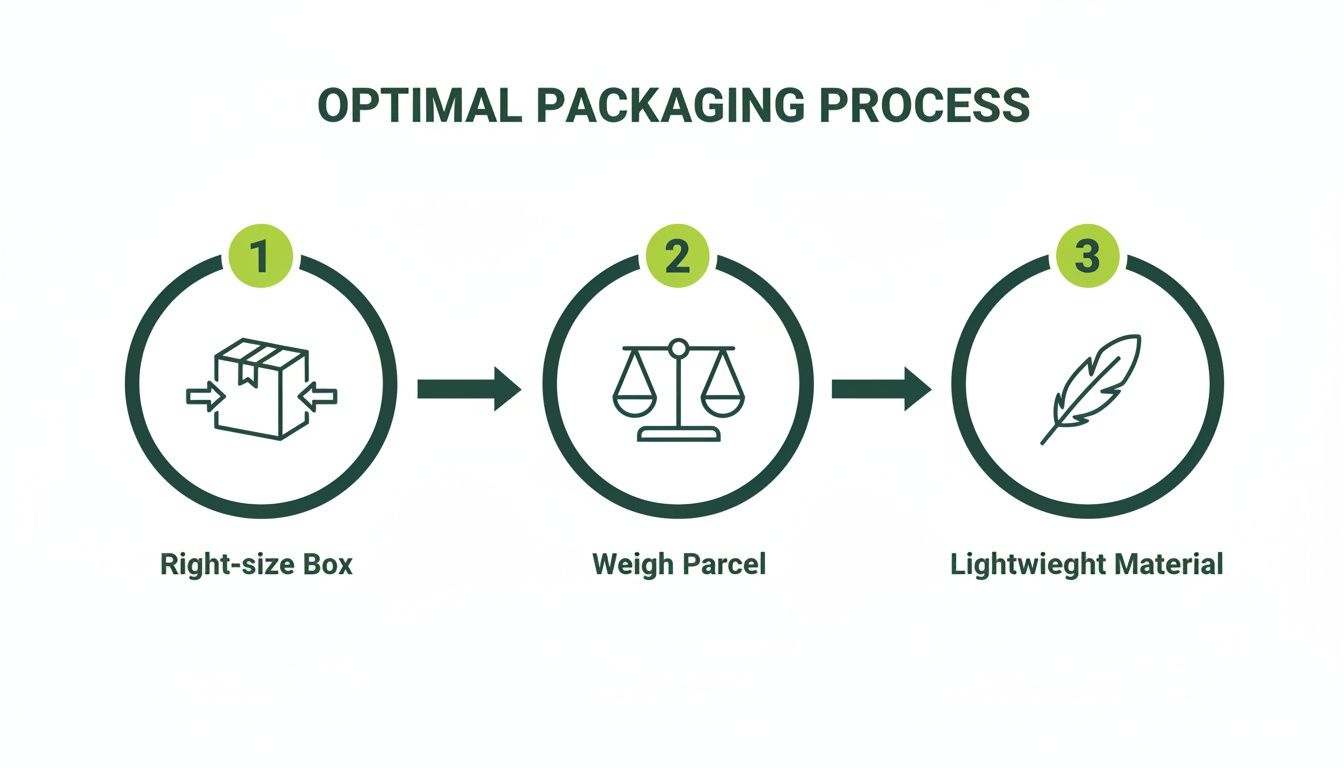
Getting this simple three-step process right—using the right-sized box, weighing it accurately, and using lightweight void fill—has a direct impact on the quotes you’ll get. An oversized box or an estimated weight can quickly inflate your costs.
Making the Smart Choice for Your Business
Using a multi-carrier platform fundamentally changes your role. You’re no longer just accepting the price a carrier gives you; you're actively selecting the best price from a range of options. You're in the driver's seat.
This is especially true if you ship different types of products. The carrier that’s cheapest for a small satchel from Melbourne to Brisbane might not be the most economical for a bigger box going to regional Queensland. A comparison platform gives you the freedom to choose the best carrier for the job, every time.
Don't just take my word for it. The best way to understand the impact is to see it for yourself. You can use our tool to compare courier rates in real-time and see the potential savings in black and white. This isn't just about finding a small business cheap courier—it's about building a smarter, more profitable shipping operation from the ground up.
Turn Your Shipping Process into a Competitive Advantage
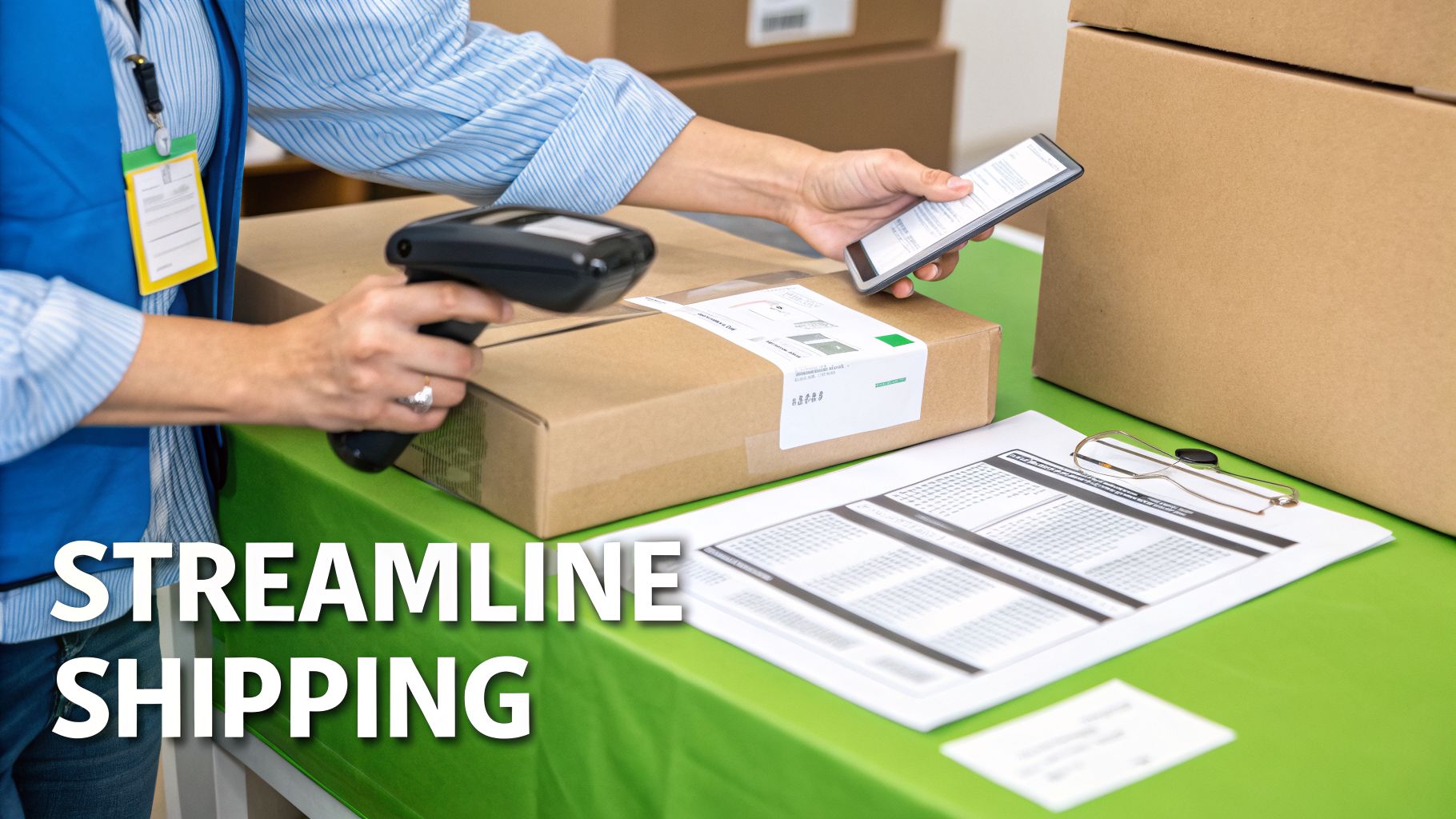
Finding a great courier rate is a huge win, but honestly, that’s just the starting line. Now it's time to turn your shipping from a daily chore into something that actually gives you an edge over the competition. This is where you build a well-oiled machine that saves you time, money, and headaches every single day.
It’s about moving beyond just sending parcels and creating a slick, professional system that impresses your customers and fuels your growth. With a few smart moves, you can stop fighting fires and start building a shipping function that works for you.
Eliminate Errors Before They Cost You
One of the most common—and frustrating—hidden costs I see is the dreaded re-delivery fee. It almost always comes from a tiny, preventable mistake: an incorrect address. A single typo or a missing unit number can send a parcel on a costly round trip, torching your profit margin and wasting precious time.
Double-checking every address isn’t just a task; it’s your first line of financial defence. Before you hit ‘print’ on that label, take five seconds to verify the details. Most e-commerce platforms have address validation tools that flag potential errors, which is an absolute lifesaver.
Think of every parcel you send as a mission. Your job is to give it the best possible chance of success. Verifying addresses, printing clear labels, and tracking proactively are the simple disciplines that separate amateurs from pros.
Similarly, the quality and placement of your shipping label can make or break a delivery. A smudged barcode or a label creased over an edge can cause scanning errors at the depot. This is exactly how parcels get delayed or temporarily ‘lost’ in the system.
- Print with a good quality printer: Make sure your barcodes are crisp, dark, and scannable.
- Use self-adhesive labels: They’re faster and far more secure than taping on a piece of paper.
- Place it on a flat surface: The top of the box is perfect. Never, ever wrap it around a corner or edge.
These small habits prevent the infuriating delays that can really hurt your reputation.
Gain Total Visibility with a Centralised Dashboard
Remember the old days of juggling tracking numbers across five different courier websites? It was a logistical nightmare and a massive time-suck for any busy business owner. Thankfully, modern platforms have completely changed the game.
Using a single dashboard on a multi-carrier system gives you a bird's-eye view of every single shipment, all in one place. This centralisation is more than just convenient; it’s a powerful management tool. You can see everything at a glance—what’s on track, what’s stuck, and what’s been delivered.
This unified view lets you proactively monitor every parcel, spot potential issues before they become problems, and keep your customers in the loop without having to chase down information.
Instead of reacting to a customer asking, "Where's my order?", you can be the one to reach out first if you notice a delay. That level of service builds immense trust and turns a potential negative into a genuinely positive customer experience. You’re no longer just a seller; you're a reliable partner. For anyone interested in the final stages of this journey, our article on optimising last-mile delivery offers deeper insights into ensuring a smooth customer experience.
Turn Shipping into a Scalable Operation
When you're just starting out, shipping a few orders a day is easy enough. But what happens when you have a killer sales week and suddenly need to send out 20, 50, or even 100 parcels? An inefficient process will quickly crumble under that pressure.
Building a scalable operation means creating a repeatable workflow that can handle growth without adding stress.
- First, set up a dedicated packing station. Have your boxes, satchels, tape, and filler materials organised and within arm's reach. No more running around the office looking for the tape gun.
- Next, invest in a thermal label printer. It's a small upfront cost that saves an incredible amount of time compared to printing on A4 paper, cutting, and taping.
- Finally, batch your process. Pack all your orders first, then print all your labels in one go, and then book all your pickups at once.
This 'assembly line' approach minimises distractions and dramatically speeds up your fulfilment time. It’s how you prepare your business for success, ensuring that a spike in sales is a reason to celebrate, not a cause for panic. By getting these operational details right, your search for a small business cheap courier evolves into a powerful strategy for building a more resilient and profitable business.
Why the Cheapest Price Isn't Always the Best Value
We’ve all been there. You get a few courier quotes back, and one is significantly lower than the rest. For a small business owner watching every dollar, that instinct to snatch up the cheapest option is powerful. It’s completely understandable.
But I’ve seen this movie before, and it rarely has a happy ending. In the world of shipping and logistics, that tempting price tag often hides a world of trouble. Chasing the lowest number without looking at the bigger picture can be one of the most expensive mistakes you’ll ever make.
The real goal isn't just finding a cheap courier; it’s about finding the best value. Value is that perfect intersection where a great price meets rock-solid reliability and genuine peace of mind.
The Hidden Costs of an Unreliable Courier
Let’s play out a scenario. You’ve found a courier with an unbeatable rate to send a package from your Melbourne workshop to a new customer in Brisbane. A bargain! But a week later, an email lands in your inbox: "Hi, just wondering where my order is?"
The tracking link is useless, customer service is an automated dead-end, and you’re left scrambling. This is where the true cost of that "cheap" service starts to reveal itself, and it's far more than what you paid for shipping.
- The Cost of Replacement Goods: If that parcel is lost or damaged, you're not just out the delivery fee. You have to replace the entire order from your own pocket.
- The Cost of Reshipping: Now you have to pay for shipping all over again, this time with a courier you can actually trust to fix the problem.
- The Cost of Your Time: Every hour you spend chasing updates, filing claims, and apologising to an unhappy customer is an hour you’re not spending on sales, marketing, or product development.
- The Cost to Your Reputation: This is the big one. A single terrible delivery experience can turn a first-time buyer into a one-star review and a lost customer for life.
A genuinely cheap courier for a small business is one that delivers both savings and security, making sure your business is protected when it counts.
The most expensive courier you can hire is the one that loses your customer's parcel. The money you saved on the initial shipping fee is instantly wiped out by the cost of replacement, reshipping, and the irreversible damage to your brand's reputation.
Non-Negotiable Features for Real Value
To avoid falling into this trap, you have to train yourself to look past the price and ask, "What am I really getting for my money?" These aren’t fancy extras; they are the absolute essentials for protecting your business.
1. Included Transit Insurance
Does the quote include at least a base level of cover for loss or damage? A courier that offers this as a standard feature is providing a vital safety net. Without it, you’re personally carrying all the risk for every single box that leaves your business.
2. Real-Time, Accurate Tracking
Vague updates like "in transit" just don’t cut it anymore. Your customers (and you!) deserve to see exactly where a parcel is at every stage of its journey. Granular, real-time tracking creates transparency and builds the kind of trust that keeps customers coming back.
3. Responsive Australian Customer Support
When something goes sideways—and eventually, it will—you need to speak to a real person who can actually help. An accessible, local support team can turn a potential disaster into a minor hiccup. Being stuck in a loop with an international call centre or a generic "support@" email address is a recipe for pure frustration.
Why Reliability Is Critical During Peak Seasons
The need for a reliable courier is magnified tenfold during your busiest periods. Think about the chaos of the Christmas rush. The pressure is immense, orders are flying out the door, and customer expectations are sky-high. This is the exact moment a cheap, flaky courier service can bring your operations to a grinding halt.
During the 2025 peak season, for example, Australia’s entire courier network was under incredible strain. Australia Post alone delivered nearly 111 million parcels in November and December. On their single busiest day, they processed over 3 million parcels. As you can see in this report on the 2025 peak season, the system is pushed to its absolute limit.
An unreliable courier is the first to buckle under that kind of pressure, leading to massive delays and a spike in lost parcels.
Choosing a dependable carrier during these crucial times ensures your orders actually arrive, your customers stay happy, and your holiday sales become a success story, not a customer service nightmare. Our detailed breakdown of factors influencing courier costs can help you better understand what you’re paying for. Ultimately, paying a little more for a trusted name is a tiny premium for the certainty that your business will deliver when it matters most.
Time to Turn Knowledge into Savings
Alright, you've absorbed the strategies and you've got the playbook. Now, let's be real – conquering your shipping costs isn't about some grand, complicated overhaul. It’s about a series of smart, deliberate moves that put you firmly in the driver's seat.
Think about it. Nailing your packaging, using a multi-carrier platform to your advantage, and smoothing out your daily dispatch routine aren't just abstract concepts. These are the practical, day-to-day actions that start putting real dollars back where they belong: in your business. You now know how to stop treating shipping as a cost centre and start turning it into a genuine asset.
It All Comes Down to Your Next Parcel
But here's the thing about great advice: it’s only powerful when you use it. All the theory in the world doesn't mean a thing until you get your hands dirty and see the results for yourself. Your journey to smarter, cheaper shipping really just begins with one simple, decisive action.
You've done the learning, now it's time to start earning. The final, crucial step is to apply these strategies and see the savings stack up on your very next shipment. It's about moving from planning to doing.
So, what's next? Take all this momentum and put it to the test right now with an instant, no-strings-attached quote. A platform like Aeros Couriers was built for exactly this moment. Pop in your parcel details and you'll instantly see the kind of discounted rates you can get for fast, reliable delivery across Australia.
This isn't about locking into a contract. It's about taking one small step to see how much you could have saved on the last box you sent – and how much you will save on the next one. This is your chance to finally make your shipping work for you, not against you.
Your Questions, Answered
Jumping into the world of couriers can feel like a maze. We get it. To help clear things up, here are some straight-up answers to the questions we hear most from fellow Aussie small business owners.
Are Cheaper Rates Possible Without Going Direct to a Carrier?
Yes, and honestly, it’s one of the biggest game-changers for a small business. Think of a platform like Aeros Couriers as a co-op for shipping. By bringing together the shipping volume of thousands of small businesses, they gain massive negotiating power with the big carriers across Australia.
This lets them secure incredible bulk discounts—the kind an individual business shipping a few parcels a week could only dream of. The best part? Those wholesale rates are passed straight on to you. You get enterprise-level pricing without any sneaky account fees or minimum order requirements.
Is the Absolute Cheapest Option a Safe Bet?
Chasing the rock-bottom price can be a risky game. It's tempting, but a super-low rate often means you're sacrificing the essentials. We're talking no tracking, zero included insurance, and a customer support line that goes straight to voicemail. One lost parcel in that scenario can wipe out any savings you made, and then some.
Smart businesses don't hunt for the cheapest price; they hunt for the best value. The sweet spot is finding a platform that gives you discounted rates from reputable, trusted carriers. You get the cheap price your small business needs, backed by the reliability of Australia's best delivery networks. It’s the perfect balance.
Do I Need to Sign a Contract or Meet a Minimum Volume?
Not in 2026. The old days of being locked into contracts or having to guarantee a certain number of parcels are over. Modern courier platforms were built with the flexibility of small businesses in mind.
You can grab an instant quote for a delivery anywhere in Australia and book a shipment in minutes, no strings attached. This model means you get the same cheap courier rates whether you're sending your very first package or your 500th. It’s a lifesaver for startups and growing online stores needing to keep costs down without being boxed in.
Does "Affordable" Mean My Customers Will Be Waiting Forever?
Not at all. "Affordable" and "slow" don't have to go hand-in-hand. When you use a comparison tool, you see all your options laid out side-by-side, from standard road freight to express next-day delivery.
This puts you in the driver's seat. You have the freedom to decide what matters most for each shipment. Need to get a box across Melbourne fast? Go for express. Sending a standard parcel from Brisbane to a customer in Perth with no major rush? A standard service will do the job and save you money. You can meet your customers' expectations every time without blowing your budget.
Ready to stop overpaying for shipping and start saving on every single parcel? With Aeros Couriers, you can compare discounted rates from Australia's top carriers in seconds and book your next shipment in minutes. Get your free, instant quote today!
Courier quotes, tracking and support
Ready to send a parcel? Compare the available services for your postcodes, parcel dimensions and weight. For an existing delivery, use your consignment number to check tracking or ask our team for help.