
Shipping costs usually start as a small annoyance, then turn into a margin problem.
You compare one courier site against another. One quote looks fine until the final checkout screen. Another seems cheap until the parcel goes outside a metro postcode. A prepaid satchel feels simple, then your item bulges, gets rejected, or lands in the wrong service level for what you needed.
That’s why many senders never really solve shipping. They just keep reacting to it.
If you want to send satchels cheap in Australia, the answer isn’t chasing one magic carrier. It’s building a smarter process. The businesses that keep shipping under control do three things well. They choose the right satchel before packing, they understand where delivery costs show up, and they use booking tools that expose the final price instead of hiding it.
Cheap shipping also isn’t only about the sticker price. It’s about avoiding rework, failed lodgements, damaged goods, customer complaints, and regional blowouts that wipe out the savings from your metro jobs.
Your Guide to Smarter Shipping Starts Now
If you’re sending parcels regularly, you’ve probably watched postage creep up while customers still expect fast, affordable delivery.
That pressure is worst for small businesses. A few dollars saved on each satchel can protect your margin. A few dollars lost on each one can eat the week’s profit.
Cheap shipping starts with process, not luck
Plenty of senders still approach freight the wrong way. They look for the cheapest headline rate, book in a hurry, and only find the catch later. The catch might be a bulky parcel that won’t fit properly, a regional surcharge, or a service that looked fast on paper but comes with vague delivery expectations.
A better approach is simple:
- Match the satchel to the item first. Don’t start with the carrier.
- Check the destination postcode early. Metro assumptions cost money.
- Pack to the service rules. A rejected satchel isn’t a bargain.
- Compare final landed pricing. Not just the base quote.
Cheap freight is rarely the result of one big trick. It usually comes from removing avoidable mistakes.
What actually works
Flat-rate satchels still have a place, especially when you’re sending dense products that fit cleanly within the size and weight rules. Modern courier platforms also give smaller senders access to workflows and pricing logic that used to sit behind account managers and volume contracts.
That matters because shipping performance and cost control sit inside the same system. If you want a useful refresher on the operational side, these ecommerce shipping best practices are worth reading alongside your courier setup.
The practical mindset is this. Don’t ask, “Who is cheapest?” Ask, “Which option is cheapest for this parcel, to this postcode, packed this way, with this delivery expectation?” That question gets better results.
Choose the Right Satchel to Win from the Start
A sender can save a few dollars on a satchel and still lose money on the job. It happens when the pack swells, misses the service rules, or travels to a regional postcode where delays turn a “cheap” send into a customer service problem.
The right satchel does three jobs at once. It keeps the item within the carrier’s limits, protects it without wasted bulk, and gives you a price that still makes sense once the parcel leaves metro routes.
When flat-rate satchels make sense
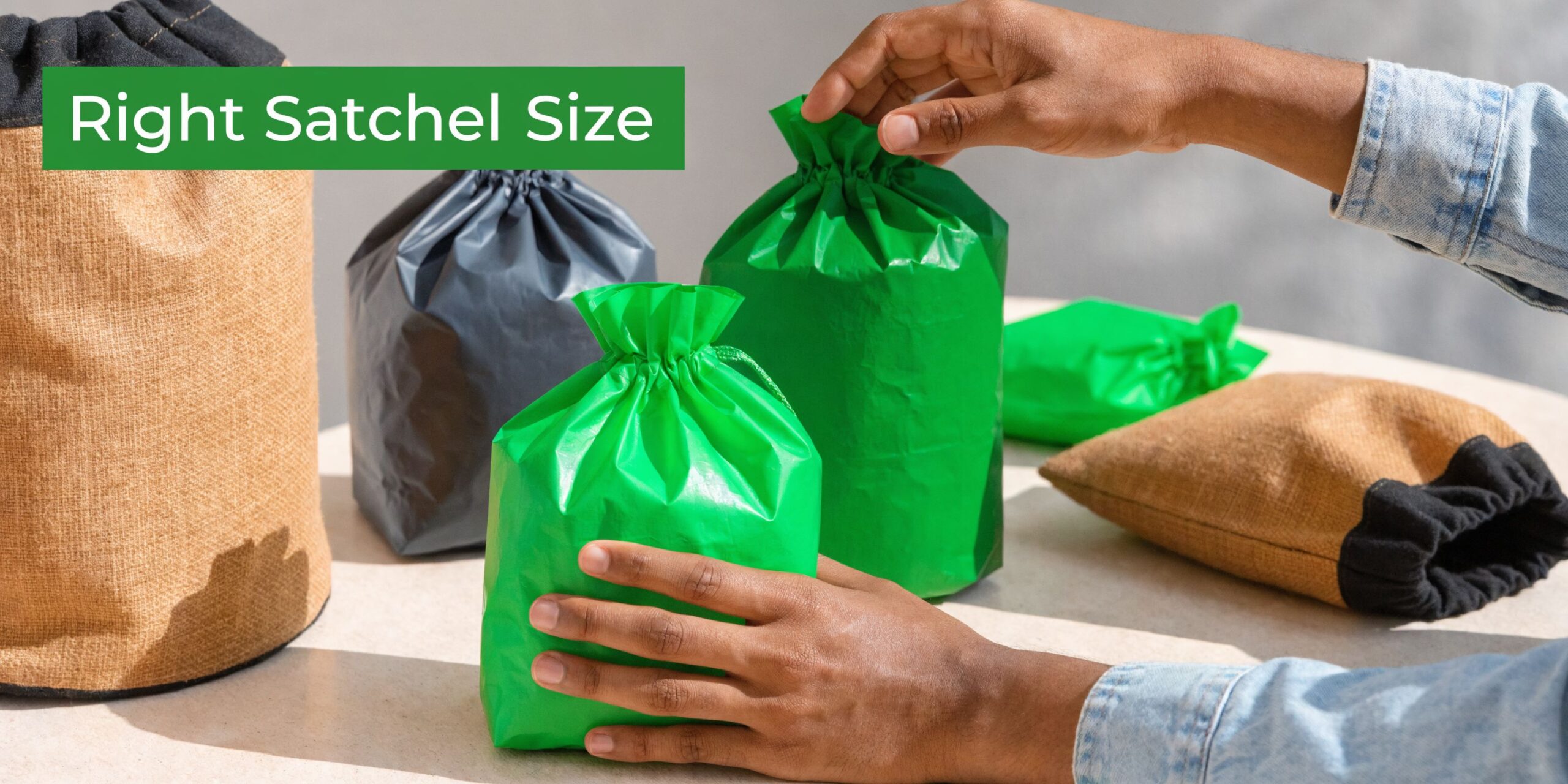
Flat-rate satchels work best for compact, heavier items that fit neatly without stretching the seams or distorting the shape. Australia Post’s prepaid satchel structure is based on the satchel format for eligible items up to 5kg, so the value is usually strongest when the product is dense rather than bulky, as outlined in Australia Post’s own satchels and mailing boxes guide.
That can suit books, spare parts, accessories, tools, and other stock that carries weight without taking up much room.
The trap is soft volume. Clothing bundles, plush items, and awkward mixed orders often look cheap in a satchel at quoting stage, then create fit issues at packing time. In regional lanes, where replacement sends and ETA blowouts cost more, that wrong satchel choice hurts twice.
A practical filter for satchel selection
Use a simple bench test before you print the label.
| Item type | Better choice | Why |
|---|---|---|
| Dense and compact | Flat-rate satchel | Good value if it sits flat and seals cleanly |
| Soft but bulky | Own packaging or larger mailer | Reduces shape problems and handling issues |
| Fragile item with corners | Box inside satchel or small box | Holds shape and protects impact points |
| Odd-shaped product | Box or custom pack | More predictable for sorting and transport |
One extra check matters here. Ask whether the item will still present well after linehaul and van loading, not just whether it fits on the packing bench. A satchel that barely closes in Sydney often arrives looking worse in Dubbo, Cairns, or regional WA after more touchpoints.
The packing mistake that burns margin
Overpacking causes rework, poor protection, and disputes at lodgement. If the satchel needs force to close, or the contents create a rounded or lopsided shape, choose a different pack.
Practical rule: If you need to push, squash, or tape the shape back into form, it’s the wrong satchel.
Keep one sample of each satchel size at the bench and test your top SKUs against them. That habit prevents bad fits before they turn into relabelling, damaged goods, or a service downgrade. For sellers watching freight profit closely, this links directly to understanding your contribution margin, because packaging mistakes rarely show up as a single obvious cost. They show up as margin leakage across fulfilment, resends, and support time.
Carrier satchel or your own packaging
Prepaid satchels are useful when your products are consistent and your process is simple. They give clear pricing, quick dispatch, and fewer packing decisions for repeat orders.
Your own satchels or cartons make more sense when the product mix changes often, the goods need internal protection, or you want flexibility across carriers and service levels. That matters for Australia-wide shipping because the cheapest option to a metro postcode is not always the cheapest once a parcel heads regional and the ETA becomes less reliable.
If you’re comparing standard satchel formats before booking, this page on small satchel options in Australia Post workflows is a practical reference point.
Good satchel selection is less about finding the lowest listed price and more about avoiding the expensive mistakes that show up later. That is where cheap shipping starts to become cheap.
Decoding Delivery Costs and Dodging Regional Surcharges
A cheap metro quote is not the same thing as cheap Australia-wide shipping.
That assumption catches a lot of senders. They price their offer around Sydney, Melbourne, Brisbane, or Perth lanes, then discover the cost when an order goes to a regional postcode and the service behaves differently.
The regional problem most guides skip
Regional shipping changes two things at once. Price and ETA.
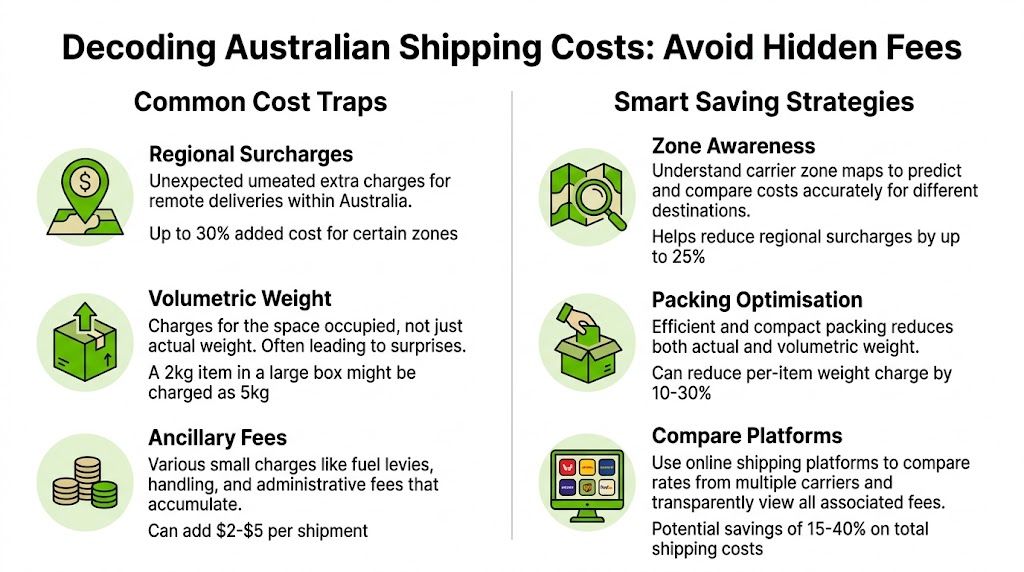
According to the verified regional shipping brief, hidden regional delivery surcharges can lift costs by 20% to 50%, and 28% of Australians live in regional areas, which means this isn’t a niche issue for sellers shipping nationwide. The same brief notes that remote-area delivery can also void Express Post guarantees, making “cheap and fast” claims unreliable outside metro lanes, as outlined in this regional shipping analysis.
That’s the part many guides avoid. They compare standard satchel pricing, but they don’t tell you what happens after checkout when the destination sits outside a straightforward city route.
Why your “cheap” satchel suddenly isn’t cheap
The final cost often gets distorted by factors like:
- Regional postcode treatment: A destination may look normal to a customer but price differently to a carrier.
- Residential delivery complexity: Some non-commercial drop points are harder to service efficiently.
- Service-level mismatch: Express branding doesn’t always equal express performance in remote zones.
- Operational handling: Awkward packaging shapes can create avoidable friction.
None of that shows up clearly if you only compare front-page prices.
If you sell nationally, your freight model has to survive regional orders, not just metro ones.
A better way to quote before you promise
At checkout, I’d rather see an honest ETA and a realistic all-in cost than a low teaser price that falls apart later.
Use this simple check before you offer shipping to a customer:
- Enter the exact pickup and delivery postcodes
- Check whether the destination sits outside a standard metro lane
- Review the displayed ETA as an estimate, not a guarantee
- Compare total landed freight cost against your product margin
- Decide whether to absorb, pass through, or set postcode rules
If you need a finance lens for that decision, understanding your contribution margin helps. Shipping isn’t just an ops line. It directly affects what each order contributes after variable costs.
What transparent booking looks like
The operational fix is straightforward. Use platforms that show the likely final price and regional ETA before you book, instead of pushing you into a base quote that changes later.
That’s especially important when you’re sending satchels cheap in Australia across mixed destinations. The right workflow isn’t about making every parcel look cheap. It’s about making every parcel predictable.
For senders who want to see how pricing variables are handled before dispatch, courier cost breakdowns and quote logic are worth reviewing.
The takeaway for regular senders
If you only test your shipping offer on metro postcodes, you don’t yet know your real shipping cost.
Regional freight punishes guesswork. The good operators build their pricing, customer messaging, and packaging process around that fact from day one.
Pack Like a Pro to Minimise Weight and Maximise Protection
Packing is one of the few shipping cost levers you fully control.
You can’t control where every parcel goes. You can control how efficiently each one leaves your bench.

Protect the item without packing air
Most overpacked satchels have the same problem. Too much empty space, then too much filler trying to compensate for it.
Aim for a snug fit with light materials. Bubble wrap, light foam, padded sleeves, and thin cardboard stiffeners usually do the job better than heavy improvised packing.
Use this rule set at the bench:
- Soft goods: Fold tightly and remove dead air before sealing.
- Small hard goods: Wrap corners first, then add a light outer layer.
- Liquids or spill-risk items: Bag internally before they go into the satchel.
- Sharp edges: Add cardboard reinforcement so the satchel doesn’t tear.
Use box-in-a-bag when shape matters
Some products don’t belong loose inside a satchel, even if they fit.
A small carton inside a satchel often works better for cosmetics, boxed accessories, ceramics, and anything with crush points. You keep a cleaner external shape while protecting the product from punctures and rough handling.
Bench habit: Reinforce the product, not the whole parcel. Extra tape across an entire satchel adds clutter faster than protection.
Seal properly and label clearly
Bad seals create expensive problems. Split seams, loose openings, and half-adhered flaps lead to damage, loss, and manual handling.
Do three things every time:
- Press the adhesive strip firmly across the full width
- Tape only the stress points if needed
- Keep the label flat, visible, and scannable
If your team needs a quick refresher on placement, this guide on putting the label on a package covers the fundamentals cleanly.
Waterproofing is part of cost control
Rain, damp cages, and exposed drop points are normal in domestic networks. A cheap satchel that lets moisture in can become the most expensive parcel you send that day.
Use inner sleeves for apparel, printed materials, and any item that can’t handle water exposure. This matters even more for return-sensitive orders where a damaged first delivery becomes a second freight charge.
What good packing really buys you
Good packing lowers the chance of rework. It also helps your parcel move through sorting and delivery without attracting attention for the wrong reasons.
That’s the practical advantage. A neat, compact, correctly labelled satchel is easier to process, easier to track, and less likely to become a problem job.
Leverage Modern Platforms for Wholesale Rates and Seamless Booking
A common cost blowout starts after the quote looks cheap.
You book a satchel to a Sydney or Melbourne address and the rate seems fine. Then the next batch includes Dubbo, Geraldton, Burnie, or Alice Springs, and the gap between carriers gets wider fast. Some services stay competitive outside metro corridors. Others add regional fees, longer transit times, or delivery estimates that look acceptable at checkout but slip once the parcel enters the linehaul network.

Platform-based booking gives you more buying power
Sending satchels cheap in Australia now depends less on sticking with one carrier and more on comparing the actual job each time.
Platform-based booking tools combine quoting, booking, labels, and tracking in one place. That matters because the cheapest metro option is not always the cheapest national option. If you send to a mix of capital cities, outer suburbs, and regional towns, side-by-side comparison helps you catch the hidden difference before you pay for it.
What to look for in a booking platform
A useful system should help you:
- Compare multiple carriers in one screen
- See service options before committing
- Print labels from a single dashboard
- Track jobs without switching portals
- Spot which option suits regional delivery better
I pay close attention to that last point. Cheap freight falls apart when the ETA is unreliable and the customer chases an update three days later. A slightly higher booked price can be cheaper overall if it avoids missed expectations, support time, and resends to regional areas.
One example is a platform to compare and book your courier, which brings quoting, booking, labels, and tracking into one workflow. For smaller businesses and occasional senders, that removes the need to open separate accounts just to check whether one carrier handles non-metro deliveries better than another.
Why the old method costs more than it looks
Traditional workflows split the job across too many systems. You source satchels in one place, check rates somewhere else, book in a carrier portal, then track through another page. That setup hides real comparison and makes it harder to notice when a regional destination changes the economics.
It also encourages lazy carrier selection. Teams under dispatch pressure often rebook the last service used because it is familiar, not because it is the best fit. That habit is expensive when your order mix changes week to week.
A modern booking platform handles that variation better. It lets you choose based on destination, service level, and current rates, instead of forcing every parcel into one carrier’s rules.
The practical gain for low and mid-volume senders
Direct carrier discounts usually favour larger accounts. Smaller senders rarely get strong pricing across several networks at once.
A platform that aggregates volume can still give you access to rates and service choices that would be hard to secure on your own. The key win is not just lower pricing. It is faster booking, clearer visibility, and fewer bad decisions on regional jobs where ETA accuracy matters as much as the base rate.
Advanced Shipping Strategies for E-commerce and Small Business
A Sydney store can look profitable on paper until a run of orders goes to Dubbo, Mount Gambier, or remote Far North Queensland. The listed satchel price still looks cheap. The full cost becomes apparent later in regional surcharges, extra support emails, replacement orders, and staff time spent chasing parcels that missed the ETA your checkout implied.
That is why mature shipping operations treat freight as a margin control system, not a packing task.
Build repeatability into your dispatch process
If the same order profiles keep coming through, set rules once and make the team follow them every day.
Create a dispatch routine around:
- Saved addresses and postcode checks: Catch entry mistakes before they turn into redelivery fees or manual corrections.
- Pack rules by SKU: Assign your top products to a specific satchel or carton so staff do not oversize the shipment under time pressure.
- Service rules by destination: Set different defaults for metro, regional, and remote postcodes.
- Internal cut-off times: Base them on actual carrier collection times, not optimistic website promises.
The savings are small on each label. Over a month, they add up fast.
I have seen small stores lose margin because one team member used an Express option for every order going outside a capital city, even when the ETA advantage disappeared after the parcel left the metro network. A written rule fixes that.
Use ETA accuracy as a customer service tool
Regional freight punishes vague promises. A two to four day estimate may be realistic for Brisbane to Sydney, then fail badly on the same service level once the parcel heads inland or crosses into a low-frequency route.
Set delivery messaging by postcode band, not by one national promise. If an economical service is the right choice, say so before checkout and again in the dispatch confirmation. Customers usually accept a slower window when it is honest.
Support costs drop when the ETA is realistic from the start.
Control satchel spend without ignoring postcode risk
Prepaid satchels and flat-rate options can still work well for standard order profiles, but the cheapest-looking format is not always the cheapest shipment once destination and service reliability are factored in. As noted earlier, satchel prices have risen. That puts more pressure on packaging discipline and order-level margin checks.
A few tactics hold up well in practice:
- Buy packaging in volumes that match proven demand: Bulk pricing helps only when the satchel size is used often enough.
- Reserve extras for the orders that need them: Signature, cover, and premium services should follow product risk, not habit.
- Flag expensive postcodes in your reports: Some regional zones repeatedly wipe out profit on low-value orders.
- Review satchel choice against damage and resend rates: A cheaper bag is poor value if it leads to more claims or replacements.
For more practical ways to cut dispatch spend, see this guide on how to reduce shipping costs for small business.
Turn shipping into an operating advantage
Strong operators do not chase the lowest label price in isolation. They measure landed shipping cost, delivery reliability, and support workload together.
That matters most outside metro areas, where cheap shipping often stops being cheap once delays and exceptions start stacking up. The businesses that stay in control are the ones that price regional jobs properly, set honest ETAs, and build dispatch rules that staff can follow without guessing.
If you want a simpler way to compare carriers, book satchel deliveries, and get clearer visibility on metro and regional jobs across Australia, Aeros Couriers offers an online workflow built for businesses and everyday senders who need low-cost local and nationwide shipping without the usual account setup friction.
Courier quotes, tracking and support
Ready to send a parcel? Compare the available services for your postcodes, parcel dimensions and weight. For an existing delivery, use your consignment number to check tracking or ask our team for help.