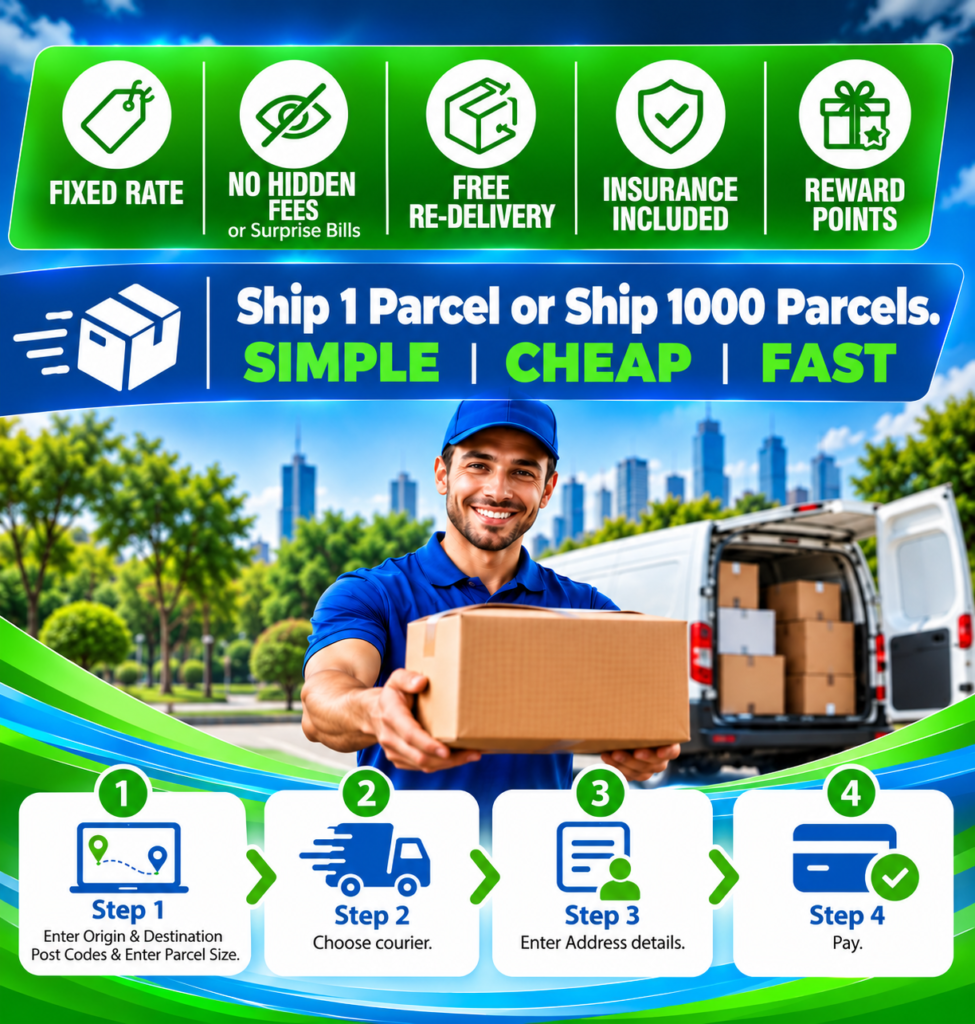






Welcome to the new reality of Australian e-commerce. In this world, smart parcel delivery isn’t just a service—it's your most powerful competitive advantage. The days when fast, reliable shipping was a luxury only the big players could afford are long gone. Today, it’s the engine that drives growth for small and medium businesses just like yours.
Your Guide to Modern Parcel Delivery
Think of this guide as your roadmap to mastering the Australian delivery network. We’re here to pull back the curtain on the entire process, showing you exactly how to meet rising customer expectations and keep your costs in check. It's time to trade complexity for clarity and turn logistics into your secret weapon.

The hunger for fast, affordable, Australia-wide shipping has never been greater. Modern e-commerce is built on a simple promise: get products into customers' hands without hassle. This isn't just a passing trend. It's the new benchmark for success, transforming shipping from a background cost into a frontline tool for winning over customers.
The New Standard for Australian Businesses
As online shopping has woven itself into the daily lives of millions, the reliance on dependable couriers has absolutely exploded. This incredible volume shows just how vital a robust courier network has become for fast box and parcel deliveries Australia-wide.
This boom isn’t a threat; it’s a golden opportunity for businesses that are ready to adapt. It's no longer about just sending a box from A to B. It’s about delivering an experience. Your ability to offer cheap, fast, and transparent parcel delivery has a direct impact on your brand’s reputation and, ultimately, your bottom line.
Your shipping strategy is one of the most powerful tools you have to build customer loyalty. A smooth, transparent delivery process doesn't just complete a sale—it creates a repeat customer who trusts your brand to deliver every time.
To keep things running like clockwork, many businesses now rely on specialised shift apps for delivery logistics. These platforms help coordinate everyone from the warehouse floor to the driver on the road, making sure every package stays on the right track.
Making Shipping Your Secret Weapon
Here’s the good news: you don't need a huge logistics department to compete with the giants. Modern shipping platforms give you the power to find the best rates for sending parcels anywhere in Australia—without the headache of managing complex pallets or international freight. You can now access the same powerful tools as the big corporations, but with the flexibility and affordability that a growing business needs.
- Speed: Exceed customer expectations with fast transit times, whether you're shipping across town or across the country.
- Cost-Effectiveness: Find the cheapest prices without ever sacrificing reliability, protecting your profit margins on every single order.
- Simplicity: Manage your entire shipping process from one straightforward dashboard, from getting instant quotes to tracking every delivery.
By mastering these three elements, you can transform shipping from a necessary cost into a central part of your growth strategy. To get a better sense of your options, take a look at our overview of Australian courier services.
Now, let’s dive in and explore how you can ship faster, cheaper, and smarter across Australia, turning every delivery into an exceptional customer experience.
The Journey of Your Parcel from Click to Doorstep
Ever wondered what really happens after your customer clicks ‘buy’? It’s so much more than just sticking a label on a box. Let’s pull back the curtain on the incredible journey your parcel takes to reach your customer, a ballet of logistics that unfolds across Australia every single day.
Think of it like a massive, invisible highway system built just for boxes and parcels. Your parcel is the car, the depots are the bustling cities it passes through, and the couriers are the expert drivers who know every turn. Understanding this journey gives you a whole new appreciation for how modern shipping actually works.
This entire system has evolved to meet the booming demand for fast, reliable parcel delivery. We've seen a huge cultural shift in how we all shop and send things. It's a clear sign that parcels are now the absolute heart of the logistics world.
The First Mile: From Your Door to the Depot
It all starts the moment you book your shipment. This is the "on-ramp" to the delivery superhighway. Once you've entered the details and printed the label, you kick off the first critical stage: the first-mile pickup.
A local driver is dispatched to collect the parcel right from your business or home. But this isn't just a simple pickup. The moment the barcode on your label is scanned, your parcel is officially in the carrier's network, and its tracking number comes to life.
From there, your package is whisked away to a local sorting depot. Here, it joins thousands of other parcels in a highly organised, fast-paced environment. Sophisticated scanners read the postcode on the label, automatically sending your parcel down the right conveyor belt, ready to be grouped with others heading to the same state or region. This step is all about getting your parcel on the right path for the longest leg of its trip.
The Line-Haul: The Interstate Superhighway
With the local sorting done, your parcel begins its line-haul journey. This is the long-distance part of the trip, usually taking place overnight as big trucks haul massive volumes of freight between major city depots. A parcel heading from Sydney to Perth, for example, will be loaded onto a truck with hundreds of others making that same interstate run.
This is where the magic of efficiency really happens. By moving thousands of items at once, carriers dramatically lower the cost per item. These trucks stick to well-trodden routes, much like a commercial flight between capital cities, ensuring a predictable and timely schedule. During this stage, you can follow its progress and get a real sense of what 'in transit' means for your shipment.
Think of a line-haul truck as a shared taxi for parcels. By grouping shipments together for the long journey between major depots, couriers create massive efficiencies, which translates directly into the cheap shipping prices available for Australia-wide delivery.
The Last Mile: The Final Sprint to the Customer
After arriving at the destination depot—let's say in Melbourne or Brisbane—your parcel gets sorted one last time. It’s scanned again and handed over to a local delivery driver for the final, most important stage: the last-mile delivery.
This is the final dash from the depot to your customer’s front door. It’s often the most complex part of the entire journey, involving countless stops through residential streets and busy commercial hubs. This is the moment that truly defines the customer's experience, turning a digital order into a physical, satisfying delivery.
From a simple click to a knock on the door, this intricate dance of technology and transport unfolds seamlessly. And the best part? With a platform like Aeros, you can oversee this entire journey from a single dashboard, making Australia-wide shipping feel remarkably simple.
Decoding Shipping Costs and Delivery Speeds
Ever felt like shipping costs were a complete mystery? You’re not alone. But getting a grip on what drives the price you pay and how long a parcel will take is the first step to mastering your logistics. The good news is, it's not as complicated as it seems.
It all boils down to an equation based on three core factors. Once you understand them, you can move from guesswork to making smart, strategic choices that give you the perfect balance of cost and speed for every single shipment.
This simple visual shows the journey every parcel takes—from the moment it leaves your hands, through the sorting facility, and on to its final destination.
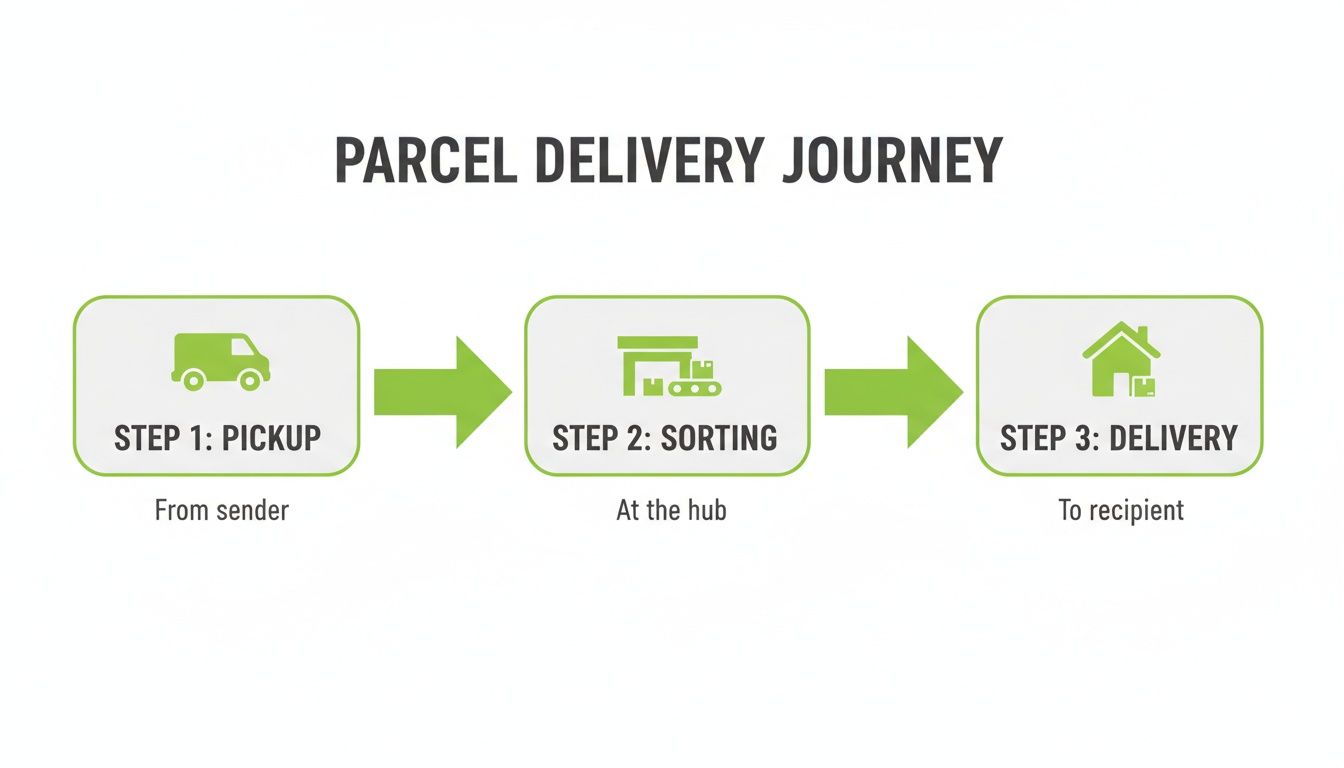
While the process looks straightforward, the time and cost involved at each step can change dramatically depending on the choices you make. Let's break down exactly what those choices are.
The Big Three Cost Drivers
Think of every shipping quote as being built on three fundamental pillars. These are the levers you can pull to find the right fit for your budget and your customer’s expectations, and they apply right across Australia, no matter which carrier you use.
- Parcel Size and Weight: Simply, how big and heavy is your package?
- Travel Distance: Where is it going?
- Service Speed: How fast does it need to get there?
Getting to know how each one works will put you firmly in control of your shipping strategy.
Factor 1: Size and Volumetric Weight
The first, and often most significant, factor is the physical size and weight of your parcel. Couriers don’t just look at how heavy your item is on a scale; they’re also concerned with how much room it takes up in a van. This is where the concept of volumetric weight (sometimes called cubic weight) comes in.
Imagine you're shipping a big box of lightweight pillows. It might only have an actual weight of 2kg, but it could take up the same space as a much heavier box of books. In this scenario, the courier will charge you based on whichever is greater: the actual, dead weight or its volumetric weight.
The principle is straightforward: space on a truck is a finite, valuable resource. By calculating volumetric weight, carriers ensure they are paid fairly for the space your parcel occupies.
This is exactly why packing efficiently is so important. Using the smallest box possible for your item keeps that volumetric weight down and can make a huge difference to your final parcel delivery cost.
Factor 2: The Delivery Zone
The second major driver is distance—but it’s a bit more sophisticated than just the number of kilometres. Couriers divide Australia into different delivery zones, and these zones are what really dictate the price and transit time.
- Metro Zones: These are the big capital city areas like Sydney, Melbourne, and Brisbane. With high freight volumes and dense delivery networks, shipping between these hubs is always the fastest and most affordable option.
- Regional Zones: Think of towns and smaller cities just outside the major metro centres, like Dubbo in NSW or Bendigo in Victoria. Deliveries here take a little longer and cost more as they require an extra leg of the journey from the main depots.
- Remote Zones: This covers those sparsely populated and hard-to-reach locations. Sending a parcel to a remote town in the Outback or a community in Far North Queensland involves significant logistical effort, making it the most expensive and time-consuming option.
Typical Parcel Delivery ETAs Across Australia
To give you a clearer picture, this table outlines the standard estimated delivery times (ETAs) you can expect when sending parcels around the country. Remember, these are estimates in business days and can vary based on the specific carrier and service level you choose.
| Origin | Destination Metro (e.g., Sydney to Melbourne) | Destination Regional (e.g., Sydney to Dubbo) | Destination Interstate Regional (e.g., Sydney to Broome) |
|---|---|---|---|
| Same-City | 1-2 Days | N/A | N/A |
| Interstate Metro | 2-4 Days | 3-6 Days | 7-14+ Days |
| Regional | 3-6 Days | 2-5 Days | 8-16+ Days |
As you can see, sending a parcel from a major city to a regional town in another state requires the most transit time, reflecting the complexity of the journey across multiple zones.
Factor 3: The Service Speed
Finally, you have the service speed itself. This is your most direct trade-off between time and money. For fast box and parcel shipping within Australia, most carriers will give you two main options.
- Standard/Road Express: This is your go-to for cost-effective shipping. The parcel travels via ground transport, making it the perfect choice for non-urgent deliveries where budget is the top priority.
- Express/Air Freight: For when speed is critical, this premium service uses air transport for the main interstate leg of the journey. It costs more, but it dramatically cuts down the delivery time for urgent shipments.
A great quoting tool takes all the guesswork out of this. It lays out all your options, showing you transparent pricing so you can instantly compare services and pick the one that offers the best value for your needs.
To see how these factors come together for your own shipments, you can estimate your shipping costs with our instant online tool and find that perfect balance every time.
How to Pack Your Parcels for a Perfect Delivery
Believe it or not, a great delivery experience starts long before a courier ever knocks on your door. It begins with the box you choose. Getting your packaging right is the single best thing you can do to make sure your products arrive in one piece, sidestep frustrating delays, and avoid any surprise fees. Let’s walk through how to prepare every parcel for a flawless journey.
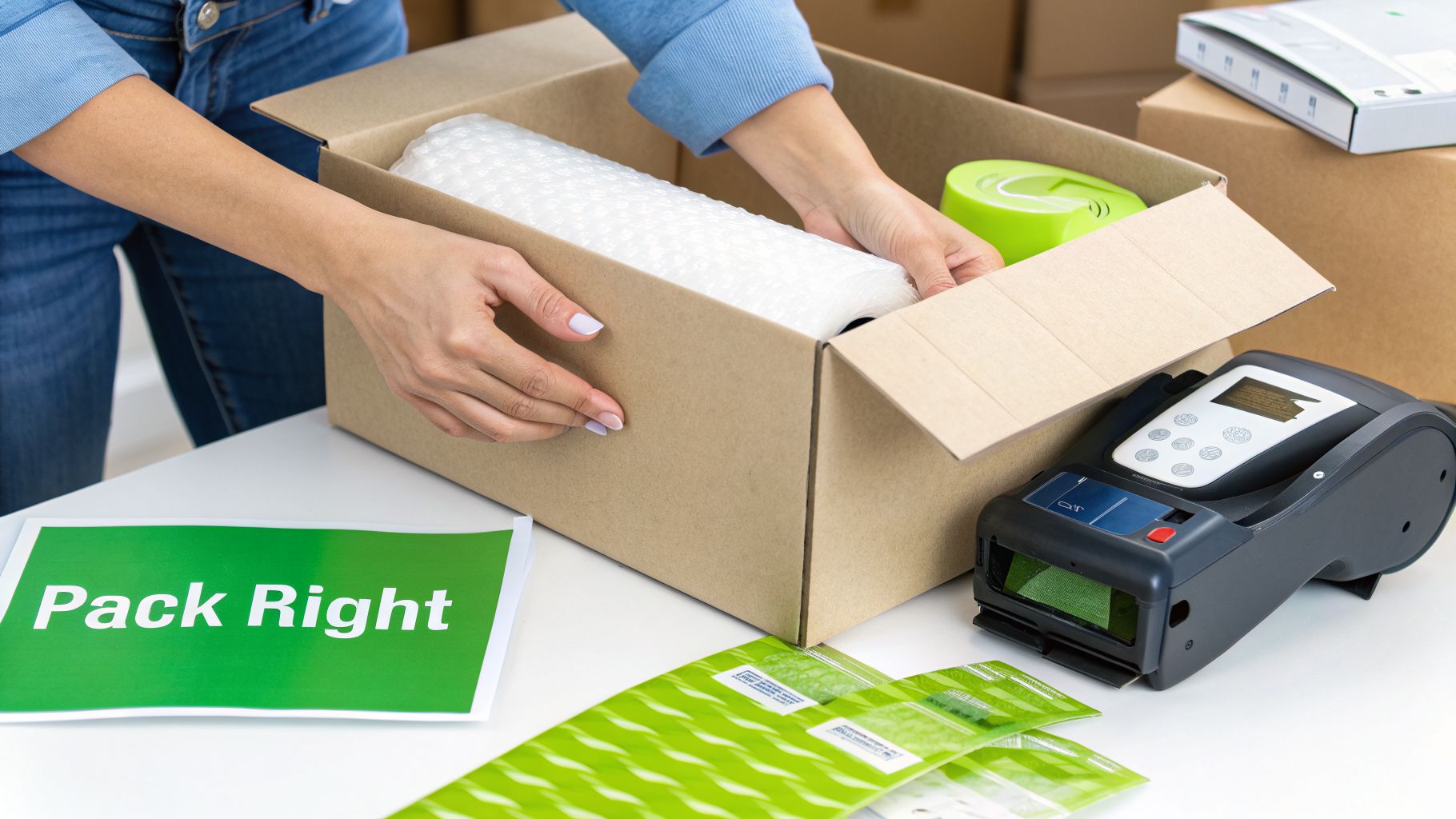
Think of your box as more than just a container—it's a suit of armour for your goods. As your parcel makes its way through Australia’s bustling delivery network, that simple cardboard box is protecting your hard work and, just as importantly, your brand's reputation. Getting it right shows your customers you care, building trust with every single order.
The Essentials of Smart Packing
After years in this business, I can tell you that perfect packing really boils down to three simple, non-negotiable steps. If you nail these basics, you’re giving every shipment its best shot at success.
- Choose the Right Box: Always start with a new, sturdy box. You want it just big enough to fit your item with a bit of room for cushioning around it. Resist the temptation to reuse old boxes; they may look fine, but a single trip can weaken their structure.
- Cushion Like a Pro: Your item should be completely snug inside the box, with absolutely no room to shift or rattle. Fill every single gap with good quality void fill like bubble wrap or packing paper. This creates a buffer that absorbs the inevitable bumps of transit.
- Seal It Tight: A strong seal is your final line of defence. Use quality packing tape and be generous with it. Run it firmly across all the seams and corners to make sure that box stays shut, no matter what.
Following these steps isn’t just a good idea. A poorly packed item is not only likely to get damaged, but it can also become a hazard to other people’s freight.
Your Legal Responsibilities: More Than Just a Box
When you send a parcel in Australia, you’re also taking on some serious legal duties under the Chain of Responsibility (CoR) laws. These rules exist to make our roads safer, and they apply to everyone in the transport chain—and that includes you, the sender.
Under CoR, you are legally responsible for making sure your parcel is packed safely, its weight and dimensions are declared accurately, and its contents are listed correctly. Getting this wrong puts people at risk and can lead to major penalties.
This means you’re directly accountable for what you send and how you send it. You have to pack your goods in a way that stops them from breaking, shifting around, or leaking during their journey. Accurately declaring the weight and contents isn’t just for calculating a price; it’s a legal requirement that keeps the entire parcel delivery network safe.
What You Absolutely Cannot Send: Dangerous Goods
A huge part of your responsibility is knowing what qualifies as a Dangerous Good (DG). These are items that, because of their chemical or physical nature, could pose a risk to health, safety, property, or the environment during transport.
For everyone’s safety, standard courier services like Aeros Couriers, which specialise in fast parcel delivery, do not transport Dangerous Goods. This is a strict rule with no exceptions. Common household items you might not realise fall into this category include:
- Flammable Liquids: Things like perfume, nail polish, and aftershave.
- Aerosol Cans: Deodorant, hairspray, and many spray-on cleaning products.
- Lithium Batteries: Found in most modern electronics like laptops, phones, and power tools.
- Corrosive Materials: Certain heavy-duty cleaning agents or industrial chemicals.
If you try to send these items through a standard courier network, your shipment will likely be stopped, sent back to you at your own expense, or even confiscated. Before you book any parcel delivery, always double-check if your item could be considered a DG.
By packing with care and declaring your items honestly, you’re not just following the rules. You’re protecting your products, keeping your customers happy, and doing your part to ensure every delivery is a safe one. For some extra tips on labelling, you can learn more about how to put a label on your package correctly.
Tracking, Insurance, and Proof of Delivery Explained
In the world of e-commerce, peace of mind is gold. It’s that invisible thread of trust you weave between your business and your customer, stretching from the click of a button to the unboxing of their order. Let’s look at the simple, powerful tools that give both you and your customer complete confidence in every parcel delivery.
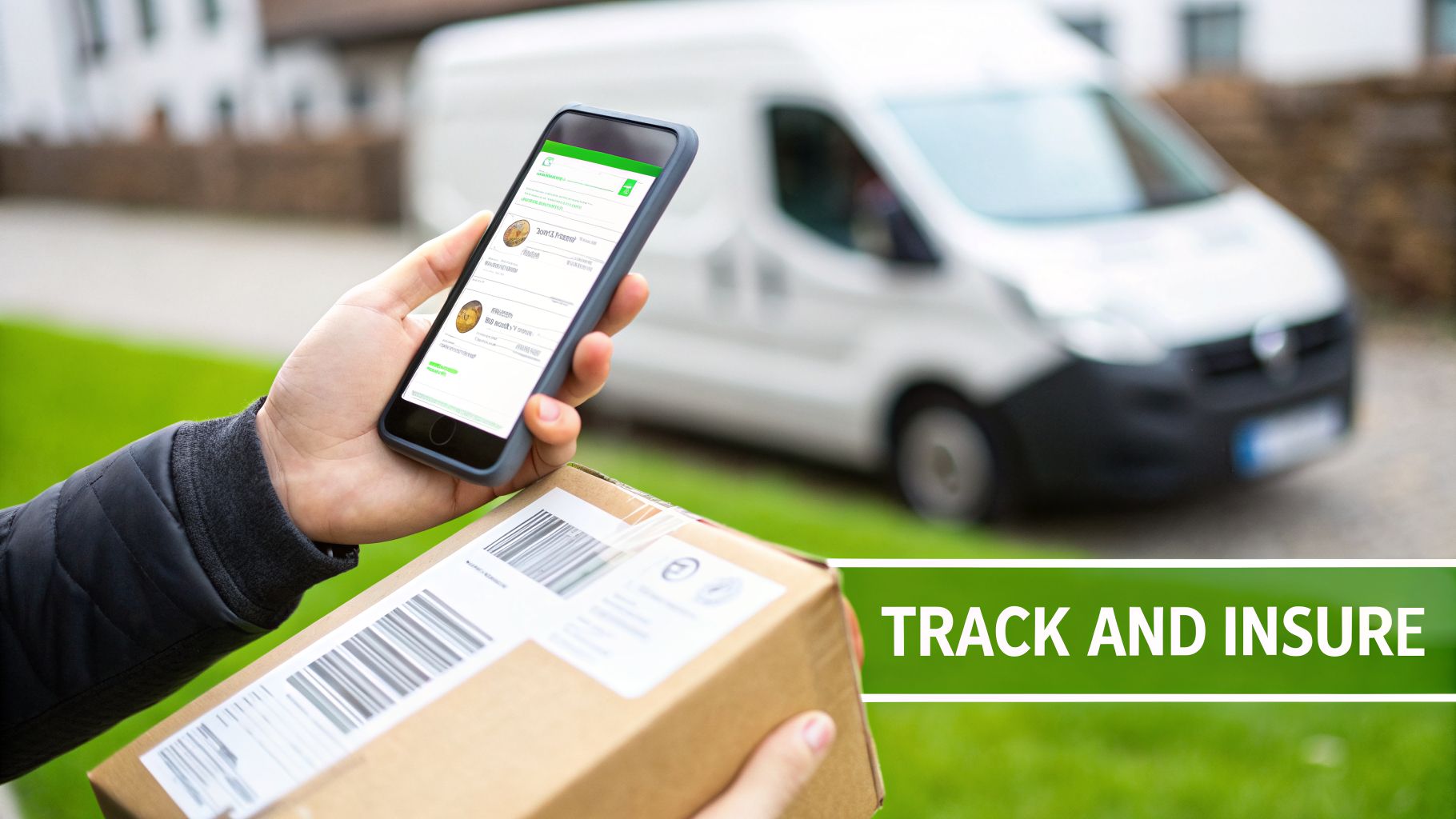
We're about to see how a humble tracking number becomes a window into your parcel's journey, and how built-in freight insurance acts as your ultimate safety net. This is more than just logistics; it’s about building a rock-solid reputation, one successful delivery at a time.
The Power of Real-Time Tracking
That small string of numbers on the shipping label? It's your direct line to the courier and, more importantly, to your customer's peace of mind. The moment that parcel gets its first scan at pickup, that number springs to life, acting as a digital passport for its entire trip across Australia.
With every scan at a depot or on a van, the parcel’s status is updated. You get a clear, step-by-step story of its progress. This isn't just a 'nice-to-have' anymore; your customers absolutely expect it. A simple link lets them watch their package get closer, transforming delivery anxiety into genuine excitement.
A word of warning, though. This very system is often targeted by scammers. Phishing emails pretending to be from couriers are incredibly common, especially during peak shopping seasons. Always advise your customers (and your own team!) to track parcels directly on the courier’s official platform, never by clicking on links in unsolicited emails.
Your Safety Net: Built-In Freight Insurance
Even with the best people and systems on the job, the unexpected can happen. A parcel might get lost, or take a bad tumble in transit. That's where freight insurance steps in, providing a crucial financial backstop. With Aeros Couriers, freight insurance is automatically included with every parcel sent Australia-wide, covering the wholesale cost of your goods up to $1,000.
Think of freight insurance as your business continuity plan for shipping. It ensures that if something goes wrong, you aren't left out of pocket. You can organise a replacement for your customer straight away, protecting both your revenue and your hard-earned reputation.
This built-in cover is designed for the fast-paced world of box and parcel deliveries, giving you automatic confidence without any extra paperwork or hidden fees. It’s a straightforward system built to protect Aussie businesses. To see exactly what's covered, you can get more details about our included insurance for couriers.
ATL vs Signature: Choosing the Right Proof of Delivery
When you book your shipment, you'll need to decide how you want it to land in your customer's hands. There are two main choices, each serving a different purpose.
Authority to Leave (ATL): This gives the driver the green light to leave the parcel in a safe spot if nobody is home. It’s incredibly convenient for customers who are out and about, ensuring they get their order without having to reschedule.
Signature on Delivery: This option requires someone to physically be there to sign for the parcel. It gives you undeniable proof that your item was received, making it the non-negotiable choice for high-value goods.
The right option really depends on what you're sending and what your customer prefers. By offering both, you gain the flexibility to meet every situation head-on.
Shipping Your First Parcel in 5 Simple Steps
Alright, enough theory. Let's get your first parcel out the door. Sending a box with Aeros Couriers isn't complicated; in fact, we've designed the whole experience to be straightforward and put you firmly in the driver's seat.
It all begins with our online quoting tool. Think of it as your launchpad for shipping anywhere in Australia, without any fuss.
You don't even need an account to get started. Just punch in your parcel's details and our system gives you instant, clear-cut pricing. From this one screen, you can compare your options, book the job, and get everything moving.
The 5-Step Booking Process
We’ve boiled it all down to these five steps. The goal is to get your parcel on its way in minutes, so you can get back to what matters most.
Get an Instant Quote: Pop in the pickup and delivery postcodes, then add your box’s weight and dimensions. Our system immediately gets to work, finding the sharpest prices for fast, Australia-wide delivery.
Choose Your Service: You’ll see a clean list of courier options, complete with their prices and estimated delivery dates. Simply pick the one that works for your budget and urgency.
Book Your Shipment: Next, you’ll fill in the final pickup and delivery addresses. You can book as a guest for a one-off send, or log into your dashboard to use saved addresses and make it even quicker.
Print Your Label: As soon as you confirm the booking, your shipping label is ready to go. Just print it out and stick it securely onto your parcel.
Schedule the Pickup: That's it! The courier is automatically booked to come right to your door. All you need to do is have the parcel packed and ready for them.
The whole thing is managed from your central dashboard, giving you a bird's-eye view of every job from the moment it's booked until it’s signed for.
More Than Just Shipping
We genuinely believe in looking after our customers. That's why every single parcel you send with us earns you points through the Aeros Couriers Rewards program. You can cash these points in for over 10,000 items, helping you save a bit more and get real value back.
For anyone just starting an online business in Australia, getting your logistics right from day one is a game-changer. An efficient, rewarding shipping partner can make all the difference.
When you strip away the complexity, you can handle your own parcel delivery with total confidence. It stops being a chore and starts becoming just another smooth, stress-free part of your day-to-day operations.
Your Parcel Delivery Questions, Answered
As you get more familiar with sending parcels across Australia, you're bound to have a few questions. That's a great sign—it means you're thinking like a pro! Here are the straight-up answers to some of the most common things we get asked, helping you ship every single time with confidence.
What Is the Cheapest Way to Send a Parcel in Australia?
Getting the best price on your shipping really comes down to a few simple, smart moves. First, think small. The secret is to pack your item into the most compact and lightweight box you can, which helps keep its volumetric weight (and cost!) right down.
Next, always choose a standard road service for the cheapest rates. Air freight is fantastic for speed, but you'll pay a premium for it. Finally, booking through a platform like Aeros Couriers is a game-changer. We give you instant access to discounted rates from a whole network of carriers, so you can see who offers the best deal in seconds. Just remember that shipping between major cities will always be more affordable than sending something out to a regional or remote area.
How Can I Ship a Parcel Without a Printer?
Let's be real: printing your own shipping label is the fastest and most reliable way to get your parcel on its way. But what if you don't have a printer handy?
While a few couriers are testing "printer-less" services where the driver brings the label, it's definitely not the norm yet. Don't let that stop you, though! You've got super easy and cheap options. Your local library or an Officeworks store will let you print documents for a tiny fee. It’s a simple fix that ensures your label is ready to go when your driver arrives.
Can I Specify a Delivery Time?
This is a big one we hear all the time. Unfortunately, with standard parcel delivery services in Australia, you can't book a specific delivery slot like "drop it off at 2 PM." Your parcel is just one of many on a driver's carefully optimised route, which usually runs anytime between 9 AM and 5 PM on business days.
While you can't lock in a specific time, the real-time tracking we provide is the next best thing. It gives your customer a live view of their parcel's journey, turning that waiting game into genuine excitement as they see it getting closer.
Now, there are some highly specialised, point-to-point courier services that might offer delivery windows, but they come with a much higher price tag and aren't what you'd use for everyday shipping across the country.
Ready to put all this expert knowledge to good use? With Aeros Couriers, you can grab an instant quote and book your next parcel delivery in just a few minutes. Experience fast, affordable, and reliable shipping all across Australia. Visit us at https://www.aeroscouriers.com.au to get started.
