


Sending goods across Australia is a big part of doing business, but the terminology can get confusing. Let's break down exactly what "inter state transport" means and why it's so vital for any company with national ambitions.
Put simply, inter state transport is the movement of any goods, freight, or parcels that cross an Australian state or territory border. The journey starts in one state, say Victoria, and ends up in another, like Queensland. This service is the lifeblood of our national economy, connecting businesses to customers right across the country.
What Exactly Is Inter State Transport?
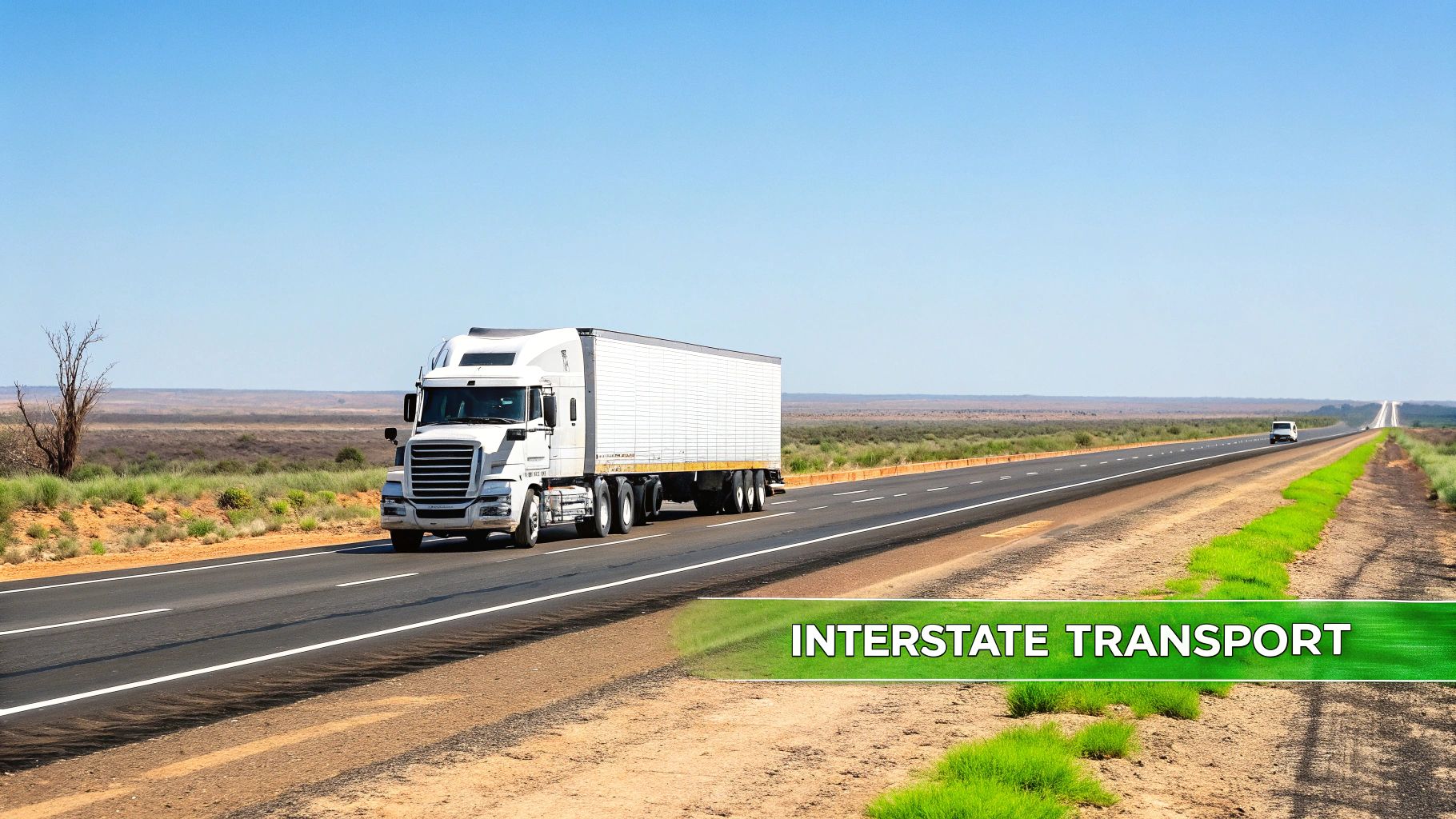
Think of Australia's logistics network as the country's circulatory system, with inter state routes acting as the main arteries. It’s what allows a small craft brewery in Perth to get its product into a bottle shop in Sydney, or a Melbourne-based manufacturer to supply retailers in Brisbane. This constant flow of goods is fundamental to national commerce, especially with the boom in e-commerce.
Without a reliable way to ship products over these vast distances, businesses would be stuck serving only their local markets, which seriously caps their growth potential. The right logistics partner turns the challenge of distance and complex regulations into a genuine competitive advantage.
Inter State vs Intrastate Shipping
It's easy to mix these two up, but knowing the difference is key to picking the right service. The core distinction is simple: do the goods cross a state line?
Here's a simple table to clarify the core differences between the shipping types, helping you identify exactly what your business needs.
Inter State vs Intrastate Shipping at a Glance
| Shipping Type | Journey | Key Challenge | Business Example |
|---|---|---|---|
| Inter state | Crosses state or territory borders | Longer transit times, complex national regulations, higher costs. | Sending a pallet of wine from Adelaide, SA to a distributor in Darwin, NT. |
| Intrastate | Stays within a single state's borders | Shorter delivery windows, metro vs. regional access. | A courier delivery from Geelong to Mildura, both within Victoria. |
While they might sound similar, the regulations, transit times, and costs involved are worlds apart. Inter state journeys are naturally longer and have to comply with a much more complex web of national safety and transport laws.
At its core, mastering inter state transport is about unlocking the entire Australian market. It empowers your business to operate on a national scale, turning a geographical challenge into a massive opportunity for growth.
The Sheer Scale of Aussie Road Freight
When it comes to moving goods in Australia, road freight is king. The numbers alone show just how crucial it is for connecting our major cities and regional centres across the continent.
According to the Bureau of Infrastructure and Transport Research Economics (BITRE), Australia's total domestic freight task recently hit a record 786 billion tonne-kilometres. Road freight handled a staggering 253 billion of that total, which really drives home its critical role. You can dig into more of these freight statistics on their official site.
Pulling off this massive undertaking requires a deeply coordinated network of carriers and logistics experts. Choosing the right one is absolutely essential for navigating the complexities. For businesses weighing up their options, our guide on selecting from the top interstate transport companies is a great place to start. Partnering with an efficient, reliable courier ensures your goods are handled properly, compliantly, and cost-effectively, no matter how far they need to go.
Navigating Australian Shipping Regulations
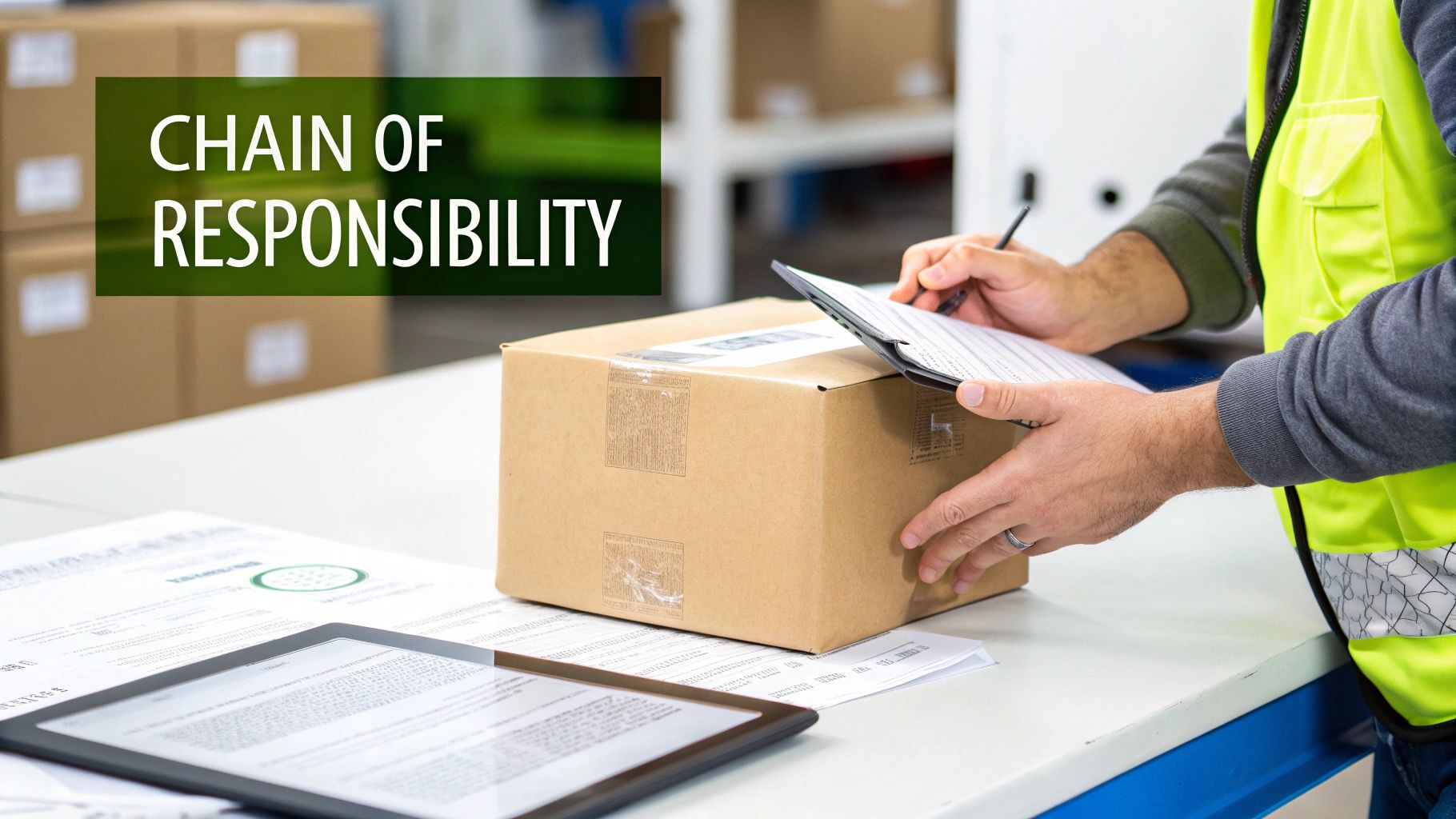
Sending a package across state lines in Australia involves more than just getting the address right. There's a whole legal framework designed to keep our roads safe, and as a business owner, you need to know your place in it. Getting this wrong isn't just about a delayed delivery; it can land you in serious legal and financial hot water.
At the very core of these rules is a concept called the Chain of Responsibility (CoR). This isn't just industry speak; it’s a national law that makes road safety a shared duty for everyone involved in getting a package from A to B.
Understanding the Chain of Responsibility
Think of the Chain of Responsibility like a relay race. The baton (the freight) has to be passed safely from one person to the next, and if anyone drops it, the whole team is affected. CoR law works the same way, making every person in the transport supply chain legally accountable for safety.
This is a big change from the old days when all the blame would fall on the truck driver. Now, responsibility is shared by anyone who has a hand in the process.
So, who's on this team? The list is long, and it's designed to make sure no one can just shrug and say, "not my problem."
- The Sender (Consignor): That's you. Your job is to declare the weight of your goods accurately and make sure everything is packed and secured properly.
- The Packer: Whoever physically packs the boxes is responsible for ensuring the contents won't shift, break, or cause an imbalance during the journey.
- The Loader: The person loading the truck has to make sure the freight is positioned correctly and safely restrained.
- The Transport Company: The carrier, like us here at Aeros Couriers, has to provide safe vehicles and well-trained drivers.
- The Driver: Finally, the driver is on the front line, responsible for operating the truck safely and following fatigue management laws.
The main idea behind CoR is powerful: if you can influence any part of the transport process, you have a legal duty to make sure it's done safely. This means a business owner in a Melbourne office can be held liable for an accident involving their freight way out in rural Queensland.
Your Duties as a Sender
Under CoR, your obligations as the one sending the goods are straightforward. You have to take all reasonable steps to prevent anything from going wrong. You don’t need to be a logistics expert, but you do need to use common sense.
A huge part of this comes down to mass and dimension. Overloading a truck or packing a pallet so it's top-heavy are massive no-nos. That’s why accurately weighing and measuring your items before booking an inter state transport service isn't just about getting an accurate price—it's a legal must-do.
Making sure your load is properly secured is another key duty. If you're sending freight on a pallet, it has to be stable, stacked correctly, and tightly shrink-wrapped so it doesn’t become a hazard on the move.
Shipping Restricted and Dangerous Goods
Things get even more serious when you’re shipping anything classified as restricted or Dangerous Goods (DGs). And it’s not just bubbling vats of chemicals; many common items fall into this category, like aerosols, some batteries, paints, and even certain cleaning products.
To send these items across state borders, you have to follow the Australian Dangerous Goods Code to the letter. This means specific paperwork, correct labelling with those universally recognised diamond-shaped symbols, and using special packaging designed to prevent spills.
For example, say a tech business in Sydney needs to send a carton of lithium batteries to a client in Perth. They can't just pop them in a box. They have to identify the correct UN number for the batteries, use UN-approved packaging with specific markings, and fill out a shipper's declaration for Dangerous Goods. Skipping these steps could get the shipment stopped, lead to hefty fines, and leave them liable if something goes wrong.
It can feel like a lot to take in, but getting it right is crucial. For a deeper dive into what qualifies and how to handle it, our guide on hazardous goods classification is a great resource. Taking these regulations seriously protects your business, your transport partners, and everyone else on the road.
How Inter State Transport Costs Are Calculated
Ever wondered why sending a small, heavy box from Sydney to Melbourne costs one thing, while a much larger, lighter package to Perth costs something completely different? Trying to make sense of a shipping bill can feel a bit like decoding a secret language, but it's not as complex as it seems.
Think of it like booking a flight. The final price you pay depends on where you're going and how much luggage you're taking. Interstate freight works on very similar principles. Once you get a handle on the key factors, you can make smarter shipping decisions, sidestep unexpected fees, and get a real grip on your logistics budget. It’s not just about chasing the lowest price; it’s about understanding what you’re paying for.
It Starts with Weight and Size
The biggest piece of the pricing puzzle is how much room your item takes up in a truck. Freight carriers have a finite amount of space, and they need to make every square centimetre count. This is why they price your shipment based on whichever is greater: its physical weight or its size.
This brings us to two core ideas you need to know:
- Actual Weight: This is the straightforward one. It's simply what your parcel weighs on a set of scales, measured in kilograms. You'll often hear this called "dead weight."
- Cubic Weight: This is all about volume—how much space your package occupies. To figure it out, you multiply the length x width x height (in metres), and then multiply that result by a standard industry conversion factor, which is typically 250.
Let's use an example. Imagine you’re shipping a small box of heavy bolts and a giant, fluffy beanbag. The box of bolts has a high actual weight but a low cubic weight. The beanbag is the complete opposite—it’s light as a feather but its cubic weight is massive because it takes up so much space. In both scenarios, the carrier will charge you based on the higher of the two numbers. This system ensures they're compensated fairly for the truck space your item uses, no matter how dense it is.
Your final freight cost is always determined by the greater value between the parcel's actual dead weight and its calculated cubic weight. Mastering this simple concept is the first step to optimising your shipping expenses.
Location and Surcharges Add Up
Once the chargeable weight is locked in, the next thing to consider is the journey itself. Going back to our flight analogy, where you're flying to obviously matters a great deal. The distance between the pickup and delivery postcodes is a fundamental cost driver. It’s no surprise that a shipment from Hobart to Darwin is going to cost more than one from Canberra to Sydney.
But it’s a bit more nuanced than just kilometres on a map. A range of surcharges often come into play depending on the specifics of the delivery.
- Fuel Levy: This is a variable fee that carriers add to cover the ever-changing price of diesel. It’s usually calculated as a percentage of the base freight cost.
- Remote Area Surcharge: Getting a package to regional or remote postcodes requires more time, fuel, and resources, so an extra fee is applied to cover these costs.
- Residential Delivery Fee: Dropping off a parcel at a home address can be more time-consuming than delivering to a business with a proper loading dock, so a small surcharge often applies here too.
These variables all stack up to create the final price, which is why using an online tool is the best way to get an accurate figure. You can plug your parcel's details into an instant shipping cost calculator to see exactly how all these factors combine for your specific shipment.
It’s also interesting to note how broader trends, like population movements, can indirectly affect pricing. Each year, Australia sees significant net interstate migration, with tens of thousands of people moving between states. This creates a steady demand for both personal and business shipping services, which in turn influences how much capacity carriers have on their most popular routes. You can dig into these population shifts on the Australian Bureau of Statistics website. Understanding all these layers helps demystify your freight invoice and shows you exactly where your money is going.
Packaging Your Goods for a Safe Journey
Think of good packaging as the first line of defence for your products. It's the armour that protects your valuable goods as they travel across the country, and getting it right is about more than just avoiding damage—it's a critical part of your legal duties under the Chain of Responsibility laws.
This isn't just about sticking something in a box. It’s a deliberate process to make sure your shipment arrives in the exact same condition it left. A well-packed carton or a solidly built pallet is designed to handle the inevitable bumps and vibrations of a long-haul trip, saving you from the headache of damage claims and unhappy customers.
Mastering the Art of Carton Packing
For your smaller shipments, the humble cardboard box is your best friend. But not all boxes are created equal, and choosing the right one is the very first step to a successful delivery.
Always start with a new, sturdy, double-walled cardboard box. It might be tempting to reuse an old one to save a few cents, but they often have hidden weaknesses and are far more likely to get crushed or torn. Make sure the box is big enough to leave at least 5-6 centimetres of cushioning space around your item on all sides.
For the best protection, follow these simple steps:
- Cushion the Base: Start by lining the bottom of the box with a good layer of bubble wrap, packing peanuts, or even just scrunched-up paper.
- Wrap Your Items: If you’re sending multiple items in one box, wrap each one individually. This stops them from knocking against and scratching each other in transit.
- Fill the Voids: Pop your item in the centre and then stuff all the empty space around it with more cushioning. You want everything to be snug. If you can shake the box and hear things moving, it’s not packed tightly enough.
- Seal It Securely: Use a strong, wide packing tape (at least 48mm is best). The 'H-tape' method is what the pros use: tape down the middle seam where the flaps meet, then tape across both of the short-edge seams. This forms a capital 'H' and reinforces all the weakest points of the box.
When and How to Use a Pallet
Once your shipment gets too big or heavy for individual cartons, it’s time to move up to a pallet. Palletising your freight simply means consolidating lots of items into a single, stable unit that a forklift can move around easily. It's the standard for most bulky inter state transport jobs.
The standard Australian pallet is 116.5cm x 116.5cm. It's crucial that your goods don't hang over the edges. Overhanging freight gets damaged easily and will almost certainly attract extra fees from the carrier.
Building a secure pallet is like laying the foundation for a house. Its stability before it even leaves your warehouse is what keeps it safe throughout the entire journey.
Stack your cartons in interlocking columns, a bit like building a brick wall, to spread the weight out evenly. Heavier boxes always go on the bottom, with lighter ones on top to avoid crushing. Once everything is stacked, you need to lock it all together. The best way is to shrink-wrap the entire pallet tightly, wrapping it several times from bottom to top and making sure the wrap binds the goods directly to the pallet itself. For even more security, you can add plastic or metal strapping bands.
This diagram breaks down the three core elements—dimensions, weight, and distance—that carriers use to calculate your shipping costs.
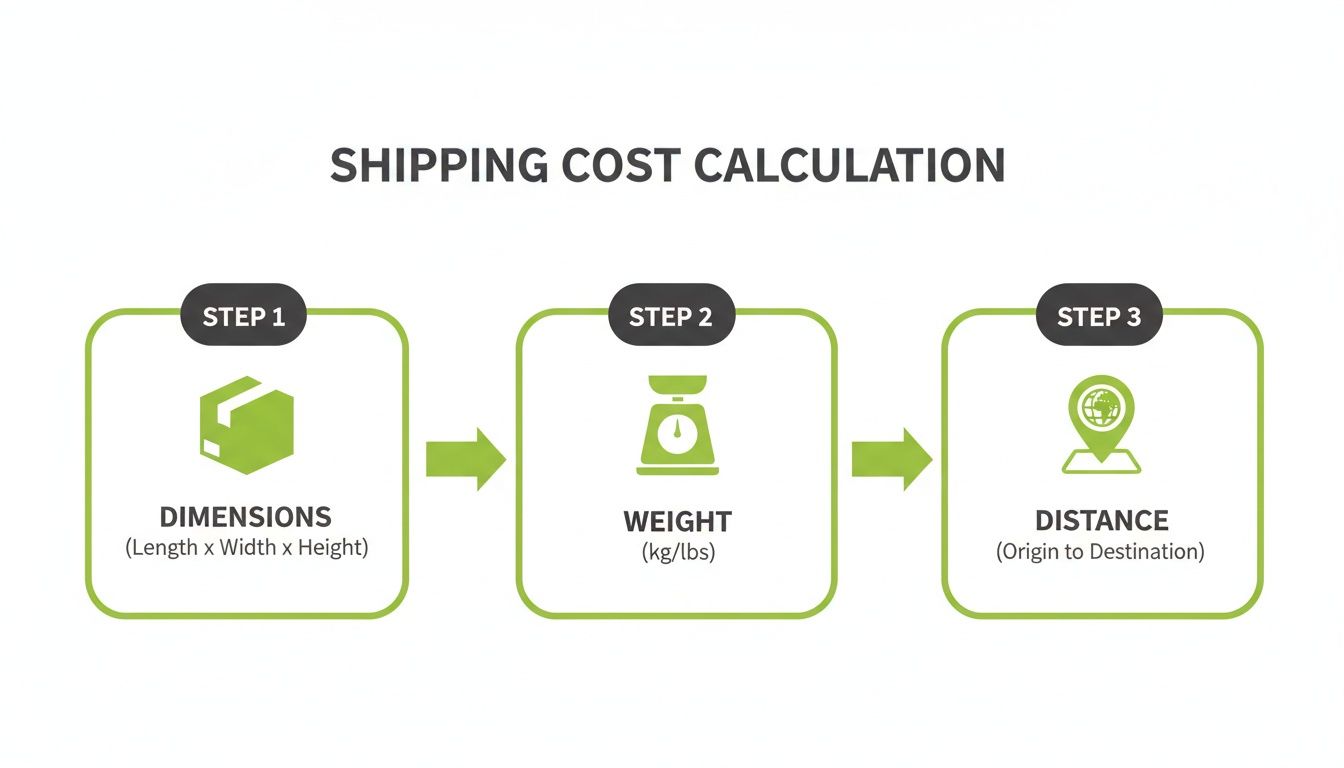
As you can see, the final freight bill comes down to a combination of how big your shipment is, how much it weighs, and how far it has to go.
Getting your freight prepared correctly from the start is the key to a smooth, hassle-free delivery. You can dive deeper into getting your items ready by checking out our other guides on Australian parcel delivery. Spending those extra few minutes on proper packing will save you a world of trouble later on.
Managing Deliveries and Setting Expectations
The final leg of the journey—getting the goods into your customer's hands—is where satisfaction is truly won or lost. Once your freight is perfectly packed and on its way, the focus shifts to managing the delivery itself. Getting a handle on the realities of Australian logistics, from typical transit times to final proof of delivery, is the key to setting clear, realistic expectations with your customers. It's how you prevent frustration and build trust.
This last stage of interstate transport isn't just about dropping a box at a door; it’s about closing the loop on a successful sale. A smooth delivery experience reinforces a customer's decision to buy from you again. On the flip side, a confusing or delayed one can undo all your hard work in an instant.
Understanding Estimated Times of Arrival (ETAs)
An Estimated Time of Arrival (ETA) is a crucial piece of the puzzle, helping customers plan their day around a delivery. But it’s vital to remember the first word: estimated. These timeframes aren't just guesses; they're calculated by sophisticated logistics software crunching a lot of data.
Here’s what goes into an ETA:
- Transit Lanes: The standard time it takes for a truck to travel between major hubs, like the well-worn path from Melbourne to Brisbane.
- Depot Processing: The time needed for freight to be unloaded, sorted, and reloaded onto the next vehicle at depots along the route.
- Final Mile Delivery: The time set aside for the local courier to handle the final drop-off from the destination depot to the customer's address.
While this system is incredibly efficient, it’s still operating in the real world. Things like unexpected road closures, peak season backlogs, or wild weather can throw a spanner in the works, which is why the dates you get are always a guide, not a guarantee.
Metro vs. Regional Deliveries
One of the biggest factors influencing ETAs in Australia is the delivery location. The sheer size of our country creates a two-tiered system for delivery speeds.
Think about it: a delivery from a warehouse in Sydney to a customer in the Melbourne CBD is a straightforward metro-to-metro run. It's a major freight corridor with multiple trucks running daily, so transit times are quick and predictable. But sending that same parcel to a regional town like Broome in Western Australia? That's a whole different ball game. The freight will first travel to the Perth depot, then get handed off to a smaller, regional delivery partner who might only service that remote area a few times a week.
Setting realistic customer expectations is paramount. Clearly communicating that regional deliveries will naturally take longer than metro drops prevents disappointment and shows you understand the realities of shipping across Australia.
The Importance of Freight Insurance
Even with the best packaging and the most reliable carriers, things can occasionally go wrong on a long-haul journey. This is where freight insurance provides an essential safety net. While carriers take every precaution, their standard liability is often limited and might not come close to covering the full value of your goods.
Imagine you're shipping lightweight but high-value electronics. A carrier's standard liability might only cover a small amount per kilogram. If something happens, that basic coverage would leave you significantly out of pocket. Adding proper freight insurance means you are protected for the full declared value of your items against loss or damage in transit. It’s peace of mind for both you and your customer.
Why a Signature on Delivery Matters
The final piece of the delivery puzzle is getting proof that the goods arrived safely. A Signature on Delivery (SOD) is your definitive proof of receipt. When the recipient signs for the parcel, it creates a legally recognised record confirming the carrier has done their job and the customer has taken possession.
Opting for an SOD is a simple and effective way to minimise disputes. It shuts down "I never received it" claims and protects your business from unnecessary losses. While giving an "Authority to Leave" can be convenient, it removes this critical layer of security. For any valuable or important interstate transport shipment, getting a signature is always the smarter choice.
How to Choose the Right Shipping Partner
Picking a courier isn't just another item on your to-do list. It's a massive decision that echoes through your entire business, touching everything from customer happiness and your brand's reputation to your actual profit margins. Think of your courier as an extension of your team—they're the one who completes the final, critical step of your promise to the customer.
It's tempting to just scan a price list and pick the cheapest option. But that's a classic rookie mistake. A bargain-basement courier that's constantly late or, worse, damages your goods will end up costing you a fortune in angry customers and lost sales. You've got to look deeper.
Key Criteria for Evaluating Couriers
When you’re weighing up your options for inter state transport, you need a solid game plan. The best approach is to focus on the things that actually matter day-to-day: reliability, technology, customer support, and genuine value.
Here’s what you should be drilling down on:
- Reliability and Coverage: Do they actually deliver on time? A great ETA is useless if it's never met. Check their network reach, too—can they get your parcels to every metro and regional postcode you service without a fuss?
- Tracking Technology: In 2024, "it's on the truck" just doesn't cut it. You need a partner with transparent, real-time tracking. This isn't just a nice-to-have; it gives you and your customers peace of mind and drastically cuts down on "where's my order?" calls.
- Customer Support: When things go sideways—and they occasionally will—how painful is it to get a resolution? You want accessible, Australian-based support from people who can solve problems quickly, not just read from a script.
- Cost-Effectiveness: This is the big one, and it's about so much more than the quote. Real value is a mix of competitive rates, minimal hidden surcharges, and a level of service that saves you money by preventing problems in the first place.
A truly great shipping partner makes your job easier, period. Their systems should be a breeze to use, their support should be on the ball, and their performance should be so dependable that you can stop worrying about logistics and get back to growing your business.
The Advantage of a Multi-Carrier Platform
Why lock yourself into one single courier company? That’s like having only one tool in your toolbox. A multi-carrier platform like Aeros Couriers gives you the freedom to pick the perfect service for every single parcel you send. A small satchel going across Sydney has totally different requirements to a hefty pallet heading to regional WA.
By using one simple platform to access a whole range of carriers, you can compare quotes and transit times instantly. It means you’ll never overpay for an express service when standard road freight would have been fine. It’s all about matching the right service to the right job, every time. This flexibility is the secret to finding the best courier service that actually fits the unique needs of your business.
Checklist for Your Inter State Shipping Partner
To cut through the sales pitches and get to the facts, a simple checklist is your best friend. Use this table to systematically compare potential inter state transport providers and see how they really stack up.
| Essential Feature | Why It's Critical | Question to Ask |
|---|---|---|
| Transparent Pricing | You need to know your real costs to avoid nasty surprises on your invoice. | "Are all potential surcharges—like fuel levies or residential delivery fees—clearly listed upfront?" |
| Real-Time Tracking | Empowers customers and frees up your support team from answering ETA questions. | "What level of detail does your tracking portal show? Can my customer see it too?" |
| Freight Insurance | Your safety net against the financial sting of loss or damage during transit. | "Is transit insurance included as standard, or is it an optional extra I need to pay for?" |
| Local Customer Support | When you need help, you need it fast from someone who understands the local landscape. | "If there's an issue, can I speak to a real person in Australia to get it sorted?" |
Making a smart, informed choice here puts you firmly in control. It transforms logistics from a frustrating cost centre into a powerful engine for growing your business and delighting your customers.
Got Questions About Inter State Transport? We've Got Answers
When you're running a business, you don't have time to get bogged down in freight jargon. You need clear, straightforward answers to get your products moving. To help with that, we’ve put together a quick Q&A covering the most common questions we hear from business owners about inter state transport in Australia.
Think of this as your cheat sheet for shipping smarter.
What's the Biggest Factor in Calculating My Shipping Cost?
It all boils down to a simple principle: you pay for whichever is greater – the parcel's physical weight or its size. Every carrier will calculate both the actual "dead weight" in kilograms and the "cubic weight," which is a figure based on the item's dimensions. You’ll be charged for the higher of the two.
This figure is then multiplied by the distance it needs to travel between the pickup and delivery postcodes. Don't forget that extra surcharges, like those for delivering to a remote or residential address, can also be tacked on, pushing up the final price.
The single most important thing to remember is that you're paying for space just as much as you are for weight. This simple fact is the key to optimising your freight budget. If you can use smaller packaging, you'll shrink your cubic weight and cut your costs.
If Something Goes Wrong With Packing, Who's Legally Responsible?
In Australia, the responsibility is shared. Thanks to our Chain of Responsibility (CoR) laws, everyone involved in the supply chain has a legal duty to ensure safety. That means you, the sender, are on the hook to make sure your goods are packed, weighed, and secured properly.
So, if there's an incident on the road because a load wasn't secured correctly, it’s not just the driver or the transport company who can get in trouble. The business that sent the goods in the first place can absolutely be held liable for not meeting its safety duties.
Can I Send Things Like Paint or Aerosol Cans?
You can, but not through the regular network. Shipping items like aerosols, paints, some types of batteries, or even certain cleaning chemicals is a highly specialised process. These products are usually classified as Dangerous Goods (DGs), and for safety's sake, their transport across state lines is strictly regulated.
You can't just pop them in a box and book a standard courier. To ship DGs, you have to make a special declaration when you book, use legally approved packaging, and make sure all the correct safety labels are applied. Honesty is the best policy here—always declare these items to make sure they're handled safely and legally.
How Can I Actually Reduce My Shipping Costs?
There are a few really practical things you can do to bring your inter state transport bills down.
- Optimise your packaging: This is the easiest win. Using the smallest box possible for your item directly cuts its cubic weight, which often means a lower price.
- Consolidate your freight: If you have several smaller boxes going to the same general area, consider consolidating them into a single, larger shipment on one pallet. It's often much cheaper than sending them all individually.
- Compare your options: Don't just stick with one carrier out of habit. Using a multi-carrier platform lets you see real-time quotes from a range of providers side-by-side. This way, you can pick the most cost-effective service for every single shipment you send.
Ready to take control of your shipping with transparent pricing and reliable service? Aeros Couriers makes it simple to get instant quotes, book jobs in minutes, and track your freight across Australia. Get started with Aeros Couriers
