You’ve probably felt this shift already. A customer in Brisbane places an order just before lunch. Another comes through from Adelaide that afternoon. Then one from regional NSW lands before you’ve packed the first two. The sales are exciting, but the delivery questions pile up fast. Which service should you use, what will it cost, and will the parcel arrive when the customer expects it?
That’s the point where many small businesses start treating shipping as a daily stress point. It doesn’t need to be. Once you understand how parcel courier services work in Australia, shipping becomes much easier to control. You stop guessing. You start choosing.
A good parcel courier setup helps you protect margin, serve customers outside your local area, and avoid the common mistakes that make deliveries expensive or messy. The aim isn’t to become a logistics expert overnight. It’s to build a practical system that works when orders are steady, busy, or unpredictable.
Your Parcel Courier Is Your Partner in Growth
A lot of business owners still think of shipping as the last task in the sale. Pack the order, print the label, hand it over, move on. That mindset keeps you reactive.
A stronger mindset is this. Your parcel courier is part of your customer experience. It affects whether people order again, whether they trust your delivery promise, and whether selling Australia-wide feels manageable or risky.

Shipping changes what your business can reach
If you’re based in one city, it’s easy to think like a local business. The moment you can send confidently to metro and regional customers across the country, your address matters less. Your delivery setup starts doing real commercial work.
That matters in a market that has grown quickly. The Australian parcel courier sector rose from AUD 4.5 billion in FY2019 to over AUD 11 billion by FY2023, driven by a 300% increase in online retail sales, according to this overview of Australia’s parcel courier history. If you sell online, reliable and affordable shipping isn’t a side issue. It’s part of how you compete.
What a strong courier setup actually does
A solid parcel courier arrangement gives you more than delivery movement. It helps you:
- Sell further: You can accept orders from customers outside your suburb, city, or state without worrying that every shipment will become a custom quote.
- Protect your brand: Fast dispatch and predictable tracking reduce the “Where is my order?” messages that eat into your day.
- Keep pricing sensible: If delivery costs are controlled, you’ve got more room to offer attractive checkout options.
- Handle growth without chaos: A process that works for five parcels a week can keep working when you’re sending many more.
Practical rule: Don’t judge a courier option only by the pickup. Judge it by what happens after the label is printed, including tracking clarity, delivery reliability, and how easy it is to solve issues.
The mindset shift that helps most
New e-commerce sellers often ask, “What’s the cheapest way to send this box?” That’s a fair question, but it’s incomplete. The better question is, “What’s the cheapest service that still matches what this customer needs?”
That distinction matters. Cheap but unsuitable delivery creates follow-up costs. You pay in support time, replacements, refunds, and customer frustration.
If you’re reviewing your setup, it helps to look at guidance built for smaller operators, such as this resource on the best courier for small business in Australia. The point isn’t to chase one universal answer. It’s to build a delivery model that fits your products, your order patterns, and your customers’ expectations.
Once you start treating your parcel courier like a growth partner instead of a post-sale afterthought, shipping becomes much less intimidating.
Decoding Your Australian Parcel Service Options
Most delivery mistakes don’t happen because the parcel was packed badly. They happen because the wrong service was chosen for the job.
One order needs urgency. Another only needs a reliable low-cost trip across state lines. A third is small enough that a satchel makes more sense than a box. If you use the same service for everything, you’ll often overspend.
Why businesses now have more choice
Australia Post still handles a huge share of domestic parcel traffic, processing over 70% of domestic parcels as of 2023, but the market has broadened, with private couriers offering competitive pricing and specialist services such as same-day metro delivery, as noted in this summary of Australian parcel volumes and market shifts. That’s good news for small businesses. You’re no longer locked into one standard way of sending everything.
Choosing Your Delivery Speed A Quick Comparison
| Service Type | Best For | Typical Speed (Metro) | Cost Level |
|---|---|---|---|
| Express | Urgent orders, time-sensitive replacements, customer upgrades | Fastest available | Higher |
| Economy | Everyday e-commerce orders where cost control matters most | Slower than express | Lower |
| Same-Day | Local metro jobs that must arrive the same day | Same business day | Highest |
| Satchel service | Soft goods, compact items, low-cubic shipments | Varies by service level | Often cost-effective |
Express isn’t for every parcel
Express is useful when delay would create a bigger problem than the extra shipping spend. Think replacement stock for a customer event, urgent documents, or premium orders where the buyer has paid for speed.
But many businesses lose margin by using express as a habit. If the customer expectation was standard delivery and the item isn’t urgent, you may be paying for speed no one asked for.
Economy wins more often than people expect
Economy services are often the quiet achiever in Australian shipping. They suit routine online orders where customers mainly want a fair price, decent tracking, and safe delivery.
If you sell homewares, clothing, accessories, packaged parts, or non-urgent retail goods, economy is often the right baseline. It lets you keep delivery fees more realistic without under-serving the customer.
Economy doesn’t mean careless. It usually means the parcel moves through a less urgent network at a lower cost.
Same-day has a narrow but valuable role
Same-day delivery can be powerful in metro areas, especially if your buyers are nearby and ordering for immediate use. Florists, spare parts suppliers, event suppliers, and some medical or office product sellers often benefit from it.
The trap is assuming same-day helps every business. For many SMBs, it’s a niche service, not the default. Used selectively, it can help you delight the right customer. Used broadly, it can become a margin drain.
Don’t overlook satchels
Satchels are one of the simplest ways to reduce shipping spend when the product suits them. They work well for:
- Soft items: Apparel, fabric goods, and other non-fragile stock.
- Low-volume products: Items that don’t need the structure of a carton.
- Simple packing benches: Teams that want faster pick-pack-label workflows.
A satchel isn’t the right answer for breakable goods or anything that needs crush protection. But if you’re sending small, durable items in cartons out of habit, it’s worth reassessing.
Match the service to the promise
Before you book any parcel courier service, ask three questions:
- What delivery promise did the customer buy?
- Does this item need protection more than speed?
- Will a cheaper service still feel reliable from the customer’s perspective?
If you want a practical view of the service mix available, this overview of parcel delivery service options across Australia is a useful place to compare common choices.
The goal isn’t to memorise every courier product name. It’s to build the habit of matching each order to the right level of speed and spend.
Understanding What Drives Your Shipping Costs
Two boxes can look almost identical and still produce very different quotes. That catches many new sellers off guard.
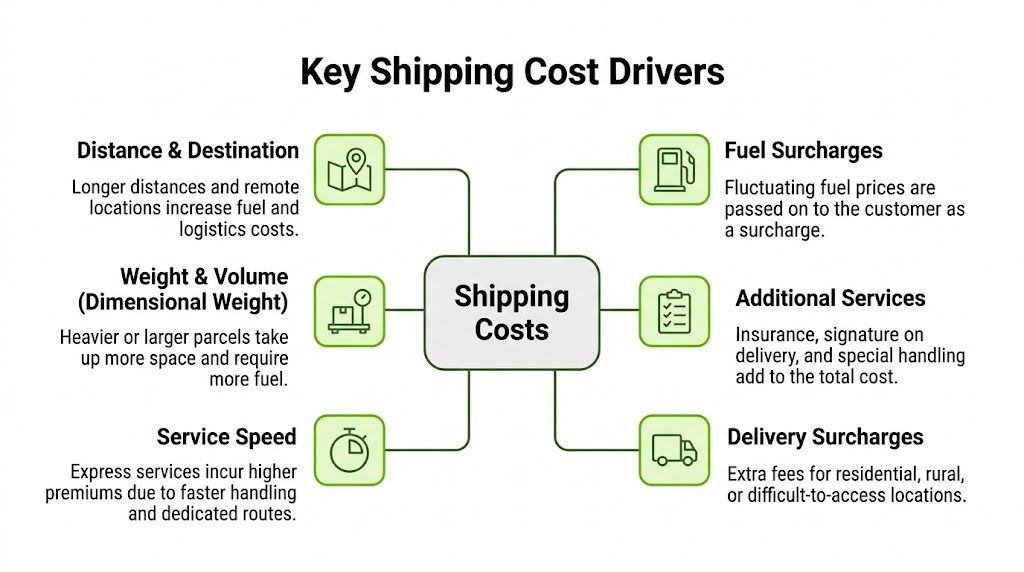
The carrier isn’t pricing only the item inside. They’re pricing the space the parcel takes up, the route it travels, the service level you choose, and the handling conditions around the delivery.
Weight matters, but size often surprises people more
Most business owners understand actual weight. If a parcel weighs more, it usually costs more. The confusion starts with cubic weight, sometimes called dimensional weight.
Think of a delivery vehicle like a bookshelf. A light but bulky box can still take up the shelf space that could have held several smaller parcels. Even if it isn’t heavy, it uses valuable room. That’s why carriers consider dimensions, not just kilos.
A classic example is bedding, hats, lightweight packaging, or promotional products. They may not weigh much, but they occupy a lot of vehicle space.
Distance and destination shape the quote
Shipping from one metro area to another is generally simpler than shipping to remote or regional areas. Longer routes involve more handling points, more linehaul planning, and more limited network density.
That’s one reason why carrier choice matters so much. In 2026, regional Australian carriers had gained 18% market share in metro-to-regional routes, often offering rates up to 25% lower than major players on those lanes, according to this report on alternative delivery options. For small businesses sending beyond the capitals, a multi-carrier approach can make a real difference.
The main cost drivers to watch
When a quote feels higher than expected, one or more of these is usually behind it:
- Parcel dimensions: Oversized cartons push up cubic weight.
- Destination: Regional and remote areas can cost more than metro routes.
- Service level: Express and urgent services carry a premium.
- Extra options: Signature on delivery, extra cover, and special handling can increase the total.
- Residential factors: Some delivery networks price home delivery differently from commercial delivery points.
A small packaging change can reduce cost without changing the product at all. The easiest savings often come from box selection, not rate negotiation.
How to use this knowledge in a practical way
You don’t need to become a freight analyst. You do need to measure parcels accurately and standardise your packaging where possible.
A simple operating habit helps a lot:
- Measure packed items, not unpacked stock.
- Create a short list of standard box sizes.
- Use the smallest safe carton for the product.
- Compare carriers before booking regional deliveries.
If you want a clearer feel for how quoting logic works, this guide to courier costs in Australia helps translate pricing factors into everyday business decisions.
Once you understand what drives the quote, shipping costs stop feeling random. They become something you can influence.
Preparing Your Parcel for a Safe and Compliant Journey
A parcel rarely travels in one straight line from your desk to the customer’s hands. It moves through cages, conveyor systems, sorting points, vans, and depots. That journey is exactly why good packing matters.
Many damaged deliveries start with a simple mismatch. The box was too large for the item. The void fill was too loose. The label was clear, but the package itself couldn’t cope with normal handling.
Pack for movement, not for the shelf
Your product may look secure while sitting still on the packing bench. That’s not the test. The true test is whether it stays secure while being moved, stacked, scanned, and delivered.
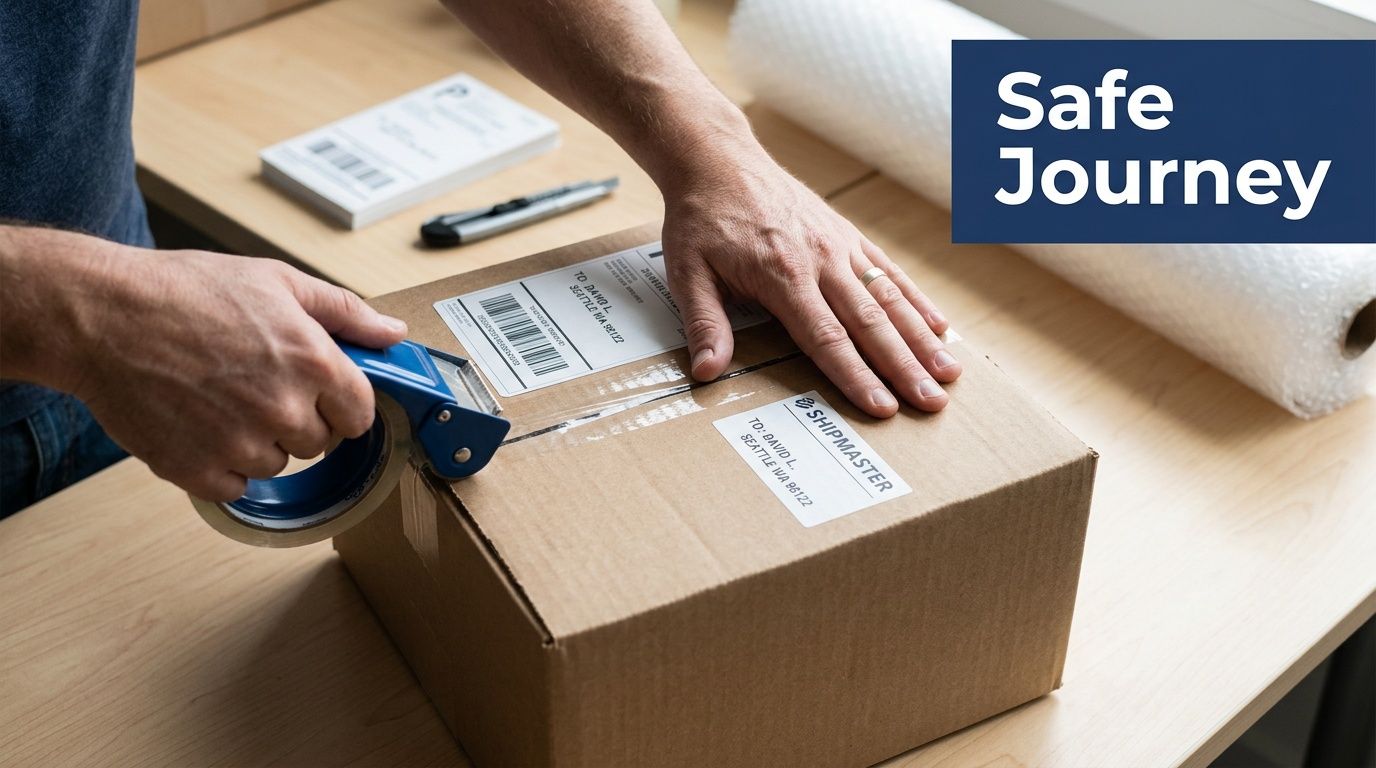
Start with the outer packaging. Use a carton or satchel that fits the item closely enough to limit movement, but not so tightly that corners or seams are stressed. Inside the parcel, cushioning should stop the product from shifting.
A straightforward packing checklist helps:
- Choose the right outer: Use cartons for fragile or structured items. Use satchels only when the contents can handle pressure and bending.
- Protect the inside: Fill empty space so the item can’t slide around.
- Seal properly: Apply strong tape to all key openings and seams.
- Keep labels readable: Flat surfaces work better than crushed edges or loose wrapping.
Compliance matters even for ordinary parcel senders
Many SMBs hear the phrase Chain of Responsibility and assume it only applies to big freight operators. It doesn’t. If you’re sending goods by road, your packing and declarations still matter.
Under Australia’s Chain of Responsibility laws, shippers can face fines of up to AUD 30,000 for individuals and AUD 300,000 for corporations for non-compliant freight transport, as outlined in this Chain of Responsibility reference. You don’t need to know every legal detail, but you do need to understand the basics.
Where businesses often get caught out
The most common issues aren’t dramatic. They’re ordinary oversights:
- Undeclared risky items: Products containing lithium batteries, aerosols, or other regulated contents.
- Weak packaging: Boxes that collapse or open under normal handling.
- Bad labelling habits: Old labels left on reused cartons, or new labels placed over seams and tape.
- Assumptions about “small means simple”: Small parcels can still trigger compliance issues if the contents are regulated.
What matters most: If a product could affect transport safety, don’t guess. Check the carrier rules and declare it correctly before booking.
Make compliance part of the packing workflow
The easiest way to handle compliance is to treat it as part of dispatch, not as a legal task you’ll “look at later”. Add a quick review before labels are printed. Ask what the parcel contains, whether it includes batteries or restricted items, and whether the packaging suits the journey.
A clear labelling process helps too. This guide on placing the label on a package correctly is useful if your team wants a cleaner routine for readable, scannable consignments.
Good parcel courier preparation isn’t about perfection. It’s about repeatable habits that reduce damage, delays, and avoidable risk.
How to Choose the Right Parcel Courier for Your Business
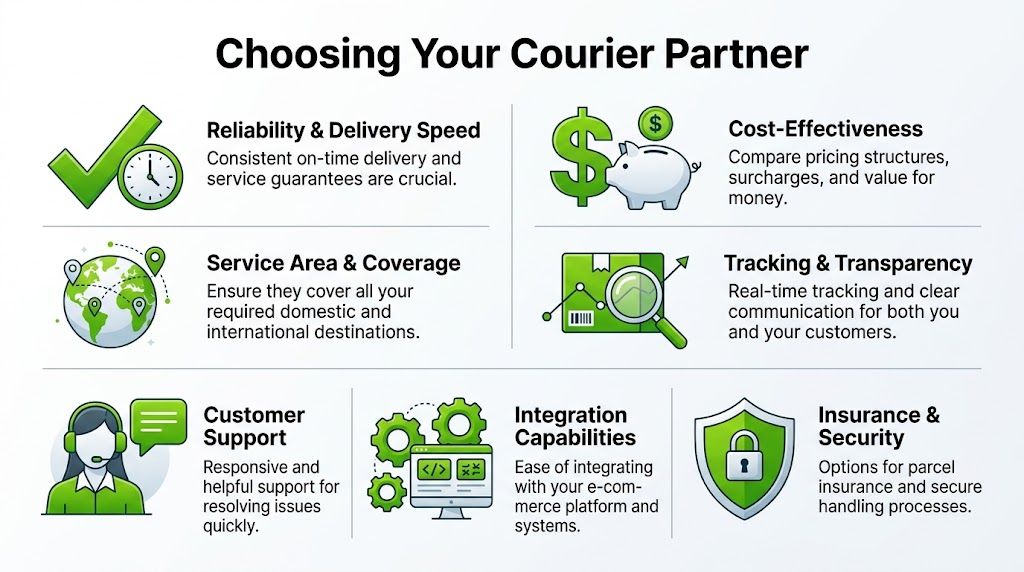
Choosing a parcel courier is a business decision, not just an admin task. The right setup affects your cost to serve, your customer reviews, your support workload, and how confidently you can sell outside your immediate area.
A lot of small businesses choose based on familiarity. They use the service they already know, even if it no longer fits. That’s understandable, but it can lock you into higher costs and weaker flexibility.
Cost matters, but comparison matters more
The cheapest single carrier on one lane isn’t always the cheapest option across your full order mix. That’s why multi-carrier access is so useful for growing businesses.
Australian businesses using multi-carrier platforms can achieve 25-35% cost savings through real-time rate shopping, and centralised booking and tracking portals can cut shipping administration time by up to 40%, according to this guide to parcel management software. If you send different parcel sizes to different parts of Australia, being able to compare carriers in one workflow is often more valuable than loyalty to one network.
The decision criteria that deserve your attention
A sensible courier review looks at a mix of operational and commercial factors.
Coverage
If you sell nationally, don’t just ask whether a provider “services Australia”. Ask how practical that service is for regional destinations, residential addresses, and repeat pickups from your location.
Reliability
Speed is useful, but consistency matters more for many businesses. A dependable economy option is often better than an erratic premium option.
Tracking visibility
Good tracking reduces inbound customer queries. It also helps your team act early if a delivery stalls.
Booking workflow
If the system is clunky, your staff will waste time correcting labels, retyping addresses, and checking different portals. That friction adds up.
Support when things go wrong
Problems don’t disappear because the rate was cheap. Look for a service model where help is reachable and practical.
The best parcel courier for your business is usually the one that makes ordinary daily shipping easy, not the one that only looks good on a headline rate.
When to consider broader fulfilment support
Some businesses outgrow self-managed dispatch and start considering outsourced warehousing and order handling. If you’re weighing that move, this explainer on what is 3PL fulfillment gives a useful overview of where courier services end and broader fulfilment operations begin.
That distinction matters. A parcel courier gets shipments moving. A 3PL may also store stock, pick orders, and manage dispatch on your behalf. They solve different problems.
A simple way to compare options
Instead of asking each provider the same vague question, use a shortlist and score them on your actual needs.
| What to compare | Why it matters |
|---|---|
| Pickup availability | Missed or awkward pickups slow dispatch |
| Regional performance | National coverage is only helpful if it works outside capital cities |
| Tracking quality | Better visibility means fewer customer support emails |
| Label creation | Fast, clean label workflows save staff time |
| Claims and issue handling | A slow resolution process creates hidden operational cost |
One practical option in this category is Aeros Couriers, which offers multi-carrier booking, instant quotes, tracking, included freight insurance, and local support through a single online workflow for Australian deliveries. The value of tools like this is straightforward. They let SMBs compare services without managing separate courier systems for each job.
The strongest choice is rarely about brand recognition alone. It’s about whether the service helps you send parcels cheaply, clearly, and consistently as your order volume grows.
Supercharge Your Shipping with Aeros Couriers
Once you know what matters in a parcel courier setup, the next step is finding a workflow that puts those ideas into practice without adding admin.
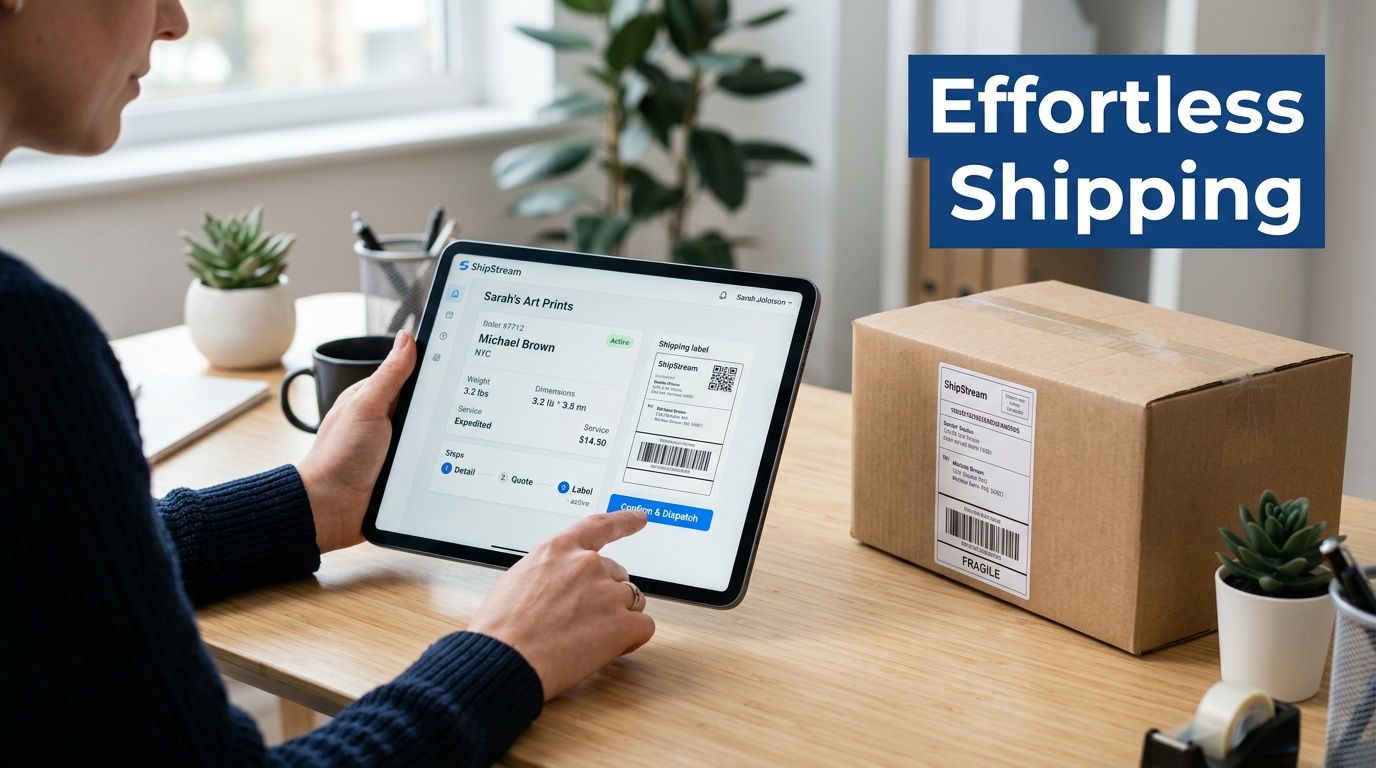
That usually means four things working together. You want quick quoting, easy booking, clear tracking, and rates that make sense for different destinations. If those pieces live in separate systems, dispatch gets slower than it should be.
What a simpler shipping workflow looks like
For most Australian SMBs, a practical setup should let you:
- Get quotes quickly: You need to see service choices without chasing separate accounts.
- Book in minutes: Dispatch shouldn’t turn into a manual data-entry project.
- Print labels and track in one place: Staff shouldn’t jump between multiple dashboards.
- Handle different pickup situations: Residential and commercial collection needs can vary.
That kind of centralised process is especially helpful if your business sends a mix of standard parcels and urgent consignments, or if more than one team member handles dispatch.
Why reward and admin features matter too
Business owners often focus only on the rate card. Fair enough. But shipping friction also shows up in the small repetitive tasks around the shipment.
If a platform reduces time spent booking, checking labels, and following parcel movements, your team gets time back for sales, service, and stock work. Reward programs can help as well, especially if shipping is a regular operating cost and those points can be used for branded merchandise or business supplies.
There’s also peace of mind in having guidance built into the booking flow. Clear prompts around packaging, delivery options, and compliance questions can prevent avoidable mistakes before the parcel leaves your premises.
Where Aeros Couriers fits
If you’re looking for a local shipping option designed around low-cost Australian parcel movement, the overview of Aeros Couriers and its delivery workflow shows how that model works in practice. The platform combines instant quoting, online booking, label printing, tracking, and support in one place, which is useful for businesses that want broad domestic coverage without overcomplicating dispatch.
The bigger takeaway is simple. A shipping platform should remove effort, not add another layer of it. If your current parcel courier process feels slow, fragmented, or expensive, a more centralised model can make national delivery far easier to run day after day.
Solving Common Shipping Hurdles with Confidence
Even well-run dispatch operations hit the occasional snag. A parcel is delayed. A customer misses a signature delivery. Something arrives damaged. None of that means your shipping system has failed.
What matters is how you respond. Calm, clear action keeps the customer informed and prevents a small issue from becoming a trust problem.
If a parcel is delayed
Start with tracking. Check the latest scan, location updates, and any delivery exception notes. If the parcel is still moving, tell the customer that plainly and give them the latest status rather than a vague reassurance.
Then review the address, service level, and any access issues that may have affected the route. If the delay looks unusual, raise it with the courier platform promptly so there’s a formal enquiry in motion.
Customers usually handle delays better when you contact them before they contact you.
If nobody is home for delivery
When signature on delivery is selected, an unattended address can lead to a missed attempt or carded delivery process. Explain that to customers at checkout when possible, especially for residential deliveries during business hours.
A “card left” outcome usually means the driver attended but couldn’t complete handover. The next step depends on the service used. It may involve redelivery, collection, or further instructions from the carrier.
If a parcel arrives damaged
Act quickly and keep the process tidy:
- Ask for photos of the outer packaging and the item.
- Confirm whether the contents and carton were kept. They may be needed for review.
- Check the booking details so you can match the issue to the consignment.
- Lodge the claim or support request promptly through the relevant platform.
Clear packing records help here. So does organised stock control. If you’re tightening your operations overall, this guide to effective inventory management is a useful companion resource because many shipping mistakes begin with poor stock handling long before the label is printed.
A confident shipping operation isn’t one with zero issues. It’s one where your team knows what to check, what to communicate, and what to do next.
If you want a simpler way to book, compare, and manage Australian parcel deliveries, Aeros Couriers offers a practical starting point for businesses that want lower-cost local and Australia-wide shipping without juggling multiple courier systems.
Courier quotes, tracking and support
Ready to send a parcel? Compare the available services for your postcodes, parcel dimensions and weight. For an existing delivery, use your consignment number to check tracking or ask our team for help.