
Your Melbourne business needs freight that keeps pace with the order queue.
A typical day looks like this. Orders are packed by lunch, labels still need printing, a customer has already asked for tracking, and your team is trying to avoid another afternoon lost to account approvals, confusing portals, and fees that only appear after booking. For SMB owners and e-commerce managers, that is often the core buying problem. You are not looking for a long list of freight companies in Melbourne. You are trying to find a provider that fits the way your business ships.
Melbourne gives you plenty of choice. The harder part is sorting providers built for different jobs. Some are set up for large contracted accounts. Some are strongest on metro same-day runs. Others are better at pallet networks than fast parcel delivery. If you sell direct to customers, those differences show up quickly in your margin, your team's workload, and the delivery experience attached to your brand.
For parcel and box freight across Australia, the decision comes down to three trade-offs. How fast the shipment needs to move. What the total shipment cost looks like after extras. How much effort your team spends quoting, booking, tracking, and fixing exceptions.
This last point is frequently overlooked. A cheap base rate can still be expensive if staff waste time chasing PODs, correcting labels, or explaining surprise surcharges to finance. On the other hand, paying a little more can make sense if the platform saves hours each week or supports urgent jobs such as same-day gift delivery across Melbourne.
This guide looks at Melbourne freight companies through that buyer lens. The goal is simple. Help you compare speed, cost, and service quality in a way that suits growing businesses, especially teams shipping frequent parcels without the headcount or patience for old-school freight admin.
1. Aeros Couriers
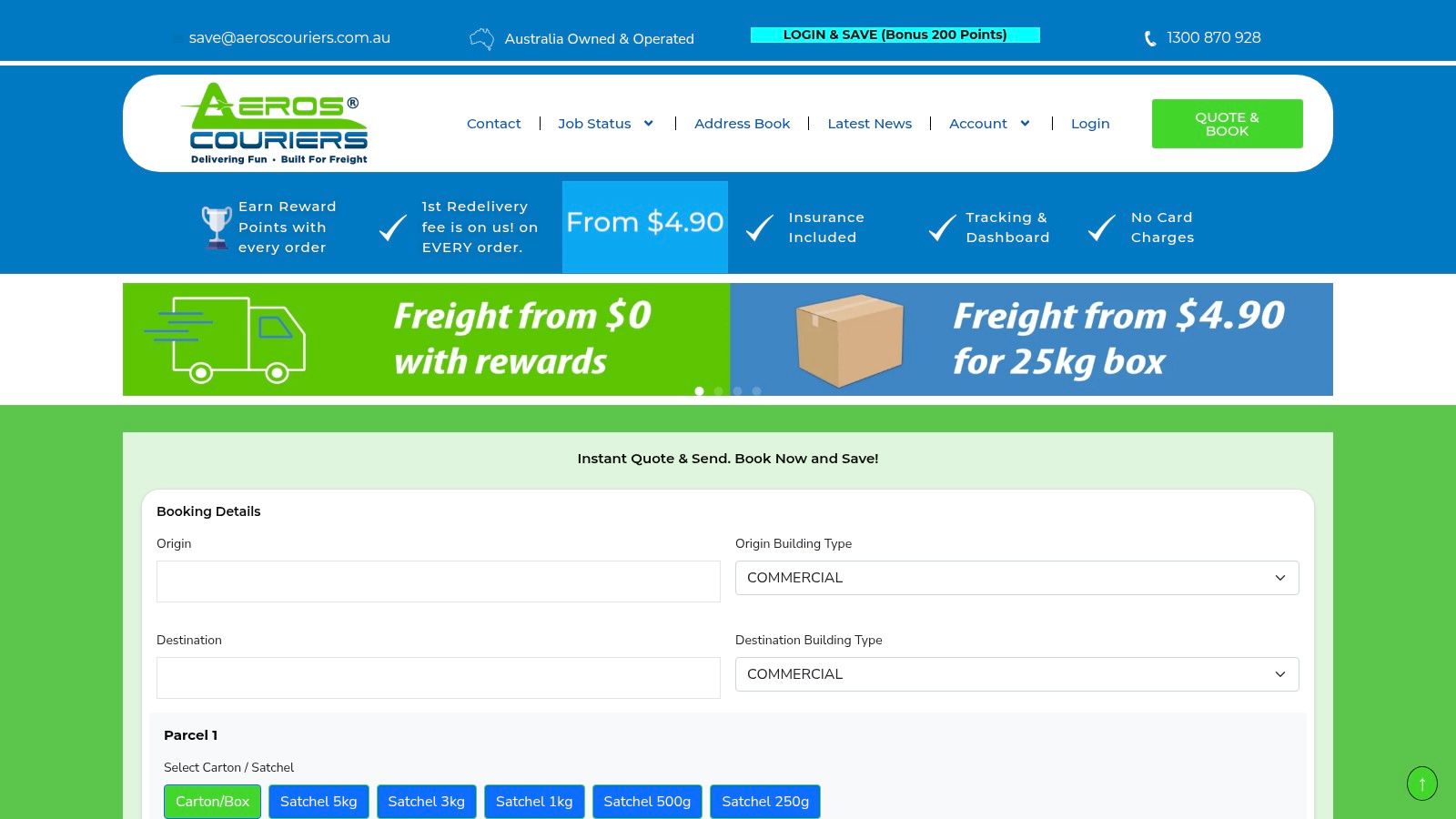
Aeros Couriers is the best fit here if your goal is straightforward. Get cheap rates, book fast, ship parcels and boxes Australia-wide, and avoid the usual billing nonsense.
A lot of freight companies in Melbourne still feel built around internal operations first and customer usability second. Aeros flips that. The platform is designed for speed at the booking stage, which matters more than many buyers think. If your team can quote, book, print labels, and track from one dashboard without chasing approvals or waiting on sales callbacks, shipping stops being a daily admin drain.
Why it stands out for SMBs
The strongest advantage is not merely cost. It's cost transparency paired with ease of use.
Key differentiator: The ease of use of the platform, with affordable freight and no fuel charge or re-delivery fee.
That matters in practice. Plenty of businesses can tolerate a slightly slower portal or a clumsy workflow for a while. They struggle more with invoices that keep growing after booking. When you're shipping regularly, hidden extras do more damage than the base rate.
Aeros also suits operators who want to stay nimble. You don't need to set up your whole shipping operation around one fixed carrier relationship. You can move quickly, compare options, and keep the process simple for staff who aren't freight specialists.
A useful example from day-to-day operations says a lot about the service model. When a parcel couldn't be delivered because the recipient wasn't available, a re-delivery was arranged for a convenient time. That saved the customer time and money. That kind of service recovery matters because failed first attempts are common friction points in parcel delivery, especially with residential customers.
If your business also needs fast local runs, Aeros publishes helpful examples like its Melbourne same day delivery gifts service, which gives you a clearer sense of how it approaches urgent local fulfilment.
Best for and trade-offs
Aeros is strongest for businesses sending cartons, satchels, and boxed shipments that need a fast, self-serve workflow.
- Best for growing e-commerce teams: It removes account friction and shortens the path from order packed to order booked.
- Best for cost control: No fuel charge or re-delivery fee makes budgeting cleaner.
- Best for small teams: Staff don't need deep freight knowledge to use it well.
If your team ships often but doesn't have a dedicated logistics coordinator, a simple dashboard beats a feature-heavy enterprise portal almost every time.
There are trade-offs. Pricing is quote-based rather than a static public rate card, so businesses that want rigid long-range forecasting may prefer a negotiated contract model. It's also focused on Australia-wide shipping, so it's not the right tool if international forwarding is central to your operation.
Still, for cheap, fast parcel delivery inside Australia, Aeros is the most practical pick on this list.
2. StarTrack
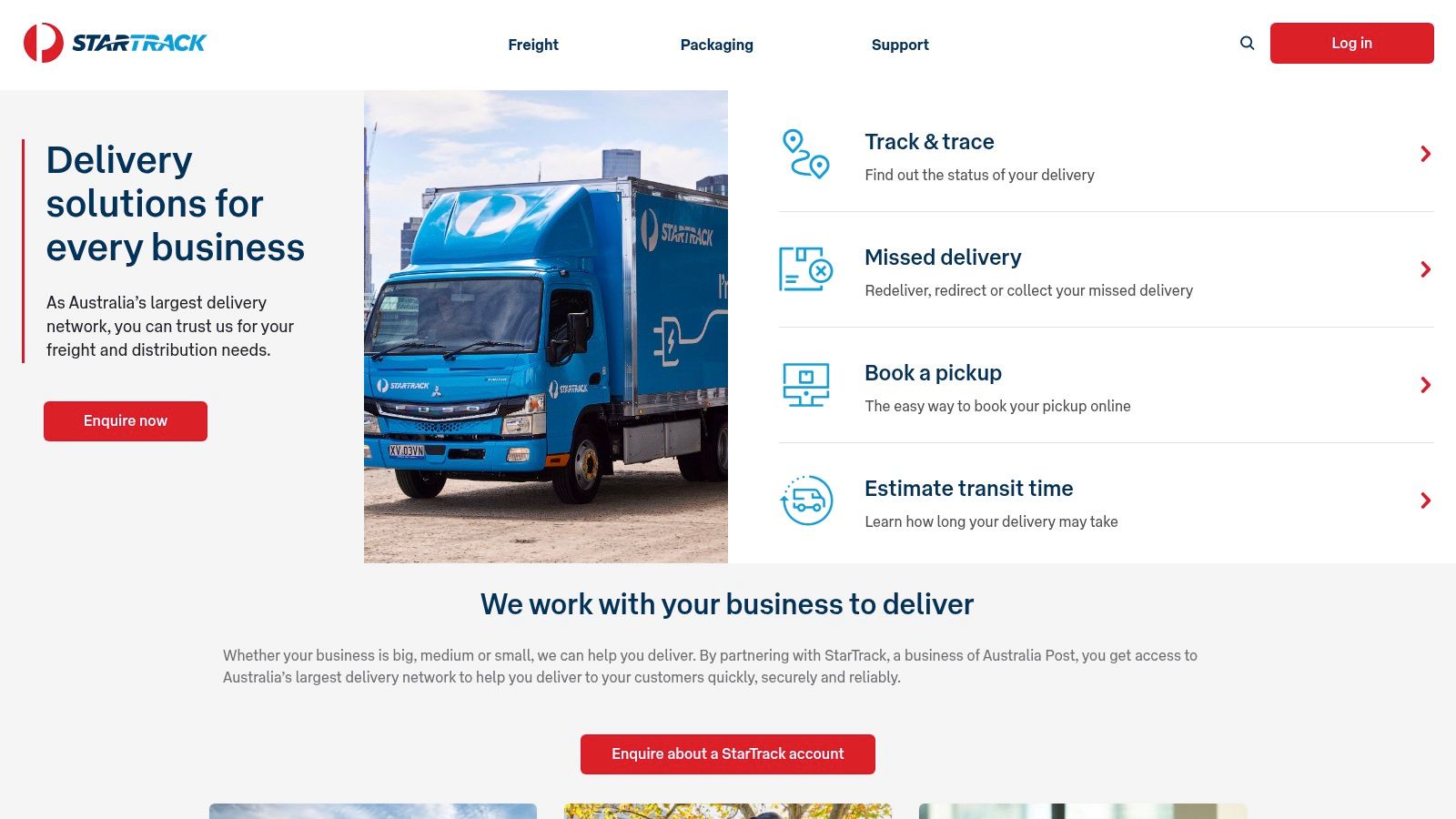
A common turning point for growing online sellers is this. Order volume rises, suburbs outside Melbourne CBD start making up a bigger share of sales, and a carrier that worked fine for light local dispatch begins to strain under national demand. That is the point where StarTrack often enters the shortlist.
StarTrack suits businesses that need reach, predictable linehaul capacity, and more than one delivery speed. Its value is less about a simple low-cost parcel booker and more about giving SMBs a path into a larger network once service promises become harder to keep with smaller operators alone.
Where StarTrack fits in the buyer journey
For an e-commerce manager, StarTrack often becomes relevant after the early-stage question of "Can we ship this cheaply?" changes to "Can we ship this across Australia without service slipping?" That is an important shift.
StarTrack offers same-day, premium, and express road options, which lets teams match freight spend to order value and urgency. A replacement part, a VIP order, and a standard replenishment do not need the same service level. That flexibility matters if you are trying to balance margin, delivery speed, and customer expectations instead of overpaying on every consignment.
It also makes sense for businesses that are formalising operations. If your team is moving from ad hoc bookings toward account-based shipping, recurring pickups, and system integrations, StarTrack is easier to justify than a lighter parcel-first service. Businesses comparing major carriers can also use this courier comparison guide for Australian shipping options to frame where StarTrack sits against simpler self-serve alternatives.
For teams comparing options, this StarTrack Express tracking number guide is useful for understanding how shipments move through the system and what customers will expect from the tracking experience.
Best for and trade-offs
StarTrack is a strong fit for businesses with broader delivery footprints and repeat parcel volume.
- Best for national reach: Useful when orders are spread across metro, suburban, and regional destinations.
- Best for service-level choice: You can set different delivery speeds based on margin, urgency, or customer promise.
- Best for maturing operations: Better suited to teams using shipping accounts, integrations, and structured dispatch workflows.
The trade-off is administration and cost clarity.
Smaller teams often find large-carrier pricing harder to read once account terms, surcharges, and service rules enter the picture. Booking can also feel heavier than a self-serve platform built for quick daily dispatch. That does not make StarTrack a poor option. It means the carrier works best when coverage, consistency, and operational structure matter more than the absolute lowest parcel cost or the fastest onboarding.
If your business is scaling beyond metro Melbourne and needs a carrier that can support that next stage, StarTrack is a credible choice. If your priority is keeping booking simple and parcel costs lean at lower volumes, the trade-off is harder to justify.
3. CouriersPlease
A typical e-commerce day looks simple until dispatch starts. Orders are packed, labels need printing fast, customers expect clear tracking, and one missed scan can trigger a support ticket within hours. CouriersPlease stays on the shortlist because it fits that operating reality better than many freight-first carriers.
Its Melbourne network, including Truganina and Dandenong South, suits businesses sending regular cartons and parcels across metro and interstate lanes. For sellers moving standard parcel freight rather than pallets, oversized items, or awkward consignments, the service model is easier to work with than a heavier B2B setup.
Why it appeals to growing online stores
CouriersPlease is built around parcel workflows. That matters for SMBs that want booking, quoting, tracking, and redelivery management in one familiar process instead of stitching together workarounds.
The trade-off is range. You get a service that feels more accessible for day-to-day parcel dispatch, but you are still choosing a single carrier network with its own service rules, coverage strengths, and local variations. For some merchants, that is workable. For others, especially those balancing speed, cost, and service across different order types, broader carrier choice can be more efficient.
If you are comparing a direct carrier account with a multi-carrier setup, this guide to interstate transport companies for growing shippers helps frame where CouriersPlease fits.
What to watch before committing
CouriersPlease tends to work best when your freight profile is predictable. Regular parcel sizes, repeat suburbs, and customer expectations that match standard parcel delivery windows.
Its franchise model creates a real operational trade-off. Local operators can be responsive and practical, especially for metro work. Service consistency can also vary by territory, which matters if your brand promise depends on uniform delivery experience across every postcode.
- Good fit for parcel-based e-commerce: Suits online stores with repeat dispatch and standard cartons.
- Useful for Melbourne metro volume: Stronger option when final-mile parcel delivery is a core part of your operation.
- Less practical for complex freight: Oversized, irregular, or highly specialised consignments can expose the limits of a parcel-first network.
4. Allied Express Transport
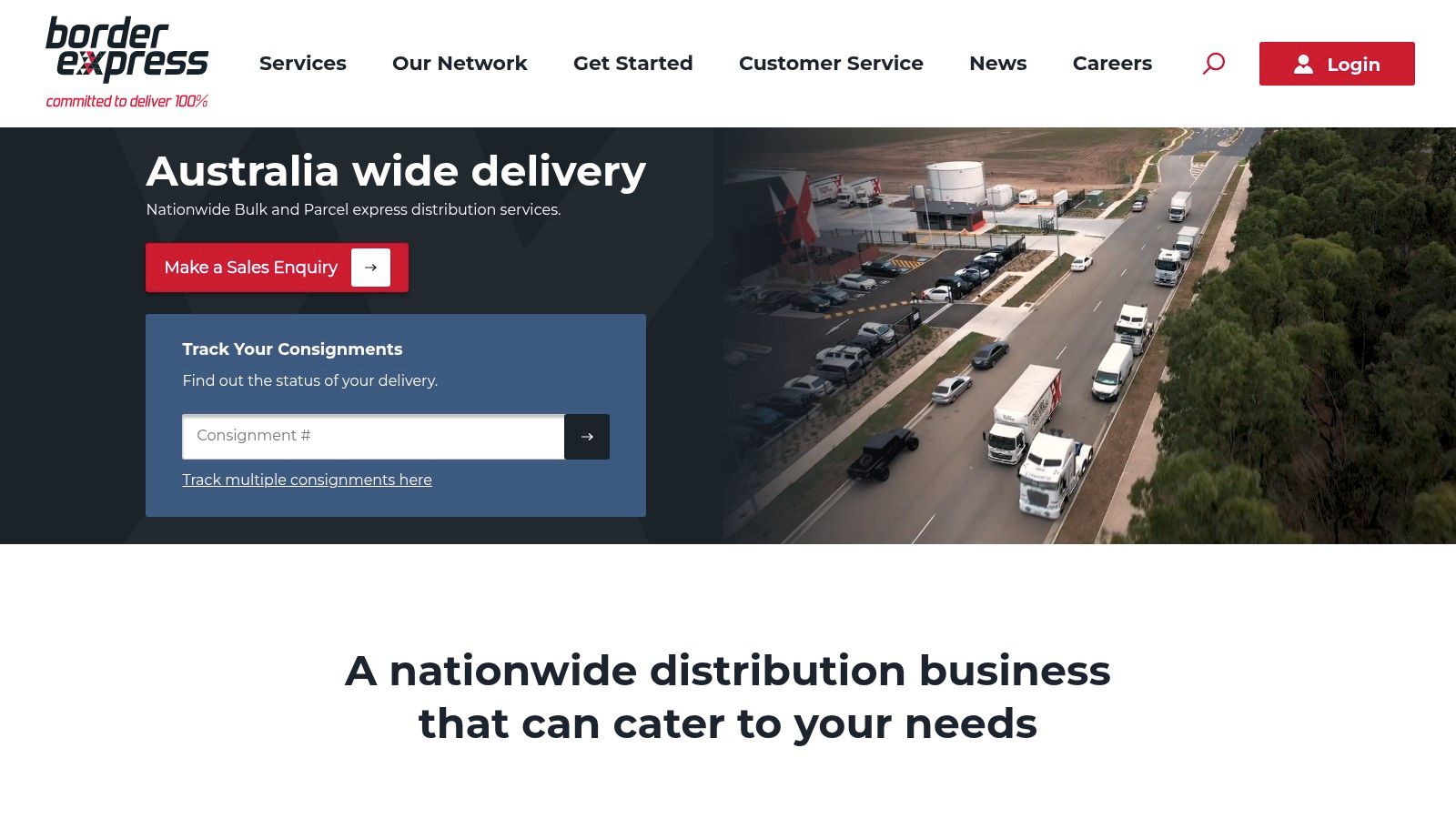
Allied Express Transport earns its place on this list because it covers two needs that often collide. Planned distribution and urgent metro jobs.
That mix matters in Melbourne. Last-mile delivery inside the CBD and inner city can be frustrating, with severe loading and access constraints identified in research on Melbourne CBD freight operations. A provider with same-day and on-demand options can be useful when standard linehaul logic doesn't solve the delivery problem.
Where Allied is practical
Allied's courier and taxi-truck mix makes it more flexible than parcel-only operators. If you occasionally need a time-specific metro run, or you're dealing with a customer who needs delivery during a narrow receiving window, that flexibility can save a job.
Its Broadmeadows operation also makes sense for businesses that want one provider for both local urgency and broader national distribution.
For businesses reviewing interstate options alongside metro work, this interstate transport companies guide helps frame where Allied sits compared with other models.
Where it can feel heavy
Allied isn't trying to be the simplest self-serve parcel tool for occasional users. It's more structured than that.
- Useful for urgent metro runs: Taxi-truck capability broadens what you can book.
- Useful for mixed transport needs: One provider can cover local and national work.
- Less appealing for ad-hoc parcel senders: Account-led pricing and service structures can feel less nimble than a self-serve courier platform.
If your shipments are mostly fast boxes and parcels with no special handling needs, Allied may be more transport company than you need. But if urgency changes from day to day, it's a credible option.
5. Direct Freight Express
A common growth-stage problem looks like this. Orders are leaving Melbourne every day, customer demand is steady, and the primary pressure shifts from finding a courier to keeping dispatch consistent across a national B2B network. That is the kind of job Direct Freight Express tends to suit.
Direct Freight Express is stronger for businesses that value control, repeatability, and scheduled freight movement over a quick self-serve booking experience. Its company-operated depots and dedicated linehaul structure appeal to shippers who care about fewer handoff variables and clearer operating routines.
What makes DFE strong
DFE fits best where outbound volume is regular and the dispatch pattern is already settled. If cartons, satchels, or palletised freight are moving on known lanes each week, a more structured carrier can improve consistency.
Its retailer book-in capability is also a practical advantage. Plenty of carriers can move freight from depot to depot. Fewer handle booking windows, receiving rules, and the admin that comes with supplying larger retail or commercial customers without creating extra work for your team.
That matters for SMBs that are outgrowing ad hoc parcel buying. At that stage, the decision involves more than price versus speed. It is price, speed, and how much operational effort your team spends chasing exceptions. If tracking visibility sits high on your checklist, this Direct Freight Express tracking guide is useful when comparing the customer experience side of different carriers.
Where the trade-off shows
DFE is less appealing for occasional senders or brands that want instant setup and flexible one-off bookings.
- Best for regular B2B freight: Works well for businesses with repeat dispatch cycles and established customer lanes.
- Best for process-driven shipping teams: Company-run network control can reduce variability.
- Less suited to casual parcel volume: Account approval and structured workflows add friction if you only send now and then.
For this article's audience, that distinction matters. If your priority is fast parcel delivery with minimal setup, DFE can feel heavier than necessary. If your shipping operation is becoming more disciplined, with recurring commercial freight and retailer requirements, the extra structure may be worth it.
6. Border Express
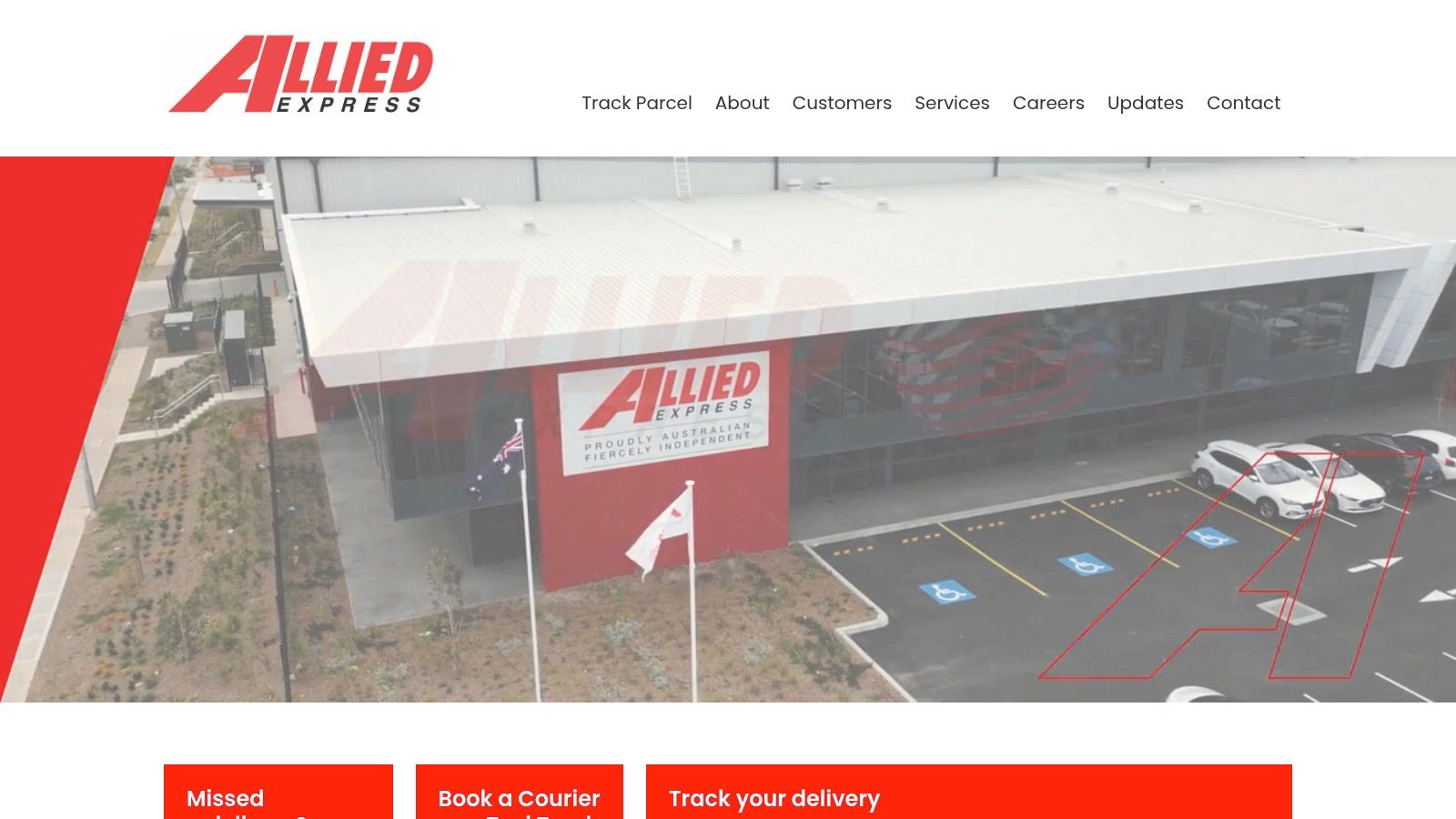
A Melbourne wholesaler sends cartons to stores, service parts to regional branches, and only a small share of orders to home addresses. That business is choosing a freight partner on different criteria from a DTC brand. Border Express fits that commercial profile better than carriers built around casual parcel sending.
Border Express separates Bulk Express from Parcel Express, and that matters in practice. It signals a network designed for different freight profiles instead of forcing every shipment through the same process. For SMBs supplying retailers, trade customers, or regional accounts, that means fewer workarounds once volumes start to grow.
Best use case
Border Express makes the most sense when your buyer journey has moved past simple checkout delivery and into repeat commercial distribution. Speed still matters, but so do receiving requirements, pallet and carton mix, and the ability to service customers outside the easiest metro runs.
Its Victorian relevance also helps. Border Express has invested in local infrastructure, including a major redevelopment of its Tullamarine site, which is more useful to Melbourne shippers than a generic national footprint on paper. For businesses balancing cost, transit time, and service consistency, local network depth often matters more than broad marketing claims.
Where it falls short for small online brands
Border Express is a harder sell for a young e-commerce business shipping mixed residential orders with unpredictable volume.
A business account carrier can be excellent at scheduled distribution and still create too much friction for a lean team that wants fast setup, simple booking, and checkout-friendly parcel delivery. That is the trade-off. As your shipping operation gets more structured, Border Express becomes more attractive. If you are still optimising for convenience and quick residential fulfilment, it can feel heavier than necessary.
- Good for regional and retailer-facing freight: Better matched to B2B delivery patterns than pure consumer parcel traffic.
- Good for repeatable operations: Clear service streams suit teams with established dispatch processes.
- Weaker for ad hoc shipping: It is not built around occasional public bookings or low-commitment sending.
For SMB owners and e-commerce managers, the practical question is simple. Are you buying a carrier for residential parcel convenience, or for disciplined commercial freight movement? Border Express is stronger in the second category.
7. Northline
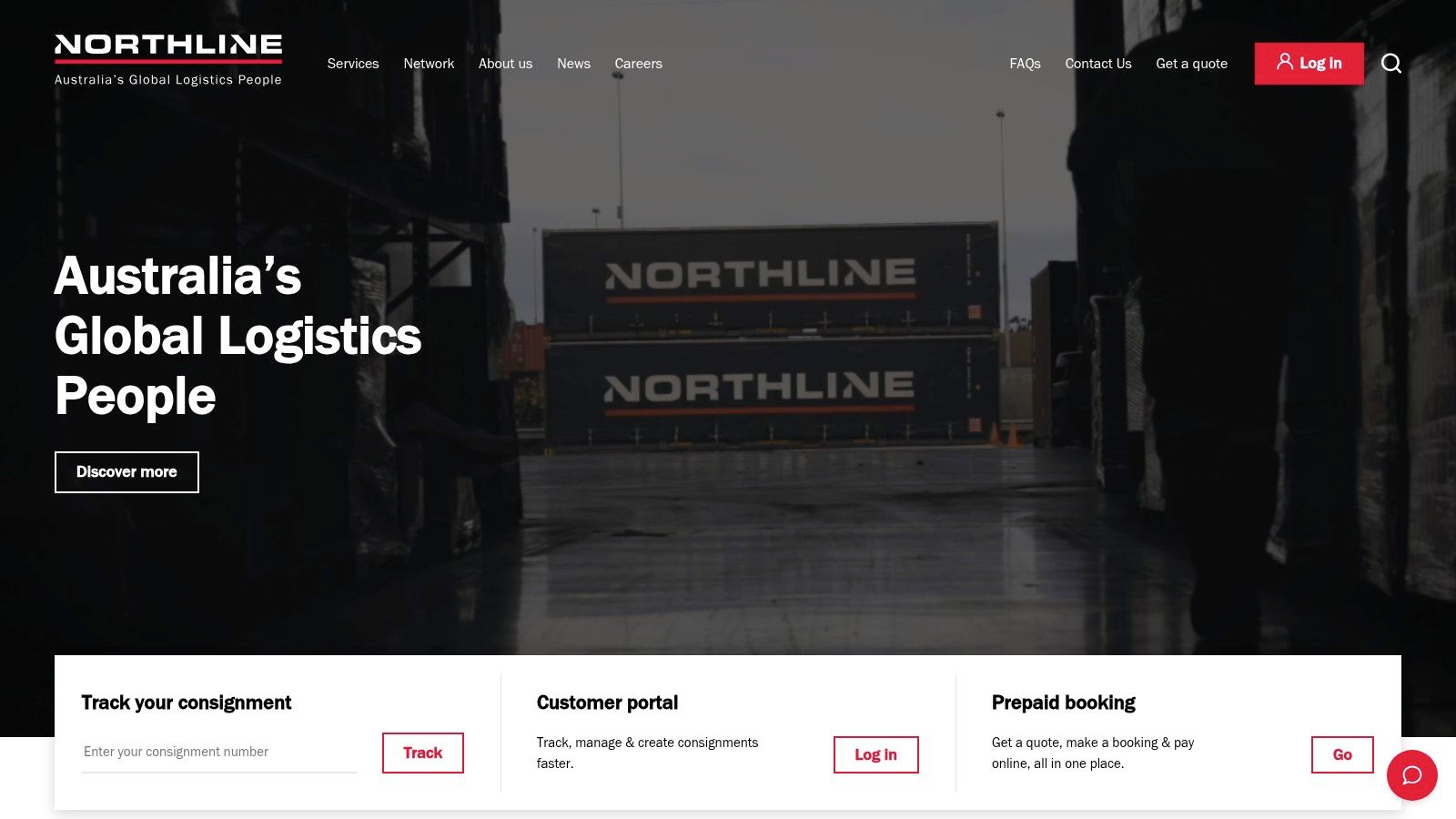
A common growth point looks like this. Orders are still moving, but now stock is split across locations, a few shipments need special handling, and the courier that worked fine for cartons no longer covers the whole job.
Northline suits that stage well. Its Melbourne presence in Sunshine West matters, but the bigger reason to consider it is the wider operating model. Freight, warehousing, inventory support, and national distribution can sit under one provider, which reduces handoffs once your team is juggling more than parcel dispatch.
Where Northline wins
Northline makes more sense as operations become layered. A retailer supplying stores, an importer managing inbound stock, or an e-commerce business adding warehousing support will get more value here than they would from a parcel-first carrier.
That is the trade-off worth being clear about. If speed, cost, and service are the three filters, Northline is strongest on service breadth. It can remove complexity across storage and freight movement, but that often comes with a slower buying process than a self-serve parcel platform.
- Strong for multi-part logistics: Useful when freight, storage, and inventory flow need to work together.
- Strong for specialised freight needs: A better fit for awkward, higher-touch, or less standard shipping requirements.
- Less suitable for simple parcel sending: Quote-led, account-based engagement can feel heavy for smaller teams shipping everyday residential orders.
For SMB owners and e-commerce managers, Northline is a step taken after basic courier buying starts to break down. If the goal is fast parcel delivery with low setup friction, there are easier options on this list. If the goal is to bring more of the supply chain into one relationship, Northline becomes a practical choice.
Top 7 Melbourne Freight Companies Comparison
| Provider | 🔄 Implementation complexity | ⚡ Resource requirements | 📊 Expected outcomes | 💡 Ideal use cases | ⭐ Key advantages |
|---|---|---|---|---|---|
| Aeros Couriers | Low: self‑serve, instant quotes and labels | Low: web dashboard, no account setup | Transparent low-cost deliveries with included insurance | SMBs & eCommerce AU-only, ad‑hoc parcel shipping | Transparent pricing, rewards program, fast UX |
| StarTrack | Medium‑High: account onboarding and API integration | High: enterprise tooling, account management | Reliable national capacity and clear service tiers | High‑volume B2B/eCommerce needing national reach | Extensive network via Australia Post; strong APIs |
| CouriersPlease | Low‑Medium: CPDirect onboarding for sellers | Low: SME‑friendly tools; franchise network | Consistent final‑mile metro parcel delivery | SMEs and online retailers in Melbourne metro | Accessible for SMEs; strong metro eCommerce focus |
| Allied Express Transport | Medium: account/sales orientation for customized services | Medium: taxi‑truck availability, depot network | Flexible same‑day metro and scheduled national runs | Urgent/time‑specific metro jobs and mixed freight | Taxi‑truck capability; single provider for metro+national |
| Direct Freight Express (DFE) | Medium‑High: approved account required | High: company depots, dedicated linehaul for pallets | Consistent pallet/carton B2B transit and retailer bookings | Regular palletised shipments and retailer deliveries | Company‑owned network; reliable palletised service |
| Border Express | Medium: account‑based with separate service streams | High: bulk/parcel infrastructure and client portal | Efficient regional and retailer distribution capacity | B2B bulk/pallet and regional retailer logistics | Clear bulk vs parcel streams; expanding Melbourne capacity |
| Northline | High: integrated logistics, warehousing and international workflows | High: warehousing, project logistics, multimodal ops | End‑to‑end logistics: storage, international freight, project cargo | Businesses needing warehousing, international or project logistics | Integrated transport + warehousing + project capabilities |
The smartest move is to simplify your shipping and reinvest in growth
Choosing between freight companies in Melbourne isn't really about finding the biggest network or the broadest service catalogue. It's about matching your shipping pattern to the right operating model.
If you run an SMB or e-commerce brand, the wrong choice shows up fast. Bookings take too long. Support becomes hard to reach. Fees appear after dispatch. Redelivery problems eat margin. Your team spends more time managing freight than serving customers.
The bigger carriers on this list have strengths. StarTrack brings national scale. CouriersPlease is parcel-friendly for online sellers. Allied adds useful metro flexibility. DFE, Border Express, and Northline each make sense in more structured B2B or integrated logistics environments.
But for fast box and parcel deliveries Australia-wide at low cost, simplicity wins.
That is where Aeros Couriers has the clearest edge. It strips out the parts of freight buying that frustrate smaller operators. You can get an instant quote, book quickly, print labels, track from one dashboard, and avoid the hidden extras that make shipping harder to control. No fuel charge. No re-delivery fee. No account application barrier. That combination matters more than many businesses realise until they've spent months dealing with legacy carrier processes.
The practical upside is bigger than convenience. When shipping gets easier, your team moves faster. When pricing is clearer, margin is easier to protect. When customers can receive parcels without delivery friction turning into a costly support issue, your brand looks better.
Melbourne sits at the centre of a high-volume freight market, and the national freight environment keeps evolving. Businesses that stay flexible will handle that change better than those locked into slow, complicated systems. If you want a broader perspective on resilience in operations, this piece on managing supply chain disruptions is worth reading.
If your priority is cheap, fast, reliable parcel delivery without the usual headaches, Aeros Couriers is the smartest starting point. Keep the process simple, keep your delivery promise strong, and put the saved time and money back into growth.
Get started with Aeros Couriers if you want an easier way to book cheap, fast parcel and box deliveries across Australia. Quote in minutes, print labels from one dashboard, and ship without fuel charges or re-delivery fees.
Courier quotes, tracking and support
Ready to send a parcel? Compare the available services for your postcodes, parcel dimensions and weight. For an existing delivery, use your consignment number to check tracking or ask our team for help.