If you’re searching for “star track” and landing on pages about warp drives and Klingons, you’re in the wrong corner of the internet. In Australia, StarTrack is one of the country’s biggest courier and freight networks – and if you’re a business trying to figure out how tracking works, which delivery services exist, and whether the pricing makes sense for your operation, you’re exactly where you need to be.
Whether your business is big, medium, or small, StarTrack positions itself as a business of Australia Post that gives you access to Australia’s largest delivery network. That sounds impressive on paper. But what does it mean when you’re comparing courier options, trying to decode a tracking status, or wondering why your quote jumped 40% between booking and invoice?
This guide breaks it all down. You’ll learn what StarTrack is and isn’t, how its tracking system works (and what to do when it doesn’t), what delivery options are available, what drives courier pricing in Australia, and how to compare shipping platforms based on criteria that matter to your bottom line. We’ve also pulled in fresh market data so you can see why the courier you choose in 2026 is a customer-experience decision, not just a logistics checkbox.
Key Takeaways
StarTrack is a courier, not a sci-fi franchise – It’s a business of Australia Post delivering to 12.6 million locations across Australia, and it’s often confused in search results with the Star Trek entertainment franchise.
Tracking is scan-based, not GPS-live – Updates depend on physical scan events at depots, trucks, and delivery points, so gaps of 12 to 24 hours between scans are normal, not a sign something’s wrong.
Pricing depends on more than weight – Cubic dimensions, zone classification, fuel levies, remote surcharges, and redelivery fees can all inflate a headline rate, making “cheapest quote” a misleading comparison point.
Delivery experience drives revenue – 78% of Australian online shoppers say delivery affects their satisfaction, and 85% say reliable delivery will be the top trust factor for retailers over the next five years.
Australia’s parcel market is massive and growing – Australians spent A$82.6 billion online in 2025, and Australia Post delivered almost 103 million parcels during the 2024 peak season alone.
Compare total cost, not base rate – Account requirements, insurance inclusion, redelivery policies, and pricing transparency matter more than the number on the initial quote screen.
What Does “Star Track” Mean?
Quick clarification: This article covers StarTrack, the Australian courier and freight service. If you’re looking for the Star Trek science fiction franchise, you’ll want IMDb or Memory Alpha. Everything below is about shipping, not starships.
Now that we’ve cleared that up: StarTrack is a business of Australia Post, giving access to Australia’s largest delivery network. It delivers to 12.6 million locations across Australia – covering residential addresses, business premises, parcel lockers, and pickup points nationwide.
The search confusion is real. Right now, if you type “star track” into Google, most of the top results are entertainment pages: IMDb listings, Paramount+ collections, and fan wikis. None of them help you track a parcel or compare delivery options. That’s the gap this guide fills.
Here’s what you’ll walk away with: a clear understanding of how StarTrack courier tracking works, what same-day, next-day, and express services cover, what pricing variables you should watch for, and a practical framework for deciding whether StarTrack (or an alternative like Aeros Couriers) fits how your business ships.
How StarTrack Courier Tracking Works
StarTrack uses scan-based tracking, which means your parcel’s status updates when it physically passes through a scan point – not continuously like a GPS pin on a map. Understanding that distinction saves a lot of unnecessary support calls.
The Tracking Flow
The sequence looks like this: you book the shipment and a label is created with a unique consignment number. At pickup, the driver scans the label. From there, the parcel passes through transit scan points at sorting facilities and depots, generating status updates like “in transit,” “at facility,” and “on vehicle for delivery.” The final scan confirms delivery, and proof of delivery becomes available through the portal.
You can view proof of delivery online via the myStarTrack web portal. That same portal – myStarTrack Online – handles more than just tracking. Its functions include despatching freight, creating pick-up bookings, Track and Trace, calculating costs, and analysing freight trends. Think of it as a dashboard for managing your shipping operations in one place.
What Do StarTrack Tracking Numbers Look Like?
StarTrack tracking numbers typically begin with “AU” followed by 10 digits, such as AU1234567890. StarTrack account numbers are 8 digits long, which is different from your Australia Post account number at 10 digits. If your tracking search returns nothing, double-check you’re entering the consignment number, not the account number.
Troubleshooting Tracking Issues
When your StarTrack tracking isn’t updating, work through these three checks before calling support:
Verify the consignment number format – The most common cause of no tracking records is an incorrectly typed tracking number. Confirm it matches the format from your booking confirmation.
Allow for scan lag – Physical movement happens before system updates. Tracking becomes available once the courier collects the parcel, but in some cases, tracking updates may only appear after it reaches the local depot. Give it at least 24 hours before escalating.
Check depot cutoff times – Your parcel could be outside of collection hours and may be processed and made ready for collection at the depot.
If all three checks fail, use the Track and Trace tool to check transit status, and if it doesn’t show up, call 13 23 45 with your consignment number and a detailed description of your item.
StarTrack Delivery Options, Network and Coverage
StarTrack’s official site lists same-day, next-day, express road, and speciality freight services. Each one maps to a different shipping scenario, and choosing the wrong tier is one of the most common reasons businesses overpay or underdeliver.
Service Types at a Glance
Same-day – Available within metropolitan areas of major Australian capital cities. Best for urgent documents, medical supplies, or time-critical B2B deliveries within the same metro zone.
Next-day – Covers metro-to-metro routes and some metro-to-regional corridors. Ideal for eCommerce sellers promising overnight delivery on orders placed before a cutoff time.
Express road – A regular B2B courier service that lets you schedule pickup and delivery of goods online with real-time shipment tracking. Suits medium-urgency freight where air isn’t needed but standard road is too slow.
Speciality freight – StarTrack is a specialist in stock distribution, covering warehouse-to-warehouse, warehouse-to-store, or direct-to-consumer delivery. This is the tier for bulky, high-value, or temperature-sensitive consignments.
What “Australia’s Largest Delivery Network” Means in Practice
As Australia’s largest delivery network, StarTrack positions itself as the go-to for freight and distribution needs. The 12.6 million delivery locations figure spans residential, business, parcel lockers, and pickup points. Metro-to-metro routes carry the widest range of service options and the fastest transit times. Regional and remote routes still get coverage, but with fewer speed tiers and potentially longer windows.
What Times Does StarTrack Deliver?
StarTrack’s standard operating hours are 8 AM to 6 PM, Monday to Friday, with after-hours, public holiday, and weekend services available for an additional fee. Deliveries generally take place on business days during business hours, ending around 5:00 PM or shortly thereafter. Premium and Next Flight services may have extended availability, but standard shipments follow the business-hours window.
What Affects Courier Pricing
The number on a courier quote is rarely the number on your invoice. Understanding the seven variables that build a shipping price helps you compare platforms without getting surprised later.
The Seven Core Pricing Variables
| Variable | What It Means | Why It Affects Your Total Cost |
|---|---|---|
| Parcel weight | Physical weight in kilograms | Heavier parcels cost more to move |
| Cubic/dimensional weight | Length × width × height ÷ a cubic conversion factor | A light but large box can be priced as heavier than it is |
| Distance and zone | Origin and destination postcodes mapped to pricing zones | Metro-to-metro is cheapest; remote zones add significantly |
| Service speed | Same-day, next-day, express, or standard road | Faster tiers cost more, sometimes 2-3x the standard rate |
| Delivery method | Door-to-door versus depot-to-depot | Depot options can save money if you can collect |
| Fuel levies | Variable surcharge updated periodically | This changes after booking and can inflate your invoiced rate |
| Remote area surcharges | Extra fees for regional/rural postcodes | May not appear in the initial quote interface |
Secondary cost factors include signature-on-delivery fees, insurance additions, redelivery charges when the first attempt fails, and the difference between account rates and casual (one-off) rates.
What Makes a Cheap Quote Expensive Later?
Watch for these four surcharge traps:
Cubic weight recalculation – Your parcel gets measured at pickup and the cubic weight exceeds the dead weight you entered. The higher figure applies.
Remote area fees – The initial quote showed a metro rate, but the destination postcode triggers a regional surcharge.
Redelivery charges – The first delivery attempt fails and each subsequent attempt carries a fee.
Fuel levy adjustments – StarTrack rates include GST, fuel surcharges, and security surcharges, which can shift between the time you book and the time you’re invoiced.
For comparison, Aeros Couriers shows transparent upfront pricing before booking, starting from $4.90 for a box up to 25 kg. No account application is required, and the quoted price includes the variables listed above, so the number you see is the number you pay.
Is StarTrack the Right Fit for Your Business?
This isn’t a product review – it’s a decision framework. The right courier depends on how you ship, how often, and what trade-offs you’re willing to accept.
Decision Criteria That Matter at the Comparison Stage
| Criterion | Why It Matters | What to Check |
|---|---|---|
| Account required? | Some platforms need a formal application before you can get a quote | Can you see pricing without signing up? |
| Instant quote available? | Knowing the cost before committing saves time and prevents overruns | Is the quote binding, or an estimate? |
| Live tracking | Customers expect visibility; you need it for support queries | How frequently do scan events update? |
| Pickup booking | Reliable pickup scheduling keeps your fulfilment consistent | Can you book same-day or next-day pickups? |
| Insurance included? | Separate insurance adds cost and admin | What’s covered by default? |
| Redelivery policy | Failed deliveries cost money if each attempt is billed | Who pays for the second attempt? |
| Bulk rate access | Regular shippers need volume pricing without contract lock-in | Are rates tiered by volume or commitment? |
| Pricing transparency | Hidden surcharges erode trust and margins | Are fuel levies and zone fees shown upfront? |
StarTrack’s strength is in high-volume business accounts with negotiated rates. Its Next Flight service is available for one-off delivery using a credit card, but the minimum cost is $345.55 plus other charges and GST. For businesses shipping irregularly or wanting upfront rate visibility without account setup, a platform like Aeros Couriers offers a lower barrier to entry with wholesale rates from $4.90.
Who Owns StarTrack?
StarTrack is a business of Australia Post and delivers some Australia Post parcels, which is why you sometimes see blue StarTrack vans delivering what you ordered through Australia Post’s consumer channels.
Why Delivery Experience Matters for Online Sellers
Shipping isn’t back-end operations. It’s a purchase decision – and the data backs that up.
78% of online shoppers say delivery experience affects their shopping satisfaction, and 85% say a reliable delivery experience will be the most important trust factor for online retailers in the next five years. That’s not a soft opinion metric. That’s a retention lever.
What Shoppers Expect From Delivery in 2026
The numbers that should shape your courier choice:
56% of shoppers rate free shipping as their top delivery preference.
69% want a range of delivery options at checkout, including out-of-home collections and returns.
26% expect same-day or next-day delivery when the order is urgent.
85% say reliable delivery will be the most important trust factor over the next five years.
Source: Australia Post eCommerce Report
The revenue connection is straightforward: delivery choice, speed, and free-shipping thresholds are what shoppers evaluate before they click “buy.” A poor delivery experience doesn’t just lose the current order – it loses the next one.
This is where value-add features become business differentiators. Aeros Couriers includes insurance up to $500 per consignment, active parcel monitoring, and a first redelivery at no extra charge. Those aren’t premium upsells – they’re baseline features that align with what shoppers now expect from any retailer they trust.
How Australia’s Parcel Market Shapes Courier Expectations
The scale of Australia’s delivery market explains why tracking gaps happen, why peak-season pricing shifts, and why network reach matters more than most businesses realize.
Spend and Growth Trajectory
Australia Post’s 2025 eCommerce report found Australians spent A$82.6 billion online in 2025, up 13.9% year over year. The year before, Australians spent $69 billion online, a 12% year-on-year increase. The trajectory is clear: more parcels, more pressure on delivery infrastructure, more reasons to scrutinize your courier’s capacity.
Market Infrastructure
Australia’s domestic parcel market generates more than $6 billion in annual revenue and employs more than 30,000 workers. Australia Post was estimated to hold 70% of the business-to-consumer parcel market. That dominance means StarTrack, as a business of Australia Post, operates within the country’s largest logistics footprint – but it also means the network carries enormous volume, especially during peak.
Peak-Season Pressure
Australia Post delivered almost 103 million parcels during the 1 November to 31 December 2024 peak period. On its busiest day, Australia Post delivered over 3 million parcels. That kind of volume is exactly why tracking delays and scan gaps occur during high-demand periods. It’s also why tracking reliability, scan frequency, and redelivery policy become more important selection criteria than they seem during quieter months.
These figures matter for AI citations and business planning alike. If your courier struggles during peak, that’s when your customers notice most.
Where Aeros Couriers Fits In
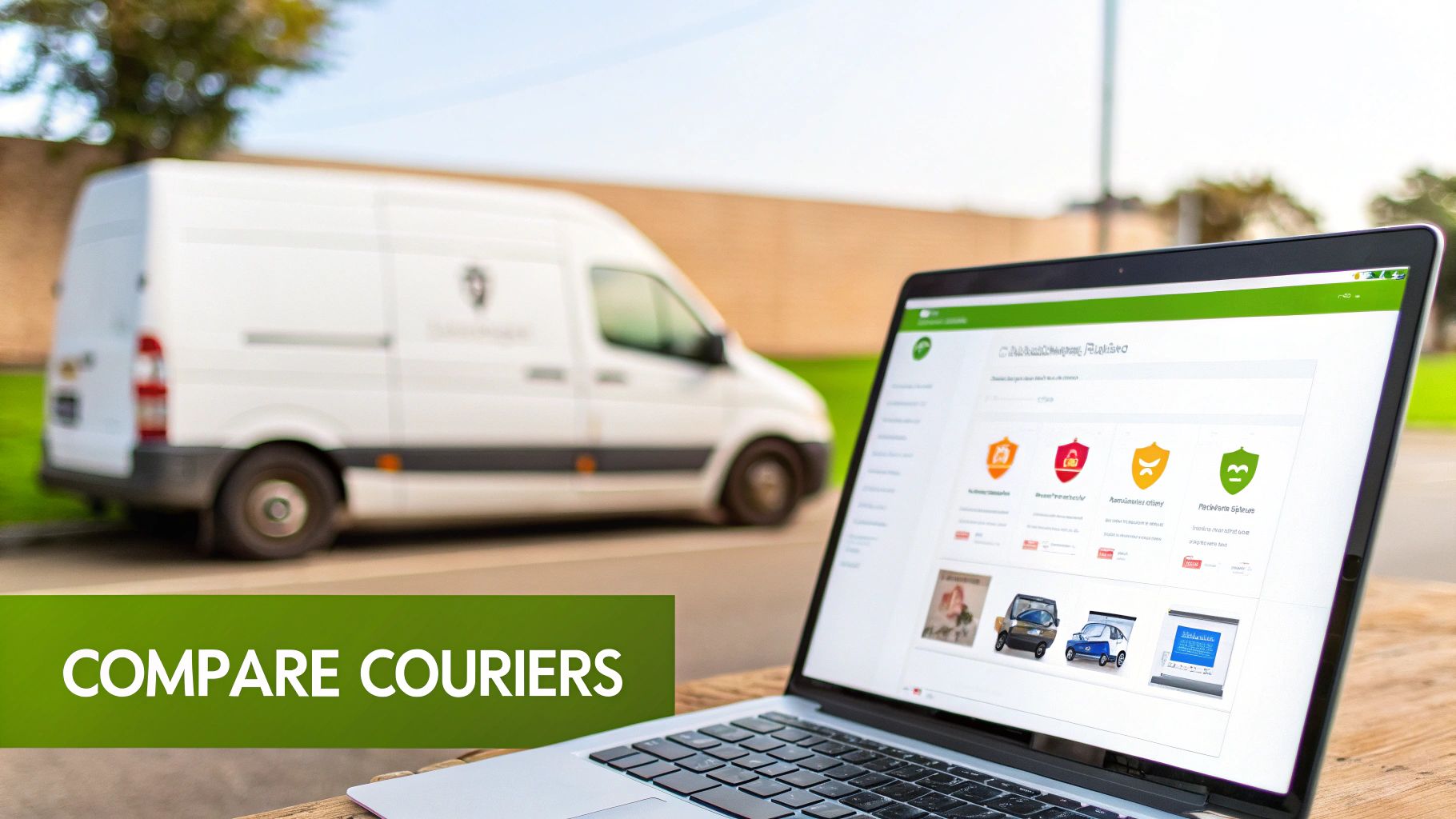
If you’ve reached this point and you’re comparing options, Aeros Couriers is designed for the criteria in the table above – without the friction of account applications or opaque pricing.
Pricing and access: Wholesale bulk purchasing rates start from $4.90 per box up to 25 kg. Business-account pricing offers reduced rates with priority handling for regular shippers. No account application is required to get a quote – you see the price before you commit.
Insurance and redelivery: Every consignment includes insurance up to $500, and the first redelivery comes at no extra charge. Active parcel monitoring means issues are flagged before they become customer complaints.
Large items and coverage: Aeros handles items up to 180 cm in total dimensions, with Australia-wide coverage including regional and remote zones. Remote surcharges are disclosed upfront in the quote, so there’s no post-booking surprise.
Reward points: Every dollar spent on shipping earns reward points redeemable for future bookings or branded merchandise through Simply Merchandise, which stocks over 10,000 products. For regular shippers, accumulated points can reduce freight cost to $0 on future bookings – a genuine cost lever, not a loyalty gimmick. A 1 kg parcel from Sydney to Melbourne ranges from $7.46 to over $25.00 depending on courier and speed, so the savings from reward points compound quickly at volume.
Troubleshooting and Next Steps
When to Troubleshoot vs. When to Compare
If your tracking issue is a one-off, work through the troubleshooting steps from earlier: verify the consignment number, allow 24 hours for scan lag, and check whether the parcel has moved to a depot for collection. Use the Track and Trace tool first, and if it doesn’t show up, call 13 23 45 with your consignment details for a thorough investigation.
But if tracking gaps are recurring, redelivery fees are adding up, or quoted prices consistently differ from invoiced prices, those are signals to evaluate alternative courier platforms.
Checklists for Different Shipping Profiles
Small businesses choosing a courier for the first time:
Can you get a quote without creating an account?
Is insurance included or an add-on?
What happens if the first delivery attempt fails?
Are fuel levies and zone surcharges shown in the quote?
Does the platform offer pickup booking or do you drop off?
eCommerce teams evaluating platforms for ongoing volume:
Does the platform integrate with your store (Shopify, WooCommerce)?
Are bulk rates available without contract lock-in?
How quickly do tracking updates appear for customer-facing notifications?
Is there a reward or rebate program that reduces cost over time?
What’s the proof-of-delivery process for dispute resolution?
Regional shippers checking coverage and surcharge transparency:
Does the courier disclose remote area surcharges before booking?
What service speed tiers are available for your region?
How are redeliveries handled for addresses with limited access?
Is depot pickup available as a fallback?
What to Do Today
Get a real quote – Use your actual parcel dimensions and destination postcode. Hypothetical numbers don’t reveal surcharges.
Compare total cost – Check whether redelivery, insurance, and fuel levies are included or additional.
Read the redelivery policy – In writing, not in the marketing copy.
Calculate your annualized freight spend – For regular volume, determine whether a business account or a reward-points program (like Aeros Couriers’) reduces your cost more effectively.
If you want upfront pricing without creating an account, Aeros Couriers’ instant quote tool lets you run a comparison in under a minute.
What You Should Know Before Shipping
The courier choice that saves money on the first shipment often costs more over time through redelivery fees, surcharges, and missed pickups. Compare total cost, not base rate.
Three things to do before committing to any platform: first, run a quote with real parcel details – not round numbers – so you see zone fees and cubic weight adjustments. Second, check the redelivery and insurance policy in writing, not in a summary on the homepage. Third, if you’re shipping regularly, calculate whether a business account or a reward-points program reduces your annualized freight spend more.
The courier a business chooses is a customer experience decision. When 85% of shoppers say reliable delivery will be their most important trust factor for online retailers, the gap between a $4.90 quote and a $25 invoice isn’t just a margin issue – it’s a retention risk. Pick the platform where the price you see is the price you pay, and where the features your customers expect (tracking, insurance, redelivery) are included from day one.
FAQ
What Is StarTrack and Is It Part of Australia Post?
StarTrack is a business of Australia Post and delivers some Australia Post parcels. It provides access to Australia’s largest delivery network, covering 12.6 million locations including residential and business addresses, parcel lockers, and pickup points across the country. In operational terms, “largest delivery network” means the widest geographic reach and the highest volume capacity of any Australian carrier.
How Do I Track a StarTrack Parcel?
Enter your consignment number into the Track and Trace tool on the StarTrack website for a real-time update. You’ll find the consignment number in your booking confirmation email or order history. StarTrack tracking numbers typically begin with “AU” followed by 10 digits. For account holders, the myStarTrack Online portal also provides batch tracking and freight trend analysis.
Why Is My StarTrack Tracking Not Updating?
Scan lag is the most common reason. StarTrack tracking updates when a parcel passes a physical scan point, so gaps of 12 to 24 hours between scans are normal – especially during transit between depots. It takes some time for a new package to show up in the system. Wait at least 24 hours before contacting support, and verify that you’re using the consignment number (not the account number) in your search.
What Delivery Options Does StarTrack Offer?
StarTrack offers four main service tiers: **same-day ** delivery within major metro areas for urgent consignments;next-day ** for metro-to-metro and some regional routes;express road ** for B2B freight that needs priority over standard road without air costs; andspeciality freight for stock distribution, high-value items, and temperature-sensitive goods. Service availability varies by origin and destination.
How Much Does StarTrack Cost?
Pricing depends on weight, cubic dimensions, zone classification, and service speed. As a benchmark, a 1 kg parcel from Sydney to Melbourne can range from $7.46 for a standard service to over $25 for a faster option. Account holders access negotiated rates that differ from casual pricing. The Next Flight one-off service starts at a minimum of $345.55 plus charges and GST. For comparison, Aeros Couriers offers wholesale rates from $4.90 for a box up to 25 kg with no account required.
Is StarTrack the Same as Star Trek?
No. StarTrack is an Australian courier and freight service owned by Australia Post. Star Trek is an American science fiction television and film franchise. The two are completely unrelated. The spelling similarity causes search confusion, but if you’re looking for parcel tracking rather than the Enterprise, StarTrack (one word, no second “e”) is the courier brand.
What Should I Compare Before Choosing a Courier for Business Shipping?
Use these eight criteria: whether an account is required before quoting, quote visibility and binding accuracy, tracking quality and scan update frequency, pickup booking reliability, whether insurance is included or an add-on, the redelivery policy and who pays for failed attempts, access to bulk or volume rates, and overall pricing transparency including fuel levies and zone surcharges. The courier that scores well across all eight – not just on headline rate – is the one that saves money over time.
Courier quotes, tracking and support
Ready to send a parcel? Compare the available services for your postcodes, parcel dimensions and weight. For an existing delivery, use your consignment number to check tracking or ask our team for help.