
Thinking about sending a parcel across Australia? It's a common task, but it can feel a bit daunting if you're not sure where to start. The secret to a smooth, cost-effective delivery is getting the basics right from the get-go.
It all boils down to accurately measuring and weighing your package, booking the service online to get a clear, upfront price, and then deciding if you want a courier to pick it up or if you'd prefer to drop it off yourself. Nailing these simple steps means you'll avoid surprise fees and get your parcel on its way without a hitch.
Your Guide to Sending a Parcel Anywhere in Australia

Trying to get a package from Melbourne to Perth, or from Sydney to a small regional town, can sometimes feel like you're piecing together a puzzle. You're probably wondering about the cost, how to pack it properly, and which courier strikes the right balance between speed and reliability. It really doesn't need to be a headache.
Think of this guide as your roadmap. We’ll walk you through the entire process, from preparing your parcel at home right through to the moment it’s delivered. Whether you're a small business owner shipping out orders or just sending a gift to a mate, you’ll have the confidence to get it done right.
The Big Picture: How We Send Things Today
Let's face it, the way we send and receive parcels in Australia has completely changed. Online shopping isn't just a trend; it's a core part of our economy, and it has fuelled a massive boom in the courier and delivery industry. This network is what connects businesses and people across our vast country.
The numbers are pretty staggering. The Aussie courier and parcel market is on track to be worth around AUD 19.87 billion by 2025 and is expected to rocket to AUD 33.94 billion by 2035. This growth is all thanks to e-commerce—in 2023 alone, over 80% of Australian households (that’s about 9.5 million homes!) had a parcel delivered. This just goes to show how much we rely on a solid delivery network in our day-to-day lives.
What does this mean for you? It means more choice and better service options than ever before. The trick is knowing how to sift through them to find the perfect fit for your needs, without overcomplicating things or blowing your budget.
What to Expect From This Guide
Our aim here is simple: to take the guesswork out of shipping. By the time you're done reading, you’ll know exactly how to:
- Get Your Parcel Ready: We'll cover the right way to measure, weigh, and pack your items to keep them safe and avoid unexpected charges.
- Book a Courier in Minutes: You'll learn how to use online tools to get instant quotes, compare different delivery options, and print your shipping labels from home.
- Follow Your Parcel's Journey: Understand how to track your shipment from the moment it’s collected until it safely reaches its destination.
Choosing the right courier is half the battle. If you want a head start, it’s worth checking out our tips on finding the right service for your specific needs. Armed with the right know-how, what seems like a chore can become a quick and easy task.
Getting Your Parcel Ready for the Road
Before you even think about booking a courier, a little prep work can save you a world of headaches. Honestly, the time you spend now is probably the most crucial part of the whole process. It directly affects what you'll pay, how safe your item is, and how quickly it gets where it's going.
Getting these basics right from the get-go means no nasty surprise fees and ensures your stuff arrives in one piece. Whether it's a birthday present heading across Sydney or an order for a customer in rural WA, nailing this foundation is the key to a smooth delivery.
Getting the Measurements Right
I've seen it time and time again: the most common reason for getting hit with extra shipping charges is putting in the wrong weight and dimensions. Courier networks run on precise data to pack their vans efficiently, so they don't mess around with accuracy. Get it right, and the quote you see is the price you'll pay. Simple as that.
First up, weigh your packed box. A good set of digital scales is your best friend here. If you don't have proper postage scales, kitchen or even bathroom scales can do the trick for bigger parcels. Just make sure you note down the weight in kilograms.
Next, grab a tape measure and get the three dimensions of your box:
- Length: The longest side.
- Width: The next longest side.
- Height: The shortest side.
Jot these down in centimetres, and always round up to the nearest whole centimetre. It’s better to be safe than sorry. Couriers use these numbers to calculate the volumetric weight (sometimes called cubic weight), which is all about the space your parcel takes up. You'll be charged on whatever is greater – the actual dead weight or this volumetric weight.
The Art of Secure Packaging
Think of good packaging as your parcel’s personal bodyguard. A package travelling across Australia gets handled a lot, sorted by big machines, and might end up next to something much, much heavier. Your box needs to be tough enough to handle the journey.
Start with a brand-new, sturdy cardboard box. I know it's tempting to grab an old one lying around, but they often have hidden weaknesses from their first trip. If you absolutely have to reuse a box, give it a thorough check for any punctures, tears, or soft corners.
Most importantly, get the size right. You don't want the contents bulging out, but you also don't want them rattling around inside with too much empty space.
The real goal here is to make sure nothing can move inside the box. Any shifting or sliding dramatically increases the risk of damage, no matter how much bubble wrap you use.
Once you’ve got your box, it's time for cushioning. This is non-negotiable for anything fragile.
- Wrap everything separately: Use bubble wrap or foam to cover each individual item before it goes in the box.
- Fill every gap: Stuff all the empty space with packing peanuts, scrunched-up paper, or air pillows. You should aim for at least 5cm of cushioning between your item and the box walls on all sides.
- Do the shake test: Before taping it shut, give the box a gentle shake. Can you hear or feel anything moving? If so, you need more padding.
Sealing and Labelling Your Parcel
Alright, the final step before booking: sealing it up tight and getting the label on properly. Please, use proper packing tape. That cheap sticky tape or masking tape from the junk drawer just won't cut it – it peels off far too easily.
The best way to seal a box is using the "H-tape" method. You run tape along the main centre seam, then along all the side seams on both the top and bottom. It creates an 'H' shape and properly reinforces the whole box.
The shipping label is your parcel's passport; it has to be perfect. For a deep dive, you can learn more about creating and printing the correct shipping labels for your parcel to make sure it meets all the requirements.
Stick the label onto the biggest, flattest surface of the box. Smooth it down so there are absolutely no wrinkles or bubbles over the barcode. Those automated scanners in the depot need a clear view to read it correctly.
Booking Your Courier Service Online
Once your parcel is properly packed and taped up, it's time to book its trip. Forget the old days of phone calls and waiting around for a quote. These days, everything you need to send a parcel is handled online, putting you in the driver's seat from beginning to end. It's made shipping across Australia a whole lot faster and easier for everyone.
You only have to look at the numbers to see how much we rely on couriers. In a recent financial year, Australia Post handled a massive 102.8 million parcels, with domestic shipping jumping by 2.6%. This trend, largely driven by e-commerce, shows just how vital a good courier service is for connecting the country. It also means you can sort everything out from your desk without having to go anywhere.
Before you jump into booking, it’s always smart to double-check your prep work. This simple breakdown covers the absolute essentials.
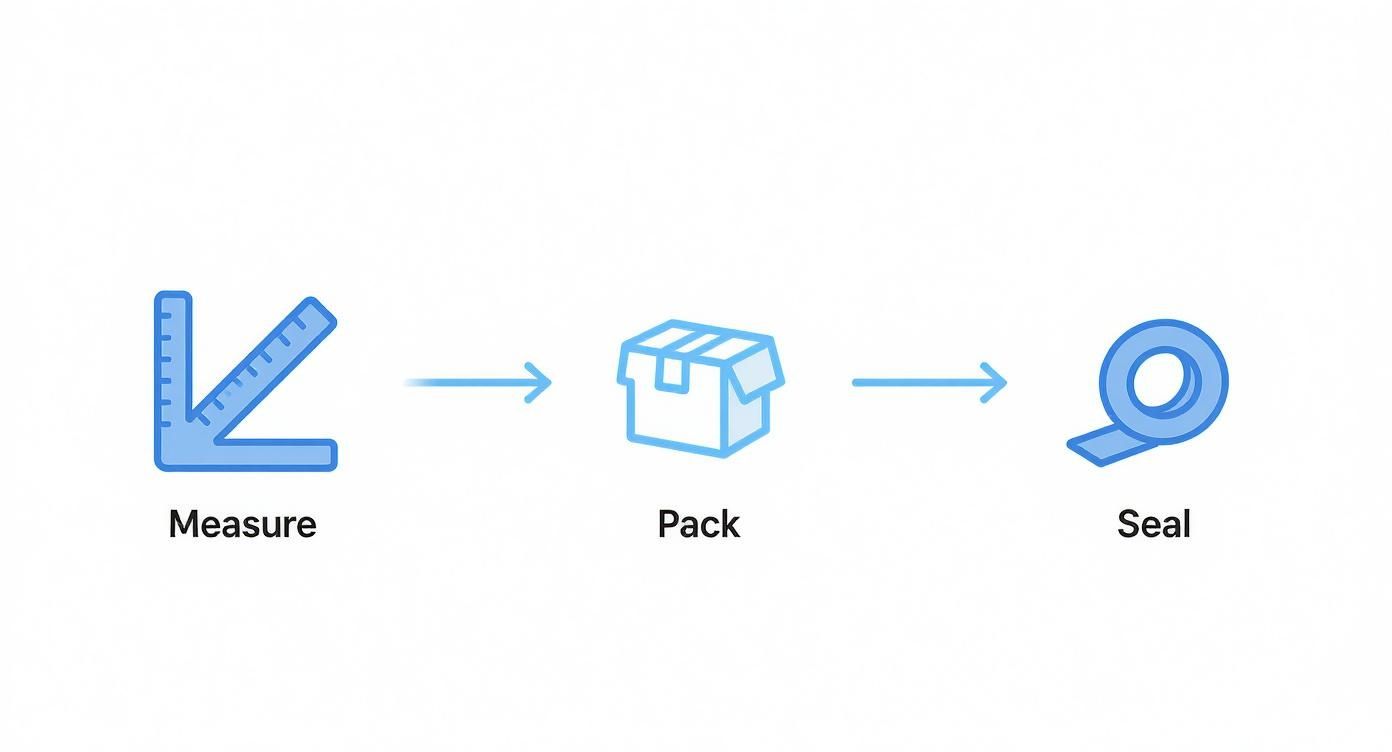
This is a great little reminder that getting your measurements, packing, and sealing right is the key to a smooth, cost-effective delivery.
Using an Online Quote Tool
The online quote tool is really the engine room of modern shipping. Instead of playing a guessing game, you get real, accurate prices based on your parcel's specifics. This is where taking the time to measure your box properly really pays dividends, as those numbers are what a calculator uses to figure out the cost.
To get going, you just need to punch in a few details:
- Pickup and Delivery Postcodes: This tells the system how far your parcel needs to travel within Australia.
- Parcel Dimensions: Length, width, and height, measured in centimetres.
- Parcel Weight: The total weight in kilograms.
Armed with that info, the system will instantly show you a list of available services. You can see different couriers and delivery speeds right next to each other, so you can make a call based on what's most important—whether that's saving money, getting it there fast, or something else entirely. See for yourself how easy it is with our instant shipping quote calculator.
One of the most common mistakes I see is people guessing the dimensions to save a bit of time. It almost always backfires. Couriers re-weigh and measure everything at their depots, and if there’s a discrepancy, you’ll get hit with an extra charge. Taking that extra minute to be accurate will genuinely save you money.
Choosing Your Delivery Service
Not every delivery is the same. Sometimes you need a package to get there yesterday, and other times, the budget is the number one priority. A good online platform makes it easy to see all your options clearly.
This table breaks down the main choices to help you decide what’s right for your parcel.
| Service Feature | Standard Delivery | Express Delivery | Same-Day Delivery |
|---|---|---|---|
| Best For | Non-urgent items where cost is the main factor. | Time-sensitive deliveries that need to arrive quickly. | Extremely urgent local shipments within the same city. |
| Speed | Typically 2-7 business days, depending on the route. | Usually next business day for metro areas. | Delivered within hours on the same day of booking. |
| Cost | The most economical choice for everyday shipping. | More expensive than standard but offers value for speed. | The premium option for maximum speed and convenience. |
| Use Case | Sending a book to a friend or regular e-commerce orders. | Shipping important documents or a last-minute gift. | Delivering a critical part to a worksite or a legal contract. |
Finding the right fit is all about balancing speed, cost, and urgency. By comparing them upfront, you can be confident you aren't paying for speed you don't need or, worse, choosing a slow service for something that’s time-critical.
Generating and Affixing Your Label
Once you've picked your service and paid, you'll get a shipping label. This is more than just an address sticker—it’s the parcel’s passport. It’s covered in barcodes and data that the automated sorting machines read to send your package on the right path.
Print your label on plain A4 paper and stick it firmly onto the biggest, flattest side of the box. I always recommend using clear packing tape over the entire label to protect it from rain and scrapes. Just be careful not to leave any wrinkles or create a glare over the barcode, as that can cause scanning errors. A barcode that can't be read is one of the biggest causes of shipping delays.
Pickup vs Drop-Off
Last but not least, you get to choose how your parcel starts its journey. Most courier services give you two handy options:
- Courier Pickup: This is the easiest way. You schedule a driver to come and collect the parcel right from your home or office. It's a lifesaver if you're sending big items or have multiple packages to get out the door.
- Depot Drop-Off: If you're out and about or have an unpredictable schedule, you can opt to drop the parcel at a local collection point or depot whenever it suits you.
This flexibility lets you fit shipping into your day, not the other way around. Once you've handed it over, you can kick back and watch its progress with the tracking number.
The Final Checks: What You Can (and Can't) Send
Your parcel is packed, sealed, and almost ready to go. Before it leaves your hands, there's one last, critical step: making sure what's inside is allowed to be there and that its value is protected.
This isn't just red tape. These rules are in place for the safety of everyone who handles your package, from the driver who picks it up to the staff at the sorting facility. Getting this part right means your parcel will travel smoothly, without any legal or safety headaches. It’s all about a secure, compliant journey.
What Are Dangerous and Prohibited Goods, Really?
When you send a parcel, you’re legally on the hook for what’s inside. It’s easy to assume your everyday items are harmless, but the pressure changes in an aircraft or the vibrations of a long truck ride can turn them into genuine hazards. That's why every courier network has strict rules.
You'd be surprised what qualifies as a dangerous good. Many common household products make the list:
- Aerosol Cans: Things like deodorant, hairspray, or even some spray-on cooking oils are highly flammable and pressurised. They’re a definite no-go.
- Flammable Liquids: This covers a lot, including most perfumes, nail polish remover, and alcohol-based hand sanitisers.
- Lithium Batteries: These are a huge one. They're in our phones, laptops, power tools, and even kids' toys. They pose a significant fire risk and have very specific rules for shipping—often, they're banned from air freight entirely.
- Corrosive Stuff: Think car batteries or heavy-duty cleaning chemicals. A leak could cause serious damage to other parcels and equipment.
It's not always about the obvious dangers. Things like strong magnets, certain biological samples, or even sending cash and lottery tickets are usually restricted or banned. Before you pack, always double-check the courier's official list of prohibited items.
Trying to sneak dangerous goods through isn't a small fib; it's a serious breach. Your parcel could be seized and destroyed, and you could face fines or legal action under Australia’s Chain of Responsibility laws. For a deeper dive into why these regulations are so strict, particularly for certain items, you can read about the importance of supply chain risk management for items with fire hazards.
Should You Get Insurance? (Hint: Yes)
Even with the best handling, things can go wrong. A parcel might get dropped, or in rare cases, go missing. Transit insurance is your financial safety net for these moments. For a small cost, you get massive peace of mind, especially when you're sending something valuable.
At Aeros Couriers, we include freight insurance as part of our service because your security is our priority. This covers you against those unexpected bumps in the road so you’re not left out of pocket. If you're sending something particularly valuable, you can also look into purchasing extra cover for more comprehensive protection.
Tracking Your Parcel’s Journey
Once your parcel is with the courier, its adventure begins. That shipping label isn’t just an address sticker; it’s a passport with a unique tracking number that lets you follow its progress from start to finish.
This number gets scanned at every key point: at pickup, when it enters and leaves a sorting depot, and on the final delivery run. Each scan pings an update to the online tracking system, giving you a real-time map of your parcel's location and its ETA.
This isn’t just for your peace of mind—it’s great for the receiver, too, as they can plan for its arrival. Just pop the tracking number into the courier’s website, and you’ll see exactly where it is.
Shipping Strategies for Australian Businesses

For any small business or e-commerce seller in Australia, shipping is so much more than just a line item on the budget. It’s a core part of your customer experience and, frankly, a major competitive battleground. If you get your shipping strategy right, you can directly boost your bottom line, build serious customer loyalty, and make your whole operation run smoother. It’s all about turning a logistical headache into a real business advantage.
The sheer volume of parcels crisscrossing the country tells the story. During a recent Black Friday, Australia Post smashed its own record by processing over 5.8 million parcels on its busiest day ever. That’s a 6.3% jump from the previous year. As this report on record parcel volumes for Australia Post shows, a rock-solid delivery process is non-negotiable for modern businesses.
Minimise Costs with Smart Packaging
One of the fastest ways to cut your shipping spend when you send a parcel is to get your head around volumetric weight. Couriers will charge you based on whichever is greater: the actual dead weight of your package or its volumetric weight—the amount of space it occupies. This is why a big, feather-light item can often cost more to ship than a small, heavy one.
The trick is to use the smallest box possible that still safely fits your product and its protective cushioning. Every centimetre you can trim from your box dimensions chips away at the volumetric weight, and those small savings add up to a huge difference over hundreds or thousands of shipments.
A classic mistake I see is businesses using a one-size-fits-all box. It seems efficient, but you’re literally paying to ship empty air. Investing in a few different box sizes that suit your main products is a smart play that pays for itself in no time.
Manage Multi-Site Shipping with Ease
As your business expands, you might find yourself shipping from multiple locations—a warehouse in Sydney, a retail shop in Brisbane, and maybe a 3PL provider down in Melbourne. Managing this shouldn't mean wrestling with different accounts and a mess of confusing invoices.
Modern courier platforms like Aeros Couriers are built for exactly this scenario. You can run everything from a single, central account while shipping from all your different pickup addresses. The benefits here are massive:
- Unified Billing: Get one clean, simple invoice for all your shipments. Your accountant will thank you.
- Centralised Tracking: Keep an eye on every single outgoing parcel from every location, all in one dashboard.
- Consistent Rates: Lock in your great rates, no matter which site the parcel is coming from.
This gives you that crucial bird's-eye view of your entire shipping operation, making it much easier to spot trends, control costs, and stay on top of things as you scale.
Leverage Rewards for Frequent Senders
If you frequently send a parcel, a good rewards program can turn a necessary business expense into a genuine asset. Instead of your shipping budget just being a sunk cost, these programs give you something tangible back for your loyalty.
With Aeros Couriers, every dollar you put into shipping earns you reward points. These aren't just for show—they can be redeemed for over 10,000 different items from our partner, Simply Merchandise. It’s a practical way to offset other business costs. Think branded office supplies, marketing gear, or even staff incentives, all funded by the shipping you were doing anyway.
This mindset of finding efficiencies is vital, especially for businesses managing a high volume of goods. Many look for ways to streamline their entire supply chain, which is where you can optimise productivity with ERP software in the manufacturing industry. It's all about making every part of your business, shipping included, work smarter for you.
Set Realistic Expectations for Regional Deliveries
Let's be honest: Australia is a huge country. Delivering to regional or remote areas presents a unique set of challenges. The most important thing you can do is be completely upfront with your customers about it. A parcel might zip from Sydney to Melbourne overnight, but a delivery to a small town in outback Queensland is obviously going to take a bit longer.
Always use a courier platform that gives you clear Estimated Times of Arrival (ETAs) right when you're booking. This transparency allows you to set realistic delivery windows for your customers, which is absolutely key to managing their expectations and avoiding any "where's my order?" headaches. You can see how these estimates work by getting a quick look at how we calculate shipping charges based on location. Building trust really does start with clear, honest communication.
Common Questions About Sending Parcels
No matter how well you plan, a few questions always seem to come up when sending a parcel. Here are some quick, practical answers to the queries we see most often, so you can sort out your shipping with confidence.
What Happens if My Parcel's Weight or Size Is Wrong?
This is a big one. If you've underestimated your parcel's size or weight, the courier's automated sorting systems will catch it. Every single package gets re-weighed and scanned by lasers at the depot.
When they find a difference, you'll see an additional charge on your account to cover the correct cost. It’s one of the most common reasons for an unexpected bill. The best way around this? Get it right from the start. Always weigh and measure your parcel after it’s fully packed and sealed up.
Can I Send a Parcel to a PO Box in Australia?
It really depends on the specific courier service you select. Many standard couriers only deliver to a physical street address and simply can't handle PO Boxes or Parcel Lockers. Their entire network is built around door-to-door delivery.
However, some services that partner with the Australia Post network can. When you get a quote on the booking platform, the service description will clearly state whether PO Box delivery is an option. Just make sure you double-check this before you book to avoid any delivery hiccups.
How Should I Package a Fragile or Awkwardly Shaped Item?
For anything fragile, the "box-in-a-box" method is your best friend. Start by putting your item in a smaller, well-padded box. Then, place that box inside a larger, tougher shipping carton, making sure you have at least 5cm of cushioning material—like bubble wrap or foam—on all six sides.
If you're dealing with a weirdly shaped item, the goal is to stop it from moving around. Find a box big enough to hold it, then fill every single gap with cushioning. You want to make it completely snug. Movement inside the box is what causes most breakages.
A great little trick is the "shake test." Before you tape the box shut, give it a gentle shake. Can you hear or feel anything shifting inside? If you can, it needs more padding.
What Should I Do if My Parcel Tracking Is Not Updating?
Don't panic just yet. It's actually quite common for tracking to go quiet for a day or two, especially if your parcel is on a long-haul trip between states. A scan only happens when it reaches a new depot.
First, take a look at the estimated delivery date you were given at booking. If the tracking has been silent for more than three business days and it's now officially late, that's your cue to get in touch. Contact the courier's support team with your tracking number, and they can start a depot search to find out exactly where it is.
Ready to send your parcel without the guesswork? Aeros Couriers gives you instant quotes, lets you book in minutes, and helps you track your delivery from start to finish. See just how easy it is at https://www.aeroscouriers.com.au.
Courier quotes, tracking and support
Ready to send a parcel? Compare the available services for your postcodes, parcel dimensions and weight. For an existing delivery, use your consignment number to check tracking or ask our team for help.