




You’re probably here because the plain shirt option no longer feels good enough.
A trade show is coming up in Sydney. A new sales team starts next month in Melbourne. Your field crew in Perth needs uniforms that look consistent instead of pulled together from three different suppliers. You want shirts that carry your logo properly, hold up after repeat wear, and make the team look organised the moment they walk into a room.
That’s where embroidery for mens shirts usually becomes the right call. It gives branding texture, depth, and staying power that print often can’t match on business wear. It also signals that the uniform was chosen with care, not rushed through as a last-minute purchase.
Crafting a Professional Image with Embroidered Shirts
The order usually starts the same way. A business has a conference, rollout, or client-facing event coming up, and the shirts need to look consistent across the whole team. At that point, embroidery stops being a decorative extra and becomes part of how the brand is presented in person.
When embroidered men’s shirts are done well, they signal control. The logo sits cleanly, the shirt suits the role, and the team looks like they belong together, whether they are on a trade show stand in Brisbane or meeting clients in Sydney. People may not know why one uniform range feels more credible than another, but they notice the difference straight away.
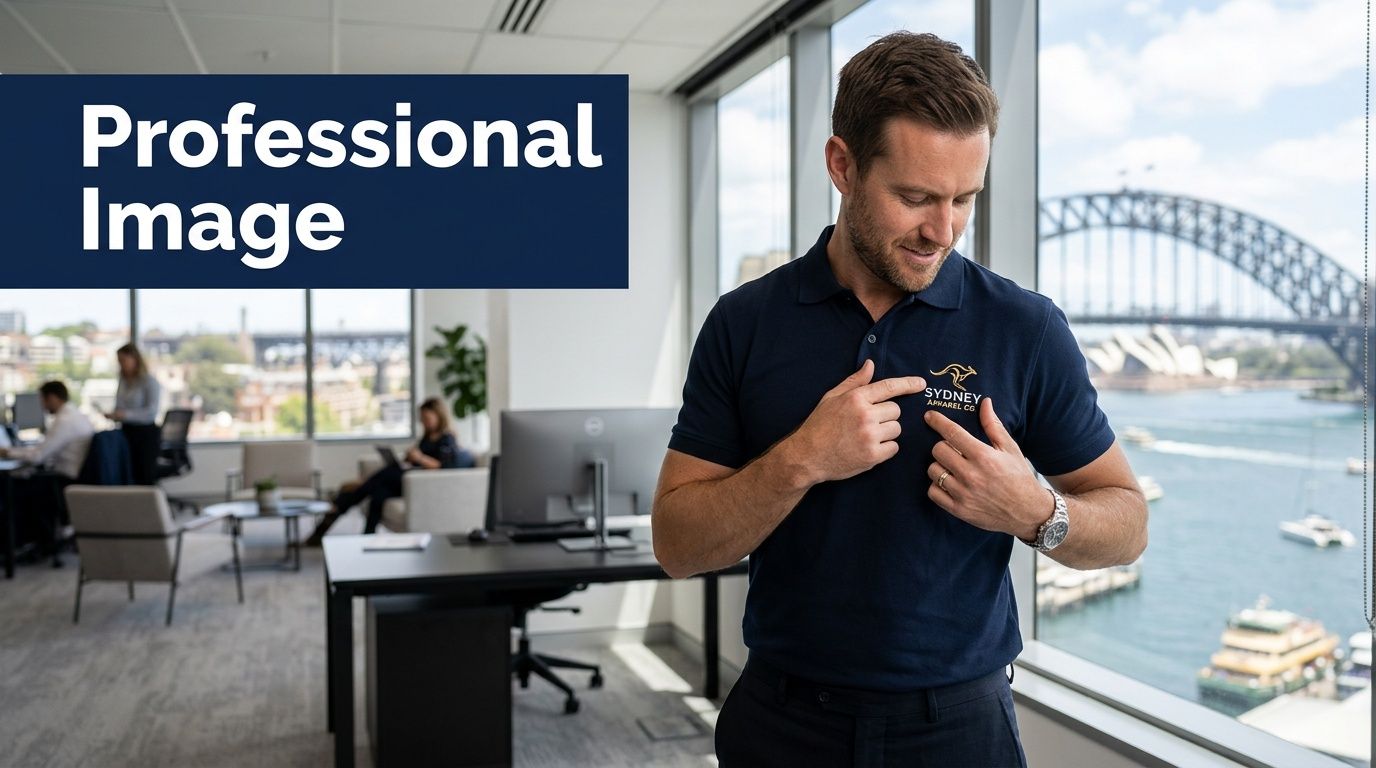
From a merchandising perspective, the practical question is usually not whether embroidery looks professional. It usually does. The question is whether it suits the job, the garment, and the number of washes the shirt will go through. For office teams and long-term uniform programs, embroidery is often the safer choice because it holds its shape well and looks natural on polos, business shirts, and many work shirts.
That said, embroidery is not automatically the right answer for every logo. Fine gradients, tiny type, and large filled areas can create problems on shirt fronts, especially on lighter fabrics. Getting a professional result depends on making the logo work for thread, not forcing thread to copy artwork that was built for print.
Where embroidered shirts make the most sense
- Client-facing teams: Sales staff, account managers, reception teams, and venue staff usually benefit from a cleaner, more structured logo finish.
- Trade shows and expos: Embroidery reads well at conversational distance and still looks polished in close-up photos.
- Multi-site uniform rollouts: A stitched logo helps keep presentation consistent across teams in different cities and reorder batches.
- Australian service businesses: Real estate groups, hospitality operators, schools, and field sales teams often need shirts that can move between office, site visit, and event use without looking out of place.
A good embroidered shirt does quiet brand work every day.
If you are comparing options, review a broader range of corporate wear solutions before you lock in one style. For teams mixing polos with tees or lighter event apparel, this guide to choosing the right t-shirt material is also useful because fabric weight and texture affect how branding presents across the full uniform range.
Laying the Foundation Choosing Your Shirt and Fabric
The logo matters, but the shirt choice decides whether the final result feels corporate, casual, or rugged.
A common ordering mistake is picking the garment purely on colour and price, then trying to force the same embroidery treatment across every role in the business. That’s when you end up with a formal office shirt on warehouse staff, or a light event polo being worn as an everyday operations uniform. Better results come from matching the shirt to the job first.
Start with the role, not the logo
Business shirts suit office teams, property groups, hospitality managers, and anyone meeting clients in a formal setting. They give your logo a restrained, professional look, but they also need more careful placement because collars, plackets, darts, and buttons affect visual balance.
Polos are the most flexible option. They work for events, retail, schools, casual office settings, and mixed indoor-outdoor roles. They’re usually easier to fit across larger teams and simpler to reorder later.
Work shirts are built for function first. If your team is on site, in transit, or working across heat and dust, a tougher shirt with enough structure to carry embroidery cleanly is often the practical choice.
Fabric changes the finish
Embroidery isn’t printed on top of fabric. It pulls through fabric. That means the base cloth affects tension, edge sharpness, and whether the area around the logo stays flat or starts to pucker.
If you’re still comparing garment types more broadly, this guide on choosing the right t-shirt material is useful for understanding how fabric weight and fibre choice influence decoration. The same logic carries over to shirts, especially when you’re balancing comfort against branding performance.
Here’s the practical shortlist I walk clients through.
Men's Shirt Fabric Comparison for Australian Conditions
| Fabric Type | Best For | Breathability | Durability | Embroidery Finish |
|---|---|---|---|---|
| 100% cotton | Office wear, hospitality, premium casual uniforms | High | Moderate | Soft, classic finish. Can need careful stabilising |
| Polyester | Active teams, outdoor events, frequent washing | Moderate | High | Clean stitching and good shape retention |
| Poly-cotton blend | General business uniforms, mixed-role teams | Balanced | Strong | Usually the easiest all-round base for logos |
What works and what doesn’t
- Cotton works well when comfort and a natural hand feel matter most. It can look excellent on business shirts, but lighter cotton fabrics need proper support behind the logo area.
- Polyester works well when shirts will be washed hard, worn often, or exposed to sun. It tends to hold shape well under embroidery.
- Blends are often the safest middle ground for first uniform orders because they balance comfort, structure, and everyday durability.
Practical rule: If the shirt feels too soft, stretchy, or lightweight in the chest area, the embroidery needs more planning. If the shirt has some structure, the logo usually behaves better.
For broader garment options across polos, shirts, workwear, and team apparel, it helps to review custom clothing categories for branded uniforms before finalising your shortlist. Most uniform issues start at garment selection, not at the embroidery machine.
Designing for Thread Preparing Your Logo for Embroidery
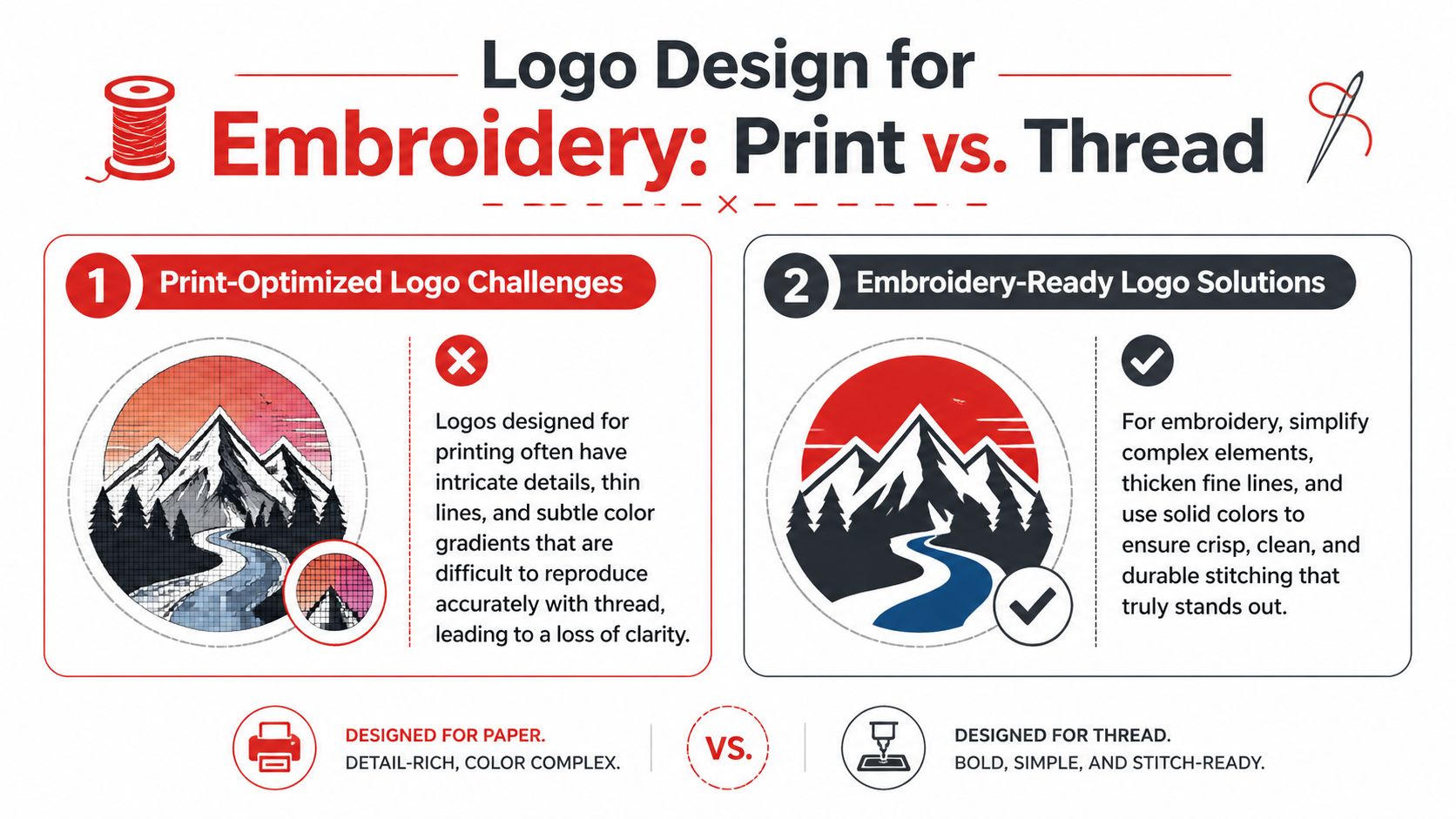
A common first-order problem looks like this. The logo is crisp on a website, clean in a PDF brand guide, then suddenly loses detail when it is stitched onto 120 men’s business shirts for a national rollout.
That usually comes down to one thing. Embroidery needs artwork prepared for thread, not screens.
What digitising means
Digitising converts your logo into a stitch file that an embroidery machine can read. The file sets stitch types, stitch direction, start and stop points, trims, sequencing, and the way the design is built on fabric.
That matters because thread behaves differently from ink. Fine outlines, soft fades, tiny legal text, and tightly packed shapes often need adjustment before approval. In our experience at Simply Merchandise, the cleanest uniform results usually come from logos that have been simplified before digitising starts, not patched up after a proof comes back.
Industry guidance from the Wilcom embroidery lettering guide also reflects what we see in production. Small lettering and narrow gaps are where readability drops first, especially on left chest logos for business shirts.
What to change before you send artwork
The aim is to protect brand recognition while making the logo reliable in thread.
Use these checks before submission:
- Remove gradients and transparency effects. Embroidery handles solid colour areas far better than soft transitions.
- Increase line weight. Thin rules and outline-only icons can break up or disappear once stitched.
- Review small text hard. Department names, taglines, and web addresses often need to be enlarged, shortened, or removed from chest embroidery.
- Open up tight spacing. Letters and shapes need breathing room so thread does not fill the gaps.
- Prepare for one-colour substitutions where needed. On some navy, black, or charcoal shirts used by Australian field teams, a reversed white version may read better than the full brand lockup.
A good proof usually starts with a practical question. What does the logo need to achieve on the shirt from two to three metres away? If the answer is brand recognition, then clarity beats detail every time.
Files that keep the process moving
Vector files are still the best starting point. AI, EPS, and press-ready PDF files give the digitiser clean edges and proper colour references. A high-resolution PNG can work for simple artwork, but screenshots, pasted Word images, and cropped website graphics usually create redraw delays.
If this is your first uniform order, these artwork submission tips for beginners will save time during redraws, font checks, and colour confirmation.
For Australian businesses ordering through Simply Merchandise, the proofing stage is where many preventable problems get fixed. Ask to confirm the exact logo version, thread colour match, and intended shirt colour together, because the same file can behave differently on white poplin, blue chambray, and black hospitality shirting.
If your brand team also works across other stitched merchandise, it can help to learn tote bag embroidery to see how artwork decisions change across product types.
The strongest embroidery logos for men’s shirts usually share three traits. Clear shapes, controlled detail, and enough contrast against the garment to stay legible in real working conditions.
The Finer Details Stitching Density and Placement
A common first-order problem looks like this. The approved proof is correct, the thread colours are correct, and the finished shirts still look off once the cartons are opened. In production, that usually comes down to two decisions clients do not see on a screen. Stitch density and logo placement.
Why density changes everything
Density controls how much thread sits in a given area of the design. On a firm shirt fabric, a slightly heavier fill can make a mark look crisp and substantial. On a lighter business shirt, the same file can pucker the fabric, feel stiff across the chest, and pull the logo out of shape after washing.
That is why we do not judge embroidery quality by thread count alone. A dense logo is not automatically a better logo. For men’s business shirts, the better result often comes from simplifying fills, opening up small details, and using enough underlay to support the design without turning the shirt front into a patch.
At Simply Merchandise, this is usually the point where I ask clients what matters more for the job. Maximum detail, or a cleaner result across fifty, one hundred, or five hundred shirts. The right answer depends on the garment, because a logo that works well on a heavier polo can be too aggressive on fine cotton poplin.
Placement on Australian men’s business shirts
Placement is just as technical.
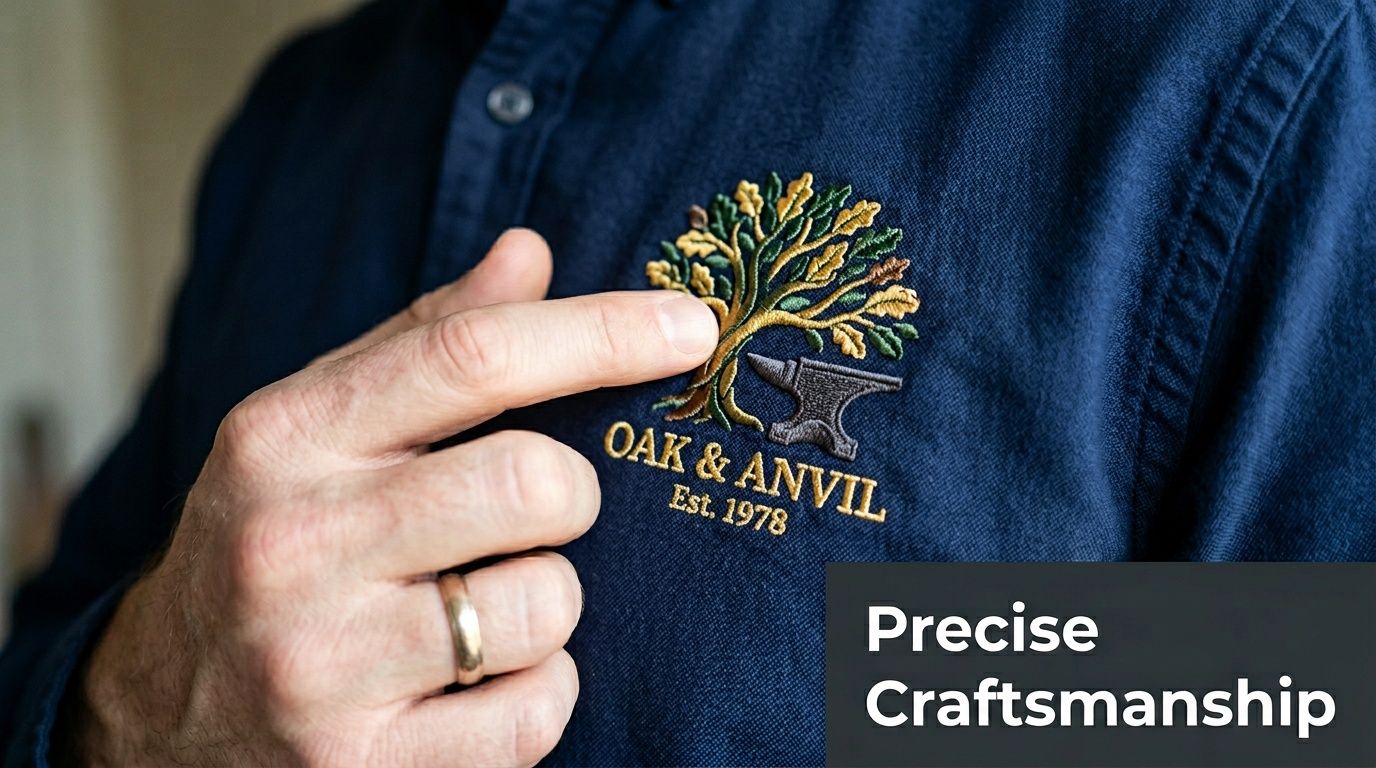
A lot of overseas guides use fixed measurements from the shoulder seam. That can be a decent starting point, but it often produces a chest logo that feels too far toward the arm or slightly crooked once the shirt is buttoned. On Australian business shirts, especially styles with a visible placket and sharper collar stand, the eye reads alignment against the centre front first.
So the logo needs to be balanced to the placket, not just measured from the shoulder. In practice, left chest embroidery usually sits best when it is visually centred in the space beside the placket and clear of the second button area. That sounds minor. On the wearer, it makes a real difference.
If a button-up logo looks crooked, the stitching may be fine. The placement reference point was wrong.
For men’s shirts, I usually guide clients like this:
- Left chest: The standard choice for office uniforms, sales teams, and front-of-house staff. Keep the logo visually connected to the placket.
- Sleeve embroidery: Best for a secondary mark, location name, or campaign detail. Large sleeve logos tend to look sporty rather than corporate.
- Back yoke or upper back: Useful for event crews, field teams, and hospitality groups that need brand visibility from behind. Less suited to formal office shirts.
This is also where shirt type matters. A logo can sit perfectly on a regular-fit business shirt and feel too low on a slim fit because the chest shaping changes the visual balance. For mixed staff sizing, approval on one sample size is not always enough. If the order is large or the fit is unusual, ask to review placement against the actual garment style being ordered.
Clients who want a clearer production explanation can read what embroidery is and how it works on garments. It helps explain why backing, hooping, and stitch type all affect the finished result.
If you want a useful comparison outside shirts, this piece on learn tote bag embroidery shows how placement logic changes with structure and seam lines. It is a different product, but the same rule applies. Construction affects where embroidery looks balanced.
Navigating Your Order Costing Proofing and Turnaround
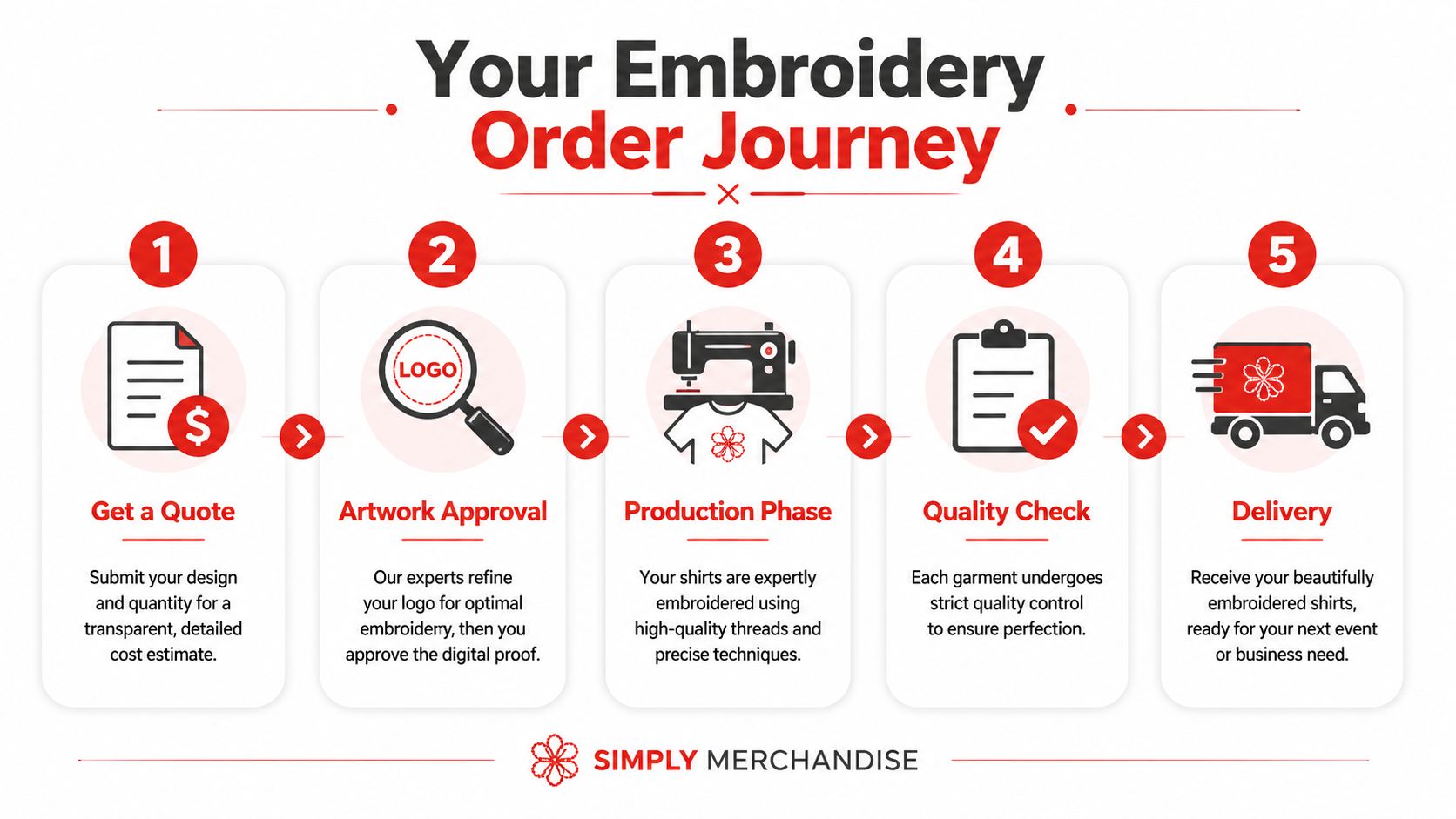
A common first-order scenario looks like this. The shirts are chosen, the logo file is in, the launch date is booked, then the staff list changes twice and someone approves the proof from their phone between meetings. That is usually where cost and timing start to drift.
Most large uniform orders stay on track when three items are locked down early: the garment, the artwork proof, and the size breakdown. If one of those changes after approval, production often needs to be reset. On embroidered men’s shirts, that can mean a fresh proof, a new stitch-out, or reworking stock allocations if a shirt colour or fit has already been reserved.
What affects cost
Pricing usually comes down to four practical variables. The shirt itself, the stitch count in the logo, the number of embroidery positions, and the quantity ordered.
A clean left-chest logo on a standard business shirt is usually the most economical setup for Australian teams ordering uniforms at scale. Costs rise when the artwork has small text, heavy fill areas, or extra placements such as sleeve and back yoke embroidery. Those jobs take more machine time and more handling in production. Garment choice matters too. Some men’s shirt fabrics run cleanly on press and hoop. Others need more care to keep the finish sharp.
For first-time buyers, the better question is not “What is the cheapest shirt?” It is “Which option gives the right look without creating avoidable production cost?” In practice, that often means simplifying a logo version for embroidery, limiting placements, and standardising one shirt style across the team where possible.
What to check in the proof
The proof is the last low-cost chance to catch a high-cost mistake.
Check these points carefully before sign-off:
- Spelling and legal names: This matters for franchise locations, departments, and funded programs.
- Logo version: Confirm the file used is the approved embroidery version, not a web or print file.
- Scale on the actual shirt style: A logo that felt right on a sample polo can look oversized on a men’s business shirt.
- Thread colours: Review them against the shirt colour and fabric texture, not just against brand guidelines in isolation.
- Placement note: The proof should state the location clearly, such as left chest or right sleeve.
- Garment details and size split: Check the exact SKU, colour, fit, and quantities before production is booked.
At Simply Merchandise, this is often the point where Australian clients save themselves the most trouble. A careful proof review catches the issues generic online order forms miss, especially when the rollout involves mixed branches, field staff, or a deadline tied to an event date.
If you want to see what is usually covered before approval, our custom embroidery logo services for apparel orders page gives a clear picture of setup, proofing, and production support.
Turnaround expectations
Turnaround depends on stock availability, artwork readiness, order size, and freight. Delivery timing also changes if the job is going to one metro address versus split cartons across several Australian sites.
The fastest orders usually have approved artwork, a final size breakdown, and one decision-maker signing off the proof. Orders slow down when approvals are spread across multiple people, substitute garments are needed because stock moves, or names and quantities are still changing after production planning starts.
If the order is tied to a conference, onboarding date, or branch rollout, build in review time before the date you need the shirts. That buffer matters. It gives room to fix a proof note, swap a low-stock size, or coordinate freight without paying for a rush that could have been avoided.
Beyond the Order Care Instructions and Maximising Your ROI
The first real test happens a few weeks after delivery. Staff have worn the shirts on the road, they have been through the wash a few times, and you can see whether the order was set up to last or just to get through day one.
Good embroidery holds up well, but poor care shortens the life of even a well-produced shirt. The goal is simple. Keep the fabric stable, keep the thread looking clean, and avoid heat or abrasion that distorts the logo area.
A practical care note for staff helps more than people expect, especially across sales teams, branch networks, and site-based roles where shirts are washed under very different conditions.
Care that protects the stitching
Use clear, repeatable instructions:
- Wash inside out: This cuts down friction on the logo during the wash cycle.
- Use mild detergent: Strong chemicals can fade the shirt and dull the thread sheen.
- Skip high heat drying: Heat can shrink the garment, stress the backing, and cause puckering around the embroidery.
- Iron from the reverse side where possible: Direct pressure on the stitched area can flatten the design and mark the thread.
If the shirts are part of a national rollout, ask one person internally to own care guidance and reordering. That keeps wear standards more consistent across Australian offices and makes it easier to spot whether replacements are needed because of heavy use, incorrect laundering, or the wrong garment choice for the role.
Getting more value from the order
Return on an embroidered shirt usually comes from repeat wear, not the first impression alone. A shirt that still looks sharp after regular use does more for your brand than a cheaper option that loses shape, fades, or starts pulling around the logo after a short run.
The strongest returns usually come from practical use cases:
- Trade show uniforms: Staff look consistent without needing a one-off event outfit.
- Onboarding kits: New starters get something usable from day one.
- Client-facing visits: Field staff and account teams arrive looking organised and brand-aligned.
- Internal team wear: Managers often get better uptake from shirts people can wear weekly, not novelty merch that stays in a drawer.
Sustainability can also be part of the buying decision, but it should be handled realistically. Rather than chasing unsupported ROI claims, focus on choices that reduce replacement cycles. Fabric weight, colourfastness, shrink control, and embroidery setup all affect how long the shirt remains presentable. In practice, a durable shirt with a clean left-chest logo often gives better long-term value than a cheaper garment that needs replacing halfway through the year.
At Simply Merchandise, I usually advise clients to review the order again after the first wear cycle. Check what staff reach for, which sizes are moving fastest, and whether the shirt suits the job it was bought for. That simple review makes the second order more accurate, reduces dead stock, and stretches the uniform budget further.
Frequently Asked Questions
Is embroidery better than screen printing for men’s shirts
It depends on the shirt and the role. For business shirts, polos, and uniforms, embroidery usually gives a more professional finish and holds up well over time. Screen printing is often better for large graphic areas or casual campaign apparel. If your goal is a polished chest logo on men’s shirts, embroidery is often the cleaner fit.
Can I supply my own shirts
Sometimes, but it’s not always the best move. Supplied garments can create issues around fabric suitability, sizing consistency, dye lot variation, or damage risk during production. For first-time uniform orders, it’s usually easier to source shirts through the same workflow as the embroidery so the garment and decoration are matched properly from the start.
What logo file should I send
Vector artwork such as AI, EPS, or PDF is the strongest option because the edges stay clean when the file is prepared for stitching. A high-resolution PNG can still work for simpler logos. Screenshots, website grabs, and compressed images usually slow the process down because the artwork team has to rebuild details before a proof can be approved.
If you’re ordering embroidery for mens shirts for the first time, the smartest approach is simple. Choose the shirt for the job, simplify the logo for thread, and pay close attention to proof placement on structured garments. That’s what gives you a uniform people want to wear.
If you’re ready to organise embroidered shirts for your team, Simply Merchandise can help you work through garment choice, artwork readiness, proofing details, and delivery planning so your order suits your brand, your timeline, and your budget.
