

We’ve all been there—that nagging uncertainty after a package has been sent. For any Aussie business that relies on getting boxes and parcels out the door quickly, real-time direct freight express tracking is how you replace customer anxiety with genuine excitement. It’s no longer just a perk; it’s a fundamental part of great service.
The Power of Knowing Where Your Parcel Is Right Now
In a market where customers expect speed and transparency, knowing your shipment's exact location is more than data. It's peace of mind. For businesses shipping across Australia, clear, live tracking builds the kind of trust that sets you apart. It completely changes the conversation from a reactive "Where is my order?" to a proactive, "Your order is on its way!"
This kind of visibility lets you get ahead of the game. Instead of waiting for a customer to call about a delay, you can see it coming, reach out first, and turn a potential problem into a moment of brilliant customer care.
Turn Tracking Data into Customer Loyalty
The smartest businesses I've worked with know that every tracking scan is a touchpoint—an opportunity to deliver on their promise. When you give customers real-time information, it has a massive ripple effect on your operations and their happiness.
- Fewer Service Headaches: Good tracking drastically reduces the time your team spends answering "where is it?" calls and emails.
- Real, Lasting Trust: Customers who can see their parcel making its way to them feel secure. That confidence is what brings them back.
- Proactive Problem-Solving: Clear visibility means you can spot a holdup before it becomes a real issue, keeping you in control of the delivery story.
Think of tracking as more than just logistics. It's a direct line to your customer, assuring them their order is cared for from your warehouse to their doorstep.
Having this level of insight isn't just for keeping customers happy. It’s also an essential tool for managing supply chain disruptions, giving you the agility to navigate unexpected hurdles without missing a beat.

At the end of the day, offering the cheapest prices on fast deliveries is only one piece of the puzzle. You can find out more on striking that perfect balance between cost and quality in our guide to Australian courier services. By mastering tracking, you’re not just sending a product; you’re delivering a professional, seamless experience that builds loyalty one successful delivery at a time.
How to Use the Direct Freight Express Tracking Portal
Let's be honest, that moment after a parcel leaves your hands can be filled with a bit of uncertainty. But it doesn't have to be. We're going to walk through the Direct Freight Express tracking portal together, transforming that "where is it now?" feeling into confident control. It’s a refreshingly simple process that gives you fast answers, whether you're tracking a single package or keeping an eye on multiple deliveries across Australia.
The key to all this is your tracking number, which in Direct Freight’s world is called a connote or consignment note. This is the unique code that follows your parcel everywhere it goes. You’ll find it printed right on the shipping label or in the booking confirmation email you received when you first organised the shipment.
Locating and Using Your Tracking Number
Once you have that connote in hand, you’re just a click away from peace of mind. Simply head over to the Direct Freight Express website and look for their tracking tool. You’ll spot a field asking for your consignment number—pop your connote in there, hit the track button, and you're in.
It’s designed to be quick and fuss-free, getting you the information you need without any unnecessary steps.

Instantly, you’ll get a full breakdown of your parcel's journey. You can see everything from the moment it was picked up to its current whereabouts and what the next move is.
Making Sense of the Tracking Results
The results page lays out your shipment's entire story. Here’s a quick guide to what you’re looking at:
- Current Status: This is your at-a-glance update. It might say something like 'In Transit' or 'Onboard for Delivery', telling you the latest major event.
- Scan History: Think of this as a travel diary for your parcel. It’s a chronological list of every depot scan, complete with the date, time, and location.
- Estimated Time of Arrival (ETA): This gives you a delivery window, which is incredibly helpful for managing customer expectations for their fast box and parcel deliveries.
This kind of detailed visibility is becoming essential in Australia’s courier industry. As the domestic market continues to grow, so does the demand for better tracking. If you’re curious about how other carriers handle this, our guide on Capital Transport tracking offers another great perspective.
Having direct access to this information means you can answer customer queries with genuine confidence. Instead of guessing, you're providing concrete details pulled straight from the source.
The courier market in Australia is booming, with experts projecting it will reach AUD 33.94 billion by 2035. This incredible growth is powered by innovations in tracking that reduce missed deliveries and give businesses total visibility—especially critical when 62.40% of revenue comes from domestic shipments. You can find more data on the Australian courier and parcel market on expertmarketresearch.com.au.
Knowing your way around these tools puts you in a powerful position, helping you deliver the seamless, reliable experience your customers have come to expect.
A Better Way to Track All Your Shipments in One Place

Let's be honest, juggling multiple tracking numbers across different carrier websites is a special kind of frustration. It’s a time-consuming scramble of copying and pasting, trying to keep track of which parcel is with which courier. Imagine, instead, a single, clean dashboard where every single shipment is tracked in one place. This is what it feels like to take genuine command of your logistics.
It’s about more than just checking a status here and there. It’s about creating a single source of truth for your entire shipping operation. The goal is simple: stop the constant back-and-forth between booking confirmations, carrier portals, and customer service emails. All your Direct Freight Express tracking data should live right alongside every other shipment you send.
That’s the exact vision we had when building the Aeros Couriers platform. We designed it from the ground up to eliminate friction and bring all your logistics into one intuitive, powerful space.
Centralise Your Entire Shipping Workflow
True efficiency isn’t just about speed; it's about integration. What if booking jobs, printing labels, and tracking parcels weren’t separate, clunky tasks but part of one seamless flow? That’s exactly what our dashboard is built to do.
You can get instant quotes, compare the best prices for your deliveries, book the job, and print the right labels without ever leaving the platform. The moment your parcel is picked up, the system automatically pulls in all your Direct Freight Express tracking updates. You can watch every delivery—from pickup right through to its final destination—all from one screen.
Here’s a glimpse of how the Aeros Couriers dashboard gives you that powerful, bird's-eye view of your entire operation.
This consolidated view means you can manage every shipment proactively. You can give your customers accurate, timely updates without having to dig for the information yourself. It’s an approach that saves you an incredible amount of time and turns shipping from a necessary chore into a real strategic advantage.
From Booking to Delivery, All in One Place
The benefits of a unified system go far beyond simple convenience. When you bring all your shipping activities under one roof, you start to see patterns and gain insights that are impossible to spot when your data is scattered across different platforms.
- Effortless Management: See the real-time status of all your Australia-wide shipments, no matter which carrier is handling them.
- Serious Time Savings: Forget switching between websites. You can quote, book, print, and track from one central hub.
- Smarter Decisions: With all your shipping data in one place, you can finally analyse costs and delivery performance with clarity.
This integrated approach is about more than just tracking; it’s about creating a single source of truth for your entire shipping process. It’s the difference between reacting to delivery issues and preventing them altogether.
This level of control is absolutely critical for businesses that rely on fast, dependable deliveries across Australia’s vast and varied geography. To see how we ensure consistent service, check out our guide on domestic freight express options. By centralising your Direct Freight Express tracking and management, you’re not just saving time—you’re building a more resilient and professional operation.
Decoding Your Tracking Status and Delivery Times
Ever stared at a tracking update like ‘In Transit’ and wondered what’s really happening with your shipment? You’re not alone. Getting to grips with the language of logistics is one of the best ways to manage your own expectations and keep your customers happy and informed.
Think of each tracking scan as a new chapter in your parcel's story. It's a real-time map of its journey across Australia, from your warehouse to your customer's doorstep. When you can confidently explain what these updates mean, you transform a simple tracking number into a powerful customer service tool. You can reassure an anxious customer that 'Onboard for Delivery' means their package is on the final leg of its trip—a small detail that makes a huge difference.
This flowchart breaks down the typical stages of a shipment, helping you pinpoint exactly where your parcel is in the delivery cycle at a glance.
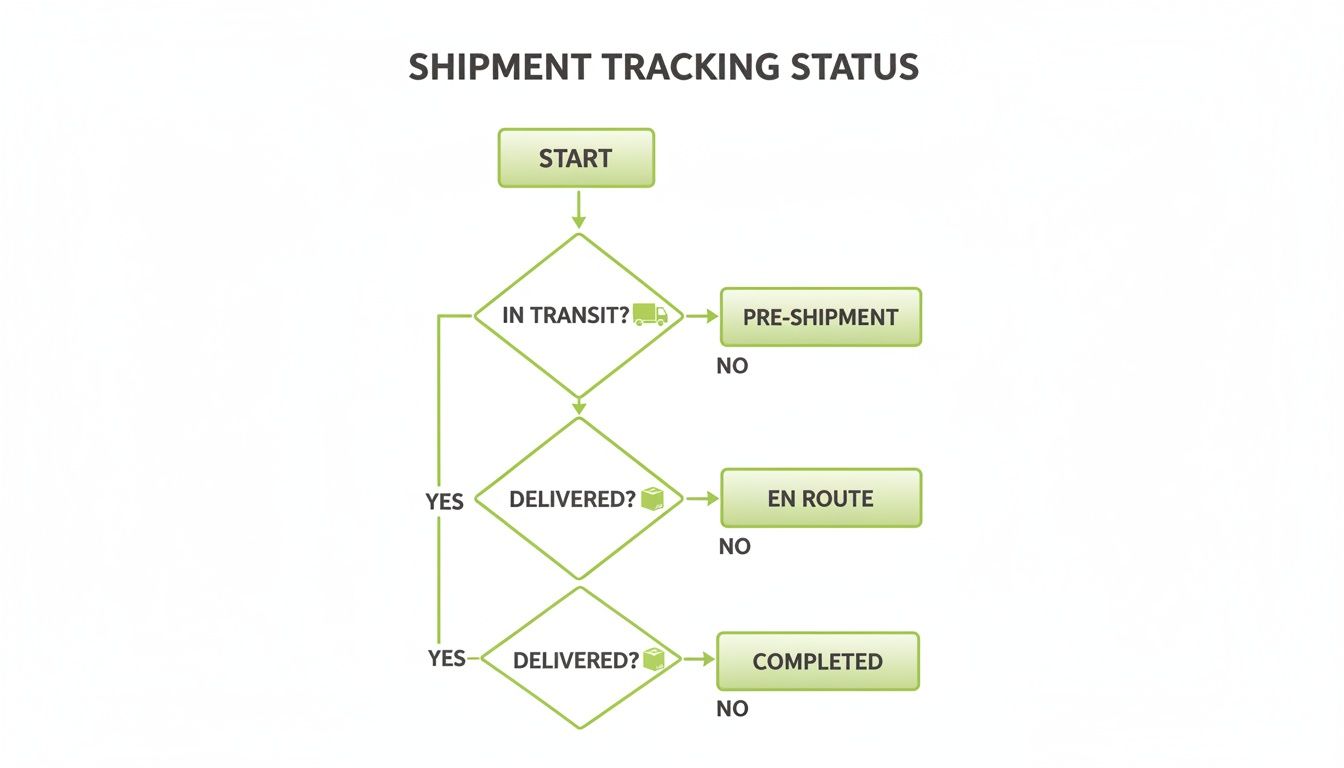
As you can see, every parcel moves from collection through to sorting and final delivery, with each step creating a new status update in the tracking history.
Common Direct Freight Express Tracking Statuses Explained
Let's dive into the most common statuses you'll encounter with Direct Freight Express tracking. Knowing what each one means in the real world will help you give your customers clear and accurate answers.
Here’s a quick-reference table to help you translate those tracking updates into plain English.
| Tracking Status | What It Means | Your Next Action |
|---|---|---|
| Pickup | The journey has officially started! A Direct Freight driver has collected your parcel. | Nothing needed from you. The next scan will likely be when it arrives at the origin depot. |
| In Transit | Your parcel is on the move between depots, usually on a truck heading interstate or across the state. | Just keep an eye on the tracking. For a deeper look, see our guide on the true meaning of 'in transit'. |
| Onboard for Delivery | This is the one you’ve been waiting for. Your parcel is in the local delivery van, out on its final run. | A great time to let your customer know their delivery is expected today. |
| Delivered | Mission complete! The parcel has been successfully delivered and handed over. | Perfect. Consider sending a follow-up to your customer to confirm they have it and are happy. |
This table covers the essentials, turning what can seem like confusing logistics jargon into simple, actionable information.
How ETAs Are Calculated
The Estimated Time of Arrival (ETA) you see is Direct Freight Express’s best guess for when your parcel will arrive. It’s calculated using standard transit times between Australian postcodes. For instance, sending a standard box between major metro areas like Sydney and Melbourne is often an overnight service.
Just remember, an ETA is an estimate, not a rock-solid guarantee. Things like major traffic snarls, wild weather, or the busy Christmas rush can add a bit of time. It’s just the nature of shipping parcels.
Shipments heading to regional towns or remote parts of the country will naturally have longer ETAs simply because the journey involves more stops and handovers. The key is to be upfront about these timelines with your customers from the start. A little proactive communication goes a long way in building trust and making sure everyone feels looked after.
Troubleshooting Common Delivery Issues
Let’s be honest—even with the most organised system, shipping parcels across Australia can sometimes hit a bump in the road. Seeing a tracking update flash ‘Attempted Delivery’ or ‘Held at Depot’ might make your heart skip a beat, but it’s rarely time to panic. These are everyday hurdles in the world of shipping, and knowing how to handle them is what separates the pros.
Think of this as your go-to guide for navigating those moments with confidence. We’ll walk through the most common delivery exceptions you’ll see with box and parcel shipments and give you clear, simple solutions to get everything moving again. A quick, proactive response can turn a potential headache into a brilliant customer service win.
Resolving Attempted Deliveries and Depot Holds
One of the most frequent scans you’ll encounter is ‘Attempted Delivery’. This almost always means the driver showed up, but no one was home to sign for the parcel, or they couldn’t find a safe place to leave it. When this happens, the item is typically returned to the nearest Direct Freight Express depot for safekeeping.
A ‘Held at Depot’ status is similar and can pop up for a few different reasons:
- The delivery address was incomplete or had a small error.
- Your customer specifically asked for it to be held for pickup.
- It’s awaiting customs clearance (though this is very unusual for local Australian shipping).
The secret to sorting these out is acting fast. Don’t wait for your customer to call you with a “Where’s my order?” question. The second you spot the status update, you can jump in, arrange a redelivery, or let the customer know they can pop down to the depot to collect it.
This kind of hands-on approach is more important than ever. Australia’s road courier industry is navigating constant pressure, but the demand for reliable, express services keeps climbing thanks to e-commerce. You can read more about the Australian freight market update on tfgglobal.com.au.
Proactive Steps to Prevent Delivery Problems
Of course, the best way to deal with delivery exceptions is to stop them from happening in the first place. I’ve found that a few simple checks before you even book the job can prevent nearly all of these little headaches. Most of the time, the problem is just a tiny error in the address details.
Here’s what I always recommend to ensure your parcels get there without a hitch:
- Double-Check Addresses: Always, always confirm the street number, street name, suburb, and postcode. A single typo can easily send a parcel to the wrong side of the country.
- Provide Clear Instructions: If you’re sending to a business, make sure you include the company name. For tricky residential spots, add a simple delivery note like, “Leave at front door behind the pot plant if safe.”
- Correcting an Address Mid-Shipment: Spotted a mistake after the parcel has already been dispatched? Get in touch with support immediately. While it’s not always guaranteed, it’s sometimes possible to correct an address while the parcel is in transit—but you have to be quick.
If you run into other tracking snags, you might find our guide on what to do when Australia Post tracking is not updating helpful for general advice.
Taking those few extra seconds for these checks makes your Direct Freight Express tracking experience smooth and predictable. It’s a small effort that pays off big by reinforcing your reputation for reliable, professional service.
Your Top Direct Freight Express Questions, Answered
Sending parcels across Australia should feel straightforward, not stressful. But let’s be honest, sometimes questions pop up. After helping thousands of businesses manage their shipments, we’ve heard them all.
We’ve put together this quick guide to answer the most common queries about Direct Freight Express tracking. Think of it as having a logistics pro in your corner, ready to give you the clear, practical answers you need to ship with complete confidence.
What if My Direct Freight Express Tracking Number Isn’t Working?
This is a common one, but don’t panic—it’s almost always a simple fix. The first thing to do is double-check the tracking number (also called a connote) you’ve entered. It’s surprisingly easy to mix up a character or two, especially if you’re typing it in manually.
Also, keep in mind that a brand-new tracking number needs a moment to enter the system after its first scan. If the driver has only just picked up the parcel, you might need to give it a few hours to show up online. Of course, if you booked through Aeros Couriers, you can just glance at your dashboard; we centralise all that info for you in real-time.
If you’ve waited more than 24 hours and the number still isn’t showing any tracking events, it’s time to investigate. If you’re the receiver, get in touch with the sender. If you sent the parcel yourself, contact our support team. We’ll get on the case and liaise directly with the carrier for you.
What Does ‘Onboard for Delivery’ Mean?
Seeing ‘Onboard for Delivery’ is the signal you’ve been waiting for! It means your parcel has been scanned onto the local driver’s truck and is making its final journey to the drop-off point. Your fast box or parcel delivery is officially in the home stretch.
In most metro areas around Australia, this status means you can expect the delivery to happen that very same business day. While you won’t get a specific delivery window, you can rest assured it’s on its way. Drivers are typically on the road from morning until late afternoon, working through their specific route for the day.
Can I Redirect a Parcel to a Different Address?
This can be tricky once a parcel is moving through the Direct Freight Express network, but it’s not always impossible. The key here is speed. The second you realise the address is wrong, you need to act.
Your best move is to contact support immediately. If you’ve booked through the Aeros Couriers platform, give our support team a call right away. We have direct lines of communication with Direct Freight Express and can find out if a redirection is still possible. In some cases, it might be easier to have the parcel held at the nearest depot for the recipient to collect.
How Long Does Direct Freight Express Take to Deliver?
Delivery speed really comes down to where the parcel is coming from and where it’s headed. Direct Freight Express focuses on fast parcel and box deliveries Australia-wide, so their transit times are known for being sharp.
- Metro to Metro: For shipments travelling between major east coast hubs like Sydney, Melbourne, and Brisbane, delivery is often an overnight service.
- Interstate & Regional: Naturally, journeys to regional towns or across the country (think Perth to Sydney) will take a bit longer. You can generally expect these to take between 3-7 business days.
At Aeros Couriers, we believe that our cheap prices for local shipping in Australia should never mean a drop in service. That’s why we give you clear delivery estimates right when you book, so you’re never left guessing.
Ready to take the guesswork out of your shipping? With Aeros Couriers, you get cheap prices, a simple dashboard to manage everything, and the power to track all your parcels in one spot. Get an instant quote and see just how easy it can be.
