

A customer in Melbourne has run out of stock. Your Adelaide team promised dispatch today. The parcel is packed, the clock is moving, and suddenly the usual shipping process feels too slow.
Most growing businesses hit this moment. It might be a replacement part for a trade customer, a sample box for a wholesale buyer, or an urgent online order that cannot sit in a depot until tomorrow. When that happens, people start searching for direct couriers adelaide because they want one thing. A fast, low-friction way to move a parcel from A to B without drama.
The confusion starts when courier terms sound similar but work very differently. Some services are built for scheduled network movement. Others are built for urgent, point-to-point jobs. And if your real goal is not just local speed, but also cheap Australia-wide parcel shipping from Adelaide, the better question is not only “Who has a van nearby?” It is “Which booking model gives me the fastest option, the clearest price, and the least admin?”
That is where many Adelaide businesses rethink how they ship. Instead of relying on one traditional provider and hoping it suits every job, they move to a platform approach that helps them compare, book, label, and track from one place.
That Urgent Order That Needed to Leave Adelaide Yesterday
A lot of owners know this scene well.
At 2:40 pm, the warehouse team is still packing. Sales has just confirmed the customer needs the parcel delivered fast. The buyer is already nervous because they were let down by another supplier. If your team misses this dispatch, the problem is no longer “shipping”. It becomes trust.
For a small Adelaide business, that pressure lands on one person. Usually the owner, ops manager, or customer service lead. They stop what they are doing, ring around, wait on hold, explain the job twice, then try to work out whether the quote is for metro only or for the full route.
That is why people look for a direct courier. They want a delivery that feels like a taxi ride for a parcel. Pick it up, move it, deliver it. No extra handling if it can be avoided. No messy chain of handoffs. No guessing.
A better workflow starts before the panic. If your team sends urgent boxes often, use a system that lets staff book quickly, see options, and move on. A fast online process matters just as much as the van on the road. If your orders regularly need same-day attention, it helps to understand what a fast courier service can look like before the next emergency lands on your desk.
A common Adelaide example
A specialty parts supplier in the western suburbs gets a call from a customer whose technician is waiting on-site. The item is not oversized. It is just a boxed component. The value is in speed, not freight complexity.
In that case, the winning move is often the simplest one. Book the parcel on a service designed for urgent movement, send the tracking to the customer, and keep your team focused on fulfilling the next order.
Tip: If a delayed parcel could stop a customer from working, treat shipping as part of your product experience, not as an afterthought.
What Exactly Is a Direct Courier Service
The simplest way to understand a direct courier service is this. It is a taxi for your parcel.
A traditional courier network often behaves more like a bus system. Your parcel joins other freight, travels through depots, waits for sorting, and moves along a planned route with many other consignments. That model is useful for broad network coverage, but it is not built for every urgent job.
A direct courier works differently. The vehicle is assigned to your pickup and takes the shipment toward its destination with as few detours as the service model allows. For Adelaide businesses sending urgent documents, sample cartons, replacement stock, or customer orders, that difference is easy to feel.
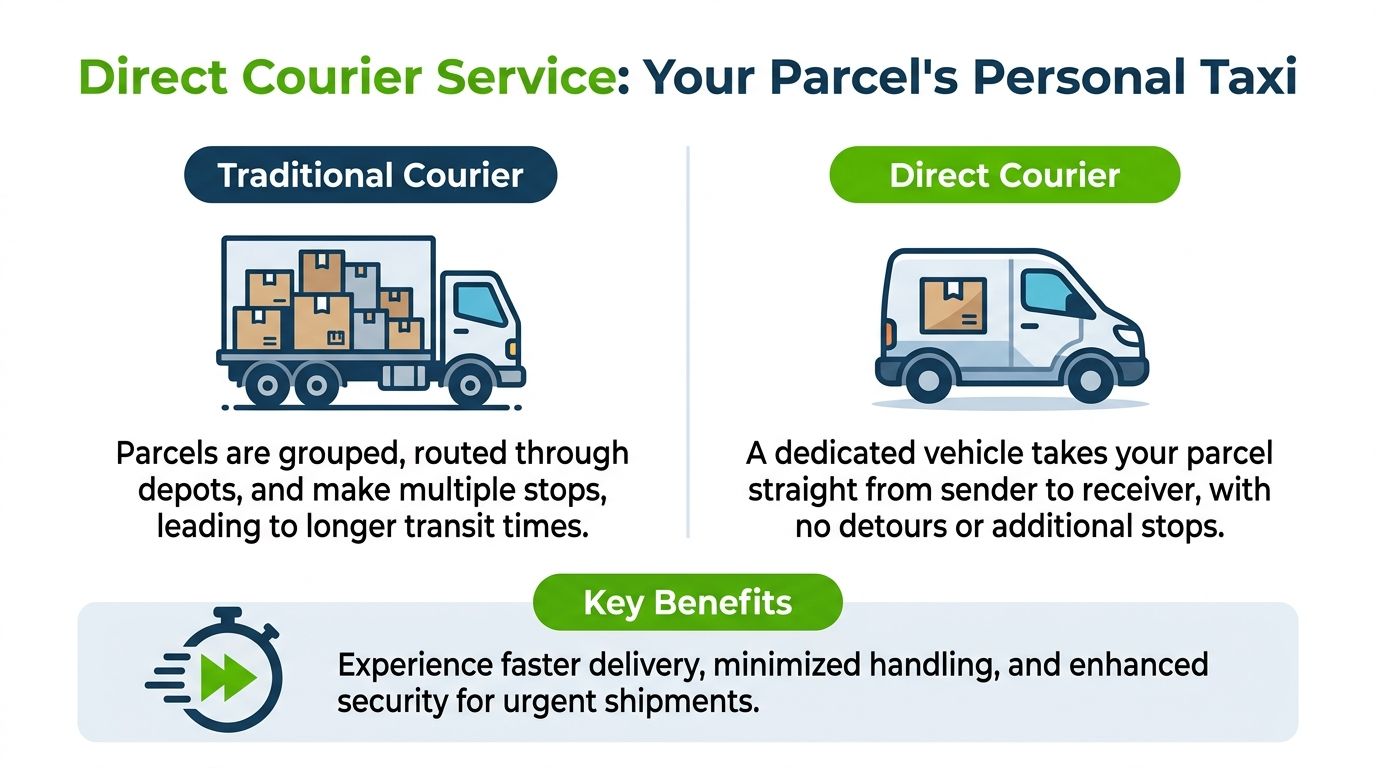
Taxi versus bus
Here is the practical comparison.
| Service type | How it usually moves | Best for |
|---|---|---|
| Traditional courier network | Grouped freight, depot sorting, multi-stop routes | General parcel movement where urgency is lower |
| Direct courier | Pickup to destination with minimal handling | Time-sensitive boxes, parcels, samples, and documents |
That “minimal handling” point matters. Every extra transfer creates another moment for delay, scanning issues, or rough movement. If you are sending fragile stock in cartons, reducing touchpoints often reduces stress.
Where businesses get mixed up
Many Adelaide operators hear “direct courier” and assume it only means a local same-day van. Sometimes it does. But the broader decision is really about service style, not just vehicle type.
Ask these questions before booking:
- Is this parcel urgent or merely important? Urgent jobs suit direct movement.
- Will the receiver be waiting on it? If yes, speed and clear tracking matter more.
- Is the item a simple box or satchel? Parcel-friendly jobs are often the easiest to move quickly.
- Do I need metro only, or Australia-wide options too? This changes which booking model is most useful.
If your business regularly sends cartons and satchels rather than pallet freight, it helps to compare services built for a package courier service workflow rather than heavy freight complexity.
Key takeaway: A direct courier is not “better” for every shipment. It is better when urgency, fewer handoffs, and simplicity matter more than fitting into a standard depot cycle.
The Business Case for Speed and Simplicity
Fast delivery does more than move parcels. It protects revenue.
When a customer buys from a growing Adelaide business, they are not only judging the product. They are judging whether you are organised, dependable, and easy to deal with. Shipping is where that judgement becomes visible.

Why speed changes the customer experience
Think about three common situations.
A law firm needs a signed document across town. An online retailer wants to rescue a last-minute order. A supplier must get a replacement item to a trade customer before close of business. In each case, delivery speed affects how professional your business appears.
Direct movement also keeps communication cleaner. Your staff can tell the customer what is happening without overexplaining depot scans, transfer delays, or route ambiguity.
Modern courier platforms that use dense driver networks and optimised routing can achieve over 99% on-time delivery rates for time-critical shipments, with instant proof-of-delivery photos arriving within seconds of completion, according to Direct Couriers’ technology overview. For a business owner, that means less time chasing status updates and more time serving the next customer.
Simplicity saves staff time
The hidden cost in shipping is not only the invoice. It is admin.
If your team needs to:
- ring for quotes,
- copy delivery details into emails,
- wait for confirmations,
- and manually update customers,
you are paying for slow process with staff time.
A simpler booking flow helps in ways owners feel immediately:
- fewer interruptions for the operations team,
- cleaner handover between sales and dispatch,
- faster customer updates,
- easier proof of delivery when disputes arise.
Speed can support cheaper shipping decisions too
This sounds backwards, but it is true in daily operations. A clearer shipping process often helps businesses spend less badly.
When your team can see service choices quickly, they are less likely to overbook premium services out of panic. They can match urgency to the right option, rather than using the most expensive method every time.
Practical advice: Separate “urgent”, “important”, and “routine” in your dispatch process. Most overspending starts when every parcel gets treated like an emergency.
For Adelaide businesses, that discipline builds a stronger brand. Customers remember when an order arrives smoothly. They also remember when your team gave them clear tracking and followed through.
Navigating Pricing and Timelines in South Australia
Pricing gets confusing in South Australia for one reason. Many businesses assume Adelaide metro logic applies everywhere.
It does not.
A parcel moving within metropolitan Adelaide is usually easier to quote than one heading beyond the main metro boundary. Once you start sending to outer areas or regional South Australia, the details matter more. Not every provider shows those details clearly upfront.
What usually affects the quote
For box and parcel deliveries, cost and timing usually depend on a few practical factors:
- Pickup and delivery locations matter first. Metro-to-metro is usually the simplest path.
- Speed of service changes the price. Urgent jobs cost differently from standard parcel movement.
- Parcel size and weight influence vehicle choice and routing.
- Residential or commercial delivery conditions can affect how smoothly a run can be completed.
The most frustrating part for many businesses is not that regional delivery can cost more. It is that the extra cost is sometimes unclear until late in the process.
Analysis of customer complaints in South Australia found that 28% relate to unexpected regional fees from metro-focused couriers, often because upfront quoting outside main city boundaries is not transparent, according to Direct Couriers’ metro boundaries information.
A simple way to think about ETAs
Do not treat estimated delivery times as one universal promise. Think in layers.
| Route type | Typical booking certainty |
|---|---|
| Adelaide metro to metro | Usually the clearest for price and ETA |
| Metro to outer fringe | Check boundary rules and service windows |
| Metro to regional SA | Confirm coverage, timing, and any added fees upfront |
That is why many operators prefer a live quote tool before they commit. If your team wants fewer surprises, start with a shipping price calculator that shows the route details before the parcel is booked.
What to ask before accepting a quote
- Is the destination inside the provider’s metro area?
- Are there any route-based surcharges?
- Is the ETA based on standard network movement or urgent handling?
- Will the same tracking flow apply for metro and regional jobs?
When your staff ask those questions every time, pricing becomes less mysterious and budgeting gets easier.
Booking Your First Urgent Delivery with Aeros Couriers
The first booking usually feels harder than it is.
Most hesitation comes from not knowing what details you will need on hand. Once your team has done it once, the process becomes routine. For urgent boxes and parcels, a good online booking flow should take minutes, not half the afternoon.
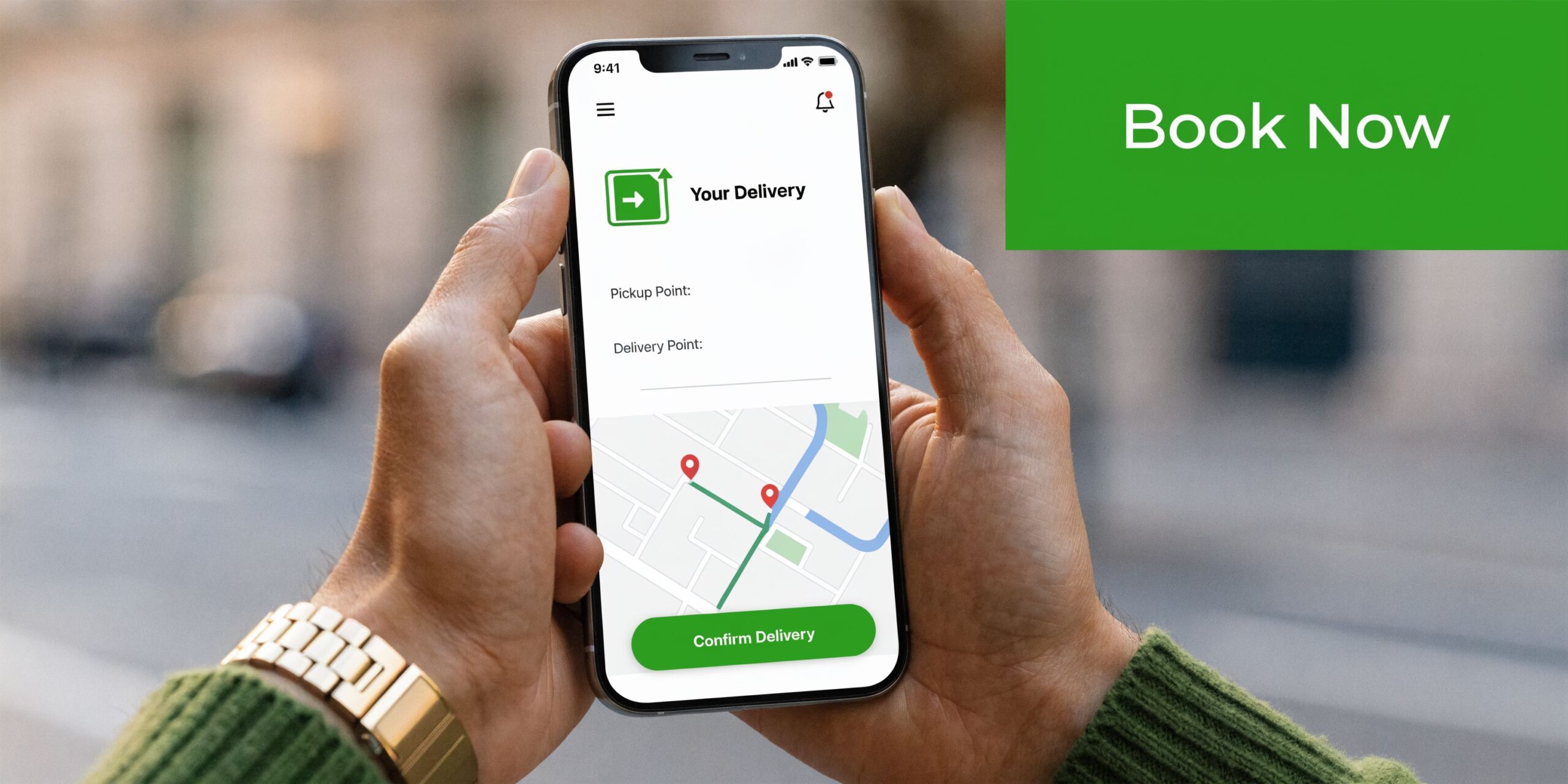
Get the job details ready first
Before opening any booking page, gather the basics:
- Sender details including contact name, address, and phone number
- Receiver details with the correct suburb, postcode, and delivery contact
- Parcel information such as box count, dimensions, and weight
- Delivery preference like standard drop-off or signature on delivery
- Special notes if access is limited or the receiver closes early
This prevents the most common mistake. Rushing through the form, then realising the receiver address was incomplete.
Book in a clean sequence
A smooth booking usually follows this order.
First, enter the pickup and delivery suburbs. That tells the system what routes are available.
Then add parcel dimensions and weight carefully. If the numbers are rough guesses, your quote may not reflect the actual movement conditions. For boxes, train your dispatch team to measure every side and weigh the packed carton, not the product alone.
After that, choose the service level that matches the urgency. If the parcel must be handed over securely, add signature on delivery. If the shipment has enough value to justify extra protection, review the insurance settings and included cover.
Finally, confirm the job and print the label straight away. Leaving label printing until later is a classic dispatch bottleneck.
What the dashboard should do for you
Once the booking is placed, your dashboard should become your control point.
Look for these basics:
- current job status,
- label access,
- tracking updates,
- proof of delivery,
- and a simple view across all current consignments.
This is especially useful for Adelaide businesses with more than one staff member handling dispatch. Sales can check progress without interrupting the warehouse. Customer service can send updates without chasing the driver.
Tip: Write one internal rule for urgent orders. “Booked, labelled, and tracking sent within the same workflow.” That single habit removes a lot of avoidable confusion.
Small choices that matter
Not every urgent parcel needs the exact same settings.
A replacement garment sample going to a retailer may only need standard parcel tracking. A legal document or high-value electronics accessory may justify signature on delivery. A customer-facing e-commerce order may need the cleanest notification trail possible.
What matters is that your booking tool makes those decisions easy, not hidden. A modern platform should help you quote, book, print, and track in one sequence so your team stays focused on dispatching boxes, not chasing paperwork.
Packaging Parcels and Meeting Your Obligations
Fast shipping starts with a well-packed parcel.
If the box fails, the service fails with it. Many delivery problems that look like courier issues often begin at the packing bench. Corners collapse. Items shift inside the carton. Labels sit over seams or tape joins. Then everyone loses time sorting out what should have been prevented.
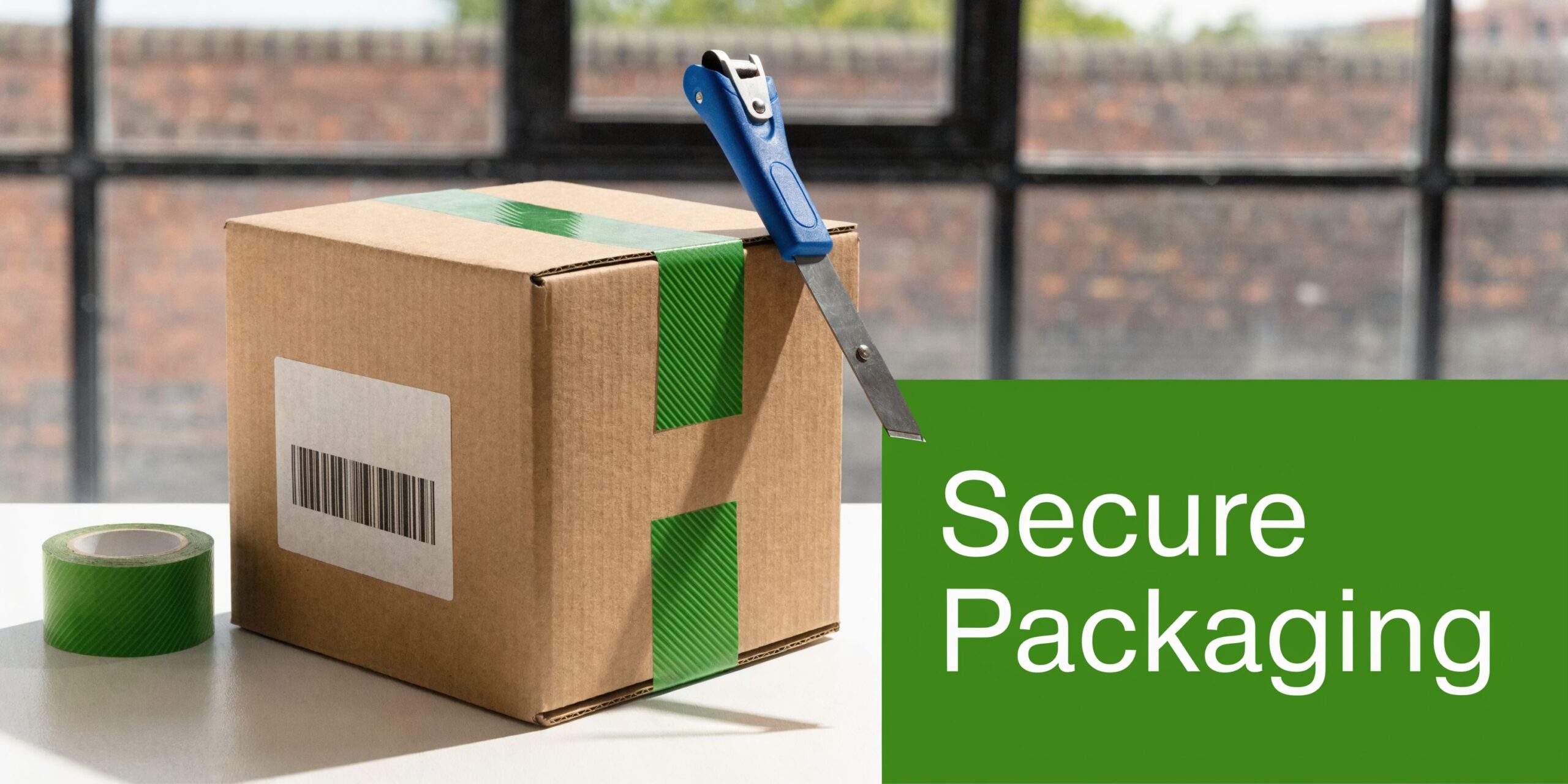
A simple packing standard for box shipments
Use this checklist for cartons and satchels:
- Choose the right box size. Too much empty space lets items move around.
- Add internal cushioning. Fill gaps so the product cannot rattle in transit.
- Seal every edge properly. Use strong tape and reinforce the base.
- Apply labels on a flat surface. Keep barcodes visible and scannable.
- Remove old labels. Reused cartons cause sorting confusion if old markings remain.
For soft goods in satchels, keep packaging snug and weather-resistant. For boxed goods, assume the parcel will be moved more than once and pack accordingly.
Understanding Chain of Responsibility
Chain of Responsibility, often shortened to CoR, means your business shares responsibility for safe and compliant transport practices. You do not need to be a transport lawyer to follow it. You do need to pack accurately, describe goods correctly, and avoid sending items in a way that creates risk.
With a 22% rise in national safety audits and stronger enforcement of CoR laws, businesses are under more pressure to ensure shipments are packed safely and comply with transport rules, according to Direct Couriers’ services overview.
That matters even for ordinary parcel senders. If your team understates contents, ignores restrictions, or packs carelessly, the legal and operational risk sits with more than just the carrier.
Keep your paperwork clean
The shipping label is not the whole record. Your consignment details matter too. If your staff are unsure what belongs on that document, this guide on what a consignment note is helps clarify the basics.
Practical rule: If a parcel description would confuse a stranger, rewrite it before booking. Clear goods descriptions help everyone handle the shipment properly.
Choosing the Right Adelaide Courier for Your Business
Not every courier setup fits every business.
Some Adelaide companies still choose one provider for everything. That can work if your parcel volume is simple and your destinations rarely change. But many growing businesses now need more flexibility than a single carrier relationship can give them.
Old model versus platform model
The Australian courier market includes established operators founded as early as 1983, with national fleets of more than 1,250 vehicles, but many businesses now need the flexibility and wholesale-style pricing available through newer platform models, based on the verified Direct Couriers profile at RocketReach.
That does not mean traditional operators are irrelevant. It means the buying decision has changed.
| Decision factor | Single traditional provider | Modern booking platform |
|---|---|---|
| Pricing visibility | May require manual quoting | Often clearer at the booking stage |
| Carrier flexibility | Limited to one network | More adaptable to job type |
| Admin workload | Can involve calls and separate processes | More centralised |
| Australia-wide parcel strategy | Depends on one provider’s strengths | Can better suit mixed needs |
What Adelaide businesses should prioritise
If you mostly ship boxes and parcels Australia-wide, focus on these criteria:
- Transparent quotes so your team can budget before dispatch
- Strong metro and interstate coverage without forcing you into freight-heavy workflows
- Tracking and proof of delivery that customer service can access easily
- Simple label generation for warehouse staff
- Support for residential and commercial deliveries because many growing brands serve both
A direct local run may solve today’s emergency. But your broader shipping model should also support tomorrow’s interstate order volume, online sales growth, and repeat dispatch routines.
A better decision framework
Ask one final question before you choose any Adelaide courier arrangement.
Does this option only move the parcel, or does it also make your business easier to run?
If the answer is only “it moves things”, keep looking. The right solution should reduce admin, improve clarity, and help you send parcels cheaply without lowering service standards.
Your Adelaide Courier Questions Answered
Is direct courier service only for same-day metro jobs?
No. The term usually points to a style of delivery focused on urgent, low-handling movement. Many businesses use it for local urgency, but your wider parcel strategy may still involve Australia-wide shipping through a broader platform model.
Do I need a business account before I can book?
That depends on the provider. Many businesses prefer platforms that remove account setup friction so staff can quote and book quickly when a job is urgent.
What if my customer asks where the parcel is?
Use the tracking page first. A clean tracking workflow reduces phone calls and gives your customer service team one place to check updates. If you need help understanding common tracking events, see direct courier tracking information.
Should I choose signature on delivery every time?
No. Use it when the item value, sensitivity, or customer expectation justifies the extra control. For routine low-risk deliveries, standard delivery settings may be enough.
What causes the biggest booking mistakes?
Usually one of three things. Wrong dimensions, incomplete addresses, or poor packaging. Fix those early and most parcel bookings become much easier.
If your Adelaide business wants cheaper, faster parcel shipping across Australia without the usual admin, Aeros Couriers gives you instant quotes, easy online booking, label printing, tracking, and reliable low-cost delivery options from one efficient platform.
Courier quotes, tracking and support
Ready to send a parcel? Compare the available services for your postcodes, parcel dimensions and weight. For an existing delivery, use your consignment number to check tracking or ask our team for help.