


When you hear "dangerous goods," you might picture something that explodes or catches fire. But Class 8 substances pose a completely different kind of threat. These are corrosive substances, materials that can cause severe damage when they come into contact with living tissue or, in the case of a leak, can literally eat through other materials like metal.
Think of them as a chemical reaction waiting to happen. While they don't produce flames, common examples like battery acid, potent industrial cleaners, and certain metal treatments can chemically dissolve skin, destroy packaging, and weaken the very structure of a vehicle.
Getting to Grips with Class 8 Corrosive Substances
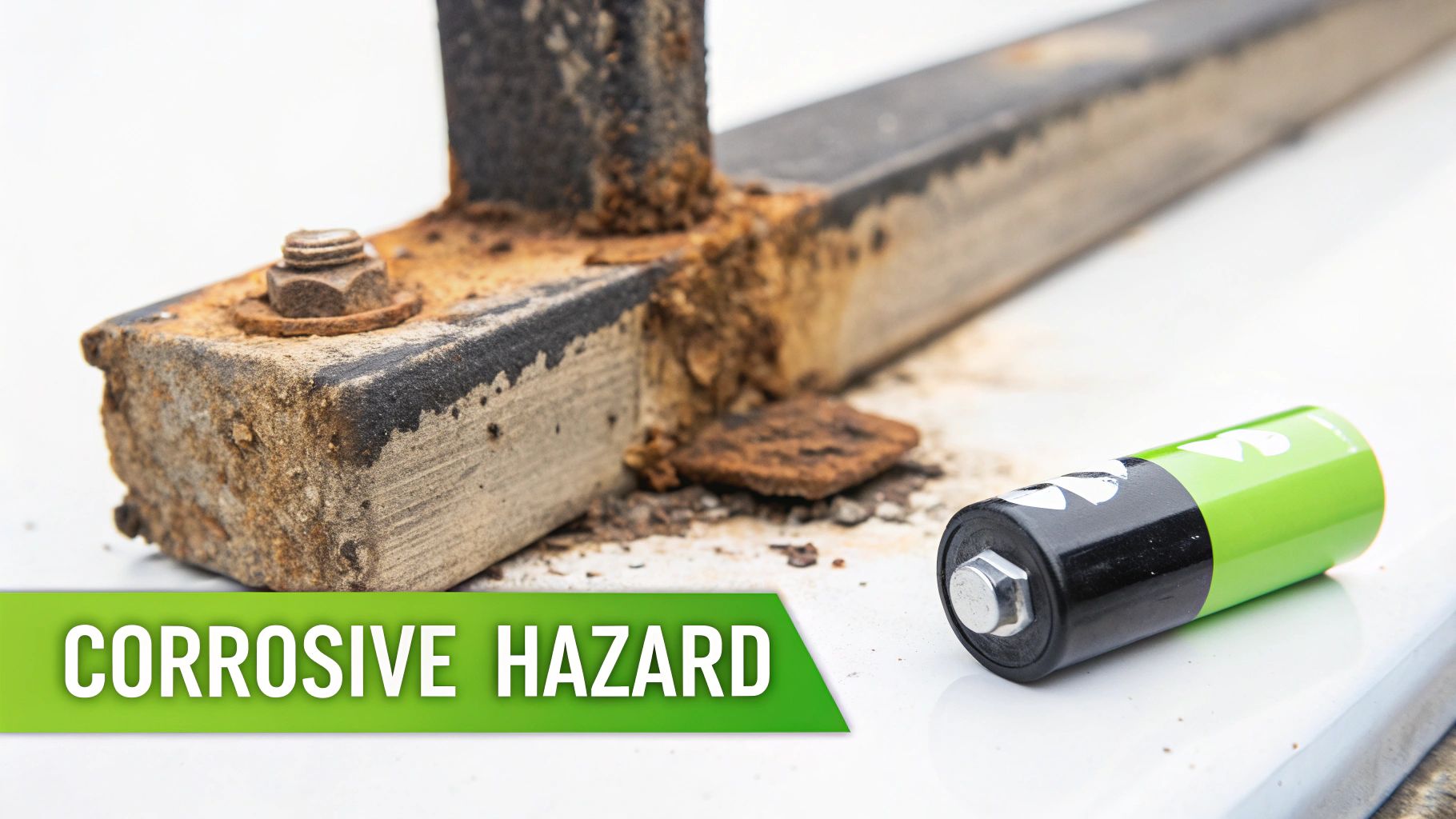
Imagine a small spill that does more than just make a mess. Picture it silently eating its way through a steel truck floor or causing irreversible chemical burns to anyone who touches it. That's the stark reality of Class 8 dangerous goods. Their primary danger isn't flammability or explosive potential; it's their quiet, relentless ability to degrade and destroy whatever they touch.
This destructive power is precisely why they are so heavily regulated. A tiny leak from a poorly sealed container of industrial acid could ruin an entire pallet of goods, damage expensive transport equipment, and create a serious health hazard for freight handlers. The damage isn't always instant, either. It can be a slow, creeping process that weakens structures over time, making it even more insidious.
The Role of The ADG Code
To manage these risks in Australia, all transport of dangerous goods by road and rail falls under one critical rulebook: the Australian Dangerous Goods (ADG) Code. This isn't just a set of guidelines; it's the legal framework dictating exactly how corrosive substances must be identified, packaged, labelled, and handled from start to finish.
The ADG Code creates a common language for safety that everyone in the Australian supply chain understands, from the person packing the box to the driver delivering it. Its sole purpose is to keep people safe and prevent incidents before they even have a chance to occur.
The ADG Code is the single source of truth for the land transport of dangerous goods in Australia. Following its rules isn't a choice—it's a legal obligation to protect workers, the public, and the environment.
Why Compliance Is Non-Negotiable
Ignoring these regulations isn't just risky; it's a direct path to serious problems for any Australian business. Official data shows that a staggering 60% of dangerous goods incidents are caused by simple mistakes like poor packaging or incorrect paperwork. That's a huge number, especially when you consider that over 2 million movements of dangerous goods happen across Australia every year.
Cutting corners can lead to massive fines and serious legal trouble under the Chain of Responsibility laws, which make every party in the supply chain accountable for safety. For businesses using platforms like Aeros Couriers, getting compliance right from the outset is the only way to avoid costly delays, fines, and potentially disastrous safety incidents. To learn more, check out our guide on transporting dangerous goods across Australia and what you need to know to stay compliant.
Spotting Class 8 Goods in Your Day-to-Day Operations
It’s easy to think of "dangerous goods" as something only found in a science lab, but you'd be surprised how many common products fit the Class 8 corrosive category. Chances are, your business handles them every day without a second thought. Getting a handle on what they are is the absolute first step to shipping them safely and legally within Australia.
From the local mechanic’s workshop to a busy commercial kitchen, corrosive substances are everywhere. We’re talking about the wet-cell lead-acid batteries in cars and forklifts, the heavy-duty drain cleaners under the sink, or the rust removers used on a factory floor. Each one is classed as corrosive and has to be transported under strict rules.
The trick is to look past the product’s everyday purpose. It's not just "cleaning supplies" or a "standard car battery." If you’re shipping it, you need to think about its chemical makeup. That shift in perspective is what keeps you compliant and, more importantly, keeps everyone safe.
UN Numbers: The National Code for Hazmat
Once you've flagged a product as potentially corrosive, the next step is to find its UN Number. This four-digit code is the universal ID for dangerous goods, recognised right across Australia. It’s not just a bit of administrative fluff; it’s a crucial safety tool.
Think of it like a chemical passport. That single number tells couriers, warehouse staff, and emergency services exactly what they’re looking at and how to handle it. It cuts through any confusion, ensuring the package is stored correctly and kept away from anything it might react with. You’ll always find the UN Number on the product's Safety Data Sheet (SDS), which is your go-to document for this kind of information.
Quick Reference for Common Class 8 Dangerous Goods
To make things a bit clearer, here’s a quick-reference table that connects some of the most common corrosive products to their official UN numbers and typical uses in Aussie businesses.
| Common Name | UN Number | Typical Business Use in Australia |
|---|---|---|
| Battery Acid (Sulphuric Acid) | UN2796 | Filling and servicing wet-cell batteries in automotive, marine, and industrial equipment. |
| Sodium Hydroxide (Caustic Soda) | UN1824 | A powerful ingredient in industrial-strength drain cleaners, oven cleaners, and degreasers. |
| Hydrochloric Acid | UN1789 | Used for cleaning brickwork and concrete, removing rust, and adjusting pH in industrial processes. |
| Car Batteries (Wet, filled with acid) | UN2794 | Standard vehicle batteries found in cars, trucks, and machinery across countless industries. |
| Sodium Hypochlorite Solution | UN1791 | The active ingredient in strong commercial bleaches and sanitisers used in cleaning and water treatment. |
Getting this right is non-negotiable. As guides from institutions like UTS highlight, things like car batteries and bleach must be correctly identified because they can cause severe damage to human tissue or other goods in transit. For businesses that need to ship these items across Australia, ensuring compliance can feel complicated. That's where services designed for simplicity come in, offering wholesale rates, dedicated 1300 support, and even rewards on over 10,000 items, allowing you to book shipments in minutes, insure pallets, and stay compliant with nationwide parcel delivery. To learn more, check out this guide on how to manage hazardous chemical compliance.
By getting into the habit of checking your inventory against this list and always referring back to the SDS, you lay the groundwork for a shipping process that is safe, smooth, and compliant every time.
Mastering Packaging, Labelling, and Documentation
So, you’ve correctly identified your Class 8 corrosive substance. What’s next? This is where the practical side of compliance really kicks in. Getting your shipment ready for transport all comes down to three key pillars: robust packaging, crystal-clear labelling, and accurate documentation.
Think of it this way: you wouldn't send a priceless, fragile vase through the post by just chucking it in a flimsy box. You'd find a strong container, pack it with cushioning, and plaster "FRAGILE" all over it. Shipping Class 8 goods is a legally mandated, high-stakes version of that same process. Every choice you make is designed to prevent leaks, dangerous reactions, and accidents on the road.
This simple flowchart breaks down those first crucial identification steps before you can even think about what box to use.
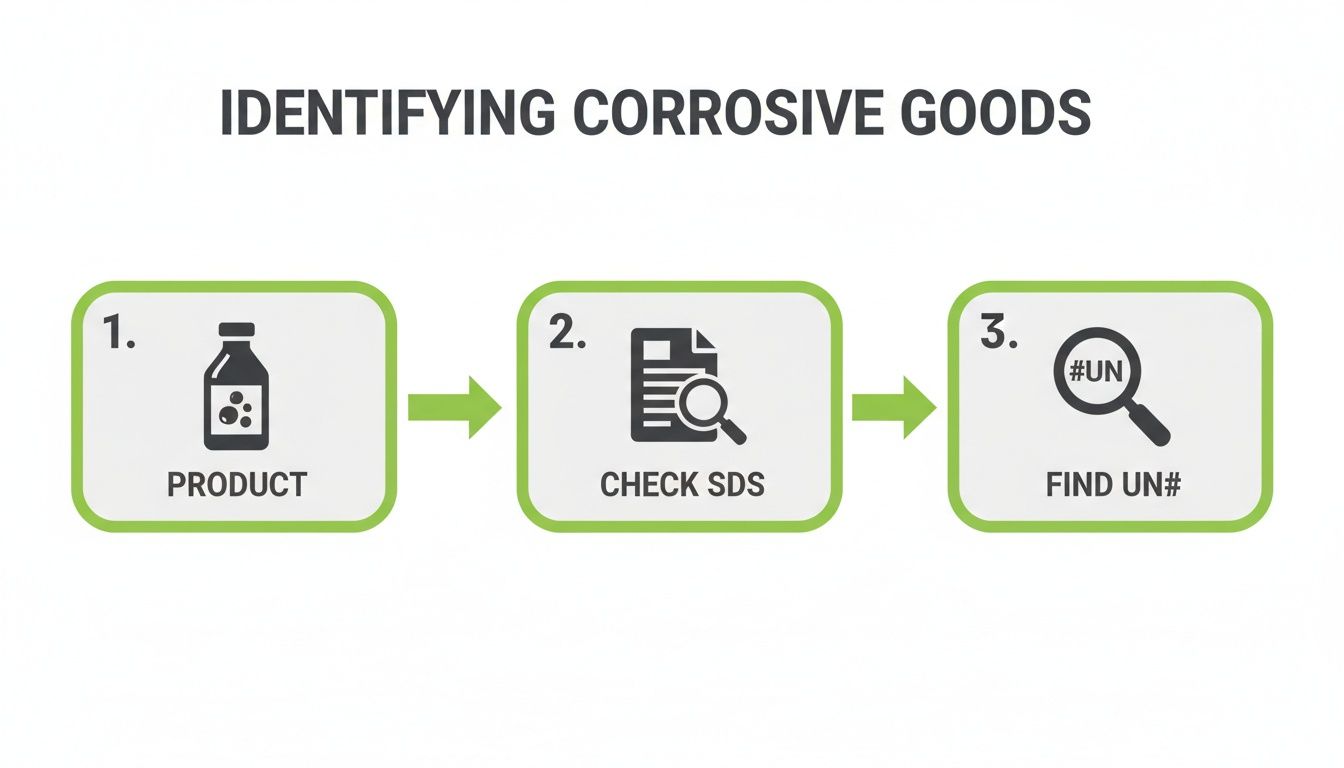
As you can see, everything starts with the product's Safety Data Sheet (SDS). This document is your source of truth, giving you the official classification and UN number you’ll need for everything that follows.
Selecting the Right Packaging
Not all containers can handle materials that can literally eat through metal. The Australian Dangerous Goods (ADG) Code sorts Class 8 substances into three Packing Groups (PG), which are ranked by how dangerous they are. This group dictates exactly how tough your packaging needs to be.
- Packing Group I (PG I): High danger. These are the most aggressive corrosives, able to destroy intact skin tissue in less than 3 minutes.
- Packing Group II (PG II): Medium danger. These substances cause full-thickness skin damage after being in contact for between 3 and 60 minutes.
- Packing Group III (PG III): Low danger. These cause the same level of skin damage but after a longer exposure of 60 minutes to 4 hours. This group also includes substances that corrode steel or aluminium faster than 6.25 mm a year.
Your product's SDS will clearly state its Packing Group. With that information, you must use UN-approved packaging. This isn't just any container; it’s one that has been specifically designed and tested to hold your material without leaking, breaking, or reacting. You’ll be looking at things like specialised plastic drums, jerricans, or composite containers.
Getting Your Labels Right
Think of labels as the universal language of dangerous goods. They communicate the hazard instantly to every single person who handles the package—from your own warehouse staff to the courier and even emergency services. Every Class 8 shipment needs a few specific marks to be compliant.
These labels have to be stuck on the outer surface of your package where they can’t be missed.
- The Class 8 Corrosive Hazard Diamond: That iconic black-and-white symbol showing a liquid eating away at a hand and a metal bar. It’s the primary visual warning.
- The UN Number: This four-digit code (like UN1824 for Sodium Hydroxide) has to be displayed, usually inside a rectangular border or right next to the hazard diamond.
- The Proper Shipping Name (PSN): This is the official name for the substance as listed in the ADG Code, such as "SODIUM HYDROXIDE SOLUTION".
- Consignor’s Name and Address: Your business details also need to be clearly visible on the package.
Why is this so important? Imagine the worst-case scenario. In an emergency, a firefighter can glance at the package, see the labels, and know the exact risk in seconds. That immediate, clear information allows them to take the right action to protect themselves and everyone else.
Completing the Essential Paperwork
The final piece of the compliance puzzle is your documentation. For every single dangerous goods shipment within Australia, you are legally required to provide a dangerous goods declaration. This document is your formal, signed statement certifying that the goods have been correctly classified, packaged, and labelled according to the ADG Code.
This declaration needs to be spot-on with the details:
- The sender's (consignor) and receiver's (consignee) name and address.
- The Proper Shipping Name, Class (8), and UN Number.
- The Packing Group (I, II, or III).
- The number and type of packages (e.g., "1 x 20L plastic drum").
- The total quantity of dangerous goods being shipped.
This paperwork travels with the freight and is the main source of information for the carrier. It's often built into the main shipping document; if you're curious about how that works, it's worth understanding what is a consignment note and the role it plays. Remember, accurate paperwork is just as critical as a strong container. One mistake here can get your shipment stopped cold and result in some hefty penalties.
How to Handle and Transport Class 8 Goods Safely
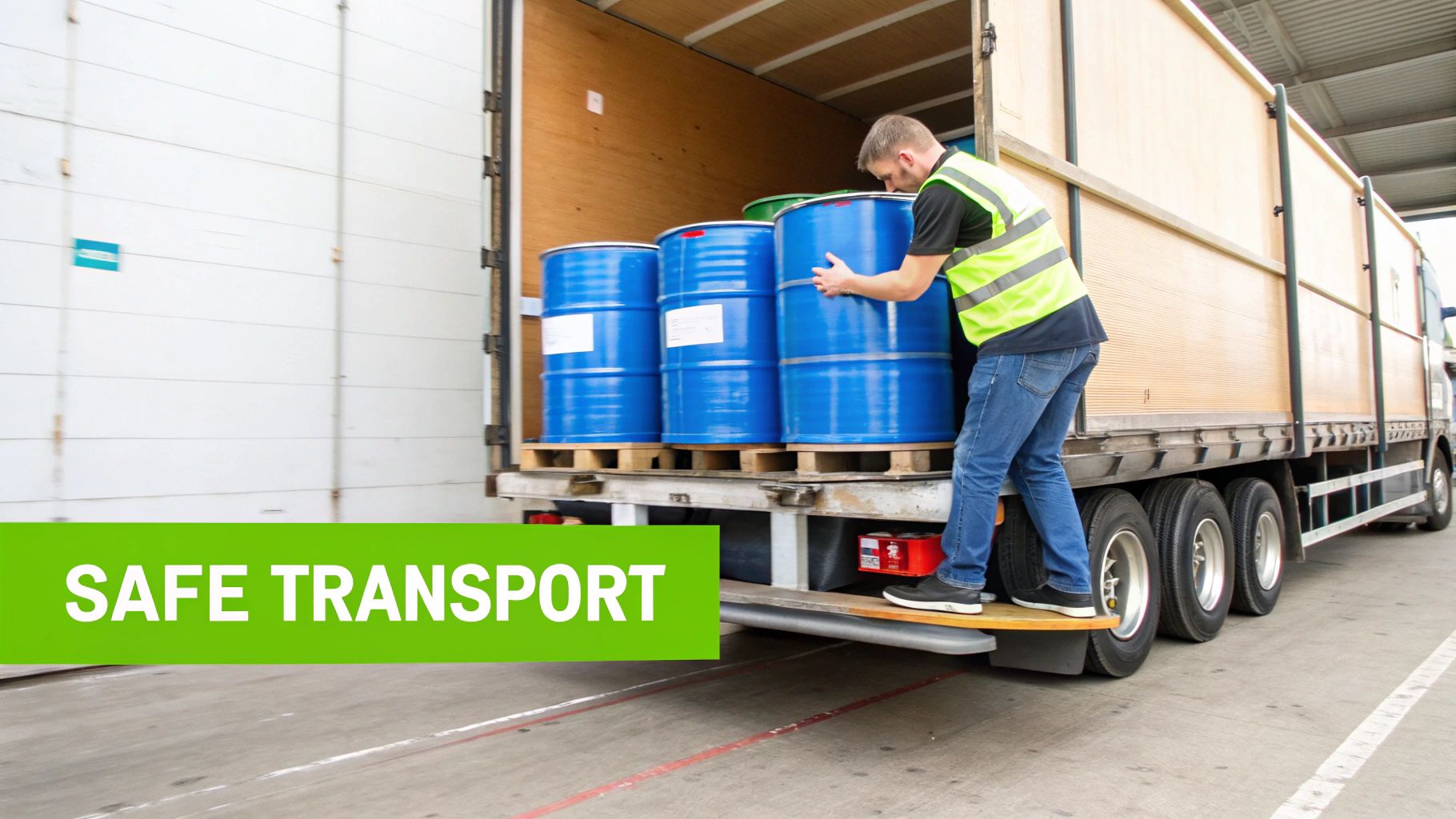
Getting corrosive substances across Australia safely is about much more than just sticking the right label on a box. It involves a hands-on, practical understanding of the rules of the road. From the moment those goods are loaded onto a truck until they reach their destination, every single step is guided by strict safety protocols designed to prevent a worst-case scenario.
These rules aren’t just red tape. They’re there to protect everyone—the driver, other people on the road, and the environment—from the serious damage a spill or chemical reaction could cause.
The Critical Rules of Segregation
One of the most fundamental rules in transporting dangerous goods is segregation. You can't just pack different chemicals side-by-side and hope for the best. Mixing substances that don't play well together can trigger violent reactions, releasing toxic fumes, starting fires, or even causing explosions.
The ADG Code gives us a clear segregation chart, and for Class 8 corrosives, it's non-negotiable.
- Acids and Alkalis: Think of these as chemical opposites. Loading a strong acid like Hydrochloric Acid (UN1789) next to a potent alkali like Sodium Hydroxide (UN1824) is a recipe for disaster. If both were to leak, they could react violently, generating intense heat.
- Corrosives and Flammables: Always keep Class 8 goods well away from flammable liquids (Class 3) or solids (Class 4). A corrosive leak could easily eat through the container of a flammable substance, starting a fire that would be incredibly difficult to contain.
- Corrosives and Cyanides: This combination is absolutely lethal. If an acid comes into contact with cyanides (Class 6.1), it can release hydrogen cyanide gas—a highly toxic substance that can be fatal if inhaled.
Vehicle Placarding and Driver Training
Any truck carrying dangerous goods over a certain amount needs to display placards. These are basically large, diamond-shaped versions of the hazard label, placed on the front and back of the vehicle. In an emergency, these placards are the first thing responders look for, telling them instantly what kind of danger they’re up against.
Just as important, the person behind the wheel must be properly trained and licensed to carry dangerous goods in Australia. This isn’t just about driving; it’s about understanding the specific risks, knowing the segregation rules inside and out, and being prepared to act quickly and correctly if something goes wrong.
The journey of a corrosive substance is complex. Transporting Class 8 corrosive substances across Australia's vast road and rail networks demands unwavering adherence to the ADG Code's Class 8 protocols, as these materials—ranging from acids and hydrofluoric acid to sodium hydroxide in drain cleaners—can cause irreversible tissue damage or corrode vehicle components if leaked. Nationally, over 2 million dangerous goods consignments move yearly, with Class 8 items requiring specialised UN-approved containers, prominent hazard labels, and trained personnel at every stage. You can discover more insights about dangerous goods classes on the CASA website.
Exemptions for Limited Quantities
Now, not every single shipment of a corrosive product needs the full-blown dangerous goods treatment. The ADG Code has a practical exemption for what’s known as Limited Quantities (LQ). This can be a real cost-saver for businesses sending smaller amounts of certain Class 8 items.
The LQ rule applies when the substance is packed in small inner containers (like 1-litre bottles) which are then packed into a solid outer box that weighs no more than 30 kg. These parcels get a special black-and-white LQ diamond mark but are let off the hook for some of the more intense transport regulations.
Be careful, though—this exemption has strict limits. It’s generally for substances in Packing Groups II and III, and the ADG Code specifies the maximum size for the inner containers. It's vital you check that your product actually qualifies before you send it this way.
For a deeper dive into managing hazardous materials from start to finish in your workplace, you might find this a comprehensive guide to hazmat waste management useful.
Understanding Your Role in the Chain of Responsibility
When you ship dangerous goods in Australia, your safety responsibility doesn't just stop at your warehouse door. Australia has a powerful legal framework called the Chain of Responsibility (CoR) that makes safety a shared duty, holding everyone in the supply chain accountable.
What does that mean in practice? If a shipment of Class 8 dangerous goods goes wrong, the blame doesn't just fall on the driver. The law looks at everyone who had a hand in the transport process, and that includes you—the sender, also known as the consignor.
Under CoR laws, you have a legal obligation to take every reasonable step to prevent safety breaches. This means making sure your corrosive substances are correctly identified, packed, labelled, and documented before a courier even lays eyes on them.
Your Specific Obligations as the Sender
As the person sending the goods, you're the first and most critical link in the chain. You know more about what you're shipping than anyone else, and ignoring that duty can lead to serious consequences, from massive fines to prosecution for both individuals and the business.
Your main duties under the Chain of Responsibility are:
- Correct Classification: It’s on you to accurately identify the goods, their UN Number, and their Packing Group using the Safety Data Sheet (SDS).
- Compliant Packaging: You must use UN-approved packaging that’s right for the substance’s specific Packing Group.
- Accurate Labelling and Marking: Every package needs the correct Class 8 hazard diamond, UN Number, and Proper Shipping Name clearly displayed.
- Proper Documentation: You're responsible for giving the carrier a complete and accurate dangerous goods declaration.
- Ensuring Safe Loading: While the carrier does the heavy lifting, you need to present the goods in a way that allows for safe transport—think stable, secure, and absolutely not leaking.
The core idea behind CoR is simple: if you have control, you have responsibility. As the sender, you control the crucial first steps of the journey, making your actions fundamental to the safety of everyone down the line.
Staying current with your obligations is a continuous process. For anyone looking to formalise their expertise and stay ahead of regulatory changes, it's worth exploring what makes for valuable CPD accreditation and professional development.
A Practical Checklist for CoR Compliance
To help you manage your risks and meet your legal duties, we've put together a simple checklist. Use it to audit your process for shipping Class 8 goods and ensure you’re ticking all the right boxes. Staying on top of these details is the key to effective logistics compliance.
Shippers Checklist for Chain of Responsibility
Use this checklist to ensure your business meets its legal CoR obligations when shipping Class 8 corrosive substances in Australia.
| Compliance Task | Completed (Yes/No) | Notes or Action Required |
|---|---|---|
| Product SDS is current (within 5 years) and accessible | ||
| UN Number and Packing Group are confirmed | ||
| Packaging is UN-approved and suitable for the Packing Group | ||
| All required labels (Class 8 diamond, UN No.) are applied | ||
| Dangerous goods declaration is fully and accurately completed | ||
| Carrier has been correctly informed of the dangerous goods |
Treat this checklist as a starting point. Regularly reviewing your procedures is the best way to ensure nothing slips through the cracks, protecting your business, your partners, and the public.
Sending Class 8 Goods with Aeros Couriers
Knowing the rules for shipping corrosives is one thing, but actually putting them into practice is what gets your goods delivered safely and legally. We’ve designed the Aeros Couriers platform to make this process as straightforward as possible, helping you meet your obligations without getting bogged down in complexity.
We’ve built the compliance checks right into the booking workflow. This turns what can feel like a daunting task into a series of simple, manageable steps. By prompting you for the right information at the right time, we help you build a fully compliant shipment before the parcel even leaves your hands.
Your Step-by-Step Booking Guide
Once your Class 8 goods are properly packaged and labelled, our online platform guides you through the booking. We’ll ask for the essential details required by the Australian Dangerous Goods (ADG) Code, making sure nothing is missed.
Here’s a quick rundown of how it works:
- Start a New Quote: Pop in the pickup and delivery postcodes, along with your parcel's weight and dimensions.
- Declare Dangerous Goods: When you get to the freight details, you’ll see a clear option to declare your shipment as dangerous goods. For any Class 8 item, this step is mandatory.
- Enter Critical Information: As soon as you tick that box, new fields will appear. This is where you’ll enter the UN Number, Proper Shipping Name, and the Packing Group (I, II, or III)—making sure it all matches your Safety Data Sheet (SDS).
- Confirm and Book: Our system takes this information and instantly finds a carrier qualified to handle dangerous goods, giving you a competitive quote on the spot.
Getting these details right from the start ensures your consignment note and all carrier paperwork are generated correctly. It’s a crucial part of fulfilling your Chain of Responsibility duties.
The Aeros Couriers Advantage
When you choose Aeros Couriers, you’re not just getting a booking platform; you’re partnering with a team that gets the challenges Australian businesses face. We provide a complete freight solution built on reliability, affordability, and genuine local support.
Our system is designed to take the guesswork out of compliance. By asking for specific details like the UN Number and Packing Group during the booking process, we help you declare your shipment correctly from the very beginning. This minimises the risk of delays, fines, and safety incidents down the line.
Our platform also gives you access to a host of other benefits, including full national coverage across metro and regional Australia, included freight insurance for extra peace of mind, and a direct line to our Australian-based support team on a 1300 number if you ever have a question.
To see how we can help your business, feel free to explore the full range of our courier services and discover a smarter way to manage your freight.
Common Questions About Shipping Corrosives
Even when you feel you've got a good handle on the rules, shipping Class 8 dangerous goods can throw a few curveballs your way. Let's tackle some of the most common questions we hear from Australian businesses when they're getting corrosive substances ready for transport.
Getting these points straight will give you the confidence to manage every shipment safely and correctly.
Do I Need a Special Licence to Send Class 8 Goods in Australia?
As the sender, you personally don't need a specific licence. The real responsibility lies with the carrier and their driver—they're the ones who must hold the required dangerous goods licences in Australia.
However, the law does put a crucial duty on you. You need to have the right training and knowledge to make sure the goods are correctly identified, packed, labelled, and documented according to the ADG Code. Essentially, your job is to hand over a consignment that is safe and fully compliant.
What Happens If I Mislabel My Class 8 Goods?
Getting the labels wrong on dangerous goods is a serious misstep in Australia, and the consequences can be severe. You could be looking at hefty fines, prosecution, or even jail time under the Chain of Responsibility laws.
But beyond the legal penalties, mislabelled packages are a genuine safety hazard. They can lead to spills, dangerous chemical reactions, and injuries, putting transport workers and the public at risk. To get this right every time, you can learn all about how to correctly label your package with our helpful guide.
Can I Send Small Amounts of Corrosive Products with Fewer Rules?
Sometimes, yes. The Australian Dangerous Goods Code has a provision for 'Limited Quantities' (LQ), which allows tiny amounts of certain Class 8 goods to be shipped with less stringent regulations.
But be warned: the rules for Limited Quantities are incredibly strict and specific. You must confirm that your exact product, its concentration, and the size of its inner packaging all meet the precise criteria. If there's any doubt at all, the safest path is always to declare it as a full dangerous good and use a specialised carrier.
Are Common Household Cleaners Considered Dangerous Goods?
Absolutely. Many powerful cleaning products you'd find under the sink or in a commercial supply closet are classified as Class 8 corrosives. Think about things like:
- Heavy-duty drain cleaners
- Concentrated oven cleaners
- Industrial-grade concrete cleaners
Never just assume a retail product is safe for unregulated transport. The golden rule is to always check the product's Safety Data Sheet (SDS). The SDS will tell you definitively if it's a dangerous good and provide its UN number and Packing Group.
Ready to ship your goods with a partner who makes compliance straightforward? Aeros Couriers gives you the tools and support to send freight across Australia safely and affordably. Get an instant quote and book your next shipment in minutes at https://www.aeroscouriers.com.au.
