


Scouring Australia for an affordable interstate courier doesn't have to be a painful process of endless phone calls and confusing quotes. The secret? It’s all about using the right tools to compare your options instantly. An online comparison platform is your best friend here, giving you a clear view of real-time quotes from multiple Australian carriers all in one place.
How to Find the Cheapest Interstate Courier

Landing a great deal on interstate shipping boils down to a few simple, powerful habits. Gone are the days of being stuck with a single carrier’s non-negotiable rates. Smart shippers today—from eCommerce store owners to someone just sending a birthday gift—know that the real power comes from comparison.
This shift has been driven by digital aggregator platforms, which have brought much-needed transparency to the Australian shipping industry. Tools like these have been game-changers, often helping Aussies save up to 80% on interstate deliveries. They work by pulling live quotes from all the major players—think Australia Post, Aramex, and TNT—so you can see who offers the best price for your specific job, side-by-side.
Core Strategies for Saving Money
While comparing carriers is crucial, the biggest savings often come from factors that are entirely within your control. Before you even get a quote, think about these key areas:
- Your Parcel's Size and Weight: Couriers use something called 'cubic weight' (or volumetric weight). They'll charge you based on either the actual weight of your parcel or its size—whichever is greater. This means a big, light box can surprisingly cost more to send than a small, heavy one.
- How Fast You Need It: Does it absolutely have to be there tomorrow? If not, opting for standard road freight instead of express air services is one of the easiest ways to slash your costs.
- Getting the Details Right: Double-check your measurements and weight. Providing accurate information from the get-go ensures the quote you see is the price you'll actually pay, helping you dodge nasty surprise surcharges down the line.
Nailing these fundamentals will put you in the best position to consistently find the sharpest rates.
If there's one habit to build, it's this: stop automatically using the same courier you always have. Taking a minute to compare at least three quotes before you book can easily save you 30-40% over the course of a year.
This guide will give you a simple playbook to master this process. We'll cover everything from using online tools to your advantage to optimising your packaging. For an even deeper look, explore our complete guide on finding the cheapest courier service available.
Navigating Australia's Courier Options
The Australian courier market is a crowded space, which is fantastic news if you're looking for a good deal. Getting your head around the key players and services is the first step to snagging a genuinely cheap interstate courier service. The whole industry has been supercharged by the boom in online shopping, forcing everyone from the big names to the new kids on the block to get serious about their pricing.
This explosion in demand has really shaken things up. The Australian courier sector has ballooned into a $13.7 billion industry, with the number of businesses skyrocketing from roughly 19,000 to over 56,550 in just a few years. All this competition puts the power right back in your hands. For a deeper dive, you can check out these industry growth trends and what they mean for shipping costs.
Road Freight vs Express Air Services
When you're shipping something interstate, you’re essentially choosing between two main options: standard road freight or express air services. They serve very different needs and, of course, have very different price points.
-
Standard Road Freight: This is your best bet for saving money. Think of it as the reliable workhorse of Australian logistics. It's perfect for anything that isn't desperately urgent, like bulky items or regular business-to-business freight. It takes a little longer, but the cost savings are substantial, making it the most common choice for cheap interstate shipping.
-
Express Air Services: Need it there yesterday? Air freight is the way to go. It's built for time-critical documents, high-value goods, or that urgent online order a customer is waiting on. As you'd expect, you pay a premium for that speed.
The trick is to match the service to your real-world needs. One of the most common mistakes is paying for overnight air freight when a package would have been perfectly fine arriving in three days by road.
How Modern Shipping Platforms Have Changed the Game
What's really turned the industry on its head is the rise of online courier platforms. These websites have completely disrupted the old way of doing things, where you were stuck with whatever rates a single carrier offered. Now, you can see quotes from multiple couriers all on one screen, making them compete directly for your booking.
It's a bit like booking a flight—you’d never just go to one airline's website. You use a comparison site to find the best deal. Applying that same mindset to shipping is the fastest way to find massive savings on every single parcel.
This transparency is a win for everyone, whether you're an individual sending a gift to a mate in another state or a small business shipping orders every day. It gives you access to competitive rates that, in the past, were only available to massive companies with huge shipping volumes. Making a smart choice has never been easier, and our guide on choosing the best courier service for your needs can help you weigh up all the options.
Using Comparison Tools to Secure the Best Rates
This is where the real savings kick in. Honestly, using an online courier comparison tool is the single most effective way to find a genuinely cheap courier interstate. Instead of wasting time jumping between different carrier websites, these platforms pull all the information you need onto one screen, essentially making them compete for your business.
Let’s walk through a real-world example. Imagine you’re an online store owner in Perth who needs to send a 5kg package of handmade leather goods to a customer in Sydney. The box dimensions are 40cm x 30cm x 20cm.
Your first step is to punch these details—origin, destination, weight, and dimensions—into an aggregator platform. Within seconds, you'll see a list of quotes from various Australian carriers. But here's a pro tip: don't just sort by the lowest price and click 'book'.
This simple diagram shows just how straightforward the process is.
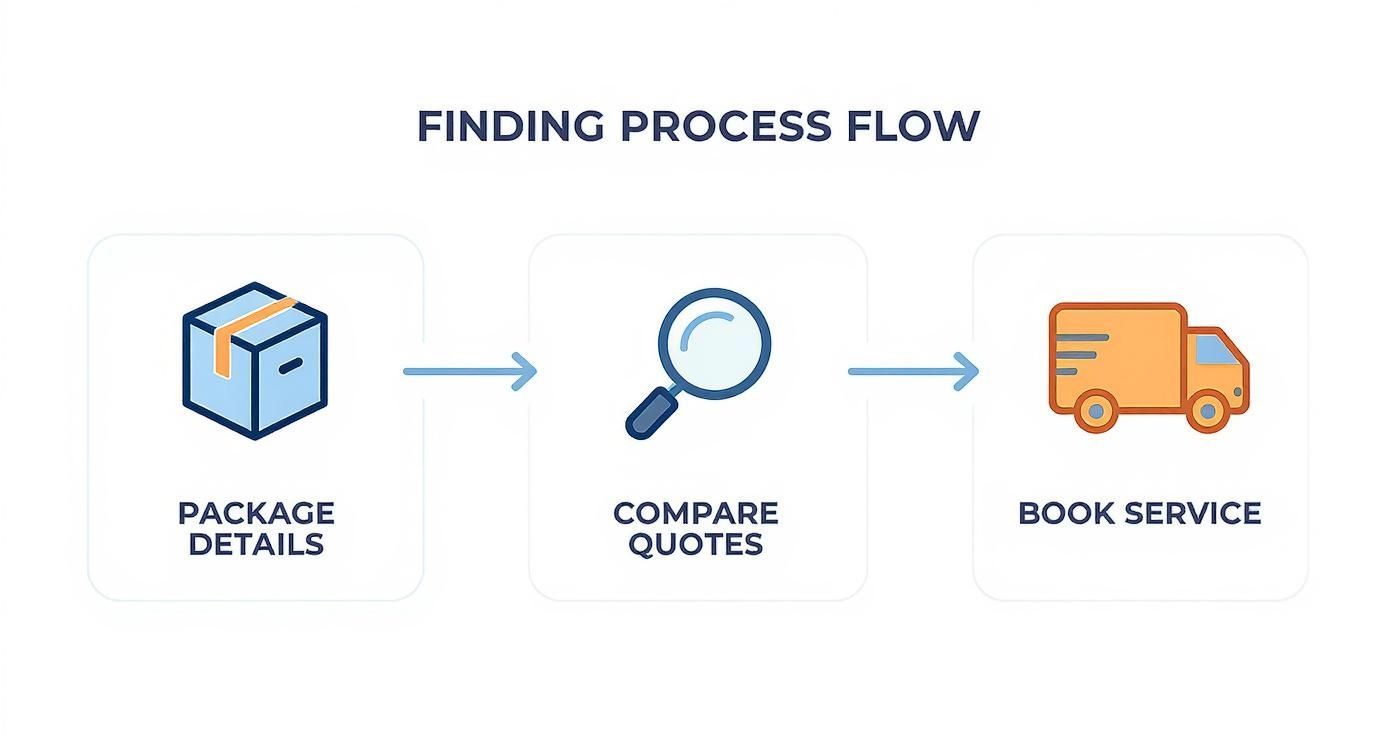
As you can see, it's a simple flow: provide your package details, compare the quotes that pop up, and then book the service that fits.
What to Look for in Your Quotes
The cheapest quote isn't always the best value. I’ve learned this the hard way. You need to look closer at the details to avoid unexpected costs or service headaches down the line. A few extra dollars might just buy you a much better service and peace of mind.
When you're comparing, keep an eye on these critical factors:
- Service Type: Is it a depot-to-depot service where you have to drop the item off and the recipient has to collect it? Or is it a more convenient door-to-door service? The price difference can be significant, so make sure you're comparing apples with apples.
- Transit Time: That super-cheap option from Perth to Sydney might take 7-10 business days via road freight. For a slightly higher price, another quote might cut that time in half. It’s all about matching the delivery speed to your customer's expectations.
- Included Insurance: Many services include a small amount of complimentary transit cover, often around $50 or $100. If your leather goods are worth more than that, you'll definitely need to purchase additional insurance.
By taking a moment to analyse the options beyond just the headline price, you transform from a reactive shipper into a strategic one. This small habit prevents costly mistakes and ensures you're selecting the right service for the right price, every single time.
Spotting Potential Hidden Fees
Comparison tools are fantastic for transparency, but you still need to be vigilant. Always look out for potential surcharges that might not be immediately obvious in the initial quote.
- Residential Delivery Surcharge: Some couriers add a small fee for delivering to a residential address compared to a commercial one.
- Attempted Delivery Fee: If the courier shows up and no one is home to sign for the parcel, you could be hit with a re-delivery fee. It pays to let your recipient know when to expect the delivery.
- Manual Handling Surcharge: If your package is an awkward shape, poorly packaged, or not properly boxed, it may attract an extra charge because it can’t go through the automated sorting machines.
Ready to see how it all works? You can get instant quotes and compare real-time rates by using an online shipping quote calculator to find the most cost-effective solution for your next interstate shipment. It’s the fastest way to put these principles into practice and start saving money right away.
Mastering Smart Packaging to Lower Costs

Here’s a hard-earned lesson from the logistics world: the way you pack your items can often have a bigger impact on your final shipping bill than the courier you actually choose. It's easy to grab any old box, but Australian couriers have pricing models that directly penalise wasted space. This is where understanding the concept of cubic weight versus actual weight becomes your secret weapon for saving money.
Every single courier in Australia will charge you based on whichever is greater—the physical weight of your parcel or its size (its cubic weight). Think about it: a big, lightweight box of cushions can cost more to ship than a small, heavy box of books. Why? Because it takes up more precious room in the truck. You're essentially paying to ship empty air, and that's one of the fastest ways to blow out your freight budget.
Choosing the Right Materials
Your goal should always be to minimise both size and weight without ever compromising on protection. A snug fit is everything. You want a box that leaves just enough room for a decent layer of protective material around your item, and not an inch more. Too much empty space is a double-whammy: it inflates your cubic weight and gives your items room to rattle around and get damaged in transit.
Here are a few smart material swaps I always recommend:
- Bubble wrap: It’s a classic for a reason. It's incredibly lightweight and does an excellent job protecting fragile goods.
- Air pillows: These are fantastic for filling voids inside a box without adding any noticeable weight.
- Crumpled paper or cardboard inserts: A great, recyclable option for bracing items and stopping them from shifting.
Always steer clear of heavy packing materials when a lighter alternative can offer the same level of protection. Every gram you shave off contributes to finding that truly cheap courier interstate.
The golden rule of packaging is simple: make your parcel as small and light as safely possible. Shaving just a few centimetres off each dimension of your box can translate into very real savings, especially when you're shipping regularly.
Best Practices for Palletising Freight
For businesses sending larger, bulkier shipments, getting your palletisation right is absolutely critical. I've seen countless businesses hit with expensive surcharges and frustrating delays all because of improperly stacked or wrapped pallets. Couriers need pallets that are stable, machine-readable, and safe for their team to handle.
To sidestep those extra fees, make sure your palletised freight ticks these boxes:
- Stack it right: Heavier boxes always go on the bottom to create a stable base. Distribute the weight as evenly as you can, and make sure the top surface is flat. Critically, nothing should be hanging over the edges of the pallet.
- Wrap it securely: Don't skimp on the shrink wrap. Start at the base of the pallet and wind it tightly all the way to the top, overlapping layers as you go. This is what stops the load from shifting or toppling.
- Label it clearly: Attach your shipping labels to each side of the wrapped pallet. This makes it easy for depot staff to scan it from any angle, which keeps things moving.
Follow these guidelines, and your freight will glide through the carrier’s network without attracting those dreaded manual handling fees. For a deeper dive into how these small details affect your costs, our guide on the cheapest way to send a parcel has even more practical advice.
Understanding Regional Surcharges and Delivery Times
Let’s be honest, not all interstate shipping routes are created equal, especially in a country as vast as Australia. If you're hunting for a cheap courier interstate, geography is going to be one of the biggest factors influencing both the final cost and the delivery speed.
It’s just a simple reality of logistics. A parcel heading from a warehouse in Melbourne to a storefront in Sydney is joining a massive, constant flow of freight. Trucks are running that route every single day, packed to the gills. This high volume allows carriers to spread their costs across thousands of items, which is what keeps prices so competitive.
Now, picture sending that same parcel to a small town in regional Western Australia or a remote community in Far North Queensland. It's a completely different ball game. That package will likely be handled more times, travel much longer distances between fewer drop-offs, and might even be passed to a local delivery partner for the final leg. All those extra steps and lower delivery density naturally add up.
Why Metro-to-Metro Is Always Cheaper
The price gap between a major city route and a regional delivery can be pretty eye-opening. Think about the east coast capital cities – they're connected by an incredibly efficient and competitive transport network. It's a high-frequency, high-volume operation that drives down costs for everyone involved.
You can see this reflected in standard freight rates. For example, a parcel up to 3kg sent from Melbourne to Sydney can cost as little as $8 to $15. A heavier one, between 3-10kg, might sit in the $15 to $28 range. These prices are pretty much the gold standard for affordable shipping.
Managing Expectations for Regional Deliveries
When you get a quote for a regional address, you'll immediately notice two things: the price is higher and the estimated time of arrival (ETA) is longer. It's not a glitch. A delivery that takes a couple of days between Sydney and Brisbane could easily take over a week to reach a regional town just a few hundred kilometres inland.
Why? Because your parcel has to journey from a major city depot to a smaller regional hub. From there, it gets handed off to a local driver who might only service that specific area a few times a week.
Getting your head around this geographical reality is key. If you run an e-commerce store, be upfront with your regional customers. A little transparency about potential delays and slightly higher shipping fees goes a long way in building trust and avoiding frustration.
Factoring this in is crucial for your bottom line and your customer service. Our detailed guide on Australian parcel postage costs can help you get a much clearer picture of how these variables affect the final price. By anticipating these regional differences, you can budget smarter and keep your customers happy, no matter where they call home.
Pro Tips for Frequent Senders and Businesses
https://www.youtube.com/embed/bxpLSEZahqU
If you're shipping parcels regularly, you already know that even small savings on each consignment can make a massive difference to your annual budget. It’s time to move past one-off bookings and start thinking strategically. For businesses or anyone sending multiple items, a few insider tactics can seriously boost your efficiency and your bottom line.
One of the smartest moves you can make is parcel consolidation. Instead of firing off individual packages to the same city over several days, try holding them back to ship as one larger consignment. Couriers love bigger shipments, and their pricing reflects that. You'll often unlock a volume discount you simply can't get when sending single parcels here and there.
Unlocking Wholesale Rates and Loyalty Rewards
This is where the real savings kick in for regular senders. When you set up a business account with a courier platform, you're not just a casual user anymore—you get access to wholesale or pre-negotiated rates. These are prices the general public never sees, designed specifically to reward businesses for their loyalty and consistent volume. It's an instant, permanent discount on every single thing you send.
But it's not just about the upfront price. Many platforms run loyalty programs that add even more value.
- Earn Reward Points: You can start accumulating points for every dollar you spend on shipping.
- Redeem for Value: These points can often be cashed in for useful things, like branded merchandise for your business or other essentials.
- Offset Costs: This turns a necessary expense into a way to get other things you need, effectively lowering your overall operational costs.
Protecting Your Shipments and Avoiding Penalties
Scoring a cheap interstate courier rate feels great, but that victory is short-lived if your valuable shipment gets lost or damaged. For businesses looking to scale, it's also worth exploring comprehensive solutions; understanding how services like Fulfillment By Amazon (FBA) explained work can reveal new efficiencies.
Let’s be clear: transit insurance isn't just an optional extra. It's a crucial safeguard for your valuable goods. While many services include a basic level of complimentary cover, it's rarely enough for high-value items. Always double-check the policy limits and purchase enough cover to protect your investment properly.
It's also absolutely critical to get the rules for restricted and dangerous goods right. Trying to send a prohibited item can lead to your shipment being returned, destroyed, or hit with hefty fines. That kind of mistake will wipe out any savings you’ve made in an instant. Always declare your items accurately to avoid a painful and expensive lesson in compliance.
Your Questions Answered
When you're trying to ship goods across Australia without breaking the bank, a few questions always pop up. Let's tackle some of the most common ones we hear from businesses and individuals just like you.
What Is the Cheapest Way to Send a Parcel Interstate in Australia?
For most shipments where speed isn't the absolute top priority, standard road freight is almost always your most cost-effective bet. Air freight is fast, but you pay a premium for that speed. Road transport, on the other hand, is built for efficiency and handling larger volumes over the vast distances between our cities.
The real trick is to use an online courier comparison tool. Instead of calling around or checking individual websites, these platforms pull in live quotes from a whole network of carriers. In seconds, you can see all the available road freight options side-by-side, making it easy to spot the cheapest price for your specific route.
How Can I Reduce My Shipping Costs?
Smart packaging is your secret weapon. Couriers charge based on size and weight (what's called cubic or volumetric weight), so using the smallest, lightest box that can still safely protect your item is crucial. The less space you take up in the truck, the less you pay.
If you ship regularly, look into consolidating multiple parcels into one larger shipment. It's often cheaper than sending them all individually. Another great move is to open a business account with a courier platform; this can give you access to wholesale or discounted rates that aren't available to the general public.
The single most effective habit is to compare quotes every single time you ship. It takes less than a minute and guarantees you aren’t overpaying by sticking with just one provider out of habit.
Are Cheaper Couriers Less Reliable?
Not at all. In the logistics world, a lower price usually reflects a longer delivery time, not a drop in service quality. A budget-friendly road service might take five days to get from Sydney to Perth, while an expensive express service gets it there overnight. Both should come with reliable tracking and proof of delivery.
The key is to stick with established, well-known carriers. A good comparison platform, like Aeros Couriers, only partners with trusted names in the Australian logistics industry. This means you can book a cheaper rate with peace of mind, knowing your parcel is in good hands.
Ready to stop guessing and start saving on every parcel you send? At Aeros Couriers, we make it simple to find the most affordable and reliable shipping options across Australia. Get an instant quote online and see how much you could save.
