



Finding a cheap courier in Australia is easier than you might think, but there’s a trick to it. The e-commerce boom has created a fiercely competitive market, which is great for us as customers. The real secret isn’t just grabbing the lowest price you see; it’s about understanding the whole picture to find true value.
This means looking past that initial quote and thinking about things like how fast you need it there, the quality of tracking, and any sneaky surcharges that might pop up.
Understanding the Australian Courier Market
Before you start hunting for deals, it helps to know what you’re dealing with. Australia’s parcel network is running at full throttle, mainly because we all love online shopping so much. This constant buzz forces courier companies to fight for every parcel, which ultimately drives prices down.
The downside? It also creates a confusing mess of different pricing structures, service tiers, and hidden fees. That ‘bargain’ rate you found might not seem so cheap once a fuel levy or a remote area surcharge gets tacked on. It’s a classic case of needing to read the fine print.
The E-commerce Effect
The numbers really tell the story here. In 2023, around 5.6 million Australian households were buying something online every single month. All up, more than 80% of us had at least one parcel delivered during the year. That’s an enormous strain—and a huge opportunity—for the logistics industry.
This constant demand means couriers are always competing for your business, whether you’re a small online retailer or just sending a birthday present to a mate. For anyone willing to do a little homework, this is your chance to save some serious cash.
Key Takeaway: The intense competition in the Australian courier market means there are great deals out there. The trick is to become a smarter shipper by learning to spot genuine value and sidestep the common traps.
Once you get this, you can start looking past the flashy ads and making decisions that actually make sense for your wallet and your deadline. Knowing why prices are what they are is the first step to finding a courier Australia that genuinely fits your needs without breaking the bank.
How to Properly Compare Courier Services
Jumping on the first quote you see is a surefire way to pay too much for shipping. If you want to find a genuinely cheap courier in Australia, you need a smart comparison strategy that goes beyond the headline price. The real secret is knowing how to use online comparison tools to your advantage and understanding which details actually matter.
Instead of just sorting by the lowest price, start by filtering the results based on what your shipment actually needs. Are you sending a delicate antique that demands special handling and insurance? Or is it just a standard document where speed is the only thing that counts? Getting specific at the outset prevents you from overpaying for features you don’t need or, worse, getting stung by a service that can’t do the job properly.
Look Beyond the Sticker Price
That initial quote you see? It’s often just the start of the story. A super-low base rate can be incredibly misleading if it’s missing essential services or hiding a bunch of potential surcharges. Finding the best value means digging a little deeper.
Think about the entire delivery journey, not just the freight cost. Sometimes, paying a fraction more for a service with reliable, real-time tracking and a responsive customer support team can save you a world of headaches—and money—if a parcel ever goes missing.
Key Takeaway: A truly cheap courier service is one that gets your parcel there safely and on time, without any nasty surprises on the final bill. Always weigh up reliability and transparency alongside the price.
This simple, three-step process is what I always follow when evaluating my options.
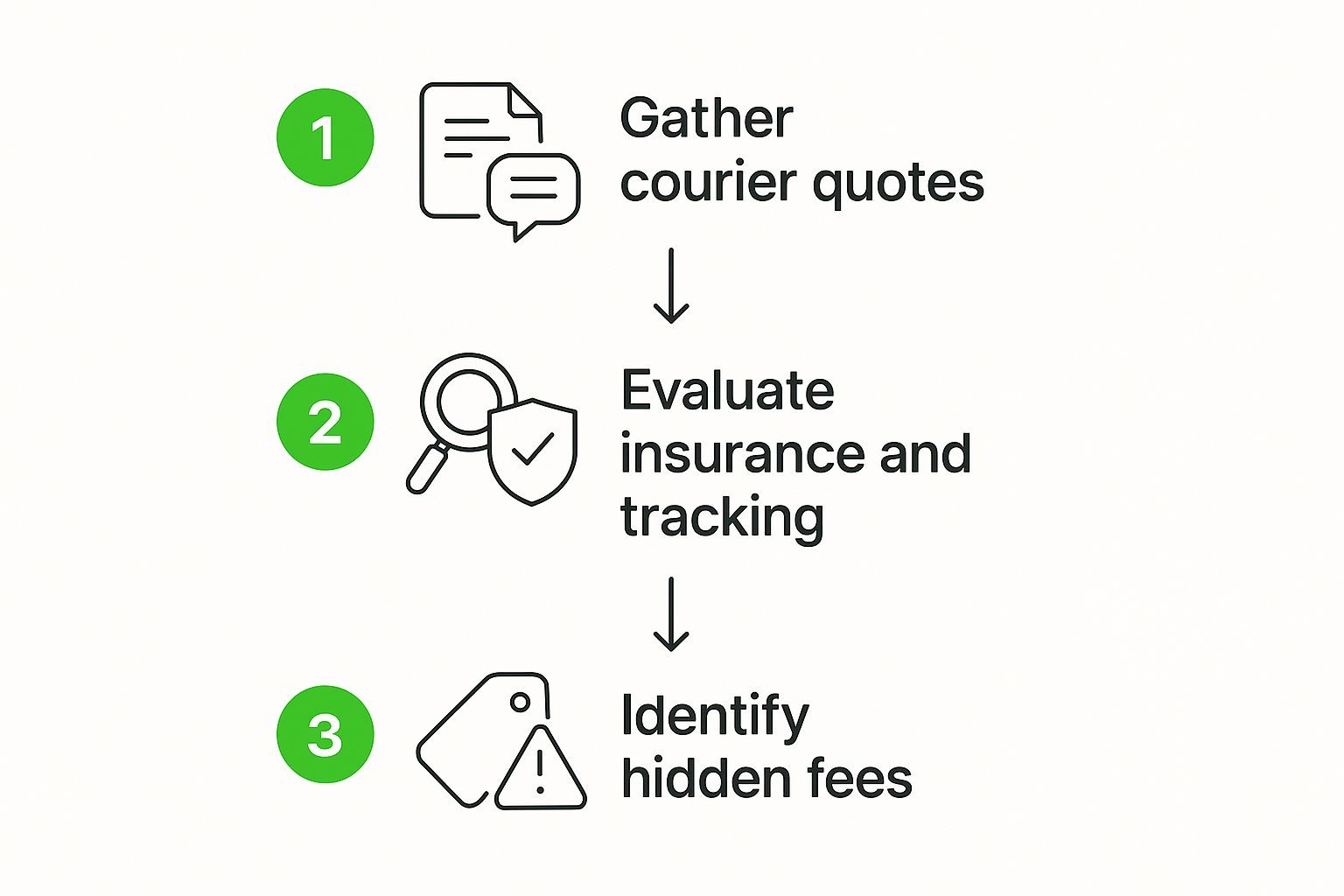
As you can see, a proper comparison is about more than just the initial number.
Uncover Common Hidden Fees
Many couriers tack on surcharges that can seriously inflate your final invoice. Knowing what these are ahead of time is crucial for accurate budgeting and finding the most affordable service. Always scan the fine print for these common extras:
- Fuel Surcharges: These fees move up and down with fuel prices and are almost always added to the base rate.
- Remote Area Fees: Delivering to regional or out-of-the-way parts of Australia will nearly always cost you more.
- Residential Delivery Fees: Believe it or not, some services charge extra for delivering to a home address versus a commercial one.
- Manual Handling Fees: If your parcel is oversized, an awkward shape, or not packaged correctly, expect to be charged for the extra manual labour involved.
It’s also worth remembering that courier costs can change depending on the day you book. For example, sending a 5 kg parcel from Melbourne to Brisbane might cost you anywhere from AUD 15 to AUD 22 on different days of the week. This is why comparing directly is so important. You can get a better feel for these price shifts by exploring more insights on Australian parcel delivery costs.
By keeping a mental checklist of these potential fees, you can compare quotes on a truly level playing field. Once you have all the information, you can book your shipment with confidence, knowing you’ve made a well-informed choice. This methodical approach ensures the price you see is the price you actually pay, making your hunt for a cheap courier in Australia a success.
Actionable Strategies to Lower Shipping Costs
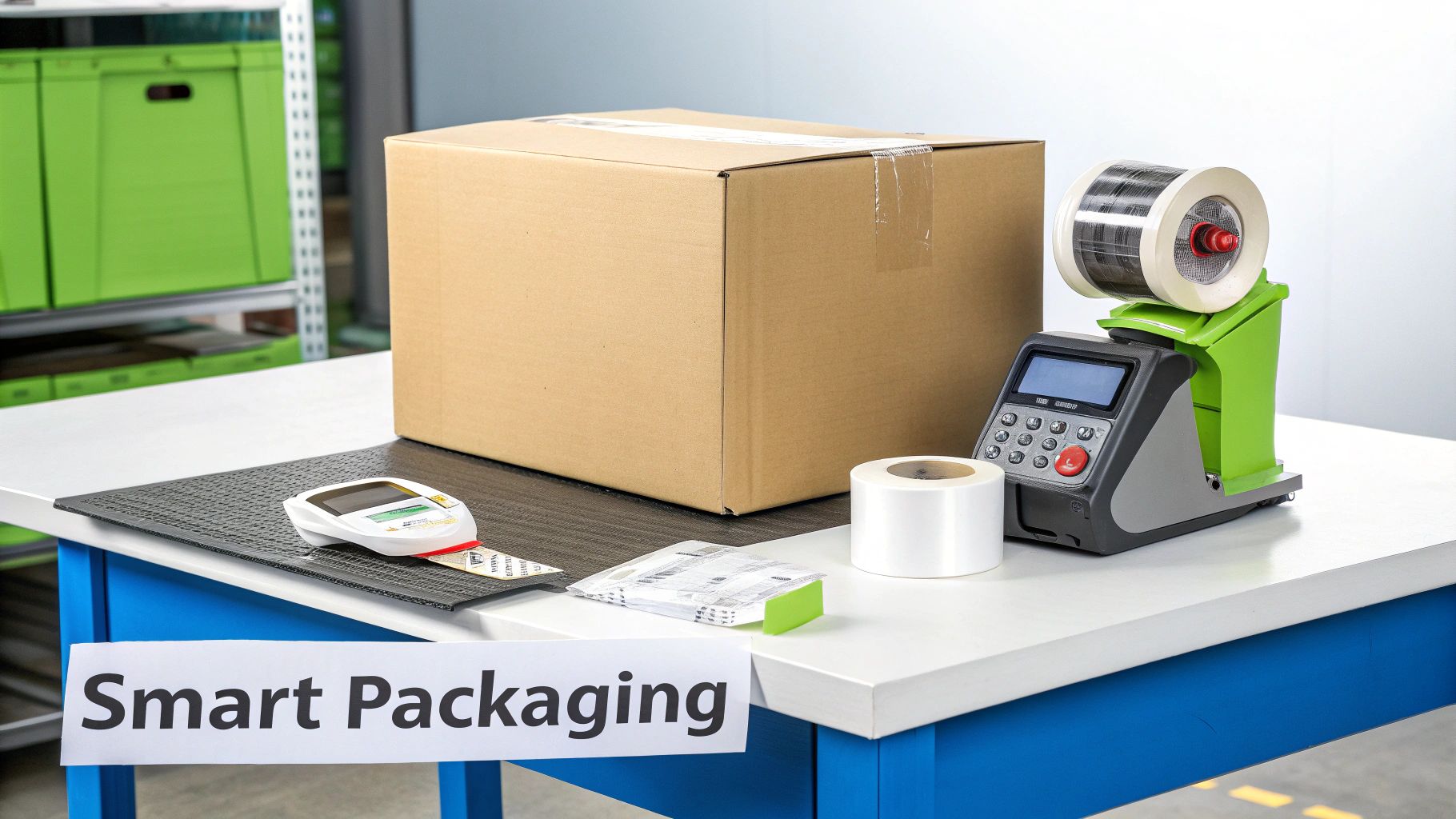
Securing a cheap courier in Australia is a solid start, but the real, ongoing savings come from getting smart about how you actually ship. The price you see on the screen isn’t set in stone; it’s heavily influenced by things you can control. A few simple tweaks to your packing process and a bit of forward planning can slash the cost of every parcel you send.
These aren’t massive, complicated overhauls. They’re just practical, easy-to-implement tactics that experienced sellers and frequent senders rely on to keep their shipping budget from spiralling out of control. Let’s get into the strategies that will give you the most bang for your buck.
Master Your Packaging Game
One of the most common money-wasters I see is the box itself. Couriers don’t just charge for how heavy your parcel is; they also charge for how much space it takes up. This is called dimensional weight (or cubic weight).
So, if you ship something light but bulky—like a puffer jacket—in a box that’s way too big, you’re going to pay for the empty space. That jacket might weigh less than a kilo, but pop it in a huge box and you could be charged for a 5kg parcel. Ouch.
The fix is simple: always use the smallest box that will safely fit your item. Pack any gaps with lightweight void fill, like bubble wrap, instead of letting oversized packaging inflate your bill. It’s a tiny change that can literally cut your shipping price in half. Before you seal that tape, always ask, “Could this fit in a smaller box or a satchel?”
Be Smart with Your Timing and Service Levels
In the world of shipping, speed costs money. It’s easy to default to the express option for everything, but honestly, it’s often an unnecessary expense. For anything that isn’t urgent, standard road services are incredibly reliable for most Aussie routes and will save you a bundle.
Also, keep an eye on the calendar. Sending parcels around major holidays like Christmas or during massive sales events like Black Friday can sometimes attract surcharges because of the sheer volume of parcels in the network. If your delivery can wait, shipping just before or after these peak times is a clever way to dodge extra fees.
Pro Tip: Always check the price difference between standard and express. A delivery that arrives in three days instead of one could save you $10 or more. If you’re shipping regularly, that adds up fast.
Consolidate and Buy in Bulk
If you’re running a small business or find yourself sending multiple items to the same person, consolidating your shipments is a game-changer. Instead of sending two or three small packages over a few days, bundle them into a single, larger box. The per-item cost drops dramatically.
For anyone who ships frequently, it also pays to buy your shipping materials in bulk. Many couriers give you a serious discount on prepaid satchels or labels if you commit to a larger quantity.
- Prepaid Satchels: Buying packs of 10, 25, or even 50 satchels upfront will almost always lock in a much better price per satchel.
- Bulk Shipping Discounts: If you have a business account, don’t be shy about asking for better rates based on your monthly shipping volume.
These tactics take a little bit of planning, but the savings make it well worth the effort. For a deeper look at managing logistics budgets, this guide on smart tips to reduce shipping costs is a fantastic resource with more great ideas.
Navigating Common Shipping Problems
Even the most organised shipper will tell you that things don’t always go to plan. Finding a cheap courier in Australia is a great start, but knowing how to handle the inevitable bumps in the road is what really sets you apart. Delays, damaged parcels, and tracking that seems frozen in time are all part of the game, but they don’t have to be a nightmare.
When something goes wrong, the best approach is to stay calm and methodical. Most issues have a clear solution if you know where to look and who to ask.
Understanding Delays and Cost Spikes
Sometimes, a delay has nothing to do with your chosen courier and everything to do with what’s happening in the wider industry. Things like driver shortages, wage pressures, and volatile fuel prices can have a real-world impact, often leading to unexpected cost increases.
Just look at Australia Post – their return-shipping fees shot up by 30% in a single year, a perfect example of how system-wide costs eventually get passed down to us. If you want to dive deeper into these trends, this detailed industry report is a great resource.
So, what do you do when the tracking page hasn’t updated? Don’t hit the panic button just yet. It could be a few simple things:
- No Scan Events: Your parcel is likely just travelling between depots. It won’t get scanned again until it hits the next major sorting hub.
- System Congestion: Big sales events and holidays can cause serious backlogs. Think of it like a traffic jam for parcels.
- Address Hiccup: A tiny typo in the address can send a package on a detour while the system tries to figure it out.
My rule of thumb? If you see no updates for more than two business days, it’s time to get in touch with customer service. Have your tracking number ready.
Pro Tip: When you call or email, be polite but get straight to the point. Give them the tracking number, the last known location, and the date of the last scan. This gives them everything they need to start digging, which is far more effective than a generic “Where’s my parcel?”
Dealing with Lost or Damaged Parcels
There’s nothing more frustrating than opening a box to find your item damaged, or worse, finding out it’s gone missing altogether. The very first thing you need to do is document everything. Grab your phone and take clear photos of the damaged item and all the packaging, inside and out, from every angle. This evidence is non-negotiable for a claim.
Next, you’ll need to check the insurance status. Most cheap courier services in Australia offer a small amount of complimentary cover, usually around the $100 mark. For anything more valuable, hopefully you opted for that extra transit warranty when you booked the shipment.
Filing a claim usually follows a straightforward process:
- Get in touch with the courier’s customer service team right away.
- Have your tracking number and all those photos ready to send.
- They’ll likely have a claim form – fill it out accurately and get it back to them as soon as you can.
On top of managing lost parcels or delays, businesses also have to keep compliance in mind. It’s well worth understanding the true cost of shipping compliance violations, because the fines and hidden fees can be a nasty surprise. By staying on top of things and acting fast, you can turn a shipping headache into a minor inconvenience.
Choosing the Right Service for Your Parcel
When you’re hunting for a cheap courier in Australia, it’s easy to just sort by the lowest price and click ‘book’. But I’ve learned from experience that the cheapest option isn’t always the right one. The real trick to saving money is matching your parcel’s specific needs to the service that fits it best.
Get this right, and you’ll avoid overpaying for express speed you don’t need or, worse, risking a fragile item with a bare-bones service that can’t handle it properly.
Think of it like booking travel. You wouldn’t hire a massive removalist truck to pick up a few groceries, and you wouldn’t try to move a fridge with a hatchback. Shipping is no different. The size, weight, and urgency of your item should guide your choice, ensuring you strike the perfect balance between cost, speed, and security every time.
Standard Versus Express Deliveries
The first fork in the road is nearly always the same: standard road service or express air? It’s tempting to want everything delivered tomorrow, but that express speed comes with a premium price tag. For most things where time isn’t a critical factor, a standard domestic service is easily the most budget-friendly choice.
Here’s a classic example from my days running an e-commerce store. A customer in Perth orders a t-shirt from my Sydney warehouse and selects standard shipping at checkout. If I sent that via an express service, I’d just be eating into my profit margin for no good reason. The customer isn’t expecting it overnight. A standard road courier is the smart, economical play.
On the flip side, if you’re sending an urgent legal document or a last-minute birthday gift, the extra cost for an express service is absolutely justified. The key is to consciously make this choice for every single parcel instead of defaulting to one or the other out of habit.
Key Takeaway: Before you book, always ask yourself, “Does this really need to be there tomorrow?” If the answer is no, sticking with a standard service is one of the easiest ways to consistently cut your shipping costs.
Handling Heavy and Bulky Freight
Once your parcels start getting bigger and heavier, you’re entering the world of specialised freight. Trying to shove a large, heavy item through a standard parcel network is a recipe for sky-high costs and a high risk of damage. Couriers that specialise in bulky goods simply have the right gear and processes to handle it safely.
For items that are too large for a regular box but don’t quite need a full pallet, you’ll want a service specifically for oversized freight. For even larger consignments, like business-to-business stock transfers, palletised freight services offer the best value and protection. It’s worth looking into the different domestic and international courier services available to see what fits your needs.
Here’s a quick mental checklist I use to categorise shipments:
- Standard Parcels: Perfect for everyday items, most e-commerce orders, and documents that fit into satchels or small-to-medium boxes.
- Express Parcels: The only choice for time-sensitive deliveries, critical documents, or when offering a premium shipping option to your customers.
- Specialised Freight: Your go-to for bulky furniture, heavy machine parts, or large stock orders that demand careful handling.
By taking a moment to figure out which category your shipment falls into before you even start searching for quotes, you can focus your search on the right providers. This not only leads to a cheaper price but also gives you peace of mind that your parcel is in the right hands.
Your Top Questions About Cheap Couriers, Answered
Sending parcels can feel like a bit of a minefield, especially when you’re trying to keep costs down without compromising on service. I get asked a lot of questions about this, so I’ve put together some straight-to-the-point answers to the most common ones.
Is the Cheapest Courier a Good Idea?
Honestly, not always. It’s so tempting to just grab the rock-bottom price, but that super-cheap option might be missing things you actually need, like real-time tracking, decent insurance, or a customer service team you can actually reach. If a parcel goes missing, that cheap quote can quickly become a very expensive problem.
Think in terms of value, not just price. For sending a book to a friend, the cheapest service is probably perfectly fine. But if you’re shipping a valuable piece of equipment or a time-sensitive document, spending a little extra for a courier with a solid reputation is money well spent.
The Real Goal: Don’t just hunt for the lowest price tag. Aim for the best overall value—a smart balance of cost, reliability, and the peace of mind that comes with knowing your parcel is in good hands.
How Do I Dodge Those Sneaky Extra Fees?
Nothing is more frustrating than getting a bill that’s way higher than your original quote. Those hidden surcharges are a common trap.
To sidestep them, you need to know what to look for. Here are the usual suspects:
- Fuel Surcharges: These are pretty standard and go up and down with fuel prices.
- Remote Area Fees: If you’re sending something out to the bush, expect to pay more.
- Manual Handling Fees: This gets slapped on parcels that are an awkward shape or aren’t packed well.
- Redelivery Fees: If the recipient isn’t home and the courier has to come back, you’ll likely be charged.
Your best bet is to use a comparison platform that shows you these potential costs from the get-go. And always, always be precise with your parcel’s weight and dimensions—accuracy is key to an accurate quote.
What’s the Cheapest Way to Send a Small Parcel?
For smaller items, usually anything under 5kg, you can’t go past prepaid satchels. Think of Australia Post’s flat-rate bags or similar deals from other couriers. You get one set price to send your item anywhere in the country, provided it fits in the bag.
Here’s a pro tip: buy your satchels in bulk. Most couriers will give you a healthy discount if you buy a pack of 10 or more. For anyone running a small online store, this is a non-negotiable strategy for cutting down on shipping costs.
Ready to stop guessing and start saving? With Aeros Couriers, you can instantly compare quotes from reliable carriers, book in minutes, and access wholesale rates with no account fees. Find your cheapest, most reliable shipping option today at https://www.aeroscouriers.com.au.
