
If you're running a business in Melbourne, shipping can feel like one of those jobs that somehow eats more time than it should. You just want a box picked up, moved quickly, priced fairly, and delivered without drama. Instead, you get vague quotes, unclear service names, and websites that tell you everything about fleet capability but very little about what your parcel will cost or when it will arrive.
That frustration is normal.
A lot of small business owners think they're bad at logistics because they don't speak the industry's language. You're not bad at logistics. You're dealing with a market that often makes simple things harder than they need to be. Once you know what to look for, the whole field becomes easier to read.
Finding Your Shipping Partner in a Crowded Market
Melbourne is a serious freight city. That matters even if you only send cartons, satchels, and small parcels.
The broader Australian road freight industry comprised 64,693 businesses in 2026, after growing at a 3.7% compound annual rate from 2021 to 2026, which helps explain why the market can feel so crowded for a business owner trying to choose a provider (industry snapshot on Australian freight companies).
If you're an online seller in Fitzroy, a clinic in Carlton, or an office in the CBD sending documents and replacement parts around Australia, too much choice can be just as hard as too little. One company promises express. Another says same-day. A third says flexible pricing. None of that tells you whether they'll suit your actual work.
Why small businesses often pick the wrong provider
Most businesses start with the obvious question.
What does it cost?
That's fair, but it isn't enough. A cheap base rate can turn expensive if the service is slow, hard to book, or loaded with extras. A more reliable provider can save money by reducing admin time, missed pickups, and customer complaints.
Good shipping decisions usually come from asking better questions, not from chasing the lowest number on the screen.
What you actually need from transport companies in melbourne
For parcel senders, the goal isn't to become a logistics expert. It's to find a partner that matches how your business operates.
A useful provider should make it easy to answer practical questions:
- Can they handle urgent metro jobs? You may need a same-day run across town.
- Can they move boxes Australia-wide? Many businesses need a simple path from Melbourne to Sydney, Brisbane, Adelaide, or regional centres.
- Can you understand the final price before booking? If not, budgeting gets messy fast.
- Can your team book without training? If every shipment needs a phone call, your process won't scale.
If you want a broader framework for judging service quality, this guide on what makes a courier service the best is a useful companion.
The good news is that you don't need insider access to evaluate providers well. You just need a clearer lens than price alone.
The Melbourne Courier Landscape Explained
Melbourne's courier market is broad enough that two companies can both call themselves a transport provider and still operate in completely different ways. That's where many businesses get caught. They compare names and headlines instead of comparing service models.
As of April 2026, Melbourne had over 141 specialised trucking and local shipping companies, which gives small and medium businesses a wide field of options but also makes carrier selection more complex (Melbourne trucking and local shipping company listings).

The three service types most parcel senders deal with
If you're sending boxes and parcels, most bookings fall into one of these practical buckets.
| Service type | Best for | What to expect |
|---|---|---|
| Same-day metro | Urgent documents, parts, forgotten stock, time-sensitive customer orders | Fast pickup and local delivery within Melbourne |
| Express next-day | Orders going interstate to major centres | Higher priority handling and quicker transit |
| Standard economy | Non-urgent shipments where price matters more than speed | Lower-cost movement with longer transit windows |
Those labels sound simple, but each one sits on a different operational setup.
A same-day service usually relies on local driver capacity and cut-off timing. An express next-day service often depends on how early your parcel enters the network. A standard economy service may still be perfectly suitable if your customer doesn't need the item immediately.
Why service names can be misleading
One provider's "express" may not match another provider's "express". That's not always dishonest. It often reflects different depot networks, booking cut-offs, subcontractor arrangements, and coverage priorities.
That's why you should ask for the outcome, not just the label.
Ask things like:
- What's the latest pickup time for this service?
- Is the delivery window business hours only?
- Does this route move directly, or through more than one depot?
- Is residential delivery treated differently from commercial delivery?
These questions matter more than marketing language.
Single-carrier loyalty isn't always efficient
Many small businesses stick with one company because it feels simpler. Sometimes it is. But it can also lock you into the wrong service for half your shipments.
A legal office might need urgent metro delivery in the morning and low-cost interstate parcel delivery in the afternoon. An online retailer may need one service for lightweight satchels and another for bulky cartons. One carrier won't always be strongest at every job.
The best transport setup often isn't one provider for everything. It's access to the right service for each shipment type.
That reality is one reason many businesses look for platforms that compare or aggregate options instead of forcing every box through a single network. If you're researching the broader field, this overview of freight companies in Melbourne helps show how varied the local market really is.
The key lesson is simple. Don't ask, "Who's the best?" Ask, "Who's best for this kind of parcel, to this destination, under this deadline?"
Decoding Courier Pricing and Hidden Costs
Most shipping quotes work like an iceberg. The number you see first is the visible part. The expensive surprises sit underneath.
One of the clearest gaps in Melbourne's market is cost transparency. Major carrier websites often talk about flexible pricing but don't publicly spell out fuel surcharges, tolls, or regional levies, which leaves many small businesses unsure what the final invoice will look like (analysis of Melbourne transport pricing opacity).

The base rate is only the starting point
A base courier charge usually reflects the core movement of the parcel. It often doesn't tell the whole story.
Common extras can include:
- Fuel-related charges that rise and fall outside the base rate
- Toll-related costs on certain routes
- Regional add-ons for harder-to-service locations
- Residential service differences when home delivery requires a different handling model
- Re-delivery or failed delivery charges if nobody can receive the parcel
- Optional cover or signature services depending on the booking type
Not every provider applies every charge. That's the point. You can't compare providers properly until you know what's included.
How hidden costs usually creep in
Here's a pattern I see often. A business compares two quotes, books the cheaper one, then discovers the "cheap" service becomes less attractive after a few common events.
A driver arrives and the item isn't packaged the way the network expects. The receiver isn't available. The address falls into a regional handoff zone. A signature is needed after all. None of these are unusual. But if the pricing model isn't clear, ordinary shipping events become budget surprises.
Ask for a like-for-like comparison
Don't ask, "What's your rate to Sydney?"
Ask this instead:
Practical rule: "What's the full charge for this exact box, from this Melbourne suburb to this delivery postcode, including any fuel, toll, residential, or regional additions?"
That wording forces clarity.
It also helps to give providers the same information every time:
- Actual dimensions
- Actual weight
- Pickup suburb
- Delivery postcode
- Business or residential delivery
- Required speed
- Any special handling needs
If you leave out one of those details, the quote may still be technically correct, but not commercially useful.
A simple way to stress-test a quote
Use this quick table when comparing transport companies in melbourne for parcel work.
| Question | Why it matters |
|---|---|
| Is the quoted price final at booking? | Helps prevent invoice shock |
| Are fuel and toll charges already included? | Avoids hidden additions |
| Is regional pricing different? | Stops underquoting for non-metro destinations |
| Is signature on delivery extra? | Important for higher-value parcels |
| What happens after a failed delivery? | Re-delivery charges can stack up |
| Is support easy to reach if billing looks wrong? | Small errors become big time drains |
Cheap isn't always low-cost
A service can be cheap to buy and expensive to operate.
If your staff spend time chasing pickups, correcting invoices, rebooking failed jobs, and answering customer emails about tracking gaps, your business is paying for poor shipping in wages and lost goodwill. Those costs don't appear on the consignment note, but they're real.
That's why a transparent online pricing tool matters so much. You want to see the cost while you're booking, not after the parcel is already in transit. If you want to benchmark what clearer online quoting should feel like, this page on courier prices is a useful reference point.
The strongest habit you can build is this one. Never compare headline prices. Compare total shipping outcomes.
Navigating Your Compliance and Packaging Duties
A lot of small senders assume compliance is the carrier's problem. It isn't. In Australia, Chain of Responsibility, usually shortened to CoR, spreads legal responsibility across the supply chain. If your business prepares and sends the parcel, you have duties too.
Under CoR laws, improper loading and non-compliance are linked to 40% of road incidents on Melbourne's arterial routes, and breaches can attract fines exceeding $10,000, which is why clear provider guidance matters so much (Melbourne transport compliance overview).
That can sound intimidating, but for box and parcel senders the practical issues are usually straightforward.
What CoR means for a parcel sender
You don't need to master transport law. You do need to make sure the goods you're handing over are described, packed, and labelled properly.
That includes:
- Accurate booking details so the carrier knows what they're collecting
- Secure packaging so the item can handle sorting and transit
- Correct labelling so the parcel moves through the network cleanly
- Honest declarations if the item contains anything restricted or risky
If you understate weight, hide a risky item, or pack something poorly, you're creating trouble for everyone who handles that box after you.
Packaging isn't just about avoiding damage
Good packaging does three jobs at once. It protects the item, protects the people moving it, and protects your ability to resolve a claim if something goes wrong.
A weak carton with poor internal fill can collapse in transit. A badly sealed box can open. A product with a lithium battery that hasn't been declared properly can trigger much more serious issues.
If your parcel wouldn't survive being stacked, scanned, and moved more than once, it isn't packed well enough for network transport.
The basic packaging check I give small businesses
Before you book, stop for one minute and ask:
- Is the box the right size? Too much empty space lets items move.
- Have I cushioned the contents properly? Internal movement causes damage.
- Is every old label removed? Mixed labels create routing errors.
- Is the outer carton strong enough? Retail packaging often isn't transit packaging.
- Have I declared anything sensitive or regulated? Many businesses frequently make errors in this area.
Some products deserve extra care. Cosmetics, electronics, medical accessories, and anything with batteries should never be booked casually.
Dangerous goods confusion is common
Small businesses often think dangerous goods means industrial chemicals only. In practice, the category can catch ordinary commercial items too, depending on what's inside.
That's why you should never guess.
If your product includes batteries, aerosols, flammable contents, or anything you're unsure about, get guidance before booking. This resource on hazardous goods classification is a practical place to start.
The simplest rule is this. If you wouldn't feel comfortable explaining the contents clearly to a transport operator, pause and check first.
Compliance isn't just legal housekeeping. It's part of running a dependable shipping operation.
Mastering Metro Melbourne vs Regional Victoria Logistics
A parcel going from Richmond to Southbank is one kind of job. A parcel going from Melbourne to a regional Victorian town is another.
Many businesses treat them as if they're the same because the booking form looks the same. Operationally, they aren't. Metro work usually has denser driver coverage, more frequent runs, and more delivery options. Regional work often depends on longer linehaul movements, handoffs, and tighter service windows.
A major challenge in the local market is regional delivery predictability. Many Melbourne transport companies say they offer national coverage, but publish zero public data on average delivery times or on-time performance for regional Victorian postcodes (review of regional transport information gaps).
Why regional freight feels less predictable
This doesn't always mean a provider is poor. It often means the route has more moving parts.
A metro delivery may stay within one dense urban network. A regional parcel might:
- travel from the pickup suburb to a Melbourne depot
- move linehaul to another centre
- transfer to a regional delivery run
- wait for the next servicing day for that postcode
The customer only sees "in transit". You need to understand the path behind that phrase.
The expectation gap that causes customer complaints
Most complaints don't start with a delay. They start with a promise that was too confident.
If your checkout says "fast Australia-wide delivery" but your provider doesn't show postcode-specific realities, your team ends up stuck between the customer and the carrier. That's stressful and avoidable.
Try using language that better reflects service type:
- Metro urgent for fast local movement
- Interstate express for major city routes
- Regional standard where delivery timing can vary by location
This sounds less flashy, but it builds trust.
Customers usually handle a realistic delivery window better than a vague promise that slips.
Questions to ask before you trust a regional service
When assessing transport companies in melbourne for Australia-wide parcel work, ask these directly:
| Ask this | Listen for this |
|---|---|
| Do you service this postcode directly? | A clear yes, or an honest explanation of handoff arrangements |
| Are some regional areas delivered only on certain runs? | Useful detail beats generic reassurance |
| Will tracking show meaningful updates after linehaul? | Tracking should inform, not just occupy the page |
| Is residential regional delivery handled differently from commercial? | Delivery success can vary by address type |
| What happens if the receiver misses delivery? | Important in towns with limited repeat runs |
If the answers stay vague, assume the service is vague.
How to set better delivery expectations
For regional jobs, your business should build a simple habit. Quote customers based on likely operating conditions, not best-case outcomes.
That means checking:
- The destination postcode
- Whether it's residential or commercial
- Whether the shipment is urgent or routine
- Whether the parcel has any handling issues that may slow processing
Then communicate in plain English. "This is going regional, so we'll send tracking once booked and give you the most realistic ETA available."
That sentence saves a lot of cleanup later.
A good shipping partner won't just accept your booking. They'll help you understand the route.
What Modern Booking and Tracking Should Look Like
Plenty of transport businesses still behave as if booking a parcel should involve forms, callbacks, and waiting around. That might have worked years ago. It doesn't suit a modern small business trying to move quickly.
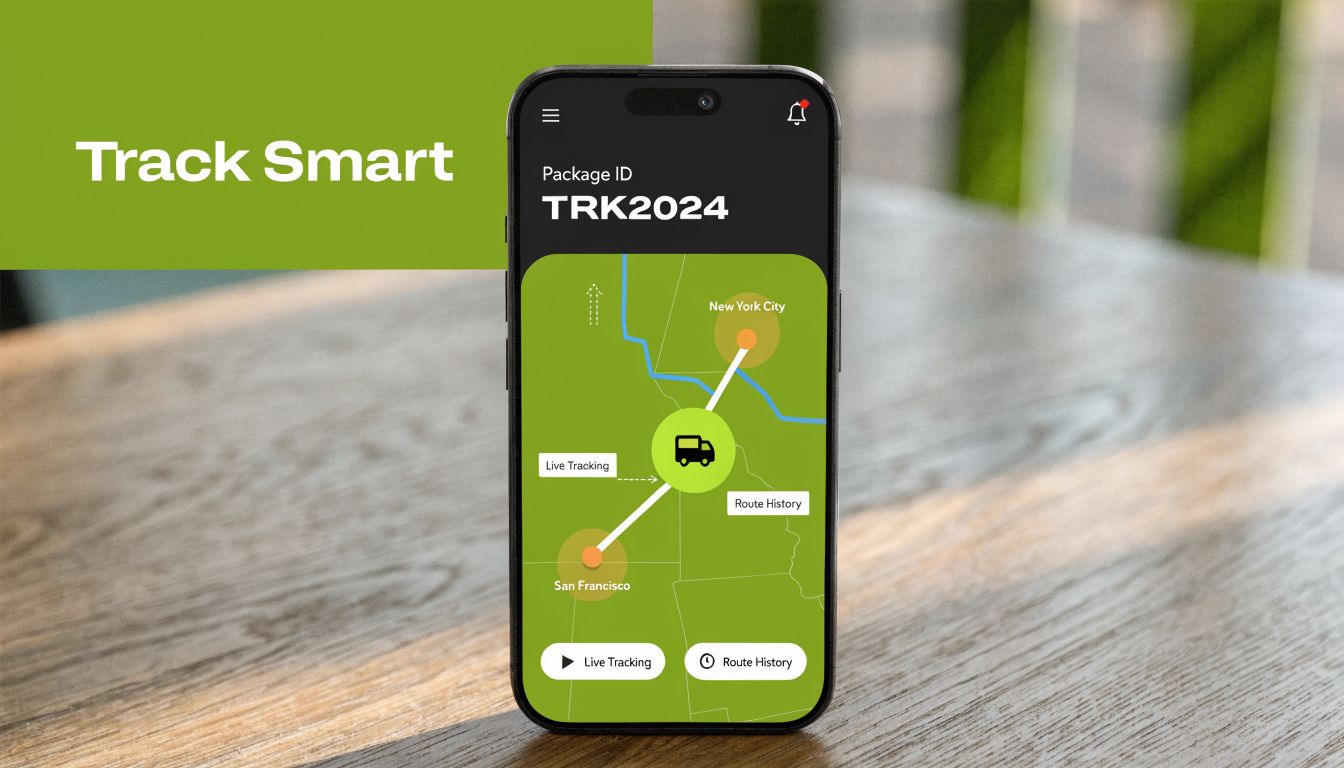
Today, booking should feel close to ordering any other business service online. You should be able to get a quote, choose an option, enter addresses, print a label, and move on with your day.
What good booking looks like in practice
A strong booking flow usually has these characteristics:
- Instant quoting without forcing a drawn-out account process
- Clear service choices rather than confusing internal product names
- Fast label generation so staff can dispatch quickly
- Address and shipment detail checks that catch mistakes early
- A central dashboard where active jobs are easy to find
If your team has to ring someone for routine consignments, the system is too heavy.
Tracking should reduce customer service work
Tracking isn't just a convenience feature. It changes how much time your team spends answering "Where is it?" emails.
Poor tracking creates uncertainty. Basic tracking shows only that a label exists or that the item is "in transit". Useful tracking gives enough event detail that your team can understand whether the parcel was collected, processed, transferred, out for delivery, or delayed.
That's why many businesses now look beyond old consignment-style updates and pay attention to broader advanced tracking features that make shipment visibility more meaningful for operations teams and customers alike.
A simple benchmark for your current process
Try this exercise with your own workflow.
Time how long it takes a team member to do one ordinary booking from start to finish.
Include:
- Getting the quote
- Entering sender and receiver details
- Selecting the service
- Printing the label
- Finding the tracking page later
If that routine task feels clunky, your shipping process is costing you more than the parcel charge suggests.
The best booking systems don't just move parcels. They remove admin friction from the business sending them.
What your team should be able to do without support
A modern courier platform should let a normal staff member, not just the office expert, handle routine shipping confidently.
They should be able to:
- book a local delivery
- send a parcel interstate
- reprint a label
- find tracking fast
- check shipment status from one screen
- manage repeat address details without rebuilding every booking
If your process depends on one "shipping person" who knows all the workarounds, your system is fragile.
For a practical example of the standard businesses now expect, this guide to direct courier tracking shows how smooth visibility should feel.
Technology won't fix every courier problem. But weak technology creates a lot of unnecessary ones.
Your Checklist for Choosing the Right Melbourne Transport Partner
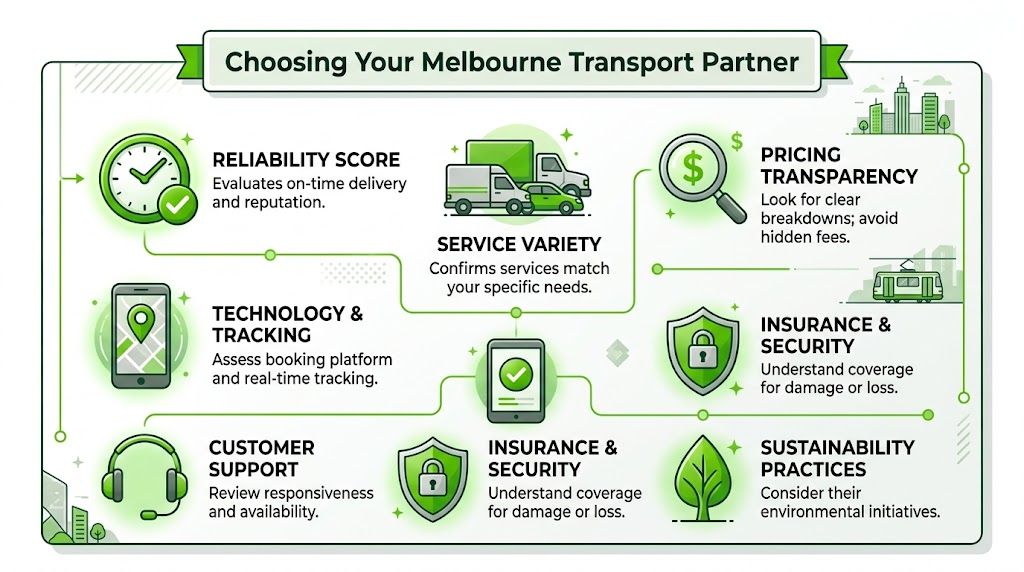
Once you strip away marketing language, choosing between transport companies in melbourne becomes much more manageable. You're looking for evidence, not slogans.
Use this checklist before you commit to any provider for local and Australia-wide parcel delivery.
Start with the commercial basics
Transparent pricing
Ask whether the amount shown at booking is the amount you should expect to pay. If the answer is fuzzy, keep looking.Service fit
Don't choose a provider because they're big. Choose them because they're good at the kinds of parcels you send. A business doing urgent metro jobs has different needs from one sending routine eCommerce orders across Australia.Easy quoting
If getting a price feels like a sales process, that's a warning sign. Shipping should be operationally simple.
Check how they handle real-world friction
A provider sounds good when everything goes to plan. How they handle ordinary complications is a significant test.
Look for clarity on:
| Situation | What a good provider does |
|---|---|
| Failed delivery | Explains the next step and any extra charge clearly |
| Address issue | Helps correct it fast |
| Packaging question | Gives practical guidance, not vague warnings |
| Tracking concern | Offers visible status and reachable support |
| Regional shipment | Sets realistic expectations early |
Many small businesses commonly get trapped by this. They compare the easy part, then suffer through the messy part.
Assess the technology like an operations manager
You don't need flashy software. You need software that saves staff time.
Ask yourself:
- Can a new team member book without training drama?
- Can labels be produced quickly?
- Can all active shipments be viewed in one place?
- Can someone check status without digging through emails?
- Can the business keep shipping if one staff member is away?
If the answer to several of these is no, the process won't scale neatly.
Don't ignore support quality
The importance of local support is often underestimated.
When a shipment is urgent or a customer is waiting, you don't want a maze of generic contact forms. You want responsive help from people who understand Australian delivery conditions and can talk plainly.
A transport partner earns trust when something goes wrong, not when the homepage says the right words.
Make compliance part of the buying decision
Small businesses often treat compliance as an afterthought. It should be part of provider selection.
Check whether the company gives clear guidance on:
- restricted items
- labelling
- dangerous goods declarations
- packaging standards
- proof of delivery options
- claims processes
A provider that explains these areas well is usually easier to work with overall.
Ask one final question
Before you open an account or make a booking, ask this:
"Will this provider make shipping simpler for my team every week, or are they just offering a low first impression?"
That question cuts through a lot of noise.
If the platform is easy to quote, easy to book, easy to track, and clear about pricing and responsibilities, you've probably found a practical fit. If it relies on vague promises, hidden extras, and manual workarounds, you'll feel that pain almost immediately.
A good Melbourne transport partner should help your business do five things well:
- Book quickly
- Understand the full price
- Send parcels safely
- Set honest delivery expectations
- Resolve issues without chaos
Use that as your standard. Not a glossy brochure. Not a sales pitch. Not a headline rate.
If you want a simpler way to send cartons, satchels, and parcels across Melbourne and Australia without the usual pricing confusion, take a look at Aeros Couriers. It offers instant quotes, fast online booking, label printing, tracking from one dashboard, included freight insurance, reward points, and responsive Australian support, all built for businesses that want low-cost shipping without the usual hassle.
Courier quotes, tracking and support
Ready to send a parcel? Compare the available services for your postcodes, parcel dimensions and weight. For an existing delivery, use your consignment number to check tracking or ask our team for help.