

Putting the right label on your package is single-handedly the most important thing you can do to ensure a fast, smooth delivery anywhere in Australia. Think of that simple sticker as a digital passport for your parcel. It contains all the critical info that automated systems and couriers need to get your shipment from A to B without a single human having to step in.
Why Your Shipping Label Is More Than Just a Sticker
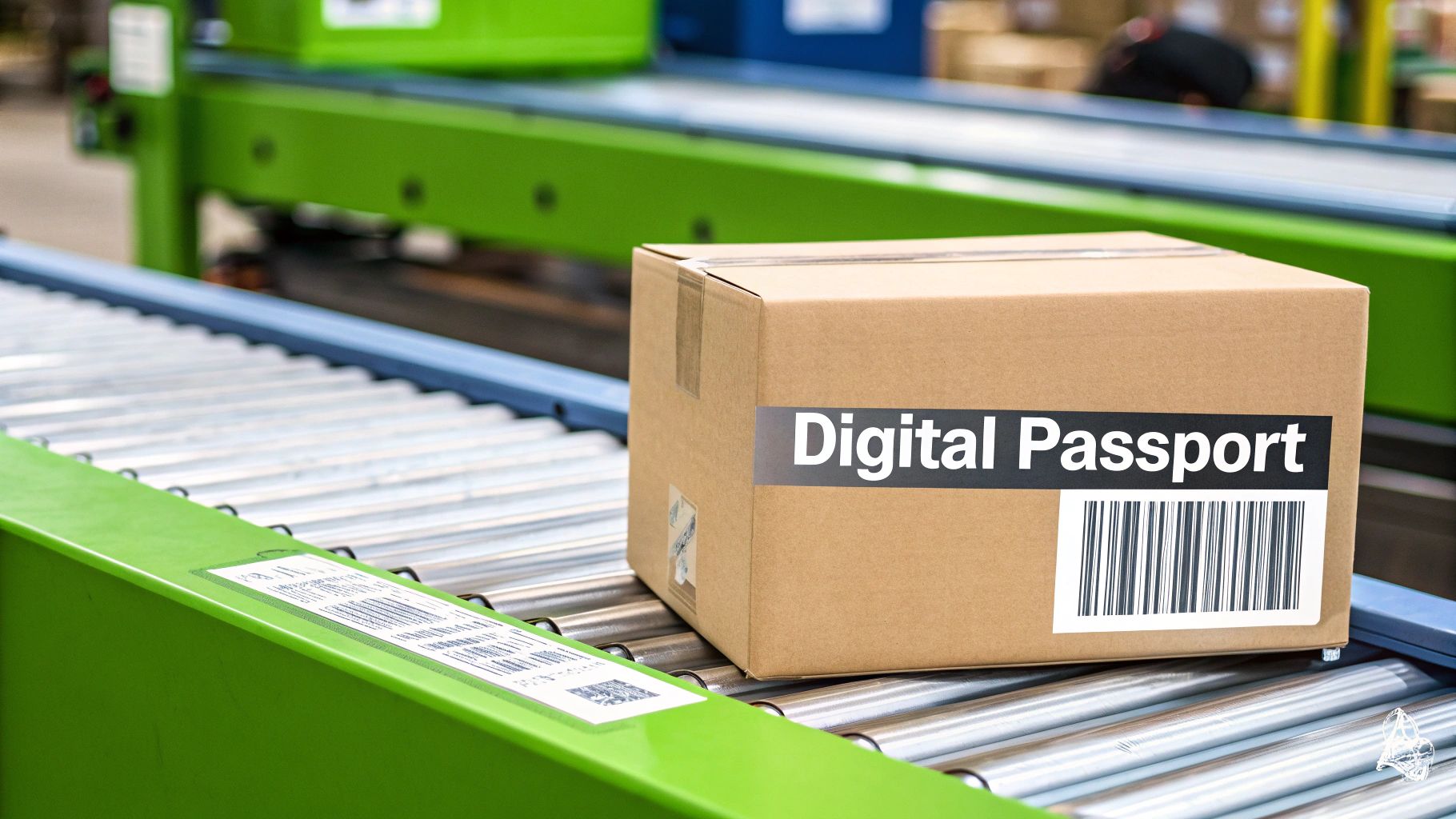
Before we get into the nitty-gritty of printing and placement, it's crucial to grasp what that shipping label actually does. Within Australia's highly automated logistics networks, it's so much more than just an address. It's the primary way your package communicates. A perfectly formatted and correctly placed label is your best guarantee that a parcel will sail through sorting hubs without a hitch.
Getting this one element right has a direct impact on your efficiency and your bottom line. Nail it, and you'll sidestep common pitfalls like:
- Costly manual handling fees: These pop up when a machine can't read a label and a person has to get involved to figure out where it's going.
- Frustrating delivery delays: Often caused by parcels being sent to the wrong depot or put aside while someone seeks clarification.
- Lost or returned items: The worst-case scenario, usually triggered by unscannable barcodes or hidden delivery details.
A great way to think about it is that the label's barcode is its unique fingerprint. When a laser scanner hits it, the system instantly knows the package's origin, destination, service type, and entire tracking history. Any smudge, crease, or bad placement makes that fingerprint unreadable.
The Legal and Tech Side of Things
Beyond the practical logistics, there are serious compliance issues at play. Under Australian Consumer Law (ACL), businesses can be hit with penalties of up to $10 million AUD for labels that don't meet specific standards, which has a knock-on effect on how you must prepare your goods for shipping. It pays to be on top of Australian packaging laws to make sure you're fully compliant.
On top of that, technology is always moving forward. While a crisp, clear barcode is the standard today, new methods like Radio Frequency Identification (RFID) technology are changing the game for package tracking. This constant evolution just reinforces how important it is to be precise from the very beginning.
When you understand these details, labelling stops being a chore and becomes a key part of your business strategy. Once you've chosen the perfect service from our https://aeroscouriers.com.au/courier/, a flawless label is the first step toward a perfect delivery.
Getting Your Shipping Labels Printed and Ready
A perfect label is more than just a sticker; it's your parcel's passport through the entire delivery network. Getting the printing right from the get-go is the single best thing you can do to avoid frustrating and costly delays down the line. It all starts with the right tool for the job.
If you're just starting out, your trusty office laser or inkjet printer will get you by for a handful of orders. But as your business grows, you'll quickly find that a dedicated thermal label printer isn't a luxury—it's a necessity. They're lightning-fast, don't use a drop of ink or toner, and create crisp, durable barcodes that can take a beating on their journey.
Choosing Your Printer: Thermal vs. Laser
For any Australian business sending out parcels regularly, the printer you use has a direct impact on your efficiency and bottom line. A laser printer might seem like the cheaper option upfront, but the recurring cost of A4 label sheets and toner cartridges can really sneak up on you. Thermal printers, on the other hand, are built for one purpose and they do it exceptionally well, offering much better value in the long run.
To keep your shipping station running smoothly, it's always a good idea to have plenty of supplies on hand. Looking into wholesale shipping labels and tags can be a game-changer for managing costs as you scale.
Choosing the right printer often comes down to your daily shipping volume and how much you value speed and durability. Here’s a quick breakdown to help you decide.
Thermal vs Laser Printers for Shipping Labels
| Feature | Thermal Printer | Laser Printer |
|---|---|---|
| Ongoing Costs | No ink or toner; only labels needed. | Requires toner/ink and A4 label sheets. |
| Print Speed | Very fast; prints one label in seconds. | Slower; prints an entire sheet at once. |
| Durability | Smudge-proof and water-resistant. | Ink can smudge if it gets wet. |
| Best For | High-volume daily shipping. | Low-volume or occasional shipping. |
Ultimately, if you're shipping more than a few parcels a day, the speed and lower running costs of a thermal printer make it the clear winner for most e-commerce businesses.
From Download to a Perfectly Printed Label
After you book a shipment, the courier will send you a PDF label. This is where a tiny mistake can cause a big problem: scaling.
You must always print at 100% scale.
Resist the urge to click "Fit to Page" or any other setting that alters the size. Even a small change can warp the barcode's dimensions just enough to make it unreadable to the automated scanners in sorting facilities. If you're using A4 sheets that have, say, four labels on them, double-check your print settings to make sure you're printing on the correct quadrant and not across the perforations.
Key Takeaway: A poorly scaled or fuzzy barcode is a guaranteed failure at an automated sorting depot. The system will kick the parcel out for a human to handle, which means delays and, often, extra fees billed back to you.
Finally, don't skimp on the labels themselves. Use good quality, self-adhesive shipping labels. Printing on plain paper and sticking it on with tape is asking for trouble. It can easily get wet, rip, or peel off in transit, leaving your parcel lost in the system.
For a more comprehensive look at getting this step right every time, our guide to perfecting your shipping label printing has even more detailed advice. A few extra seconds spent on printing correctly can save you days of headaches later.
Where to Stick Your Shipping Label on Cartons and Satchels
You’ve printed the perfect label, now what? Where you actually place that label on a package can make or break its journey. A well-placed label means your parcel glides through automated sorting centres without a second thought. A poorly placed one? It gets pulled aside for manual handling, and that’s where the delays begin.
The golden rule is simple: find the single largest, flattest surface on your package.
For a standard cardboard box, this is almost always the top. It gives scanners a clear, unobstructed view of the barcode as it zips along a conveyor belt. This whole process, from your computer to the final scan, relies on that clean application.
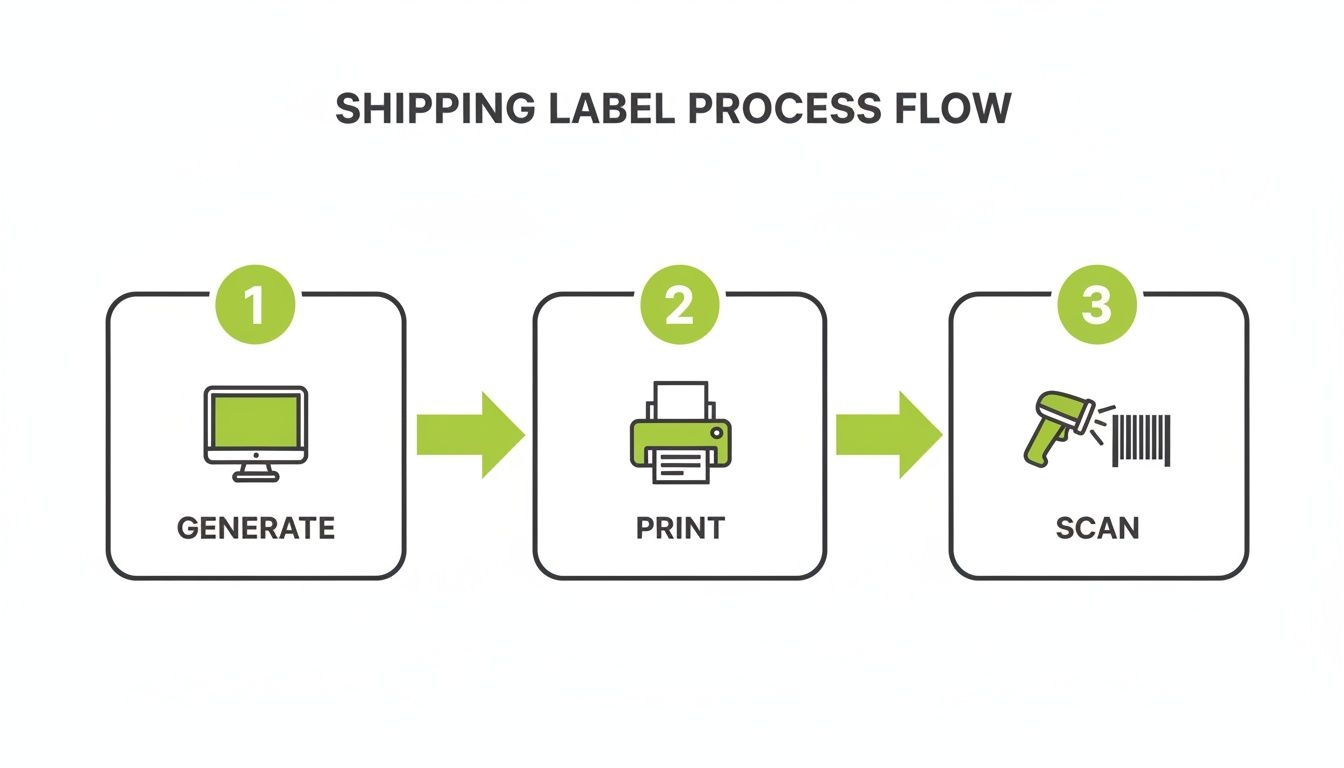
When the label is placed correctly, the final scan is effortless, keeping your delivery on track.
Common Placement Mistakes (and How to Avoid Them)
The most frequent placement errors are frustratingly simple to make, but thankfully, just as easy to avoid. You have to remember that automated systems are fast and efficient, but they have zero patience for mistakes. Any little fold or glare can cause a read failure.
To make sure your parcels fly through the Australian courier network, never stick your label:
- Over seams or edges. That crease might look small, but it's enough to distort a barcode and make it unreadable. The entire label needs to be on one, solid surface.
- On top of packing tape. Some packing tapes have a glossy, reflective finish that plays havoc with laser scanners, creating a glare. It’s always best to stick the label directly onto the box itself.
- Wrapping around a corner. This is a classic mistake. If a label is bent over an edge, the scanner can't see the whole barcode in one flat plane. It’s an instant fail.
Here’s a pro tip: place the label where it can lie completely flat, free of any wrinkles, folds, or air bubbles. When you’re using poly mailers or satchels, take a moment to smooth the label down from the centre outwards to push out any trapped air that could obscure vital information.
Getting the Orientation Right
Finding a flat surface is your main goal, but the label’s orientation also plays a part.
Whenever you can, apply the label in a 'landscape' position. This means the longest edge of the label runs parallel to the longest edge of the parcel. For barcodes, this creates what’s known in the industry as a ‘picket fence’ orientation (with the bars running vertically), which is perfect for the overhead scanners used in most sorting facilities.
Finally, make sure that label is stuck on for good. A quality self-adhesive label is your best friend here. If a label peels off mid-journey, your package is suddenly an anonymous box, destined for a depot’s lost property pile. That’s a headache nobody needs.
Nailing these small habits will dramatically increase your success rate for a seamless local parcel delivery and keep your customers happy. Making correct label placement a non-negotiable step in your packing routine is one of the easiest ways to prevent lost parcels and delivery delays.
Getting it Right: Labelling Pallets and Dangerous Goods
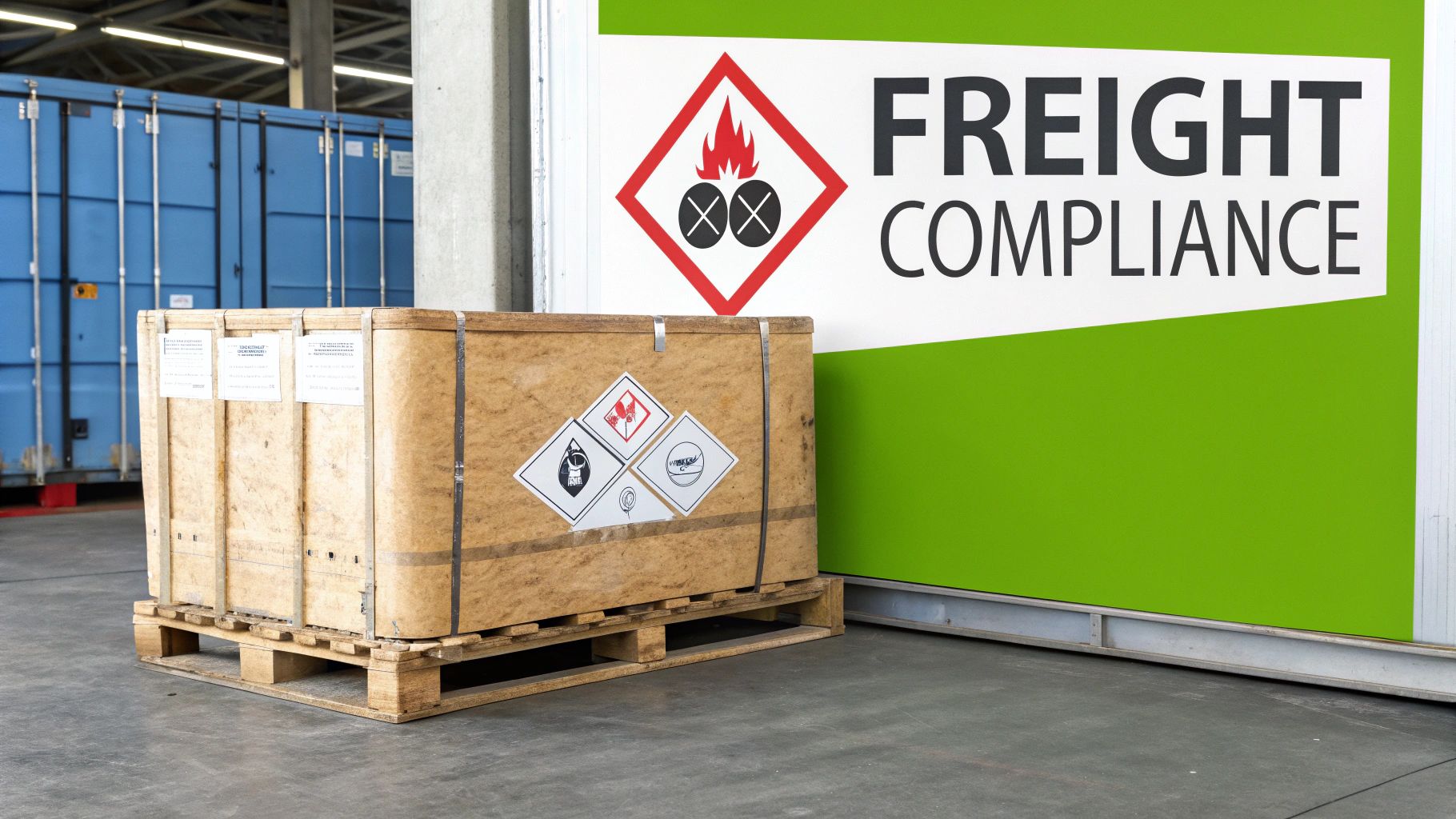
Once you start shipping more than just single cartons and satchels, the labelling game changes. Moving bulk goods on pallets or sending anything classified as a restricted item brings a whole new level of rules.
This isn’t just about making things easy; it’s about safety, compliance, and ensuring your goods actually move through Australia's complex freight networks. Get it wrong, and you're looking at rejected shipments or even hefty penalties.
For any business that's scaling up, palletised freight is a massive efficiency win. But a single shipping label slapped on one side of a tightly shrink-wrapped pallet is a classic rookie mistake—and a recipe for disaster. Think about it: forklift operators and depot scanners need to see that critical information from every possible angle.
The Golden Rules for Labelling a Pallet
When it comes to pallets, the name of the game is visibility and redundancy. You simply can't guess which side of the pallet will be facing a scanner or a driver, so you have to cover your bases.
Here’s what I’ve learned is non-negotiable:
- Double up on labels. You need at least two identical, complete shipping labels. Place one on each of two adjacent sides of the pallet. This one small action massively boosts the chances of a fast, successful scan.
- Think about positioning. Stick the labels on the outer surface of the shrink wrap, about halfway up the pallet. This is the sweet spot for both handheld scanners and the automated ones in depots.
- Make them identical twins. It’s crucial that both labels are exact duplicates. They must have the same consignment note and barcode to avoid any confusion in the sorting system.
Following these simple rules is a must for anyone using a domestic freight express service. It's the key to keeping your larger shipments flowing without frustrating (and costly) handling delays.
A Whole Different Ball Game: Dangerous Goods Labelling
Shipping Dangerous Goods (or DG) in Australia comes with a strict, non-negotiable set of rules designed to protect everyone from the sender to the receiver. Your standard shipping label is only part of the story.
DG items can't just be slipped into the regular post. They need very specific markings that are instantly recognisable, with the most important one being the DG class diamond. This is the diamond-shaped placard that screams "flammable," "corrosive," or "toxic" to anyone who handles it.
Key Takeaway: When you're labelling a package containing dangerous goods, the shipping label and the DG class diamond must be placed on the same outer face of the carton. They cannot overlap or cover each other in any way. Both must be clear and obvious for immediate identification.
On top of that, you’ll need to include other mandatory details like the specific UN number and the substance's proper shipping name. These aren't suggestions; they have to be precise.
Remember, under Australia’s national trade measurement laws, any pre-packaged goods must also display measurements in metric units on the main panel. Your freight label can't cover this information.
Failing to declare and correctly label dangerous goods is a serious offence. Before you even think about sending restricted materials, talk to your courier and get familiar with the relevant Australian transport regulations. Your clear, compliant labelling isn't just a requirement—it’s your responsibility to keep everyone in the supply chain safe.
How to Fix Common Shipping Label Problems
Even the most organised e-commerce business runs into label problems now and then. A smudged barcode, a torn label, or a simple mistake can bring a shipment to a dead stop. Knowing how to quickly fix these issues is what keeps your parcels moving and your customers happy.
A barcode that refuses to scan is probably one of the most common headaches. This usually boils down to a few culprits: the printer was running low on ink, the label got smudged while being stuck on, or it was folded over a sharp corner of the box.
If a customer gets in touch about a tracking number that isn't working, your first move should be to pull up the digital copy of the label. If your original file looks clean and sharp, the problem most likely happened somewhere between your warehouse and the customer's door.
When you suspect a scanning issue is holding things up, it's worth digging a little deeper. We've put together a guide on what to do when your Australia Post tracking is not updating that walks through the typical causes and how to resolve them.
Handling Damaged or Unreadable Labels
What happens if a label gets ripped or becomes unreadable during its journey? The courier depot will flag the parcel, hold it, and try to figure out where it's supposed to go using other details like the sender's address or consignment number.
The best thing you can do is get on the front foot. Contact the courier yourself with the tracking number and a digital copy of the original label. This gives them everything they need to reprint a new label and get the shipment back on its way.
Pro Tip: Always generate a fresh label directly from your shipping software or courier's portal for every single shipment. Never photocopy, screenshot, or reuse an old label. Each parcel needs its own unique barcode and tracking number to be scanned, tracked, and insured correctly.
The Right Way to Reuse a Box
Reusing old cartons is fantastic for the environment, but it can be a major cause of sorting mistakes if you're not careful. The automated scanners in a sorting facility are designed to read the first barcode they detect. An old, half-covered label can easily confuse the system and send your package on a wild goose chase.
Here’s how to do it properly:
- Don't just cross it out: A single line with a marker pen won't be enough to fool a high-speed laser scanner.
- Completely obscure old labels: The safest bet is to stick a blank label or some thick, black tape right over any old barcodes, addresses, and tracking numbers.
- Peel it off if you can: If the old label comes off cleanly without tearing the box, that's the absolute best-case scenario.
Taking a moment to properly prep a reused box makes sure your new label on package is the only one the machines see. This avoids frustrating and costly misdirections.
It's all part of a bigger picture of labelling standards. For example, Australian regulators have refined packaging rules over the years. The Country of Origin Food Labelling Information Standard 2016, which became mandatory in 2018, dictates very specific formats. You can read more about these standardised label requirements from the ACCC. It's a good reminder that every single mark on your parcel needs to be clear, current, and correct.
Common Questions About Package Labelling
Even with the best systems in place, you'll eventually run into a weird labelling situation that makes you second-guess yourself. Here are some of the most frequent questions we get from Australian businesses, with clear, practical answers to help you handle those tricky scenarios and keep your parcels flying out the door.
Getting these little details right can be the difference between a smooth delivery and a frustrating delay.
What Happens If I Put Clear Tape Over the Entire Shipping Label?
It seems like a good idea, right? Protect the label from rain and scuffs. Unfortunately, taping over a barcode is one of the most common reasons for scanning failures. The gloss from the tape reflects the scanner's laser, making it impossible for the machine to read the barcode.
This tiny mistake means your package gets pulled off the automated line and has to be sorted by hand, which always causes delays. If you absolutely have to use a paper label, only tape down the edges. Leave the barcode and address completely exposed.
The best solution is to avoid the problem altogether. Use proper self-adhesive thermal labels, or slip your printed label into one of those clear, stick-on shipping pouches. Both options give you a durable, scannable surface without needing a single piece of tape.
Can I Handwrite a Shipping Label If My Printer Breaks Down?
In a word: no. Modern courier networks in Australia, including ours, are built for automation. Handwritten labels are a no-go because they don't have the machine-readable barcode that's essential for sorting, routing, and tracking a parcel.
A handwritten label is basically invisible to the machines that do 99% of the work. If your printer gives up the ghost, your best bet is to save the label PDF from your booking platform. From there, you can email it to yourself and print it at a local library, office supply store, or print shop. Always, always use the label generated by the system.
How Should I Label a Mailing Tube or Cylinder?
Tubes and other cylindrical items are always a bit awkward. The main goal here is to keep the barcode as flat as possible so the conveyor belt scanners can read it.
The trick is to apply the label on your package lengthwise, running along the tube like a stripe. This lets it follow the curve without creasing the barcode. Whatever you do, don't wrap it around the tube like a flag on a pole—that makes the barcode completely unreadable. It's also a good idea to tape the end caps on securely so they don't pop off during the journey.
Frankly, whenever it's practical, the safest method is just to put the tube inside a standard rectangular box before you label it.
Is a Special Label Needed for Signature on Delivery?
Nope, you don't need a separate label for this. When you book a shipment and select "Signature on Delivery," that instruction is automatically embedded right into the barcode on your standard shipping label.
When the courier scans the parcel at the destination, their handheld scanner will flag it and tell them a signature is required to complete the delivery. The only thing you need to worry about is making sure you actually tick that service option when you're making the booking online. The barcode handles the rest.
Ready to simplify your shipping process? At Aeros Couriers, we provide a straightforward platform to get instant quotes, book deliveries, and print compliant labels in minutes. https://www.aeroscouriers.com.au
Courier quotes, tracking and support
Ready to send a parcel? Compare the available services for your postcodes, parcel dimensions and weight. For an existing delivery, use your consignment number to check tracking or ask our team for help.