


Sending a parcel across Australia can feel like a bit of a mission, but it really boils down to a few key things: packing your items properly, picking the right courier service, booking it all online, and keeping an eye on it until it lands on the doorstep.
Getting the measurements and weight spot-on from the get-go is the secret sauce. It’s what ensures you get an accurate quote and don’t get stung with surprise fees later.
Your Ultimate Guide to Sending Parcels in Australia
Whether you’re a small business owner shipping products every day or just sending a one-off gift to family across the country, posting a parcel shouldn't be a headache. This guide is here to walk you through the whole process, step by step, so your package gets where it needs to go safely, on time, and without any budget blowouts.
We're focusing purely on how to send a parcel within Australia. Forget the confusing jargon and common mistakes; think of this as your go-to playbook for shipping success.
What This Guide Covers
Let's break it down into simple, actionable pieces. You’ll get the practical know-how to handle any shipment with confidence.
Here’s what you'll learn:
- Packing and Sizing: We’ll show you how to pack your items like a pro to avoid breakages and how getting your measurements right can seriously cut costs.
- Choosing a Service: You'll finally understand the real difference between standard and express options, so you can pick the one that fits your deadline and budget.
- Booking and Tracking: Learn the easiest way to book a courier, print your own labels, and follow your parcel’s journey from your door to its destination.
Honestly, successful shipping is all about the prep work. Spending just a few extra minutes on good packing and accurate details can save you from the hassle of delays, damage, and extra charges.
Why Getting it Right Matters
Taking a moment to get the details right pays off in more ways than one.
First and foremost, it protects your stuff. Good packing is your number one defence against the bumps and tumbles of transit.
It also saves you cash. One of the most common reasons for extra courier fees is declaring the wrong weight or dimensions. A simple mistake can be a costly one.
And finally, it gives you peace of mind. When you know you’ve picked the right service and can see where your parcel is at all times, the stress just melts away.
By following this guide, you’ll be set to tackle any domestic shipping task. For anyone looking for a simple way to manage it all, Aeros Couriers provides a platform designed for straightforward Australian parcel delivery, making the whole process a breeze.
How to Properly Pack Your Parcel for Safe Transit
Before a courier even lays a hand on your package, its journey has already begun. A successful delivery starts with you—and how well you pack. Think of it as the first line of defence against all the bumps, drops, and jostles that can happen in transit. Getting this right is absolutely crucial.
This isn't just about grabbing the first box you find. It’s about creating a secure shell for your items. For almost everything you'll send, a new, sturdy double-walled cardboard box is your best bet. It’s a small investment that offers far more strength and protection than a flimsy single-walled box you might have lying around.
Here’s a quick look at the first few steps to get you started on the right foot.
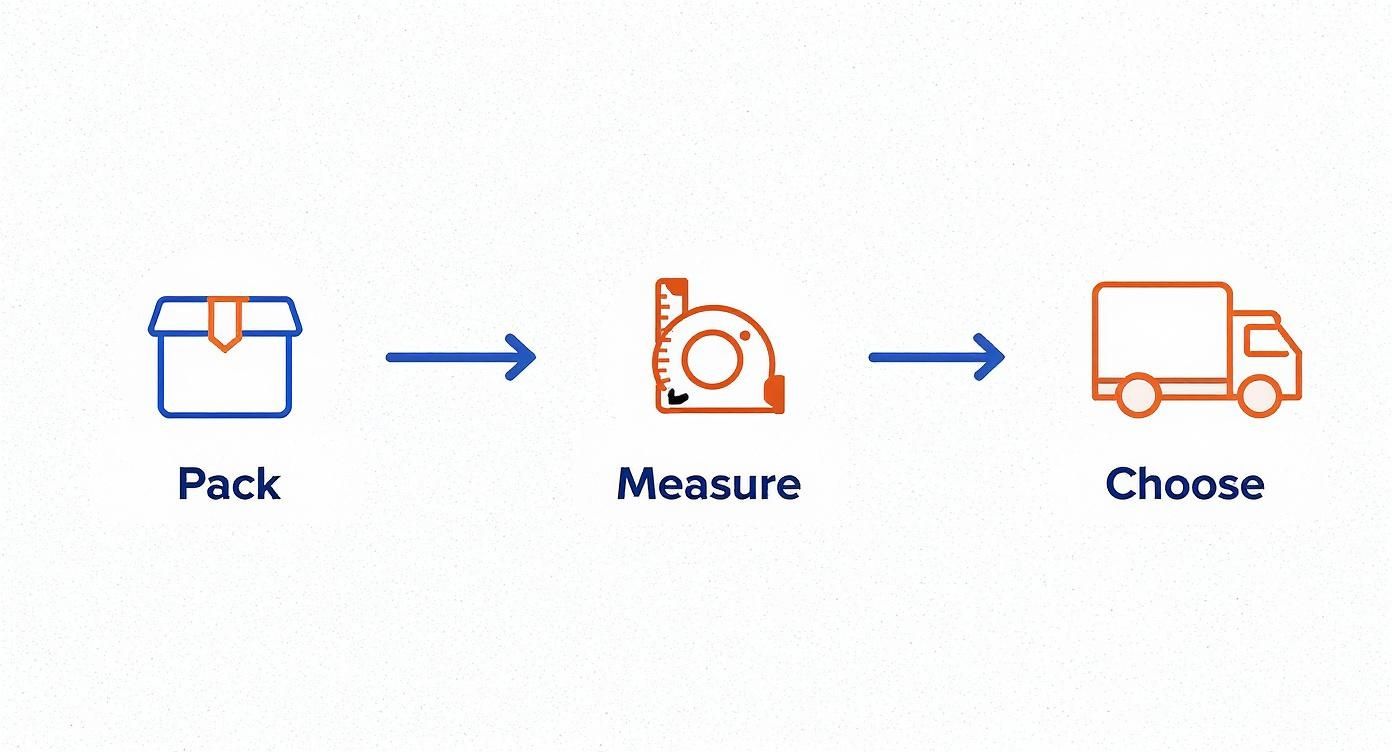
As you can see, getting the packing, measuring, and service selection right from the outset sets the stage for a smooth delivery.
Selecting the Right Packing Materials
The materials you put inside the box are just as important as the box itself. The right choices will stop your items from rattling around and absorb any shocks along the way.
- Void-Fill: Empty space is the enemy. Fill every nook and cranny with bubble wrap, packing peanuts, or even just scrunched-up paper. This is what stops your contents from shifting, which is how most damage happens.
- Cushioning: If you’re sending more than one item, wrap each one individually. This simple step prevents them from clattering against each other during their trip.
- Sealing: Don't skimp on the tape. Use a strong, quality packing tape and apply it generously. The 'H-tape' method is what the pros do—tape along every seam where the box flaps meet to give it maximum structural support.
A mistake I see all the time is people reusing old boxes. It might feel like you're saving a few cents, but a used box has already lost much of its strength. Always start fresh with a new box for peace of mind.
Protecting Fragile and Delicate Items
Got something extra fragile, like glassware, electronics, or ceramics? Standard packing just won't cut it. This is where you need a technique called the 'box-in-box' method.
It's exactly what it sounds like. First, you pack your item securely in one box. Then, you place that entire box inside a second, larger one. The key is to fill the gap between the two boxes with at least 5cm of cushioning material on all sides. This creates an incredible buffer zone that absorbs almost any impact. For more great advice, check out these super easy packing tips.
Why Precise Measurements Are Non-Negotiable
Okay, your parcel is packed and sealed. Now for the most critical step for your wallet: measuring and weighing it. This isn't something you can guess. Inaccurate details are the number one reason people get hit with surprise fees later on.
Australian couriers use what’s called cubic weight (or dimensional weight) to figure out your shipping cost. They look at both the physical weight and the size of your parcel, and then they charge you for whichever is greater.
Think about sending a big, fluffy pillow. It weighs next to nothing, but it takes up a lot of space in the van. The courier will charge you for that space, not its light weight. Getting your measurements spot-on from the get-go means the quote you get is the price you'll actually pay. If you're keen on keeping costs down, finding the cheapest way to send a parcel always begins with accurate numbers.
Choosing the Best Courier for Your Delivery Needs
Once your parcel is properly packed and you have its dimensions, it’s time to pick the right courier. With so many options out there, it’s easy to feel a bit lost. The truth is, there’s no single "best" courier for everything. The right choice always comes down to what you're sending, how fast it needs to get there, and its final destination.
The courier and parcel market in Australia is massive, valued at around USD 11.75 billion. While standard, non-urgent deliveries make up the bulk of this (75% of all parcels), the appetite for speed is growing. Express services are expanding by 5.76% each year, which tells you that customers increasingly want things now.
This means there's a service out there for pretty much any scenario you can think of. The trick is simply matching your parcel's needs to the courier that’s built for that specific job.
Speed vs. Cost: The Eternal Trade-Off
The first big decision you'll face is the classic tug-of-war between speed and budget. Are you sending a time-critical document that absolutely has to be in a Sydney CBD office by tomorrow morning? Or is it a care package to a mate in Perth that can take its time? Your answer will point you to completely different services.
-
When It's Urgent: For that critical document, you'll need an express or even a same-day service. These are the premium options that prioritise speed above all else, often using a combination of air freight and dedicated drivers to hit those tight deadlines.
-
For Standard Shipments: If it's not a rush, a standard road service is your best bet. It’s far more economical and perfect for things like e-commerce orders or personal gifts. It might take an extra day or two, but you’ll see significant savings.
Think of it like this: paying for express is like buying a plane ticket, while standard shipping is like taking a bus. Both get you to your destination, but one is built for speed and the other for value.
Regional and Remote Deliveries
Sending a parcel between major cities like Melbourne and Brisbane is usually a piece of cake—every carrier has these routes down pat. But what about shipping to a regional town in Western Australia or a remote community up in the Northern Territory? That’s a whole different ball game.
Not all couriers have the same footprint. Some are masters of the metro-to-metro game, offering incredible prices and speed on those popular corridors. Others, however, have poured resources into building out their regional networks, making them the go-to for reaching postcodes off the beaten path. This is a huge factor to consider when you need to send a parcel to a less-populated area, as picking the wrong carrier can lead to frustrating delays and surprise costs.
Australian Domestic Courier Service Comparison
To make sense of it all, here’s a quick breakdown of some of the major players in Australia and what they do best.
| Courier Service | Best For | Typical Delivery Speed (Metro) | Cost Indicator |
|---|---|---|---|
| Australia Post | Standard, non-urgent parcels & national reach | 2-6 business days | $$ |
| StarTrack | Business-to-business & express deliveries | Next business day | $$$ |
| CouriersPlease | Budget-friendly metro & e-commerce | 1-3 business days | $ |
| Aramex | Low-cost satchels & franchise network | 1-3 business days | $ |
| TNT | Heavy/bulky freight & domestic shipping | Next business day | $$$$ |
| Allied Express | Same-day metro & time-critical freight | 2-4 hours | $$$$ |
This table is just a starting point. Every courier has its own unique strengths, and the "best" one truly depends on the specific package you're sending.
Matching the Courier to the Job
Let's walk through a few real-world examples to see how this works in practice.
Scenario 1: The E-commerce Retailer
An online shop in Adelaide is sending a 2kg t-shirt in a satchel to a customer in metro Melbourne.
- Top Priority: Keeping shipping costs low while ensuring reliable delivery.
- Best Choice: A standard road courier service. It's the perfect balance of affordability and dependability for everyday e-commerce. There’s no point paying for express speed on a low-margin item.
Scenario 2: The Urgent Business Document
A law firm in Brisbane has to get a signed contract to a partner in Canberra by 9 a.m. the next day.
- Top Priority: Guaranteed speed and next-day delivery.
- Best Choice: An overnight express air service. It costs more, but for business-critical items, the peace of mind that comes with a guaranteed delivery is worth every cent.
Scenario 3: The Bulky Item
Someone is sending a heavy 20kg box of old university textbooks from a regional NSW town to a family member in Hobart.
- Top Priority: A courier that can handle heavy items and has a strong regional network, without costing a fortune.
- Best Choice: A carrier known for its expertise in bulky freight and competitive pricing for regional routes. Some couriers are simply better equipped for this kind of job.
When weighing up your options, you might look into services from companies like Parcil. Of course, a platform like Aeros Couriers makes this whole process much easier by letting you compare multiple carriers at once, ensuring you find the perfect match for your parcel.
If you want to go even deeper, our guide on choosing the best courier service in Australia breaks it all down in more detail.
Booking Your Shipment and Printing a Label
Okay, you've packed your box and chosen the right service. Now for the final piece of the puzzle: locking in the booking and getting that all-important shipping label printed. This is the moment all that prep work comes together, turning your parcel's details into a scannable 'passport' that will guide it on its journey.
Using a platform like Aeros Couriers makes this part incredibly straightforward. Instead of jumping between different courier websites and re-entering the same details, you do it once and see all your options in one place. It’s about finalising the details that ensure a smooth trip from your place to theirs.
From Quote to Confirmation
With all your parcel's information handy, the booking process is a breeze. You’ll just need to plug in the dead weight and the dimensions (length, width, and height). The system does the heavy lifting, instantly calculating the cubic weight and laying out a clear list of quotes from different Aussie carriers.
This is where you can really compare your options. You'll see the cost difference between a standard road service and a premium express option right there on the screen, letting you make a smart call based on urgency and budget. It gives you the power to find the best deal without all the legwork.
From here, it's just a few clicks to lock it in:
- Pick Your Service: Choose the carrier and service (e.g., Standard, Express) that hits the sweet spot for your timeline and wallet.
- Consider Extras: Decide if you need things like a signature on delivery for proof it arrived, or a transit warranty for extra peace of mind on valuable items.
- Pay and Book: Finalise the payment through the secure portal to confirm your booking.
Why Your Shipping Label is So Important
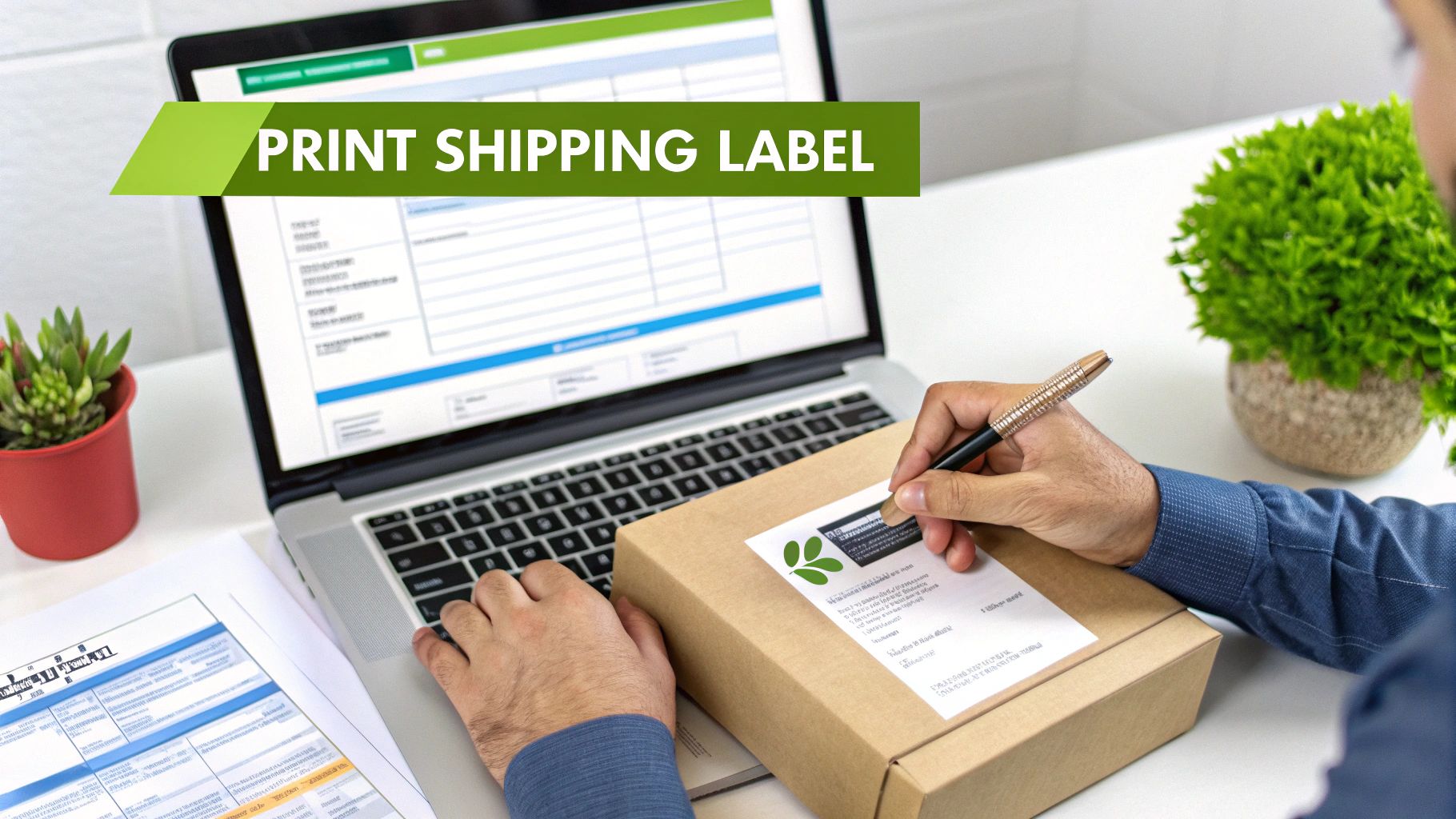
Once you’ve booked, you’ll get the shipping label as a digital file, usually a PDF. This isn't just a sticker with an address—it's the heart of the whole operation. It’s covered in barcodes that automated sorting machines and drivers scan at every checkpoint. A clear, correctly attached label is absolutely non-negotiable for a fast delivery.
Honestly, one of the most common—and easily avoidable—reasons for delays is an unreadable barcode. If a sorting machine can't scan it, your parcel gets shunted aside for a manual check, which can easily add a day or more to its transit time.
Getting the label right is the single most important thing you can do at this stage. I’ve seen parcels delayed for days simply because a label was creased over an edge or had sticky tape covering the barcode. It needs to be completely flat and crystal clear.
Pro Tips for Attaching Your Label
How you stick the label on is just as crucial as what’s on it. To make sure your parcel zips through the courier network without a snag, stick to these simple rules.
Do This:
- Print It Clearly: Make sure your printer has plenty of ink. A smudged or faded barcode is just as bad as a ripped one.
- Keep It Full Size: Print the label at 100% scale (usually A6 or A5). Never shrink it to fit on a small box, as this can make the barcode unscannable.
- Stick It Securely: Place the label on the biggest, flattest side of the box. Using clear packing tape over the whole label is a great way to protect it from rain and rips.
Not This:
- Don't Wrap It: Never, ever fold the label over a corner or edge. The scanners need a perfectly flat surface to read the barcode.
- No Coloured Tape: Only use clear tape. Any other colour will block the barcode and the address details underneath.
- Avoid Seams: Try not to place the label over a seam or opening on the box, where it could easily get torn or damaged.
With the label on and looking good, your parcel is officially ready to go. The only thing left is to get it into the courier's hands. Ready to get started? You can get instant pricing and compare all your options with a shipping quote calculator.
Getting Your Parcel on Its Way & Tracking Its Journey
Alright, your parcel is packed, taped up, and the label is on. It's officially ready for the outside world. The last step before it starts its trip is actually getting it into the courier's hands. This is where you have a couple of options, and it’s all about what’s most convenient for you and your schedule.
You can either have a courier swing by and pick it up right from your doorstep, or you can drop it off at a local collection point. Honestly, neither is better than the other; it just boils down to what fits your day.
Scheduling a Courier Pickup from Your Door
For anyone running a business from home or sending out several parcels at once, booking a pickup is a game-changer. It means no lugging boxes to the car—the driver comes straight to you.
When you finalise your booking, you'll be given a pickup window. The key here is to have your parcel ready to go and in a spot where the driver can easily and safely grab it. This could be your reception desk, a designated mailroom, or even just on your front porch.
My top tip for pickups is to be prepared. Have the parcel clearly labelled and easily visible. A smooth pickup is the first step to a fast delivery, and making the driver’s job easier helps get your package into the network without any hitches.
Just make sure you double-check the pickup instructions. Some services will need you to be there to hand the parcel over, while others offer an 'authority to leave' option, meaning the driver can collect it even if you've popped out.
Using Local Drop-Off Points
If your schedule is all over the place, dropping the parcel off yourself might be a better fit. These are super convenient locations—think local newsagents, pharmacies, or dedicated courier depots—where you can leave your pre-paid and labelled parcel whenever it suits you.
It's a really simple process:
- Find a Spot: Jump on the courier's website and use their locator tool to find the closest drop-off point.
- Check the Hours: Always give their opening times a quick look to avoid a wasted trip.
- Drop and Go: Just hand your parcel over the counter. They’ll scan it into the system, and the courier will collect it on their next run.
This option gives you a ton of flexibility. You can fit it in while you're running other errands instead of waiting at home for a driver.
Following Your Parcel with Real-Time Tracking
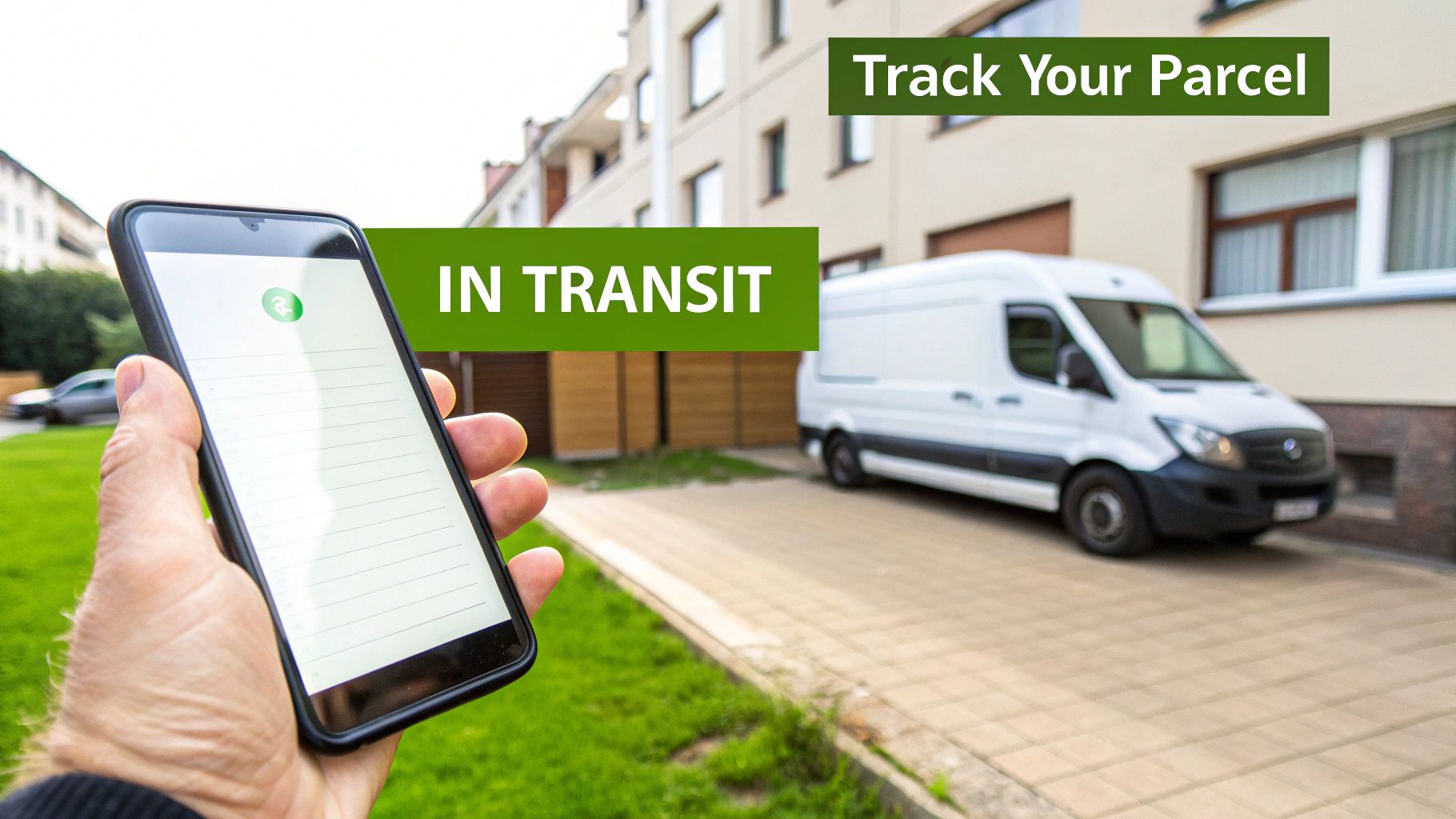
The moment your parcel is scanned by the courier, you can start following its journey online. That shipping label isn't just for the address; its barcode is your golden ticket to real-time tracking. Every time your parcel hits a key point—like a depot or the final delivery van—the label gets scanned, and its status is updated.
You’ll get a unique tracking number when you book. Just punch that number into the courier's website, and you can see exactly where your package is. This level of visibility is what everyone expects these days, and it's driving huge growth in Australia's last-mile delivery market. The sector is actually projected to grow by over 10.55% each year through 2033, mostly thanks to e-commerce and our demand for quick, transparent shipping. You can read more about the growth of Australia's delivery market if you're interested in the details.
What Those Tracking Updates Actually Mean
The tracking page will show a series of updates as your parcel moves. Here’s a quick rundown of what the most common ones mean:
- Picked Up/Collected: It's official. The driver has collected your parcel and it's in the network.
- In Transit: Your package is on the move, likely travelling between depots or cities.
- With Driver for Delivery: This is the one to watch for! It means the parcel is on the local van and should be delivered that day.
- Delivered: Success! The journey is complete, and your parcel has safely arrived at its destination.
Dealing With Awkward, Oversized, and Special Shipments
Let’s be honest, not everything fits perfectly into a standard box. Sometimes you’re dealing with items that are seriously big, surprisingly heavy, or even fall into the category of Dangerous Goods (DGs). Getting these special shipments right is non-negotiable—it's about safety, following the rules, and making sure your parcel doesn’t get held up or hit with extra fees.
You might be surprised by what’s considered a Dangerous Good. Everyday things like laptops and phones (with lithium batteries), aerosol cans like deodorant, or even perfume are classified as DGs for transport. They aren't forbidden, but they have to be sent by road freight and play by a strict set of rules. This means using the right packaging, slapping on the correct DG labels, and filling out a declaration so everyone handling it knows exactly what’s inside.
How to Ship Dangerous Goods the Right Way
The first rule of shipping DGs is to declare them. Always. If you don't, your parcel could be stopped and sent back to you, or worse, cause a serious safety issue on the road.
Before you book, make sure you’ve covered these bases:
- Know Your Item: First, confirm if your item is actually a DG for road transport. Common culprits include flammable liquids, corrosive materials, and anything with certain types of batteries.
- Pack it Properly: Some items need special UN-approved packaging. Either way, it needs to be sealed securely with plenty of cushioning to prevent any leaks or breaks.
- Label it Clearly: The right Dangerous Goods diamond label must be stuck on the outside of the box where it can’t be missed.
Tackling Large Freight and Pallets
So, what happens when your item is just too big or heavy for the usual courier service? That’s when you need to start thinking about pallets. If you’re sending bulky machinery, a piece of furniture, or a large volume of stock, securing it all to a pallet is often the best—and only—way to go.
This isn't a job for a standard van. You'll need a specialised carrier with a tail-lift truck to handle the loading and unloading. When you get a quote, be sure to provide the total dimensions of the pallet with the goods on it, not just the item itself. For a deeper dive, our guide to cheap big parcel delivery has more tips for managing these larger shipments without breaking the budget.
A quick word of warning: Accuracy is just as crucial for a giant pallet as it is for a tiny satchel. Getting the weight or dimensions wrong on oversized freight can lead to some seriously hefty and unexpected surcharges from the carrier.
The Reality of Regional and Remote Deliveries
Sending a parcel into regional or remote Australia adds a whole different challenge, especially when it comes to delivery times. A package might zip between Sydney and Melbourne overnight, but getting it to a small town in outback WA or the NT is a different story altogether.
The logistics involved in covering a country this vast are mind-boggling. To give you some perspective on the scale, Australia's growing parcel network sees billions of items delivered annually, requiring massive investment to connect every corner of the continent. Courier companies often team up with local delivery partners to handle that "last mile," which can easily add a few extra days to the ETA. It’s a good idea to always build in a bit of a buffer when you’re sending anything outside the major city hubs.
Tackling Common Parcel Problems
Even the most organised sender can run into a snag now and then. Things happen. Think of this as your go-to guide for navigating those little bumps in the road, so you can sort out any issues like a pro.
What Happens if I Miss My Scheduled Pickup?
We've all been there—you're stuck on a call or in the back room, and you hear the truck drive away. If you miss your courier pickup, don't sweat it. The first thing you should do is pull up your booking confirmation email or jump onto the tracking page for specific instructions.
Most of the time, you can re-book the pickup online for the next business day with just a few clicks. Some couriers might even try again automatically, but others will wait for you to reschedule. The trick is to act fast to keep your parcel from sitting around for too long.
Can I Change the Delivery Address Mid-Transit?
This is a classic one. A customer calls in a panic, realising they’ve put in their old address. Changing an address once a parcel is already on its way can be a bit tricky, but it’s not always impossible.
Whether you can redirect a parcel really comes down to a few things:
- The Courier’s Rules: Every carrier has its own policy, and some are just more accommodating than others.
- Where the Parcel Is: It’s a lot easier to make a change before the parcel has been loaded onto the final delivery van.
- Extra Costs: Just be prepared, as redirecting a parcel will almost always come with an extra fee.
Your best bet is to contact the courier's support team straight away. Have your tracking number and the correct address ready to go. The quicker you act, the better your chances are of successfully getting it rerouted.
What Should I Do if My Parcel Arrives Damaged?
It’s incredibly frustrating to find out your carefully packed item has been damaged in transit. If this happens to your recipient, the key is to document everything immediately.
Pro Tip: Before even opening a box that looks beaten up, take clear photos of the outside from every angle. Then, get shots of the internal packaging and, of course, the damaged item itself. This evidence is absolutely essential for any claim.
Once you have the photos, get in touch with the courier service you booked with as soon as you can. If you took out a transit warranty when you booked, now is the time to get that claim process started. Your detailed photos will make everything run much more smoothly and give you the best shot at a good outcome.
Ready to send a parcel without all the guesswork? At Aeros Couriers, we’ve made shipping across Australia simple, affordable, and reliable. You can get instant quotes, compare top carriers, and lock in your delivery in just a few minutes. Check us out at https://www.aeroscouriers.com.au to see how easy it can be.
